Extractor Fan Airflow Calculator
Enter your room details to see the recommended airflow capacity.
Why Your Current Fan Might Be Failing
You stand in your kitchen after cooking a curry or a fish dinner. Ten minutes later, the smell is still hanging in the air like a thick fog. You check the extractor fan, and it’s either humming loudly without moving much air, making a grinding noise, or just not working at all. Before you call for extractor fan repair, you need to ask yourself one critical question: is the unit actually capable of doing the job?
Many homeowners buy the cheapest fan available, install it, and wonder why their home feels damp or smells stale. The truth is that an extractor fan isn’t just a box with a spinning blade. It is a precise engineering component designed to move a specific volume of air against resistance. If you get the specs wrong, no amount of repair will fix the underlying problem. You might end up replacing a perfectly good motor because the housing was simply too small for your room.
Calculate the Airflow Requirement (The L/s Rule)
The most common mistake people make when buying a new fan is ignoring airflow capacity. In technical terms, this is measured in liters per second (L/s). This number tells you how much air the fan can move every second. To find out what you need, you have to look at your room’s volume and its usage.
For a standard kitchen, building regulations usually require a minimum extraction rate of 60 L/s if the fan is used intermittently, or 30 L/s if it runs continuously on a timer. However, these are bare minimums. If you have a high-ceilinged room or cook frequently with strong odors, you should aim higher. Here is how to calculate it:
- Measure your room: Multiply length x width x height to get the volume in cubic meters.
- Determine air changes: Kitchens typically need 10 air changes per hour. Bathrooms need 6 to 8 air changes per hour.
- Do the math: Divide the required hourly air change by 3600 (seconds in an hour) to get the L/s requirement.
If your kitchen is 15 square meters with 2.4-meter ceilings, that’s 36 cubic meters. For 10 air changes per hour, you need to move 360 cubic meters per hour. Divided by 3600, that equals 10 L/s. But remember, ductwork reduces efficiency. A long pipe with bends can lose up to 50% of the fan's power. Always add a 20-30% buffer to your calculation to ensure effective performance.
Understand Noise Levels: Decibels Matter
No one wants a fan that sounds like a jet engine taking off in their living room. Noise is measured in decibels (dB). When shopping, you will see numbers ranging from 25 dB to over 70 dB. Context helps here. A whisper is about 30 dB. Normal conversation is 60 dB. A vacuum cleaner is 70-80 dB.
For a bedroom or a quiet open-plan living area, look for fans under 35 dB. These are often called "silent" models, though they aren’t truly silent-they just blend into background noise. For a busy kitchen where you’re already using blenders, kettles, and talking, a fan between 40-50 dB is acceptable. Anything above 60 dB will likely annoy you during use. Check the manufacturer’s spec sheet carefully; some brands measure noise at 1 meter, others at 3 meters. Always compare apples to apples.
Choose the Right Type for Your Space
Not all extractor fans fit every situation. The physical constraints of your property dictate which type you can install. Trying to force a wall-mounted unit into a ceiling cavity is a recipe for disaster.
| Type | Best For | Pros | Cons |
|---|---|---|---|
| Wall-Mounted | Kitchens with external walls | Easier installation, cheaper | Takes up wall space, less aesthetic |
| Ceiling-Mounted | Bathrooms, apartments without external walls | Invisible, saves wall space | Harder to install, requires roof access |
| Integrated (Ducted) | Modern kitchens with cabinetry | Sleek design, hidden from view | Expensive, complex wiring |
| Recirculating (Non-Ducted) | Flats/apartments where ducting is impossible | No external vent needed | Less effective, filters need frequent changing |
If you live in an apartment block and cannot drill through the roof or exterior wall, a recirculating fan is your only option. These units pull air through carbon filters to remove odors before pushing it back into the room. They are significantly less effective than ducted fans because they don’t remove moisture. Over time, this can lead to mold growth, which ties directly into why proper ventilation is crucial for home improvement and property maintenance.
Ducting: The Hidden Bottleneck
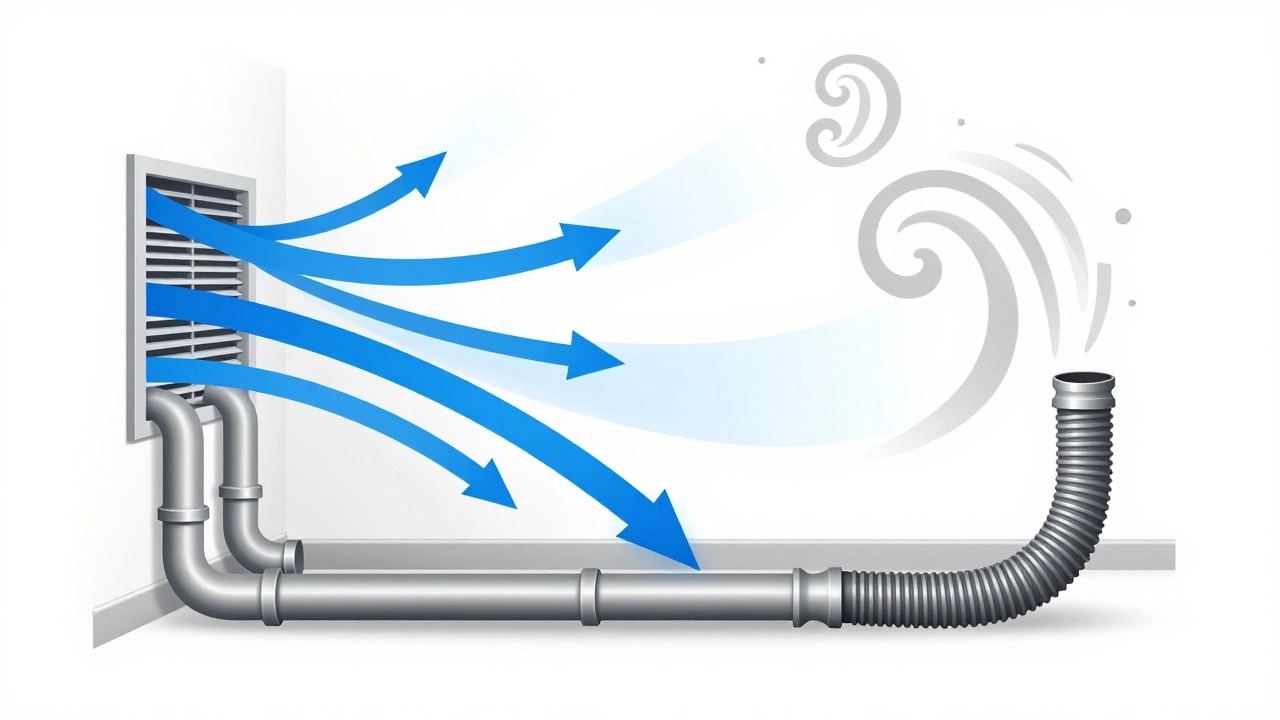
A powerful fan is useless if the path for the air is blocked. Ducting is the pipe that carries moist air outside. Flexible, corrugated plastic ducting is cheap and easy to bend, but it is terrible for airflow. The ridges inside create turbulence, reducing efficiency by up to 40% and increasing noise. Rigid PVC or aluminum ducting is smooth on the inside, allowing air to flow freely. It is also easier to clean if grease builds up-a common issue in kitchens.
Keep the duct run as short and straight as possible. Every 90-degree bend you add requires you to increase the fan’s power rating. If you must use flexible ducting, stretch it tight so the ridges are minimized. Never terminate a duct in a loft space; this pushes moist air into your insulation, leading to condensation and structural damage. Always vent to the outside air.
Controls and Automation Features
How do you want to operate the fan? The simplest models use a manual switch wired into your light circuit. This works fine if you remember to turn it on. Most people don’t. Modern extractor fans come with smart features that automate the process.
- Humidity Sensors: These detect moisture levels and turn the fan on automatically when steam rises from a shower or boiling pot. They run until the air dries out. Ideal for bathrooms.
- Timers: You press a button, and the fan runs for a set period (e.g., 15 minutes) after you turn off the lights. Good for kitchens where you leave the room immediately after cooking.
- Heat/Motion Sensors: Some kitchen fans activate when they detect heat from an oven or hob. This is highly effective for preventing grease buildup.
While sensor-equipped fans cost more upfront, they save energy by running only when necessary. They also prevent the common scenario of leaving the fan on all day, which wastes electricity and dries out the indoor air unnecessarily.
When to Buy New vs. Repair
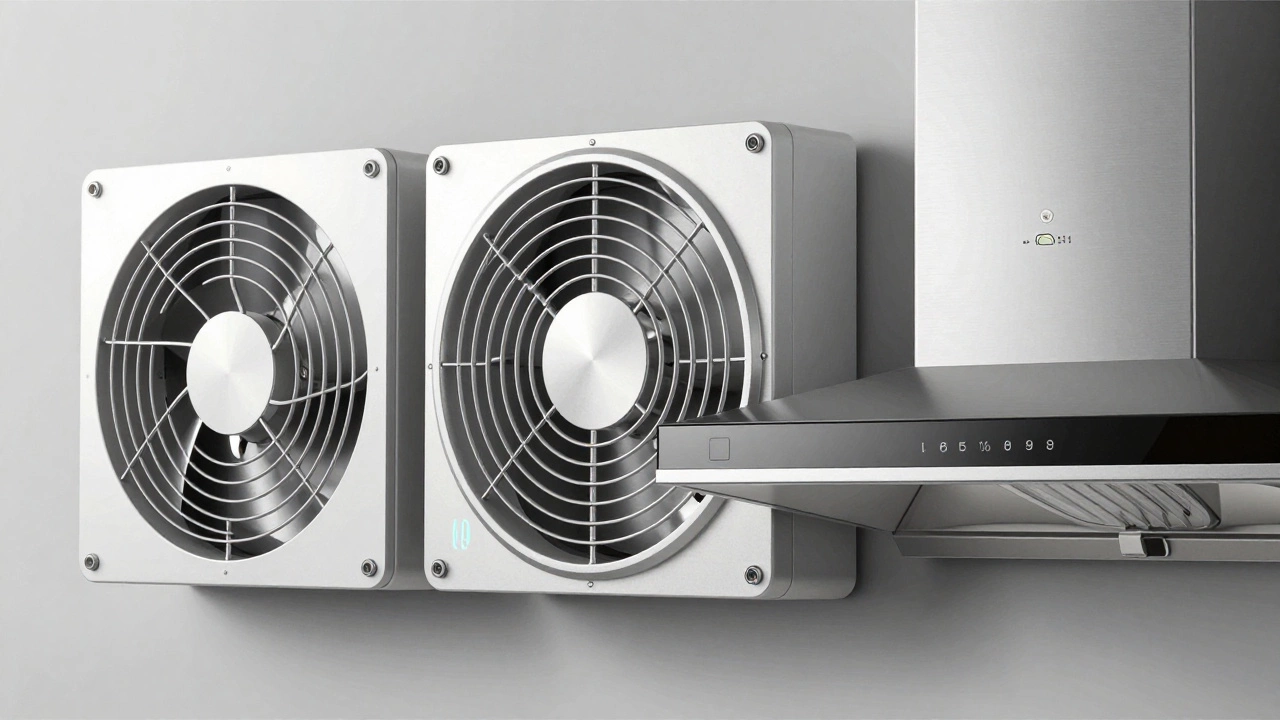
This is the million-dollar question. If your current fan is loud, inefficient, or broken, should you fix it or replace it? Consider the age of the unit. If it is over 10 years old, replacement is usually the better choice. Older motors are less efficient, consume more power, and lack modern noise-dampening technology.
However, if the issue is minor-like a dirty filter, a loose grille, or a faulty capacitor-extractor fan repair might be sufficient. A technician can clean the blades, lubricate the bearings, and check the wiring. But if the motor itself is failing, the cost of labor and parts often approaches the price of a new, more efficient model. Additionally, older fans may not meet current building standards for ventilation rates, meaning keeping them could compromise your indoor air quality.
Installation Tips for Longevity
Even the best fan will fail if installed poorly. Ensure the mounting bracket is secure and level. Vibration is the enemy of longevity; use rubber gaskets between the fan housing and the wall or ceiling to absorb shock. Seal all gaps around the ductwork with fire-rated silicone to prevent air leaks and stop pests from entering your home. Finally, test the fan immediately after installation. Listen for unusual noises and check for air leakage around the edges. If it rattles, tighten the screws. If it doesn’t pull air strongly, check the ducting for kinks.
Frequently Asked Questions
What size extractor fan do I need for my kitchen?
For most standard kitchens, a fan with an airflow capacity of 60-100 L/s is recommended. Calculate your room volume (length x width x height) and aim for 10 air changes per hour. Add 20-30% extra capacity to account for losses in the ducting.
Can I install an extractor fan myself?
Yes, if you are comfortable with basic plumbing and electrical work. Wall-mounted units are easier to install than ceiling ones. However, you must connect the fan to a switched live wire, which involves handling mains electricity. If you are unsure, hire a qualified electrician to ensure safety and compliance with local regulations.
Is it worth repairing an old extractor fan?
If the fan is less than 5-7 years old and the issue is minor (like a dirty filter or loose part), repair is cost-effective. If the motor is failing or the unit is very noisy due to age, replacement is better. Newer models are more energy-efficient and quieter.
Do I need a ducted or non-ducted fan?
Ducted fans are superior because they remove moisture and odors completely from your home. Non-ducted (recirculating) fans only filter odors and do not remove humidity, which can lead to mold. Use a non-ducted fan only if you cannot install ducting through walls or roofs.
How often should I clean my extractor fan?
Clean the grease filters every 3-6 months depending on usage. The fan blades and housing should be cleaned annually. Regular cleaning maintains airflow efficiency and prevents fire hazards caused by grease buildup.