Heat Pump: Repair vs. Replace Calculator
Enter your unit details to see if you should repair or replace your system.
What is the 5,000 Rule?
Multiply the age of the unit by the cost of the repair. If the total is over $5,000, it's generally more cost-effective to replace the entire unit rather than continuing to repair an aging system.
Quick Cost Summary
- Minor Repairs: $100 - $300 (Capacitors, sensors, thermostats)
- Moderate Repairs: $300 - $800 (Fan motors, refrigerant refills)
- Major Repairs: $1,200 - $3,000+ (Compressors, evaporator coils)
- Annual Maintenance: $150 - $300 (Tuning and cleaning)
What Actually Drives the Price Up?
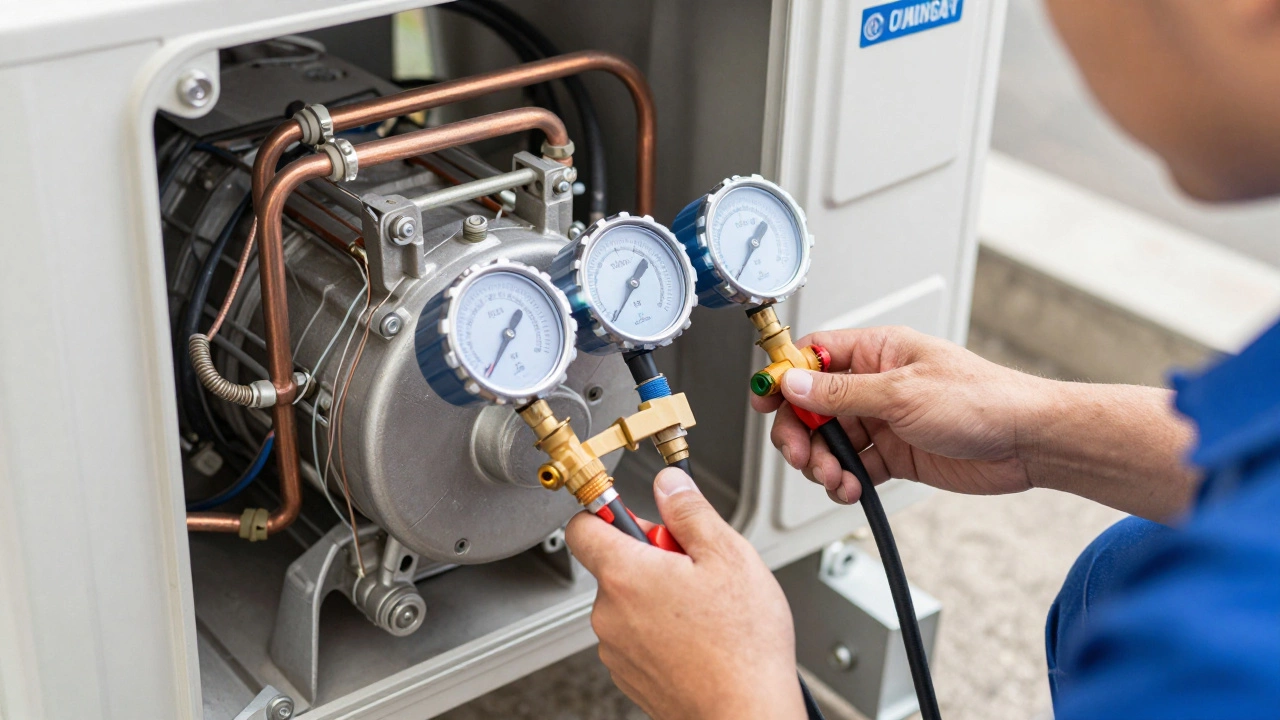
When a technician rolls up to your driveway, they aren't just charging for the part they swap out. You're paying for specialized knowledge. Heat pumps rely on Refrigerant, a chemical fluid that transfers heat. Handling this stuff requires a specific license because it's hazardous to the environment if leaked. If your system has a leak, the technician can't just "top it off"; they have to find the hole, seal it, and then recharge the system. That's where labor costs start to climb.
Another factor is the age of your unit. If you have an older system using R-22 Refrigerant, you're in for a shock. R-22 has been phased out globally due to environmental regulations, making the remaining stock incredibly expensive. Modern systems use R-410A or newer low-GWP alternatives, which are much more affordable to source.
Common Problems and Their Price Tags
Not every breakdown is a catastrophe. Many heat pump issues are electrical. For instance, a Capacitor-the small component that gives the motor a jump-start-often fails. Replacing one usually takes less than an hour and is one of the most affordable fixes in the book. On the flip side, if your Compressor dies, you're looking at the heart of the machine. This is the most expensive part to replace and often leads homeowners to wonder if they should just replace the whole unit instead.
| Component | Average Cost (USD) | Difficulty/Time | Typical Symptom |
|---|---|---|---|
| Capacitor | $150 - $300 | Low | Unit won't start / Humming sound |
| Fan Motor | $300 - $700 | Medium | Loud screeching or no airflow |
| Refrigerant Recharge | $200 - $600 | Medium | Poor heating/cooling performance |
| Reversing Valve | $500 - $1,200 | High | Wrong temperature (AC when heating) |
| Compressor | $1,500 - $3,000 | Very High | Complete system failure |
The "Repair vs. Replace" Dilemma
How do you know when to stop spending money on a dying system? A good rule of thumb is the 5,000 Rule: multiply the age of the unit by the cost of the repair. If the total is more than $5,000, it's usually time to buy a new one. For example, if your 12-year-old unit needs a $600 repair, you're at $7,200. At that point, you're putting money into a machine that's likely to fail again soon. Newer units are far more efficient, meaning the monthly savings on your electricity bill can actually help pay for the new installation over time.
You should also consider SEER Ratings. SEER stands for Seasonal Energy Efficiency Ratio. If your old unit has a SEER of 10 and a new one has a 18, you're cutting your energy consumption significantly. In a climate like Adelaide, where summers are brutal, that efficiency isn't just a bonus-it's a necessity for your wallet.
Preventing Expensive Surprises
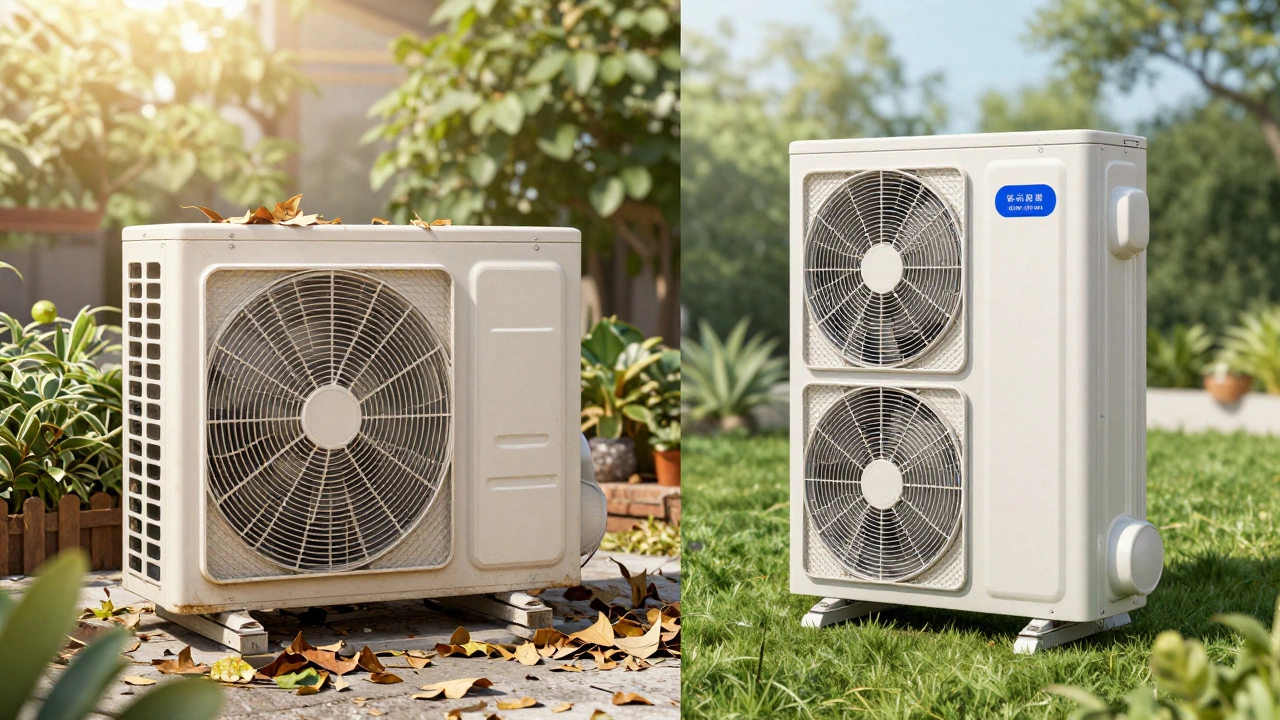
The best way to avoid a $2,000 bill is to spend $200 a year on maintenance. Most people ignore their outdoor unit until it stops working, but a bit of proactive care goes a long way. Dirt, leaves, and grass clippings can clog the coils, forcing the compressor to work twice as hard to move the same amount of heat. This extra strain wears down the motor and leads to premature failure.
Here is a quick checklist you can do yourself before calling a pro:
- Check your air filters-clogged filters are the #1 cause of system freeze-ups.
- Clear a 2-foot perimeter around your outdoor unit.
- Check your circuit breaker to ensure the unit hasn't simply tripped a switch.
- Inspect the outdoor coils for visible debris or ice buildup.
If you notice the unit is "short cycling" (turning on and off every few minutes), don't just ignore it. This is a sign that something is wrong with the Thermostat or a sensor. Catching a short cycle early can prevent the compressor from burning out, saving you thousands in the long run.
Navigating the Repair Process
When you call a technician, ask for a flat diagnostic fee. Some companies charge a high "trip fee" just to show up, while others include the first hour of labor in the diagnosis. Be wary of quotes that seem too low; heat pump repair often requires specialized vacuum pumps to remove moisture from the lines before adding refrigerant. If a tech says they can "just pump it in" without a vacuum, they're cutting corners that will kill your compressor within a few years.
Always ask for a written warranty on both the part and the labor. A reputable HVAC company should give you at least a one-year warranty on any major component they install. If they won't guarantee their work, find someone else. The cost of a slightly more expensive, certified technician is always lower than the cost of paying twice for the same job.
Why is my heat pump repair so expensive compared to a gas furnace?
Heat pumps are more complex. A furnace simply burns fuel to create heat, but a heat pump uses a compressor, a reversing valve, and chemical refrigerants to move heat. There are more moving parts and a higher level of technical expertise required to handle the sealed refrigerant system, which drives up the labor cost.
Can I fix a heat pump myself?
You can handle basic tasks like changing filters, cleaning the outdoor coils with a garden hose, and checking breakers. However, you should never attempt to fix the electrical wiring or touch the refrigerant lines. Working with refrigerants without a license is illegal in many regions and can be dangerous to your health and the environment.
How long does a typical heat pump repair take?
Simple electrical fixes like replacing a capacitor can be done in 30 to 60 minutes. A refrigerant recharge or fan motor replacement usually takes 2 to 4 hours. A full compressor replacement is a major job that can take a whole day or more, as it involves welding pipes and vacuuming the system.
Will a new heat pump actually save me money?
Yes, if your current system is more than 10-15 years old. Modern units have much higher energy efficiency ratings (SEER and HSPF), which significantly lowers your monthly power bill. Additionally, many governments offer tax credits or rebates for installing energy-efficient heat pumps, which can offset the initial purchase price.
What is a reversing valve and why is it expensive?
The reversing valve is the component that allows a heat pump to switch between heating and cooling modes. It's a complex piece of hardware that must be brazed (welded) into the copper lines of the system. Because it requires a technician to cut and weld pipes and then evacuate all air from the system, the labor cost is much higher than a simple part swap.
Next Steps for Homeowners
If your system is acting up, start by checking your filters and the outdoor unit for blockages. If those are clear and the system still isn't heating, call a licensed HVAC professional for a diagnostic visit. Be sure to have your system's model number and age ready, as this helps the technician bring the right parts on the first trip. If you're faced with a repair bill exceeding 50% of the cost of a new system, ask for a quote on a full replacement to see if the energy savings make it the smarter financial move.