Oven Element Resistance Tester
Test your oven element's resistance with a multimeter. A working element typically shows between 20 and 120 ohms. Enter your measurement below:
Important: Always unplug your oven or turn off the circuit breaker before testing. For best results, remove the element from the oven before measuring.
If your oven won’t heat up, or it’s taking forever to cook food, the problem might be simpler than you think. More often than not, it’s not the thermostat, the control board, or some mysterious electrical glitch-it’s just the heating element. The oven element is the part that glows red when the oven turns on. If it’s broken, your oven won’t get hot enough-or at all. And yes, you can check it yourself without calling a technician.
What does a working oven element look like?
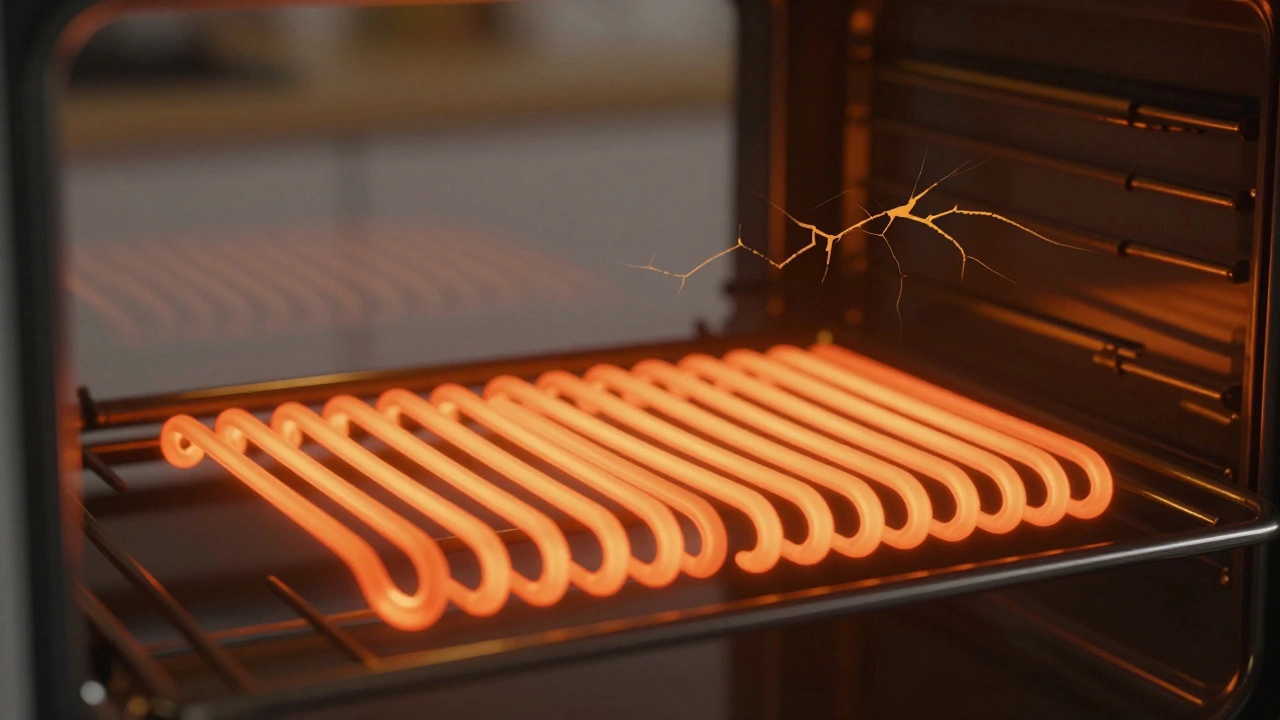
When your oven is on and set to bake or roast, the bottom element (and sometimes the top one for broil) should glow a bright orange-red. It doesn’t need to glow evenly across the whole coil, but you should see clear, consistent heat lines. If you turn the oven on and see nothing but darkness inside, that’s your first red flag.
Some people think a dim glow or a flicker means it’s still working. It doesn’t. A weak or patchy glow means the element is failing. It’s like a lightbulb that’s about to die-sometimes it works, sometimes it doesn’t. You can’t trust it.
Check for visible damage
Turn off the oven and unplug it-or better yet, shut off the circuit breaker. Safety first. Once it’s cool, open the oven door and take a close look at the element. Look for:
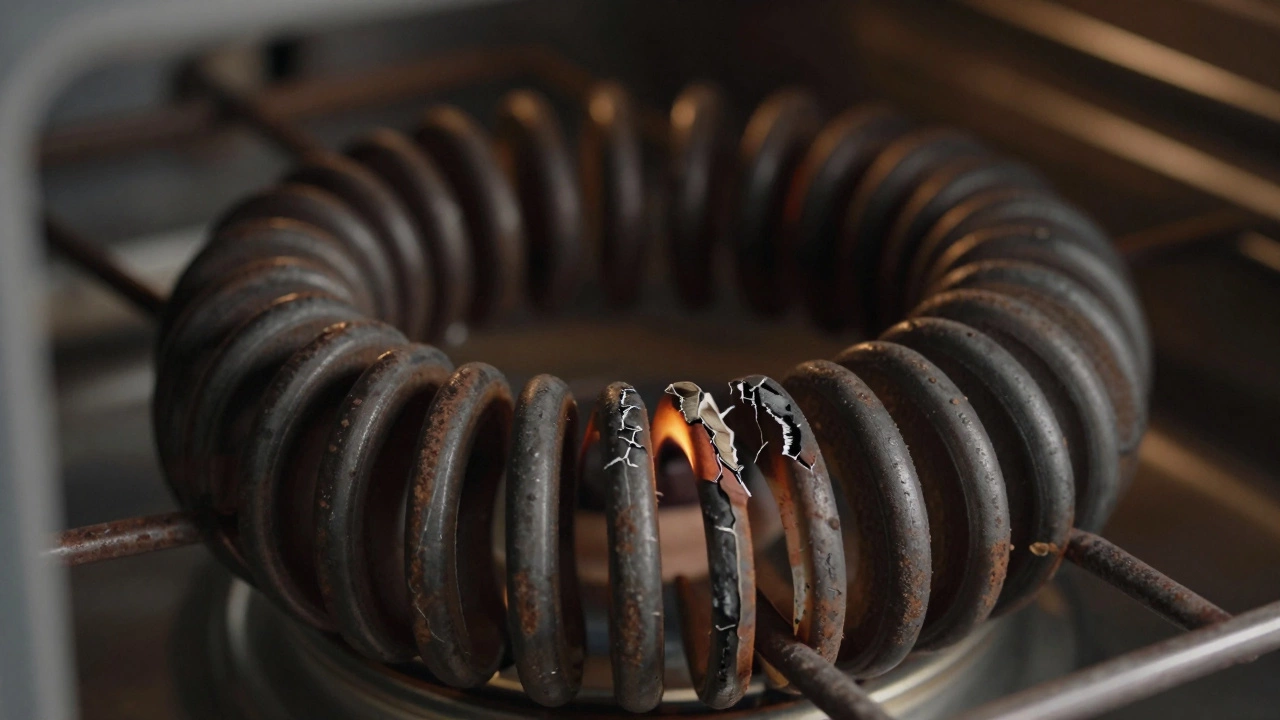
- Cracks or breaks in the metal coil
- Blistered or bubbled areas
- Sections that look burnt, melted, or disconnected
- Loose or detached wires at the ends
Even a tiny crack can stop the electricity from flowing properly. If you see any of these signs, the element is done. No need to test further. You’ll need to replace it.
Some elements look fine to the eye but are still broken internally. That’s where a multimeter comes in.
Test the element with a multimeter
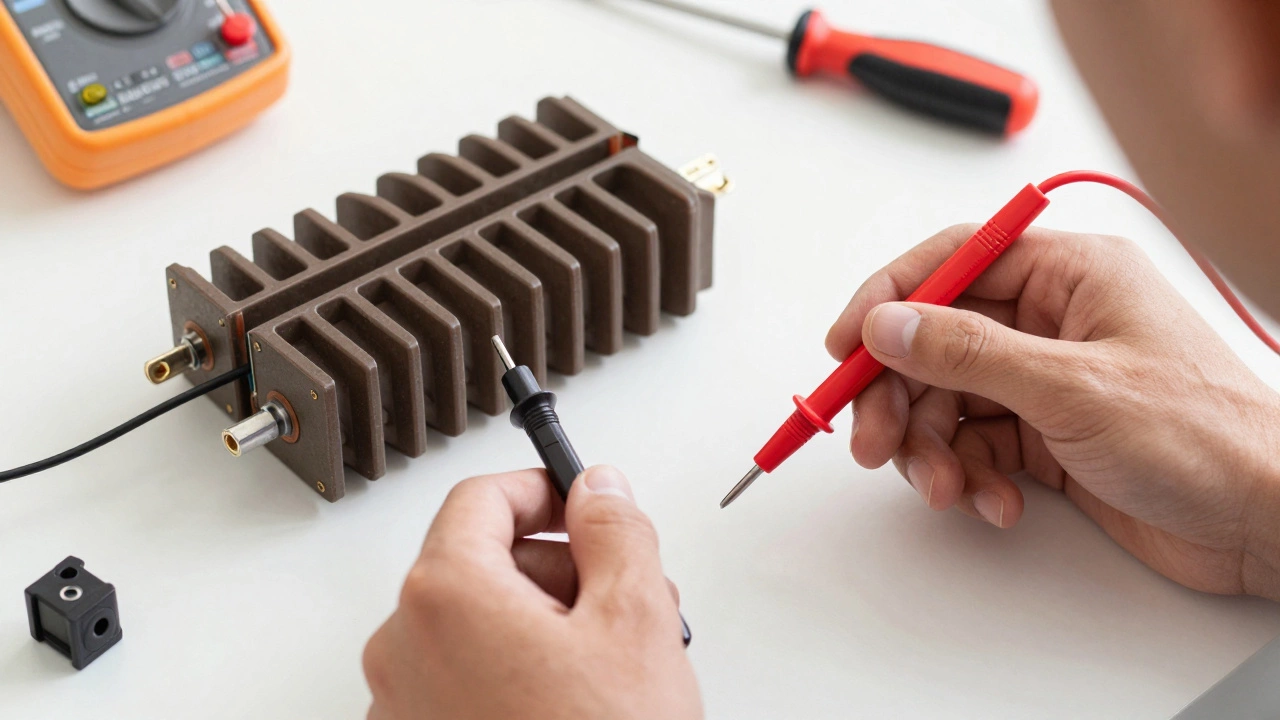
You don’t need to be an electrician to use a multimeter. A basic one costs under $20 at any hardware store. Here’s how to do it:
- Unplug the oven or turn off the circuit breaker.
- Remove the element. Usually, you just unscrew two bolts at the back and pull it out slightly. You don’t need to disconnect wires unless they’re in the way.
- Set your multimeter to the lowest ohms (Ω) setting.
- Touch one probe to each metal terminal on the element.
If the multimeter reads between 20 and 120 ohms, the element is fine. That’s normal resistance for a working heating element. If it shows OL (open loop) or 0, the element is broken. OL means no continuity-electricity can’t flow. Zero means a short circuit. Either way, it’s dead.
Some people test while the element is still in the oven. Don’t. You’ll get a false reading because the circuit includes other parts. Always test the element removed from the oven.
Why does an oven element break?
Heating elements don’t last forever. They’re made of metal that expands and contracts every time you turn the oven on and off. Over time, that stress causes tiny cracks. In homes with hard water or high humidity, mineral buildup can speed up corrosion. In older ovens (10+ years), it’s just normal wear and tear.
Other things can kill an element faster:
- Spills that drip down and cause rust
- Using the self-clean function too often
- Accidentally poking the element with a metal utensil
- Power surges from faulty wiring
If your element broke after a power outage or a storm, it might not be the element’s fault-it could be your home’s electrical system. But that’s a separate issue.
What if the element tests fine but the oven still doesn’t heat?
Then the problem is somewhere else. The most common culprits are:
- Thermostat - If it’s not reading the temperature right, the oven won’t turn the element on properly.
- Thermal fuse - A safety device that cuts power if the oven overheats. If it’s blown, the element won’t get power.
- Control board - The brain of the oven. If it’s faulty, it won’t send the signal to turn on the element.
- Wiring - Loose or burnt wires between the element and the control panel.
Replacing the thermostat or control board is trickier. Those parts often need programming or calibration. If your element tests good but the oven still won’t heat, you might need a professional.
How much does it cost to replace an oven element?
A new oven element usually costs between $30 and $80, depending on your oven model. Labor if you hire someone? Around $150-$250. But here’s the thing-you can do it yourself in under an hour.
Most elements are easy to swap. Just take the old one to a hardware store or order the exact replacement online using your oven’s model number. You’ll find it on a sticker inside the oven door or on the back. Match the shape, length, and terminal positions. Don’t guess.
Once you have the new one, plug it in, screw it back in, turn the power on, and test it. If it glows red within 30 seconds, you fixed it.
When should you call a professional?
You don’t need to call someone just because the oven isn’t heating. But you should if:
- You smell burning plastic or see smoke
- The circuit breaker trips every time you turn the oven on
- You’re not comfortable working with electrical parts
- The element tests fine but nothing else works
Smoke or tripped breakers mean something dangerous is happening. Don’t risk it. Call a certified appliance repair tech. Same if you’re unsure about wiring. Electricity doesn’t forgive mistakes.
How to prevent future element failures
Once you replace the element, you can make it last longer:
- Avoid splashing water or grease into the bottom of the oven
- Use oven-safe cookware-no metal racks scraping the element
- Don’t use the self-clean cycle more than twice a year
- Keep the oven clean but don’t scrub the element
- Check your home’s voltage. If it’s over 250V, ask an electrician to install a surge protector
Most people don’t realize that a dirty oven puts extra strain on the element. Grease buildup insulates the heat, making the element work harder and overheat faster.
How long do oven elements usually last?
Most oven elements last between 5 and 10 years, depending on usage. If you bake daily or use the self-clean function often, they may fail sooner. In households with light use, some elements last 15 years or more.
Can I run my oven with a broken element?
No. A broken element won’t heat properly, and if it’s damaged internally, it could cause a short circuit or fire. Even if the oven turns on, don’t use it. Turn it off and replace the element before cooking again.
Why does only the top element work but not the bottom?
That’s a classic sign of a failed bottom element. The top element is usually only used for broiling. If the bottom element is broken, you’ll still get heat from the top-but not enough for baking or roasting. The oven’s control board might be sending power to the top only, which is normal behavior. The issue is the bottom element, not the board.
Is it worth replacing the element or should I buy a new oven?
If your oven is less than 10 years old and otherwise works fine, replacing the element is almost always worth it. A new element costs less than 10% of a new oven. But if you have multiple problems-faulty controls, rusted interior, broken door seal-it might be time to upgrade.
Do all ovens have the same type of element?
No. Elements vary by brand, model, and age. Some are flat, some are tubular. Some have two terminals, others have three. Always match the part number from your old element or your oven’s manual. Using the wrong one can cause damage or not fit at all.
Next steps if your element is broken
First, confirm the diagnosis. Check for visible damage. Test with a multimeter. If it’s bad, order the replacement part. Most online retailers ship within 2-3 days in Australia. While you wait, use your stovetop for cooking. Once the new element arrives, follow the simple steps above to swap it out. You’ll save money, learn something useful, and get your oven working again without waiting for a technician.
If you’ve tried all this and the oven still doesn’t heat, the issue is likely deeper-wiring, fuse, or control board. At that point, call a certified appliance repair service. But for 9 out of 10 cases, the problem is just the element. And that’s an easy fix.