Fix It or Replace It? Cooker Repair Calculator
Use this tool to apply the "50% Rule" and consider appliance age to make a smart financial decision about your broken cooker.
Enter Your Details
Recommendation
Reasoning
Enter your repair costs and appliance details above to get a personalized recommendation.
You’re standing in your kitchen, staring at a cold oven or a burner that won’t spark. The first thought is usually panic: “Is my cooker dead?” The second thought is worse: “Do I have to buy a whole new one right now?” Here is the good news. In most cases, yes, a cooker can be repaired. Appliances are not disposable items like paper plates. They are complex machines made of replaceable parts. Whether you have a gas range, an electric induction hob, or a built-in double oven, the vast majority of failures are due to a single faulty component, not total system collapse.
The 50% Rule and Other Decision Criteria
Before you call a technician, you need a strategy for deciding whether to fix or toss. The most common heuristic used by home economists and repair professionals is the "50% Rule." If the cost of the repair (parts plus labor) exceeds 50% of the price of a brand-new equivalent model, replacement is often the smarter financial move. But this rule isn’t absolute. It ignores the hidden costs of buying new, such as disposal fees, installation charges, and potential cabinetry modifications if your new unit doesn’t fit the existing cutout.
Consider the age of the appliance. A gas cooker with a lifespan of 15 years that breaks down in year 14 is different from one breaking down in year 3. If your unit is under five years old, it likely still has significant life left. Repairing it protects your initial investment. If it’s over ten years old, you are fighting against general wear and tear on seals, hinges, and insulation. At that stage, minor repairs might just delay the inevitable major failure.
| Scenario | Recommended Action | Reasoning |
|---|---|---|
| Faulty element or thermostat | Repair | Parts are cheap ($50-$150 AUD); restores full function. |
| Cracked glass door | Replace | Glass panels are expensive; risk of further breakage during install. |
| Control board failure (older model) | Replace | Boards are costly; obsolete parts may be hard to source. |
| Minor scratch or dent | Ignore/Repair | Cosmetic only; does not affect performance. |
| Rusted interior cavity | Replace | Rust spreads; affects heat retention and hygiene. |
Common Faults That Are Easy Fixes
Not all breakdowns are catastrophic. Many common issues are quick fixes that even a handy homeowner could diagnose, though we always recommend professional handling for electrical components. One of the most frequent complaints is an oven that doesn’t heat up. This is rarely a sign of death. It is almost always a failed heating element or a blown thermal fuse. A heating element is essentially a resistor that gets hot when electricity flows through it. Over time, the coil can burn out. Replacing it takes about 30 minutes and costs significantly less than a new oven.
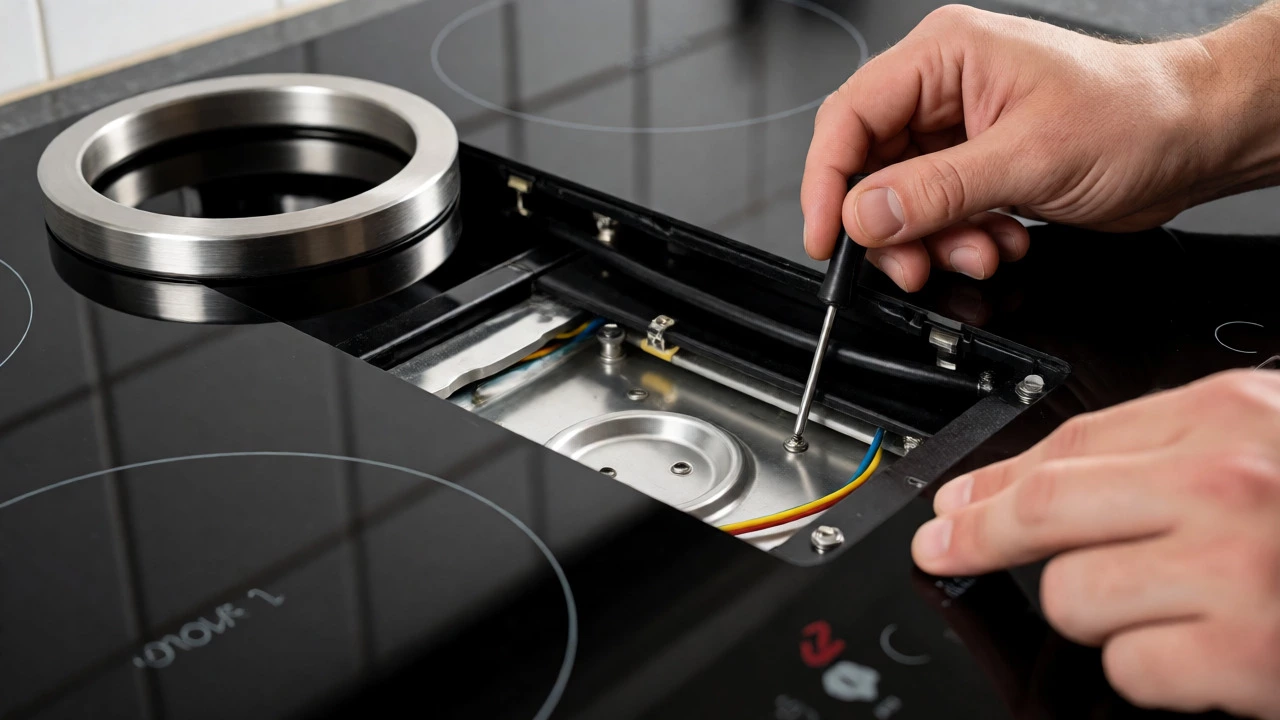
Another classic issue involves the electric hob, specifically induction cooktops. If a zone stops working, it might not be the zone itself. Induction hobs rely on sensors to detect ferrous cookware. Sometimes, the issue is simply a dirty sensor or a software glitch that requires a hard reset. Unplugging the unit for five minutes can sometimes clear error codes that look like hardware failures. For gas cookers, ignition problems are top of the list. If your clicker clicks but the flame doesn’t light, check the igniter electrode. Food debris and grease can block the spark gap. Cleaning it with a toothbrush often solves the problem instantly. If cleaning doesn’t work, the igniter switch itself may need replacing, which is a standard, low-cost part.
When Replacement Is the Only Option
There are scenarios where repair is technically possible but practically foolish. Structural damage is one. If the outer casing of your cooker is severely rusted or warped, no amount of internal part swapping will make it safe or efficient. Rust compromises the insulation between the hot inner cavity and the cool exterior, creating a fire hazard. Similarly, if the enamel inside the oven cavity is chipped extensively, moisture can get behind the metal lining, leading to rapid corrosion. You cannot repaint high-heat oven enamel effectively at home; it requires industrial baking processes.
Proprietary technology also complicates things. Some high-end European brands use integrated electronics where the timer, clock, and oven control are all on one expensive circuit board. If this board fails on a ten-year-old machine, the part alone might cost $400-$600. Add labor, and you’re nearing the price of a mid-range new cooker. Furthermore, if your cooker uses discontinued parts, you might find yourself unable to source them. Manufacturers typically support models for seven to ten years. After that, you’re scavenging eBay or using generic substitutes, which can be risky for safety-critical components like gas valves.
DIY Safety Checks Before Calling a Pro
Before you spend money on a service call, do a few basic checks. Safety is paramount. Never attempt to repair a gas leak yourself unless you are qualified. However, checking simple electrical connections is fine. Ensure the cooker is plugged in securely. Check your home’s circuit breaker box. It’s surprisingly common for a heavy-duty appliance to trip a breaker, especially if other high-draw appliances (like a kettle or microwave) were running simultaneously. Resetting the breaker might bring your oven back to life.
For ovens, check the door seal. A torn rubber gasket lets heat escape, causing the oven to run cooler than set and making the fan work harder. This strain can lead to premature fan motor failure. Inspect the seal visually. If it’s cracked or detached, replacing it is a cheap DIY job that improves efficiency immediately. Also, clean the oven vents. Blocked vents cause overheating, triggering the thermal cut-out switch. Letting the oven cool down and clearing debris from the back grille can reset the system without any tools.
The Cost Reality in Adelaide
Living in Adelaide, you have access to a robust network of appliance technicians. Labor rates generally hover around $100 to $150 per hour for a call-out and diagnostic fee. Parts vary wildly. A simple thermostat might cost $30, while a specialized convection fan motor could be $150. When you add these up, a typical repair bill lands between $200 and $400. Compare this to a new entry-level freestanding cooker, which starts around $800-$1,200. Built-in units are pricier, often starting at $1,500 plus installation. If your repair quote is near $400, weigh it carefully against the age of your unit. If your cooker is older than eight years, that $400 might be better saved toward a new purchase, especially given the energy efficiency gains of modern models.
Modern appliances are designed to be more energy-efficient. An old oven might lose 20% of its heat through poor insulation. A new model recycles that heat better, lowering your electricity bill. Over five years, those savings can offset a portion of the replacement cost. So, when asking "can a cooker be repaired," the answer is yes, but "should it be" depends on long-term value, not just immediate functionality.
Frequently Asked Questions
How long do cookers typically last?
Most cookers have a lifespan of 10 to 15 years. Gas ranges often last longer than electric ones because they have fewer electronic components. Regular maintenance, such as cleaning spills promptly and checking seals, can extend this life significantly.
Is it worth repairing an old oven?
It depends on the fault. If it is a simple part like a hinge, handle, or heating element, yes. If the main control board or digital display fails on a unit over 10 years old, it is usually not worth it due to high part costs and availability issues.
Can I fix a gas cooker myself?
You can clean burners and replace igniters if you are confident with tools. However, never attempt to repair gas lines, valves, or regulators yourself. Gas leaks are dangerous and require a licensed plumber or gas fitter to ensure compliance with Australian safety standards.
Why is my electric hob not turning on?
First, check if the child lock is activated. Next, inspect the power supply and circuit breaker. If those are fine, the issue could be a faulty interface panel or a blown internal fuse. These require professional diagnosis and replacement.
Does a warranty cover cooker repairs?
Standard manufacturer warranties usually cover parts and labor for the first 12 months. Extended warranties may cover specific components like motors or boards for up to 5 years. Always check your receipt and warranty terms before paying for a repair out of pocket.