Microwave Repair vs Replacement Calculator
Cost Analysis Tool
Enter values to see if repairing makes financial sense
Important Safety Note
Never attempt microwave repairs yourself. Microwaves store lethal high-voltage electricity even when unplugged. Professional repairs only.
Every kitchen has one. It heats your coffee in 30 seconds, defrosts your chicken in minutes, and saves your dinner when you’re running late. But when it starts sparking, humming strangely, or just stops working altogether, you’re left with a tough choice: fix it or toss it. And honestly? Most people just buy a new one. But is that really the smartest move?
How much does a microwave repair actually cost?
In Adelaide, a basic microwave repair starts at $80-$120 for a service call and diagnostic. That’s not including parts. If the magnetron-the heart of the microwave-is blown, you’re looking at $150-$220 for the part alone. Labour adds another $70-$100. So even a simple fix can easily hit $250. Compare that to a new mid-range microwave: $150-$200. Suddenly, the math looks bad.
But here’s what most repair shops won’t tell you: not all microwaves are equal. A $120 model from a discount store? Probably not worth fixing. But a built-in over-the-range unit from a brand like Panasonic or Sharp? That one’s different. Those often cost $500+ to replace. And if it’s part of your cabinetry? Replacing it means new holes, new trim, new venting. Suddenly, a $200 repair doesn’t seem so steep.
What parts actually break-and can they be fixed?
Most microwave failures come down to three things: the door switch, the high-voltage diode, or the magnetron. Let’s break them down.
- Door switch: This is the most common issue. If the microwave won’t start, or it turns off when you close the door, it’s usually a faulty door switch. These cost $15-$30 and are easy to replace. A skilled tech can fix this in under an hour. Worth fixing? Absolutely.
- High-voltage diode: This part helps convert electricity for the magnetron. If it fails, the microwave heats weakly or not at all. Parts cost $20-$40. Labour is moderate. Still a good candidate for repair.
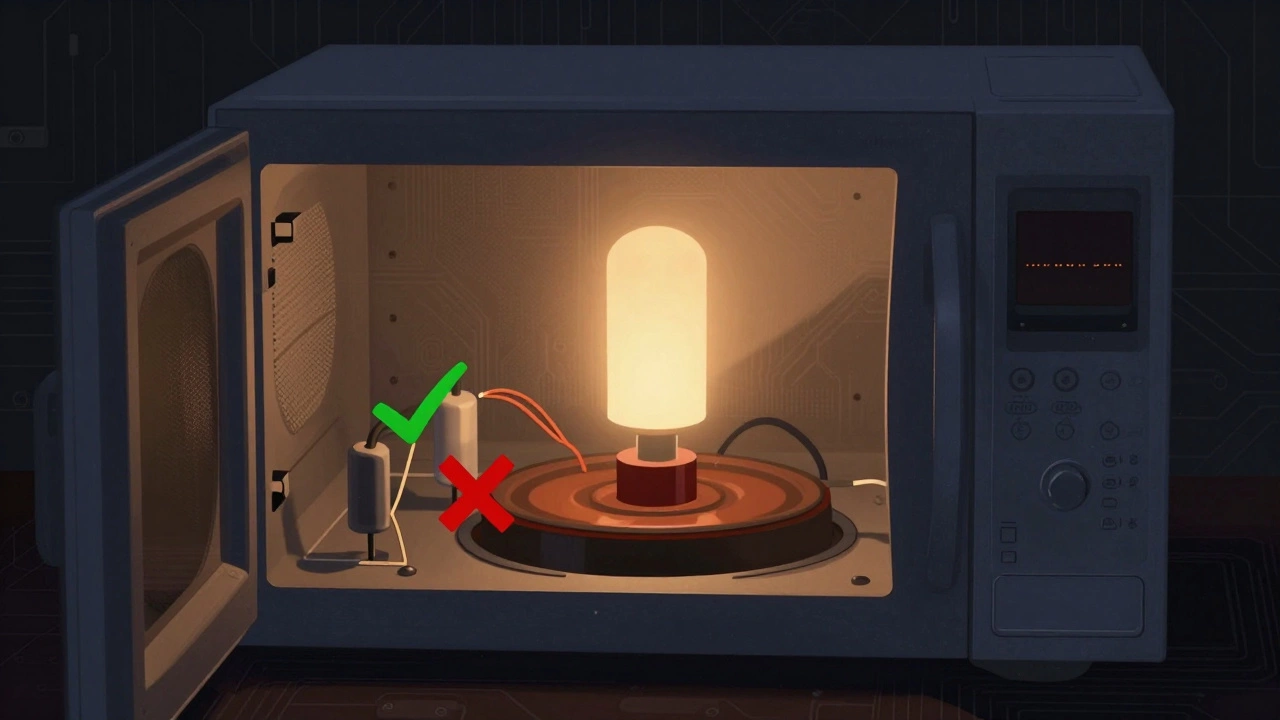
- Magnetron: This is the component that actually generates microwaves. If it dies, the oven is dead. Magnetrons cost $100-$180. Labour? Another $80-$120. Total? Often more than a new microwave. Unless your unit is high-end or built-in, this is usually the death knell.
There’s also the turntable motor, control panel, or fuse-but those are rarer. If your microwave is over 8 years old, it’s likely hitting the end of its natural life. Most manufacturers rate microwaves for 7-10 years of daily use. After that, components wear out faster.
When repair makes sense
Here’s the real rule: if your microwave is less than 5 years old and the repair cost is under half the price of a new one, fix it. That’s the sweet spot.
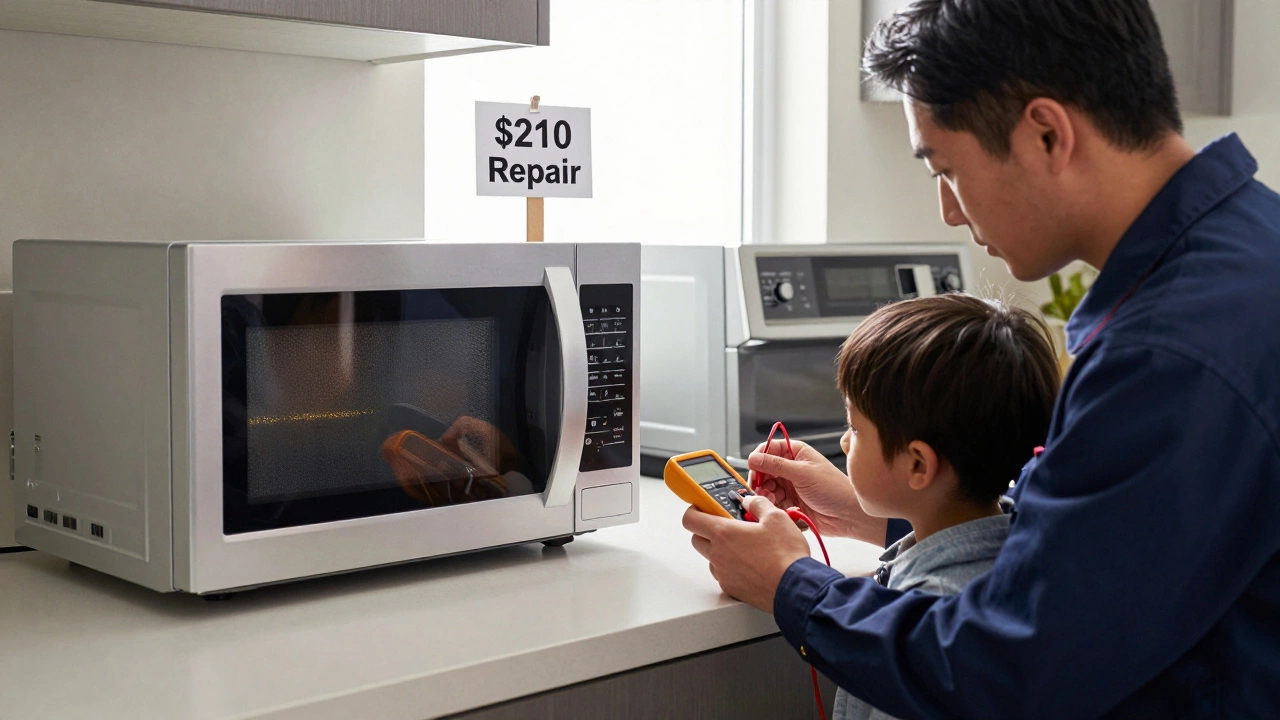
Take this real example from a customer in Norwood: a 4-year-old Sharp over-the-range microwave stopped heating. The magnetron was dead. Replacement unit? $680. Repair? $210. The customer kept it. Four years later, it’s still working. That’s a $470 savings.
Another case: a 2-year-old Panasonic with a broken door switch. $90 fix. New one? $220. No brainer.
Also consider:
- Is it built into your cabinetry? Replacing it means demolition, new measurements, new installation. That adds $300-$800 in labour.
- Do you have matching appliances? If your fridge, oven, and microwave are all from the same brand and colour, replacing one with a different model ruins the look.
- Are you environmentally conscious? Throwing away a still-functional microwave adds to landfill. Repairing extends its life-and reduces e-waste.
When to walk away
There are clear signs it’s time to replace, not repair:
- The microwave is older than 8 years.
- The repair quote is more than 60% of the price of a new one.
- You’ve already repaired it once in the last two years.
- The unit is sparking, smoking, or making loud arcing noises. These aren’t just breakdowns-they’re safety hazards.
- You’re shopping for a new kitchen soon. Why fix a microwave you’ll be replacing in 6 months?
Also, avoid repair shops that don’t offer a warranty. A reputable technician will guarantee their work for at least 30 days. If they won’t, they’re not confident in the fix.
What about DIY repairs?
YouTube makes it look easy. “Just unplug it, pop off the cover, swap the switch-done!” But microwaves store high-voltage electricity even when unplugged. The capacitor can hold a lethal charge for days. I’ve seen two techs in Adelaide hospitalised last year from DIY attempts. One guy tried replacing a fuse without discharging the capacitor. He got a 10,000-volt shock. He’s fine now. But he won’t touch another microwave again.
If you’re handy, you can safely replace the turntable motor or door switch-but only if you know how to discharge the capacitor. Most people don’t. And if you’re unsure? Don’t risk it. The cost of a hospital visit far outweighs the cost of a repair.
What’s the best replacement?
If you decide to replace, don’t just grab the cheapest one. Look for:
- Power output: 800-1000 watts for faster, even heating.
- Turntable size: At least 12 inches to fit standard plates.
- Interior material: Stainless steel or ceramic-coated. Avoid plastic interiors-they stain and warp.
- Warranty: At least 1 year. Some brands offer 2 years on parts.
- Features: Sensor cooking, inverter tech (for better defrosting), and child lock are worth the extra $20-$30.
Brands like Panasonic, Sharp, and LG consistently rank highest in reliability. Avoid no-name brands from discount retailers-they’re often built with cheaper parts and last less than 3 years.

Real-world decision tree
Here’s a quick guide to help you decide:
- Is the microwave over 8 years old? → Replace.
- Is the repair cost more than 60% of a new unit? → Replace.
- Is it sparking, smoking, or arcing? → Replace immediately.
- Is it built-in or part of a matched set? → Repair if under $200.
- Is it less than 5 years old with a simple fault (door switch, fuse)? → Repair.
One final tip: if you’re replacing, don’t just buy online. Bring the old one with you to the store. Measure the cutout. Check the venting. Test the door clearance. A microwave that looks right on paper might not fit your space. I’ve seen too many people return units because they didn’t measure properly.
Environmental impact
Every year, over 1.2 million microwaves are thrown out in Australia. Most end up in landfill. The circuit boards contain heavy metals. The plastic casing takes centuries to break down.
Repairing just one microwave saves roughly 15kg of CO2 emissions-equivalent to driving 60km in a car. It’s not just about saving money. It’s about saving the planet, one appliance at a time.
Is it safe to repair a microwave myself?
No, it’s not safe unless you’re trained. Microwaves store high-voltage electricity in capacitors-even when unplugged. A single mistake can give you a lethal shock. Replacing simple parts like door switches or turntable motors is possible, but only if you know how to safely discharge the capacitor. Most people don’t. Stick to professional repairs.
How long should a microwave last?
Most microwaves last between 7 and 10 years with regular use. Heavy daily use can shorten that to 5-6 years. Signs of aging include longer heating times, uneven cooking, strange noises, or sparks inside. If your microwave is over 8 years old, replacement is usually more cost-effective than repair.
Can a microwave be repaired if it sparks inside?
Sparking can mean a damaged waveguide cover, a faulty magnetron, or metal debris inside. If it’s just a small piece of foil or a metal utensil, cleaning it out might fix it. But if sparking continues after cleaning, it’s likely a serious internal fault. Continuing to use it risks fire or electrical damage. Turn it off, unplug it, and get it checked by a technician. Don’t risk it.
Why do some microwaves cost more to repair than to replace?
Cheap microwaves are built with low-cost, non-replaceable parts. The magnetron alone can cost $150, and labour adds another $100. A new $180 model often includes better features and a warranty. High-end or built-in models are different-they cost $500+ to replace, so a $200 repair makes financial sense. It’s not about the microwave-it’s about the value you’re getting.
Should I repair a microwave if it’s under warranty?
If your microwave is under warranty, contact the manufacturer first. Most brands offer free repairs or replacements within the warranty period. Don’t pay a third-party technician unless the manufacturer says you can. Always check your warranty terms-some exclude damage from power surges or improper use.
Final thought
There’s no universal answer. Some microwaves are disposable. Others are worth saving. The key is knowing which one you have. Don’t just guess. Check the age. Check the cost. Check the damage. And if you’re still unsure? Get a quote. A reputable repair shop will give you a free diagnosis. Use that info to make the smart choice-not the quick one.