If your tumble dryer is running but the drum isn’t spinning, you’re not alone. It’s one of the most common complaints we see in Adelaide homes, especially with older models. The dryer heats up, the timer ticks down, and you hear the motor hum - but clothes come out damp because the drum never turns. This isn’t just an inconvenience. It’s a waste of time, energy, and money. The good news? Most of the time, this isn’t a total failure. It’s usually one of five simple things gone wrong, and you can fix it yourself without calling a technician.
The Drive Belt Is Broken or Slipped
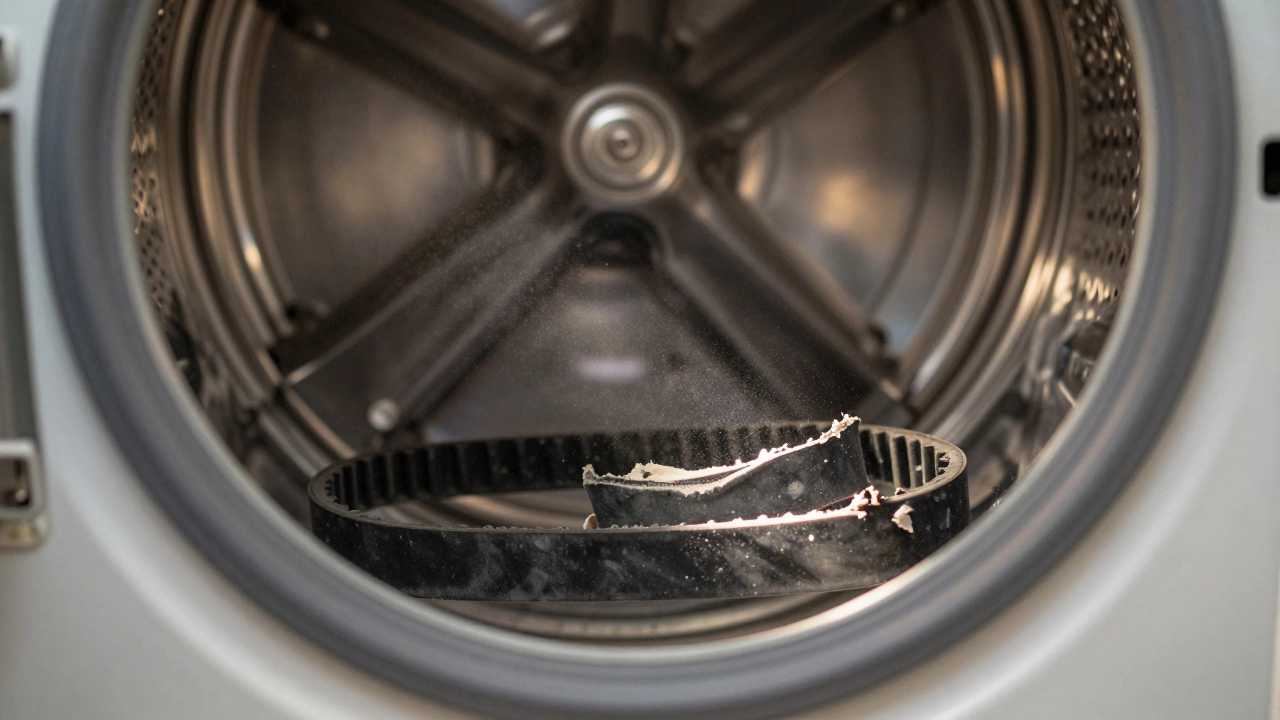
The most common reason a tumble dryer drum won’t spin is a broken or slipped drive belt. This rubber belt wraps around the drum and connects to the motor pulley. When it snaps or comes off track, the motor spins but the drum doesn’t move. You’ll often hear a loud squealing or thumping noise before it stops completely.
Most tumble dryers use a single-loop belt. To check it, unplug the dryer, remove the front panel (usually held by two or three screws), and look inside. If the belt is snapped, frayed, or lying loose on the floor of the cabinet, that’s your culprit. Replacement belts cost around $20-$35 and are easy to install. You don’t need to be a mechanic - just follow the routing diagram printed on the inside of the dryer’s casing. Make sure the belt is snug and seated properly in the groove of the drum and the motor pulley. A loose fit means it’ll slip again.
The Drum Rollers Are Worn Out
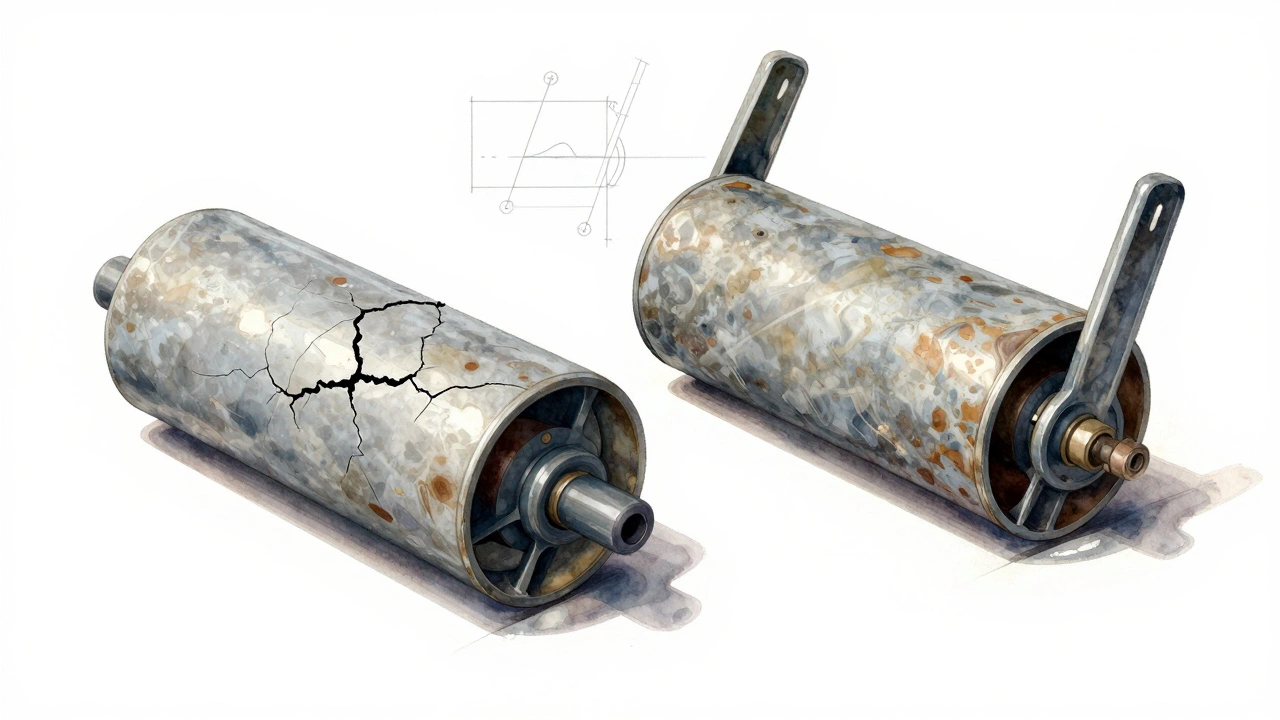
Behind the drum, there are two or three plastic or metal rollers that support its weight and let it spin smoothly. Over time, these wear down from constant friction and heat. When they crack, flatten, or seize up, the drum drags. The motor might still run, but it can’t overcome the extra resistance. You’ll notice the dryer is louder than usual - a grinding or rumbling sound instead of a smooth hum.
To check the rollers, you’ll need to remove the drum. This takes a bit more work than checking the belt. Unplug the dryer, disconnect the vent hose, and remove the top and front panels. Slide the drum forward and lift it out. Inspect each roller. If any look cracked, melted, or don’t spin freely when you twist them by hand, replace them. Most dryer repair kits include all three rollers and the idler pulley. Replacing them together prevents future issues. Don’t reuse old rollers - even if one looks fine, the others are likely near failure.
The Idler Pulley Has Failed
The idler pulley is a small wheel that presses the drive belt tight against the motor pulley. Think of it like the tensioner on a bicycle chain. If it breaks, the belt goes slack and can’t turn the drum. This is often paired with a worn belt, so if you’re replacing one, check the other.
The idler pulley is usually located near the motor, under the belt. If it’s cracked, wobbly, or doesn’t rotate smoothly, it’s done. A bad idler can also cause the belt to wear unevenly or slip off entirely. Replacement is simple: unclip the old one, snap in the new one, and rethread the belt. Most models use a standard 1-inch diameter pulley. Check your model number before ordering - some older brands like Hotpoint or Whirlpool use slightly different sizes.
The Motor Is Failing (But Not Dead)
If the belt, rollers, and idler are all good, the problem might be the motor. But here’s the catch: the motor might still run - it just doesn’t have enough torque to turn the drum. This happens when the windings inside the motor weaken from heat or age. You’ll hear the motor buzzing or clicking, but the drum stays still. Sometimes, the dryer spins for a few seconds then stops. That’s a classic sign of a motor struggling under load.
Testing the motor isn’t as simple as checking a belt. You need a multimeter to measure resistance in the windings. If the readings are outside the range listed in the manual (usually between 5-20 ohms), the motor is failing. Most home repairers avoid this step because replacing the motor costs $100-$180 - nearly half the price of a new dryer. But if your unit is under five years old and otherwise in good shape, it’s worth it. Newer dryers are more energy-efficient, but not always better built.
The Drum Is Blocked or Overloaded
Before you start pulling apart your dryer, rule out the simplest fix: too much laundry. Overloading the drum puts too much pressure on the motor and belt. Even if the belt is intact, it can’t turn a packed drum. Try running a small load - just two towels. If it spins fine, you’ve found your issue.
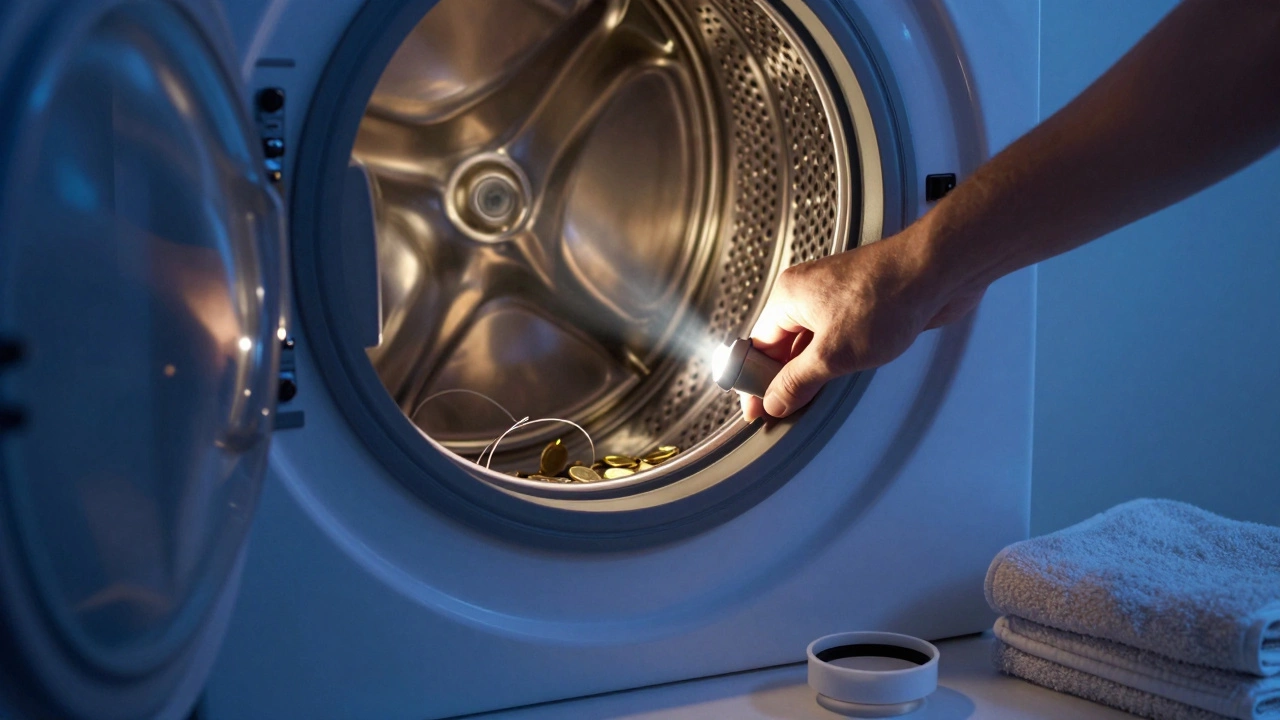
Also check for foreign objects. Coins, buttons, or bra wires can get lodged between the drum and the casing. This creates friction that stops the drum from turning. Remove the lint filter and look inside the drum opening. Use a flashlight. If you see something stuck, turn the drum by hand to free it. Never force it. A jammed object can damage the bearings or even crack the drum.
What to Do If Nothing Works
If you’ve checked the belt, rollers, idler, motor, and load size - and the drum still won’t spin - there are two other possibilities. One is a faulty capacitor on the motor (common in some European models). The other is a broken drum shaft or bearing. Both require professional tools and parts. In Australia, replacement drums are rarely sold separately. If the shaft is cracked, you’re better off replacing the whole unit.
Before you give up, check the warranty. Many dryers come with 5-10 year parts warranties. Even if you bought it secondhand, the warranty might still be active. Look for the model number on the back panel or inside the door. Search online for the manufacturer’s warranty policy. You might get a free repair.
Prevention Tips
Once you fix it, avoid a repeat. Here’s what works:
- Don’t overload the drum. Fill it ¾ full, not packed.
- Clean the lint filter after every load. A clogged filter makes the motor work harder.
- Check the vent hose every 3 months. A kinked or blocked hose traps heat and stresses the system.
- Use the correct heat setting. High heat for heavy fabrics, low for delicates. Constant high heat wears out belts and motors faster.
- Replace the belt and rollers every 5-7 years as preventive maintenance, even if they look fine.
Why does my tumble dryer make a loud noise but not spin?
A loud noise with no drum movement usually means the drive belt is broken or slipped. It can also be worn drum rollers or a failed idler pulley. The motor runs, but the belt can’t transfer power to the drum. Check the belt first - it’s the easiest and most common fix.
Can I run my dryer if the drum isn’t spinning?
No. Running a dryer without the drum spinning can overheat the motor, damage the heating element, or even cause a fire. The clothes aren’t tumbling, so heat builds up in one spot. Unplug the dryer and fix the issue before using it again.
Is it worth repairing a 10-year-old tumble dryer?
If the cost of repair is under 50% of a new model’s price, yes. A new dryer costs $600-$1,200. Belt and roller replacements cost under $50. Even if you pay for parts and labor, you’re saving money. But if the drum is cracked or the motor is failing, replacement is smarter. Older dryers also use more electricity - you’ll save on bills long-term.
What tools do I need to fix a tumble dryer myself?
You’ll need a screwdriver set (Phillips and flathead), a multimeter (for motor testing), and a flashlight. For replacing parts, a pair of pliers and gloves help. Most repairs don’t require special tools. You can buy replacement belts and rollers online using your dryer’s model number. Local appliance shops in Adelaide often stock common parts.
Why does my dryer spin on some settings but not others?
This usually points to a weak motor or a failing capacitor. Some settings use lower heat and slower spin speeds, which might still work. Higher heat or faster cycles demand more power - and if the motor is failing, it can’t handle the load. Test the motor with a multimeter or replace the capacitor if your model has one.