If your dishwasher has stopped doing its job, you’re not alone. Nearly 65% of dishwasher repairs nationwide are caused by one single issue: drainage problems. It’s the silent killer of clean dishes. You load the machine, hit start, and hear the usual hum-but when the cycle ends, the dishes are still grimy, or worse, sitting in a puddle of soapy water. That’s not a coincidence. It’s almost always the same thing failing.
Why Drainage Keeps Failing
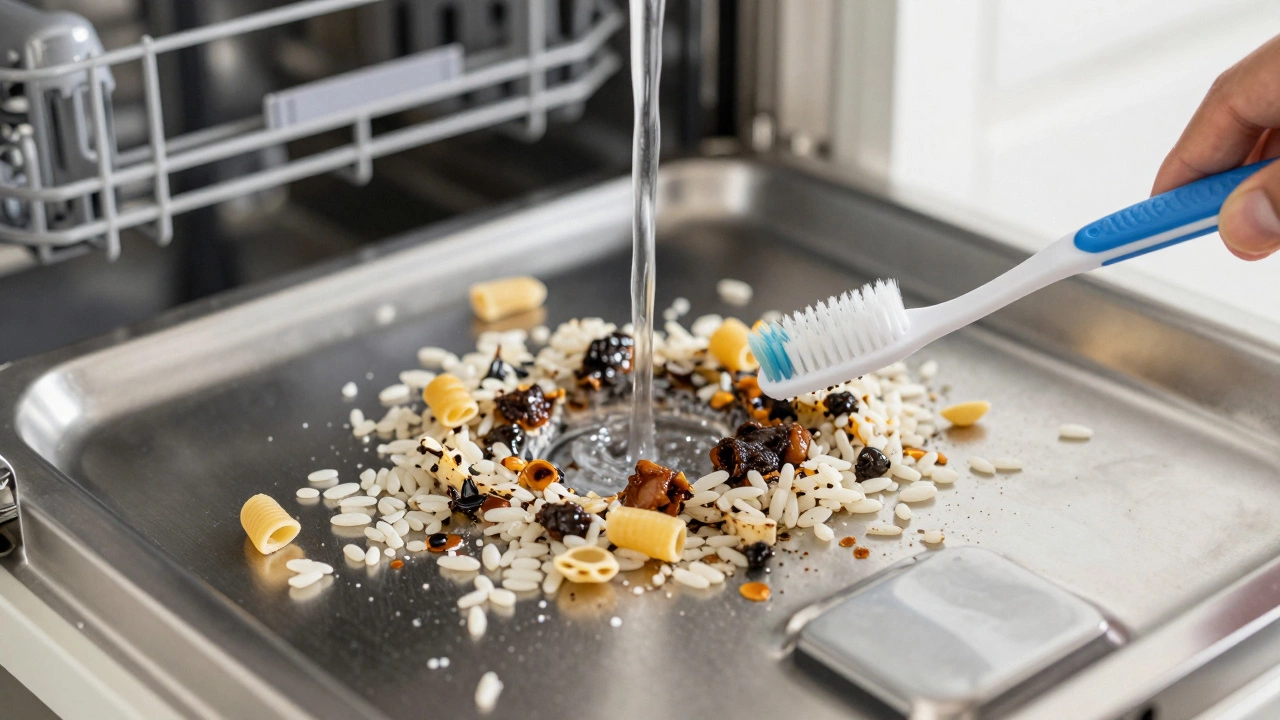
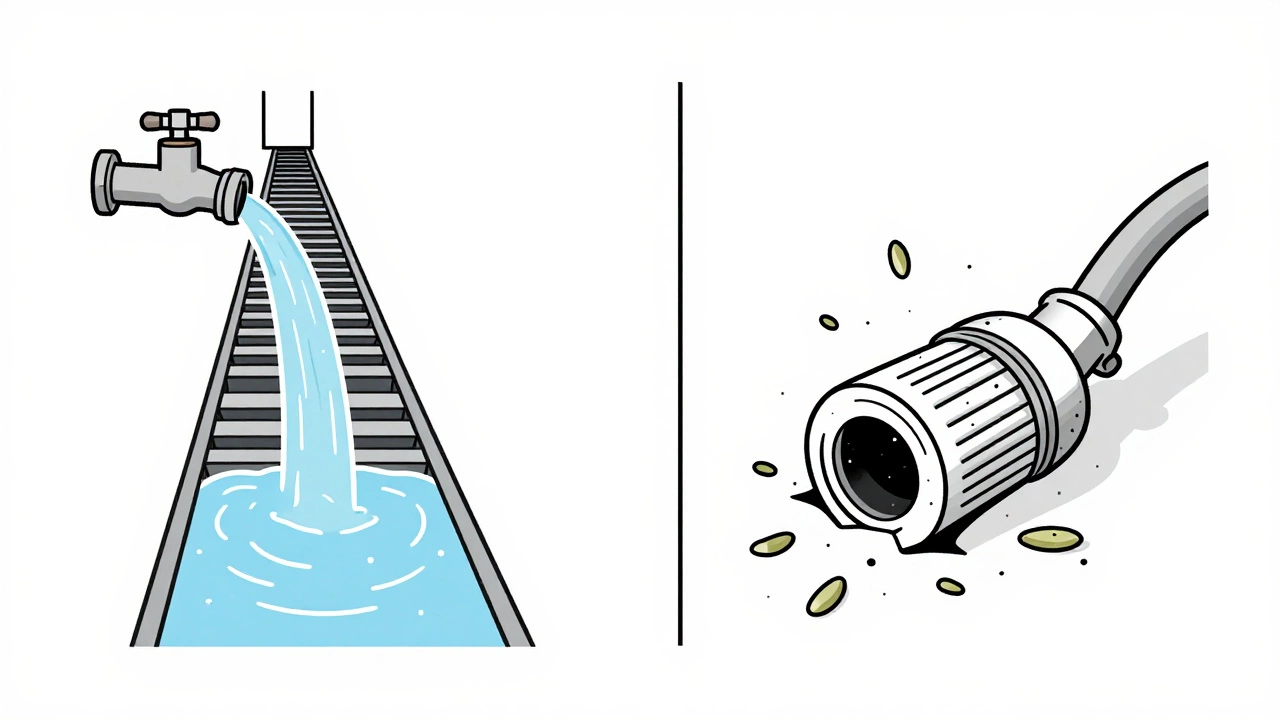
Dishwashers don’t just spray water-they need to remove it, too. After the rinse cycle, the pump should push water out through the drain hose. But if that path gets blocked, water backs up. And when water can’t drain, cleaning fails. Food particles, grease buildup, or even a kinked hose are the usual suspects. A clogged filter is the #1 trigger. Most people don’t realize their dishwasher even has a filter. It’s usually at the bottom, hidden under the lower spray arm. After months of use, it gets packed with bits of rice, pasta, coffee grounds, and melted cheese. That’s not just gross-it’s a full-on blockage.
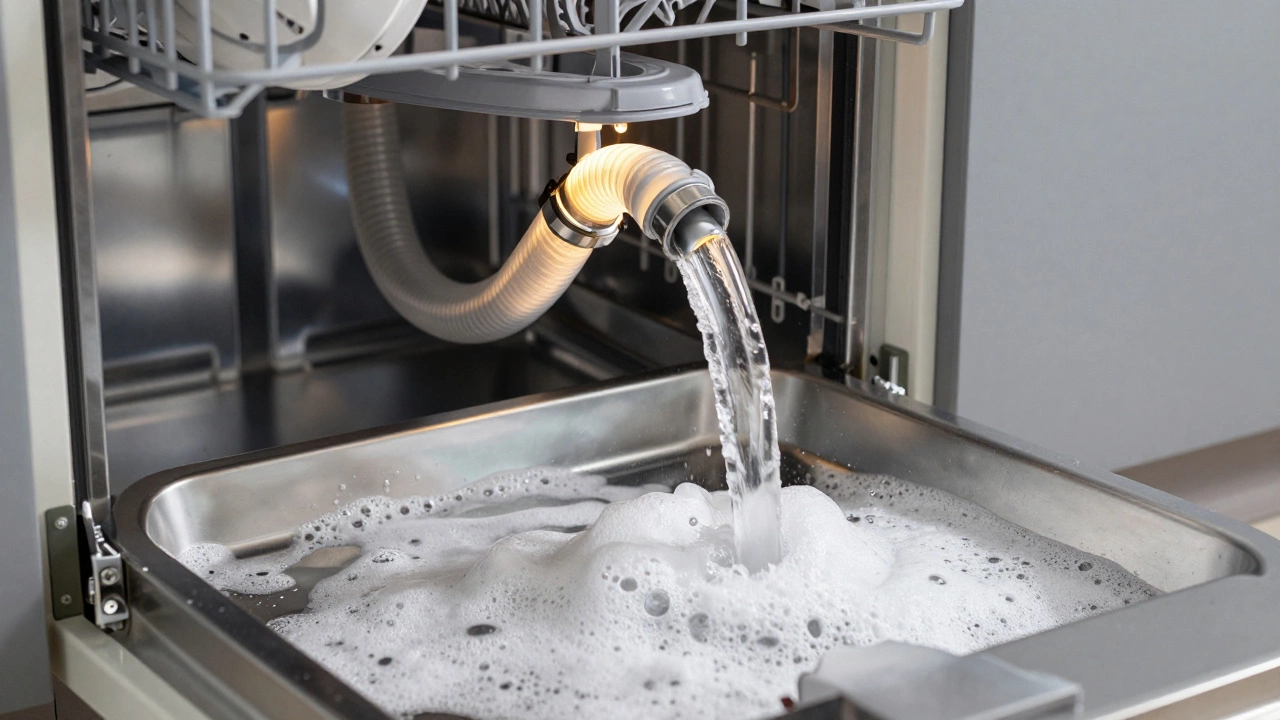
Some models have a self-cleaning filter, but even those can get overwhelmed. If you’ve got a garbage disposal connected to the same drain line, food debris from the sink can flow backward into the dishwasher. That’s why you’ll often hear a gurgling noise before the cycle ends. It’s not air-it’s water trying to escape through the wrong pipe.
Other Common Faults (And How They’re Linked)
While drainage is the top issue, three other problems show up almost as often-and they’re all connected to it.
- Water not filling - This usually means the inlet valve is clogged or the float switch is stuck. If water can’t enter, dishes won’t get clean. But sometimes, it’s not the valve-it’s the drain. If water from a previous cycle never fully drained, the float stays raised, and the machine thinks it’s still full.
- Leaking from the bottom - A bad door seal is the classic answer, but more often, it’s overfilling from a blocked drain. Water backs up, overflows the tub, and leaks out the front. You clean the seal, but the leak comes back. That’s because you fixed the symptom, not the cause.
- Not drying dishes - People blame the heating element. But if the dishwasher is still full of water at the end of the cycle, the dishes are sitting in moisture. No heat can dry them. Again, it’s a drain issue masquerading as a heating problem.
What You Can Do Right Now
You don’t need a technician to fix this 90% of the time. Here’s what to check in under 15 minutes:
- Turn off the power. Unplug the dishwasher or flip the breaker. Safety first.
- Remove the bottom rack. Look for the filter. It’s usually a circular or square mesh piece. Twist or lift it out.
- Clean the filter. Rinse it under hot water. Use an old toothbrush to scrub away grease and food bits. Don’t just rinse-scrape. If it’s crusted over, soak it in warm soapy water for 10 minutes.
- Check the drain hose. Follow the hose from the dishwasher to where it connects under the sink. Look for kinks or sharp bends. If it’s pinched behind the cabinet, straighten it. If it’s connected to a garbage disposal, make sure the knockout plug was removed (it’s a small plastic piece inside the disposal inlet-you need to remove it during installation).
- Run a test cycle. Put in a cup of white vinegar instead of detergent. Run a hot cycle. Vinegar cuts grease and clears minor buildup. If the drain works now, you’ve solved it.
When It’s Not the Drain
What if cleaning the filter didn’t help? Then you’re dealing with one of the other big three:
- Water inlet valve - If the dishwasher fills slowly or not at all, the valve might be clogged with mineral deposits. You can test it with a multimeter for continuity, but replacing it is often cheaper than diagnosing. They cost $30-$60 and take 20 minutes to swap.
- Float switch - This little plastic dome inside the tub stops water from overfilling. If it’s stuck in the up position (by debris or corrosion), the machine won’t fill. Lift it gently. If it doesn’t move smoothly, clean around it or replace it.
- Door latch or seal - A cracked or warped seal can leak, but it won’t stop drainage. If water drips from the door during the cycle, replace the gasket. They’re usually $15-$40 and snap into place.
What to Avoid
Here’s what not to do:
- Don’t use regular dish soap. It creates too many suds. Dishwashers need low-suds detergent. Regular soap can flood the machine and mimic a drain failure.
- Don’t pre-rinse dishes. Modern dishwashers need a little food residue to activate the enzymes in detergent. Rinsing too much means the cleaner doesn’t work.
- Don’t ignore the smell. A rotten-egg odor means bacteria are growing in standing water. That’s a sign the drain is blocked. Clean the filter and run vinegar immediately.
Prevention Is Simple
Once you fix the drain, keep it that way:
- Remove large food bits before loading.
- Run a monthly vinegar cycle.
- Check the filter every 3 months-even if the machine seems fine.
- Don’t overload the bottom rack. It blocks the spray arm and traps debris.
Most dishwashers last 10-12 years. But if you let the drain clog go unchecked, you’ll wear out the pump faster. A new pump costs $150-$250. Cleaning a filter? $0. That’s the difference between a $5 repair and a $200 one.
Why does my dishwasher leave food on the dishes?
The most common reason is a clogged filter or blocked drain. If water can’t circulate properly, detergent doesn’t get distributed, and spray arms can’t reach all the surfaces. Clean the filter, check the drain hose, and run a vinegar cycle. If the problem continues, inspect the spray arms for clogged holes.
Can a clogged garbage disposal cause dishwasher problems?
Yes. If the disposal is clogged or the knockout plug wasn’t removed when the dishwasher was installed, wastewater can back up into the dishwasher. Always run the disposal before starting the dishwasher. If you hear gurgling or smell sewage, the connection between the two is blocked.
Should I replace my dishwasher if it keeps having drainage issues?
Not necessarily. If your dishwasher is under 8 years old and the pump and motor are still working, cleaning the drain system and replacing worn parts like the filter or hose will usually fix it. Replace it only if you’re spending over $200 on repairs or if it’s leaking from the tub itself.
Why does my dishwasher smell bad even after cleaning?
Odors usually come from trapped food in the drain line or sump area. After cleaning the filter, pour 1 cup of baking soda followed by 2 cups of boiling water down the drain opening. Let it sit for 15 minutes, then run a hot rinse cycle. This clears out bacteria in hard-to-reach spots.
Is it safe to use vinegar in my dishwasher?
Yes, vinegar is safe and recommended for cleaning. It dissolves grease, mineral buildup, and kills odor-causing bacteria. Never use vinegar as a daily detergent-it doesn’t clean food residue. Use it monthly as a maintenance cycle, with no detergent, on a hot setting.
Final Thought
Dishwashers are simple machines. They don’t need fancy tech to work-they need clear paths. Water in. Water out. Repeat. When that path gets blocked, everything falls apart. Most people think it’s a sensor, a motor, or a control board. It’s rarely any of those. It’s just a clogged filter. Check it. Clean it. Your dishes-and your wallet-will thank you.