Heat Pump Cooling Troubleshooter
Select the symptom that best describes your current situation to find the most likely cause and the recommended action.
Please select a symptom from the list to see the diagnosis.
Quick Summary: Common Culprits
- Dirty air filters blocking airflow.
- Low refrigerant levels due to leaks.
- Clogged condenser coils.
- Faulty capacitors or start components.
- Incorrect thermostat settings (Heat vs. Cool mode).
The Basics: How Cooling Actually Works
Before we tear into the machine, it helps to understand what's happening. A Heat Pump is an HVAC system that can both heat and cool a home by moving heat from one place to another using a refrigerant cycle. Unlike a furnace, it doesn't create heat; it moves it. In cooling mode, it absorbs heat from your indoor air and dumps it outside. If the unit is running but not cooling, the "cycle" is broken. The fans are doing their job, but the heat exchange isn't happening. This is often where Refrigerant-the chemical fluid that carries the heat-comes into play.
The Low-Hanging Fruit: Simple Fixes You Can Do Now
You don't always need a toolkit to fix this. Sometimes the system is just fighting against a simple obstruction. The first thing to check is your air filter. If a filter is caked in dust and pet hair, the blower fan can't pull enough air across the evaporator coil. This can actually cause the coil to freeze over, turning it into a block of ice that blocks all cooling. If you see ice on the indoor unit or the outdoor copper lines, turn the system off and let it melt for a few hours.
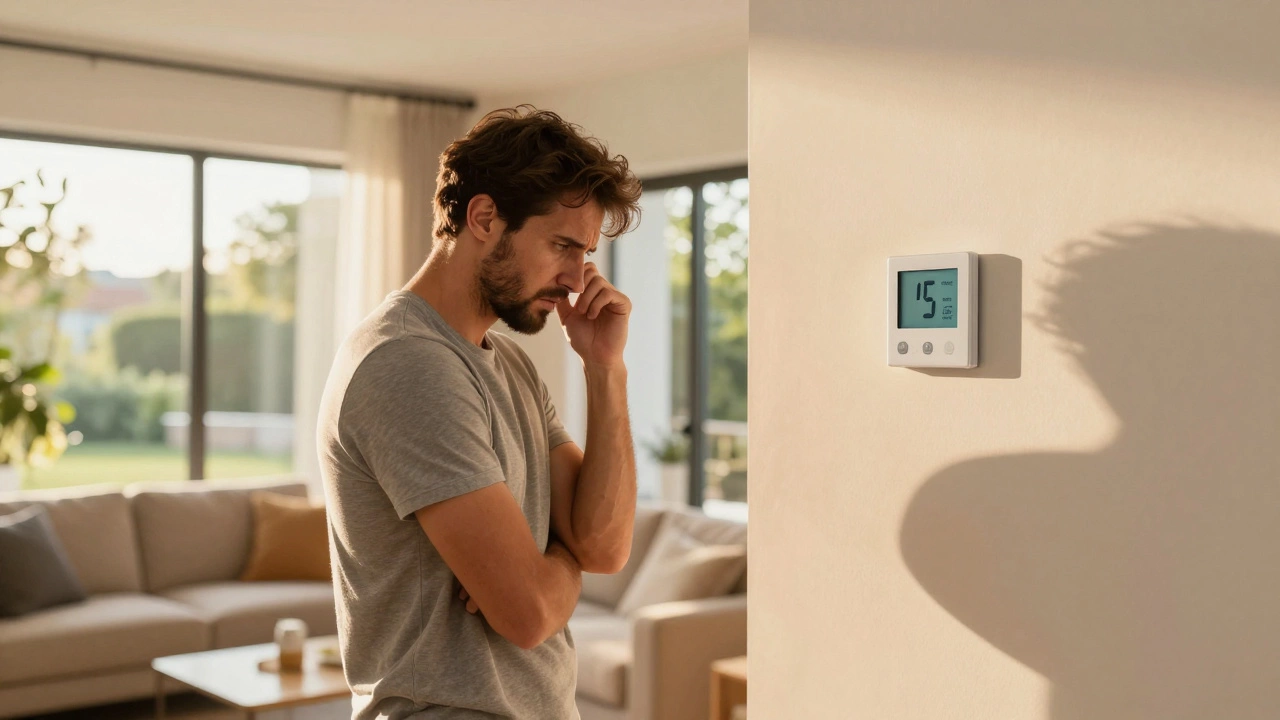
Next, check your thermostat. It sounds silly, but many modern systems have a "Heat/Cool/Auto" switch. If it's accidentally bumped to "Heat," the system might blow air that feels warm or neutral. Ensure it's explicitly set to "Cool" and that the target temperature is at least 3 degrees lower than the current room temperature to trigger the compressor.
When the Outdoor Unit is Working but the Air is Warm
If the fans are spinning outside but the air inside is lukewarm, the problem is likely the Compressor. The compressor is the heart of the system; it pumps the refrigerant through the lines. If the compressor fails or isn't receiving power, the fans will still spin, but no actual cooling occurs. A common failure point here is the Capacitor. Think of a capacitor as a large battery that gives the compressor the "kick" it needs to start. If the capacitor is blown-often looking swollen or leaking oil-the compressor won't start, leaving you with a system that runs (fans only) but doesn't cool.
The Danger of Dirty Coils
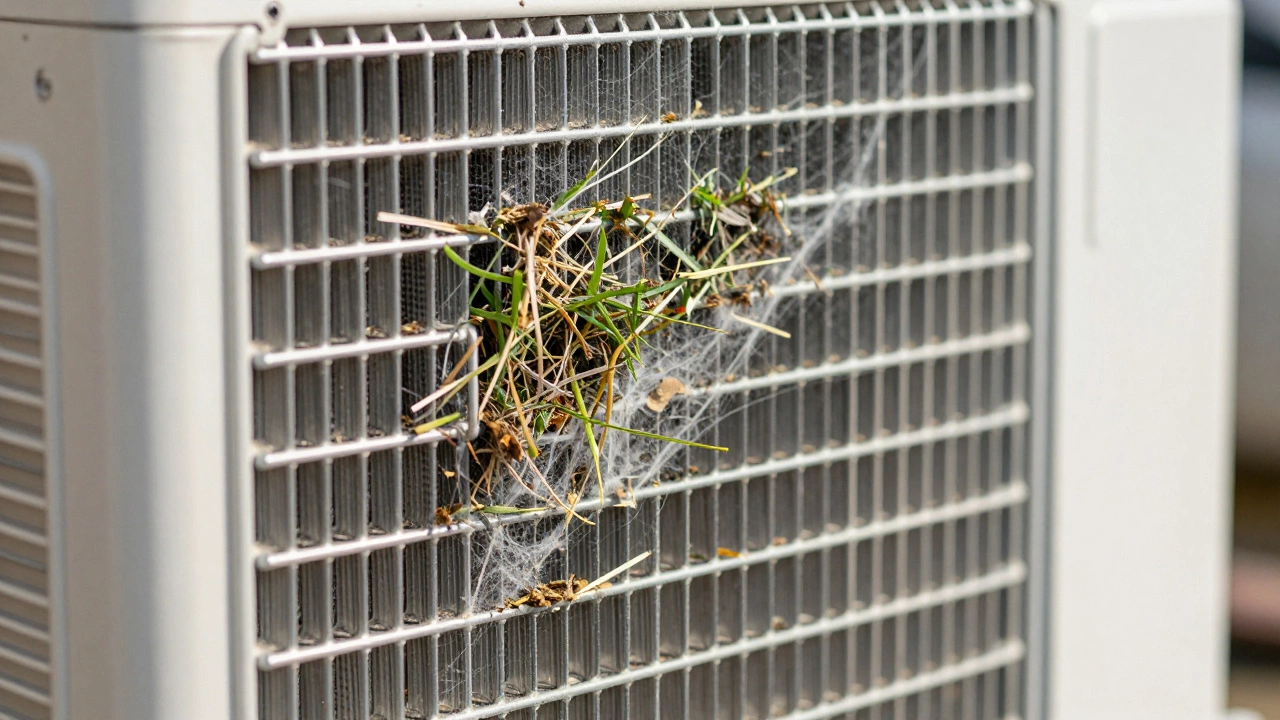
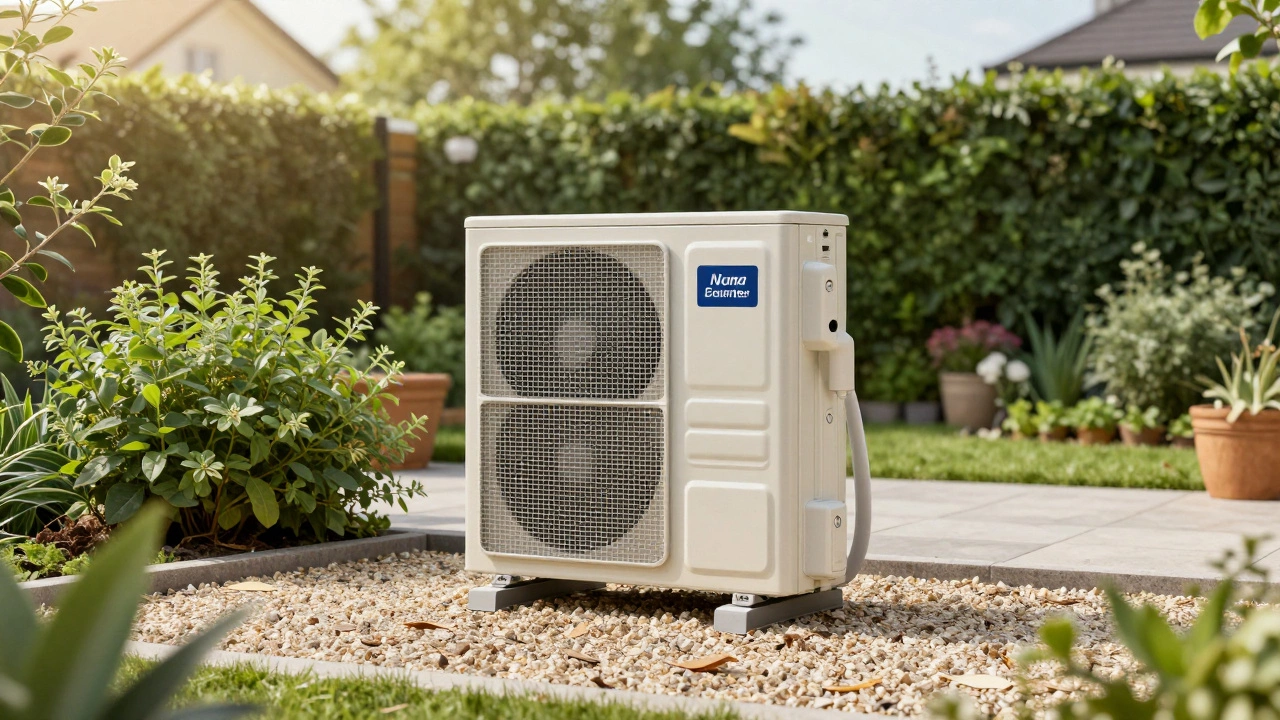
Your Condenser Coil is the set of fins on the outdoor unit. Its sole job is to release the heat collected from inside your home. If these coils are covered in grass clippings, spider webs, or thick dust, the heat has nowhere to go. The system will keep running, but it can't shed the heat effectively, making the air coming out of your vents feel warm. Using a garden hose to gently spray out the debris can often restore cooling efficiency immediately.
| Symptom | Likely Culprit | Difficulty to Fix |
|---|---|---|
| Air is blowing but not cold | Low Refrigerant / Blown Capacitor | Professional |
| Ice on the outdoor pipes | Dirty Filter / Low Refrigerant | Easy to Moderate |
| Outdoor unit is loud/clunking | Compressor Failure | Professional |
| Airflow is very weak | Clogged Air Filter | Very Easy |
The Refrigerant Mystery: Leaks and Low Levels
If your system is clean, the filters are new, and the compressor is humming, you might have a Refrigerant Leak. Refrigerant is a closed-loop system; it should never "run out." If it's low, you have a leak. When the fluid level drops, the system can't absorb enough heat from your home. You'll notice that the air is slightly cool but not cold, or you might see frosting on the thin copper line leading into the outdoor unit. Because HVAC systems use high-pressure gases and specialized chemicals, this is not a DIY job. A technician needs to find the leak, seal it, and recharge the system to the specific PSI required by the manufacturer.
Electrical Glitches and Control Boards
Sometimes the issue is purely electronic. The Control Board is the brain of the heat pump. If a relay on the board fails, it might send power to the outdoor fan but not to the compressor. This creates the illusion that the system is running. You can sometimes spot this by listening to the outdoor unit. A healthy unit has a distinct "thump" and a deeper hum when the compressor engages. If you only hear the high-pitched whir of a fan, the brain isn't telling the heart to beat.
How to Prevent This from Happening Again
Maintenance isn't just a suggestion; it's a requirement for heat pumps. A simple rule of thumb is to change your filters every 30 to 90 days depending on if you have pets. Additionally, clear a 2-foot perimeter around your outdoor unit. Removing overgrown bushes or piles of leaves prevents the system from choking on its own exhaust air. Most homeowners find that a professional tune-up once a year-specifically in the spring before the heat hits-catches capacitor failures and small leaks before they turn into a mid-summer emergency.
Can I just add more refrigerant myself?
Why is there ice on my heat pump in the summer?
How do I know if my capacitor is blown?
Does a dirty filter really cause a heat pump to stop cooling?
What is the difference between a heat pump and a standard AC?
Next Steps: What to Do Now
If you've changed the filter, checked the thermostat, and sprayed the outdoor coils but you're still sweating, it's time to stop. Continuing to run a heat pump that isn't cooling can burn out the compressor, turning a $200 capacitor fix into a $3,000 unit replacement. If you hear a loud buzzing or see ice, flip the breaker to "Off" and call a licensed technician. Tell them whether the outdoor fan is spinning and if you see ice on the lines-this helps them bring the right parts on the first trip.