Key Takeaways
- DIY replacement usually costs between $25 and $60 for the part.
- Professional installation typically ranges from $150 to $300, including labor.
- Replacing the rod every 3 to 5 years can double the life of your tank.
- Magnesium rods work best for soft water; aluminum rods are better for moderate hardness.
Imagine waking up to a leaking water heater or a tank full of rusty water. For most people, this is a nightmare that leads to a $1,500 replacement bill. But there is a small, hidden piece of metal inside your tank that prevents this from happening. If you ignore it, your tank will rust from the inside out. If you maintain it, your heater could last a decade longer than expected. The real question isn't just how much it costs to swap it out, but how much you save by doing it now.
What exactly is an anode rod?
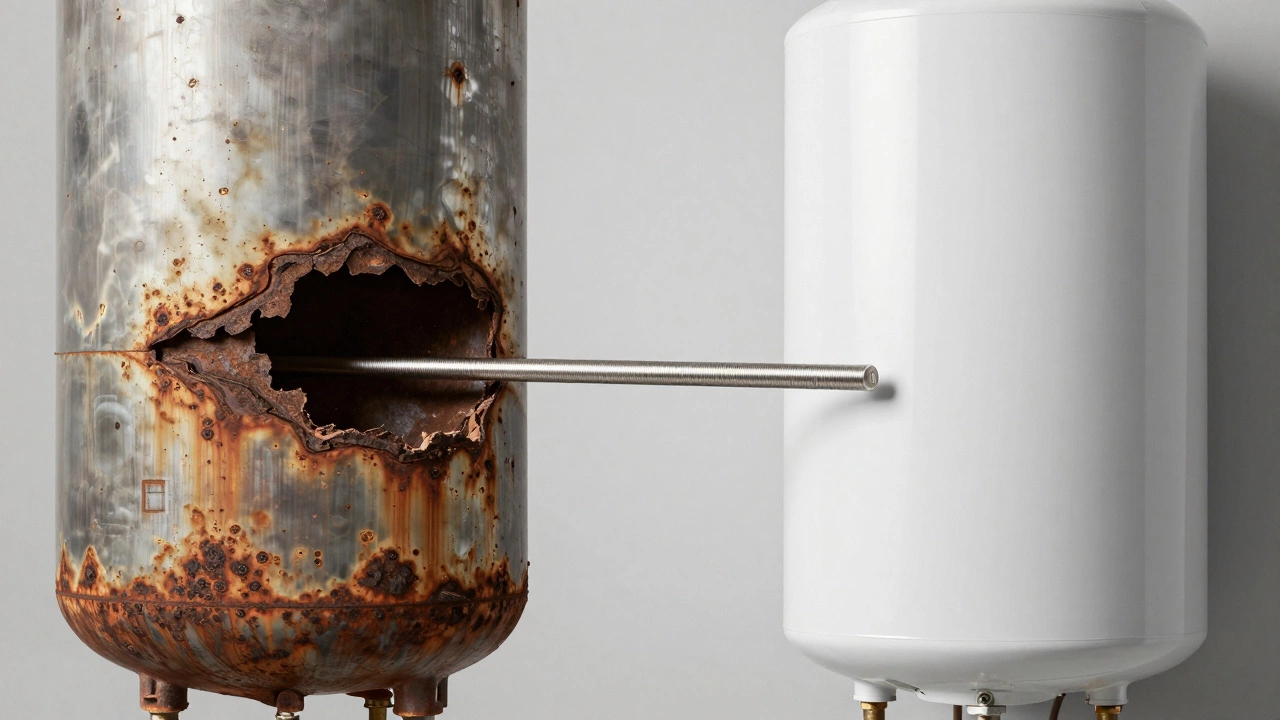
Inside your tank, there is a process called electrolysis. Basically, water and steel don't get along. Oxygen and minerals in your water naturally want to eat away at the steel walls of your tank. To stop this, manufacturers install a anode rod is a sacrificial metal rod, typically made of magnesium or aluminum, that attracts corrosive elements in the water to itself instead of the steel tank.
Think of it as a bodyguard for your water heater. The sacrificial anode takes all the damage. Once the rod is completely eaten away, the corrosion starts attacking your tank walls. Once a hole forms in the tank, you can't patch it-you have to buy a whole new heater. This is why spending a small amount of money every few years on a replacement is the smartest move a homeowner can make.
Breaking down the costs: DIY vs. Professional
The price you pay depends entirely on whether you have a socket wrench and a bit of patience or if you'd rather hand the job to a pro. For most homeowners, the anode rod replacement cost is surprisingly low compared to the cost of a new unit.
If you do it yourself, you only pay for the part. A standard magnesium rod usually costs between $25 and $60. You'll need to make sure you buy the correct length for your specific model. If you hire a licensed plumber, you're paying for the part plus a service call and labor. Most plumbers charge a flat rate for this job, usually falling between $150 and $300. This usually includes a quick inspection of your water heater to ensure there aren't other leaks or pressure issues.
| Expense Item | DIY Approach | Professional Plumber |
|---|---|---|
| Replacement Rod | $25 - $60 | $40 - $80 |
| Labor Cost | $0 (Your time) | $100 - $220 |
| Tools Required | Socket wrench, Screwdriver | Professional kit |
| Total Estimated Cost | $25 - $60 | $150 - $300 |
Choosing the right material: Magnesium, Aluminum, or Zinc?
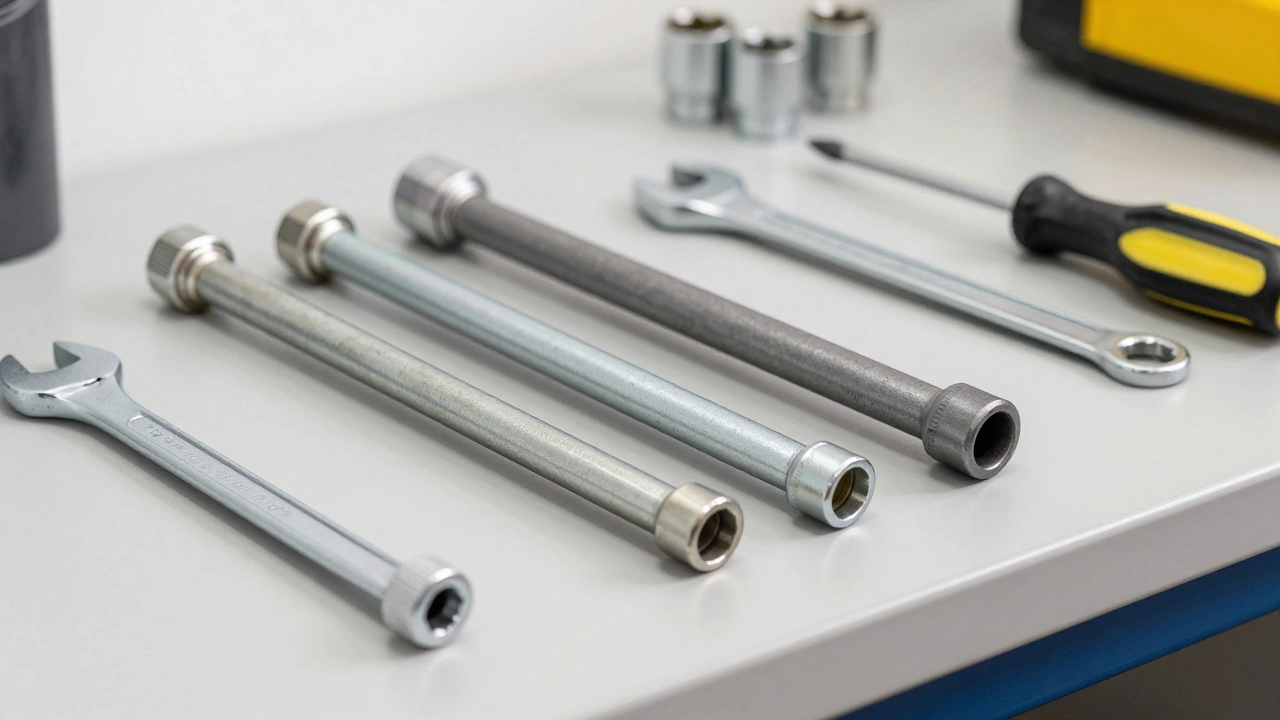
Not all rods are the same. The material you choose depends heavily on the chemistry of your local water. If you use the wrong one, it might dissolve too quickly or not work at all.
Magnesium is the most common choice. It's highly reactive and works great in areas with soft water or moderate mineral content. However, if you have very hard water, magnesium can react with the minerals to create a thick crust of lime scale on the heating elements, which makes your heater less efficient.
Aluminum rods are often found in newer heaters. They are more durable and perform better in water with higher mineral counts. If you're unsure, a zinc-aluminum alloy is often the "goldilocks" choice, providing a balance between protection and longevity. Many pros now recommend powered anode rods (also called electronic anode rods). These use a small electric current to prevent corrosion and never need to be replaced, though they cost significantly more upfront-usually around $150 to $300 for the part alone.
How to tell if your rod needs replacing
You can't see the rod just by looking at the heater, but there are a few red flags that tell you it's time for a change. The most obvious sign is a "rotten egg" smell in your hot water. This happens when sulfate-reducing bacteria react with the magnesium in the rod, producing hydrogen sulfide gas. While it's not necessarily dangerous, it's a clear sign the rod is struggling.
Another way to check is to physically remove the rod. If you unscrew it and see a thin, jagged wire instead of a thick, solid cylinder, it's spent. Most manufacturers suggest checking the rod every 3 years. In high-mineral areas, you might find the rod is gone in 2 years; in very soft water areas, it might last 6.
Step-by-step: How the replacement process works
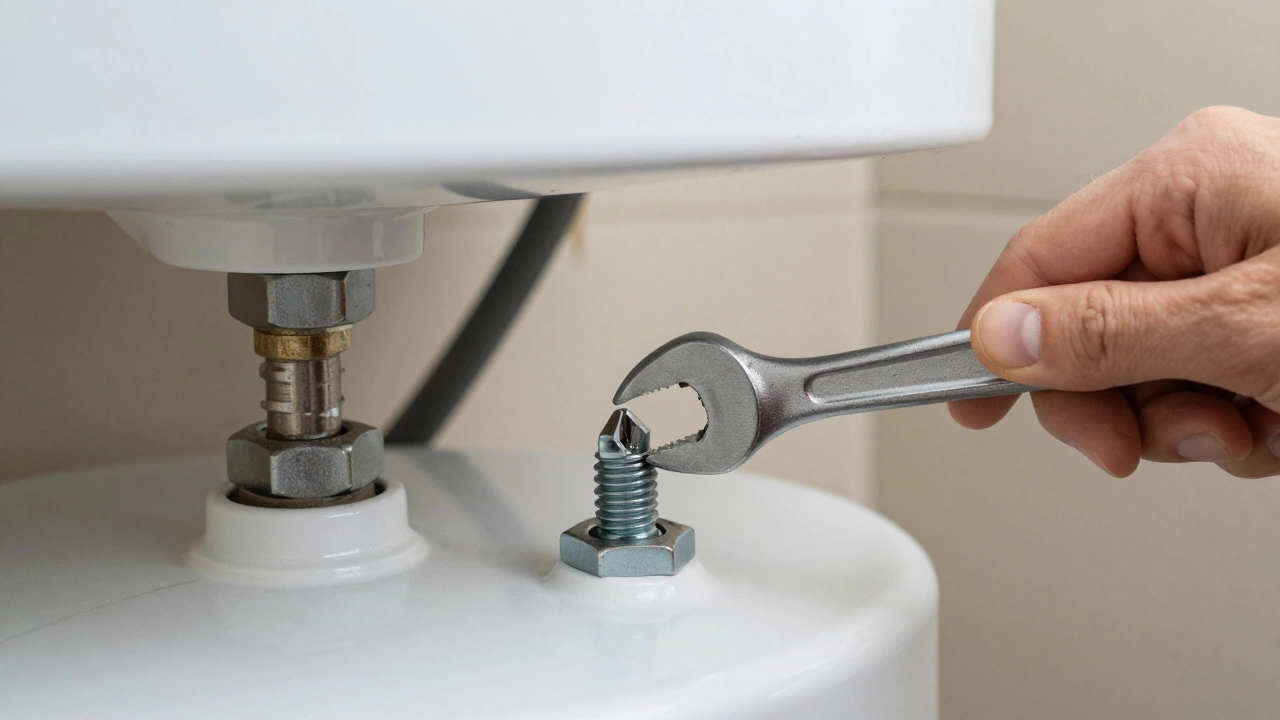
If you're feeling brave enough to tackle this yourself, the process is straightforward but requires some muscle. You'll need a 1 1/16 inch socket wrench and a way to drain some water.
- Power down: Turn off the electricity at the breaker or flip the gas control valve to "Pilot." You don't want the heating elements firing while the tank is empty.
- Drain the tank: You don't need to empty the whole thing, but you should drain a few gallons from the bottom valve to lower the water level below the top of the tank.
- Locate the rod: Look for a large hexagonal bolt on top of the heater. This is the plug holding the rod in place.
- Unscrew the old rod: Use your socket wrench to turn it counter-clockwise. Be prepared-these can be stuck tight. Once loose, pull the rod straight out.
- Inspect and install: Check the old rod. If it's gone, screw in your new replacement anode rod. Make sure the seal is tight to prevent leaks.
- Refill and restart: Turn your water supply back on. Open a hot water tap elsewhere in the house to let the air bleed out of the tank. Once water flows steadily, turn the power/gas back on.
Potential pitfalls and what to avoid
The biggest mistake people make is buying a "universal" rod that doesn't actually fit their tank. If the rod is too long, it will hit the bottom of the tank and won't seal properly, leading to a slow leak that can ruin your flooring. Always check your manual or measure the old rod before ordering a new one.
Another common error is forgetting to bleed the air from the tank. If you turn on an electric heater without filling the tank completely, the top heating element will burn out in seconds because it's heating air instead of water. This turns a $40 maintenance job into a $200 repair.
How often should I replace my anode rod?
Generally, you should check your rod every 3 years. Depending on your water quality, it usually needs replacement every 3 to 5 years. If you have very hard water, check it more frequently.
Can I replace the rod if my tank is already leaking?
No. Once the steel tank itself has rusted through and started leaking, the damage is permanent. The anode rod prevents leaks; it cannot fix them. You will need to replace the entire water heater.
Why does my hot water smell like sulfur?
This is often caused by a reaction between magnesium anode rods and sulfate in the water. Replacing a magnesium rod with an aluminum or powered anode often eliminates this smell.
Is it worth paying a professional to do this?
If you aren't comfortable working with plumbing or electricity, yes. A pro ensures the seal is watertight and that the tank is properly bled of air, which prevents expensive mistakes.
What is a powered anode rod?
A powered anode is an electronic device that uses a small electrical current to neutralize the corrosive process. It doesn't dissolve like a metal rod, meaning it never needs to be replaced.