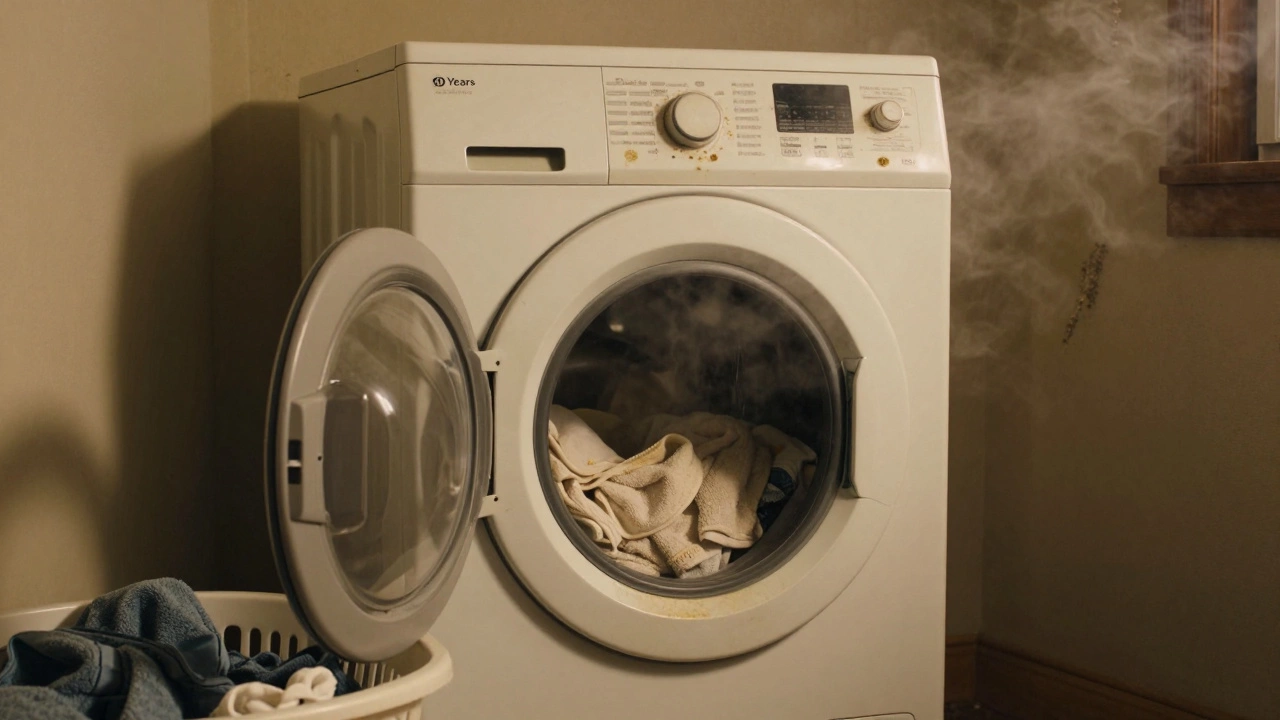
You’ve been hearing the same clunk-clunk-thump for months. The dryer’s slower than ever. The clothes come out damp, or worse - still damp after two cycles. You glance at the age on the label: 10 years. Now you’re wondering: Is this thing even worth fixing?
How long should a dryer last?
Most manufacturers say 10 to 13 years. That’s not a guarantee - it’s an average. Real-world usage changes everything. If you run your dryer every single day, especially heavy loads like towels and bedding, you’re pushing it hard. A dryer used lightly - maybe 3-4 loads a week - can last 15 years or more. But if you’re hitting 10 years and already replaced the belt, the thermal fuse, and the heating element? You’re into diminishing returns.
According to Consumer Reports, the median lifespan of a standard electric tumble dryer is 11 years. Gas dryers last a little longer - around 13 years - because they have fewer electrical components that wear out. But that doesn’t mean your 10-year-old model is broken. It means you’re at the edge of its expected life.
What’s the cost of fixing it?
Not all repairs are equal. A $40 thermostat replacement? Easy win. A $150 motor? Maybe. A $200 heating element plus labor? Now you’re getting into gray territory.
Here’s the real math:
- Typical repair costs: $100-$300 (parts + labor)
- New dryer cost: $400-$1,000 (mid-range model)
- High-efficiency or smart dryer: $1,000-$1,800
There’s a common rule of thumb: if the repair costs more than half the price of a new dryer, walk away. So if your dryer costs $700 new, and the fix is $350 or more - it’s time to replace.
But here’s what most people miss: energy costs. A 10-year-old dryer uses about 7.5 kWh per load. A new Energy Star-certified model uses 4.5 kWh or less. That’s a 40% drop in energy use. If you run 5 loads a week, that’s 260 loads a year. At $0.15 per kWh, you’re saving $117 a year just on electricity. That adds up fast.
What’s broken? That’s the real question
Not all failures are equal. Some fixes are one-and-done. Others are warning signs.
Worth fixing:
- Thermal fuse - $20-$40, easy swap
- Door switch - $30-$50
- Lint trap sensor - $50
- Drive belt - $40-$70
Think twice:
- Motor - $150-$250 (plus labor)
- Heating element - $100-$200 (electric dryers)
- Control board - $200-$300 (often not worth it)
If the motor’s failing, that usually means the drum bearings are worn out too. And if the control board is fried? That’s a sign the whole system is aging. Electronics don’t just die randomly - they die because they’ve been overheating, overloaded, or exposed to moisture for years.
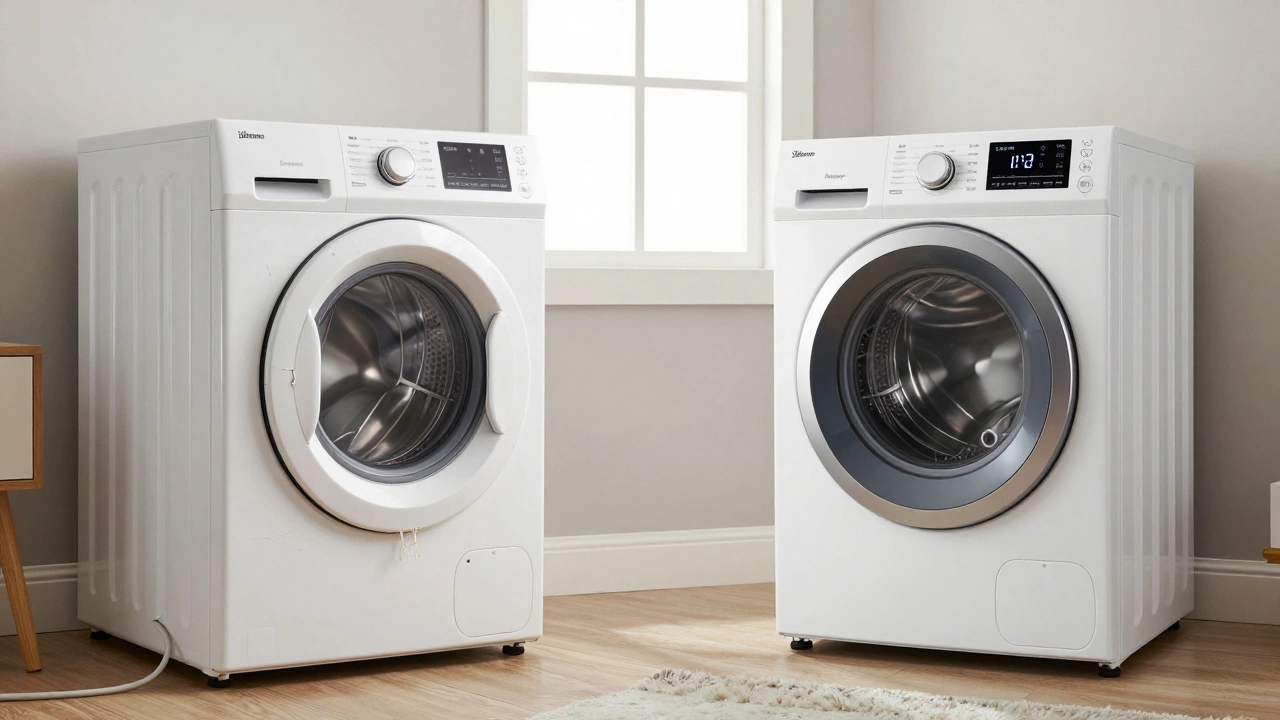
Is your dryer still under warranty?
Most manufacturers offer 1-year full coverage, 5-year parts warranty on key components. If you still have a valid parts warranty on the heating element or motor, go for the repair. But if the warranty expired years ago? You’re paying full price for a part that’s likely to fail again in 1-2 years.
Some extended warranties are sold at point of purchase. If you bought one, check the paperwork. But most people forget they even had one. If you didn’t, don’t waste money on a new one now.
What are you saving by not replacing?
It’s not just about the money. A 10-year-old dryer is likely less safe. Old heating elements can overheat. Worn-out belts can snap and cause fires. Lint buildup is worse in older machines - and lint is the #1 cause of dryer fires, according to the U.S. Fire Administration. In 2024, over 2,900 home fires were linked to clothes dryers. Most involved machines 10+ years old.
Also, newer dryers have moisture sensors, automatic shut-off, and better airflow. They don’t just dry clothes faster - they dry them better. Less wrinkling, less shrinkage, less time spent re-drying.
When should you just replace it?
Here’s a simple decision tree:
- Is the repair cost over 50% of a new dryer’s price? → Replace
- Is it a motor, control board, or heating element? → Replace
- Are you running it 5+ times a week? → Replace
- Has it had 3+ major repairs in the last 2 years? → Replace
- Do you care about energy bills or safety? → Replace
If two or more of these apply - it’s time to buy new.
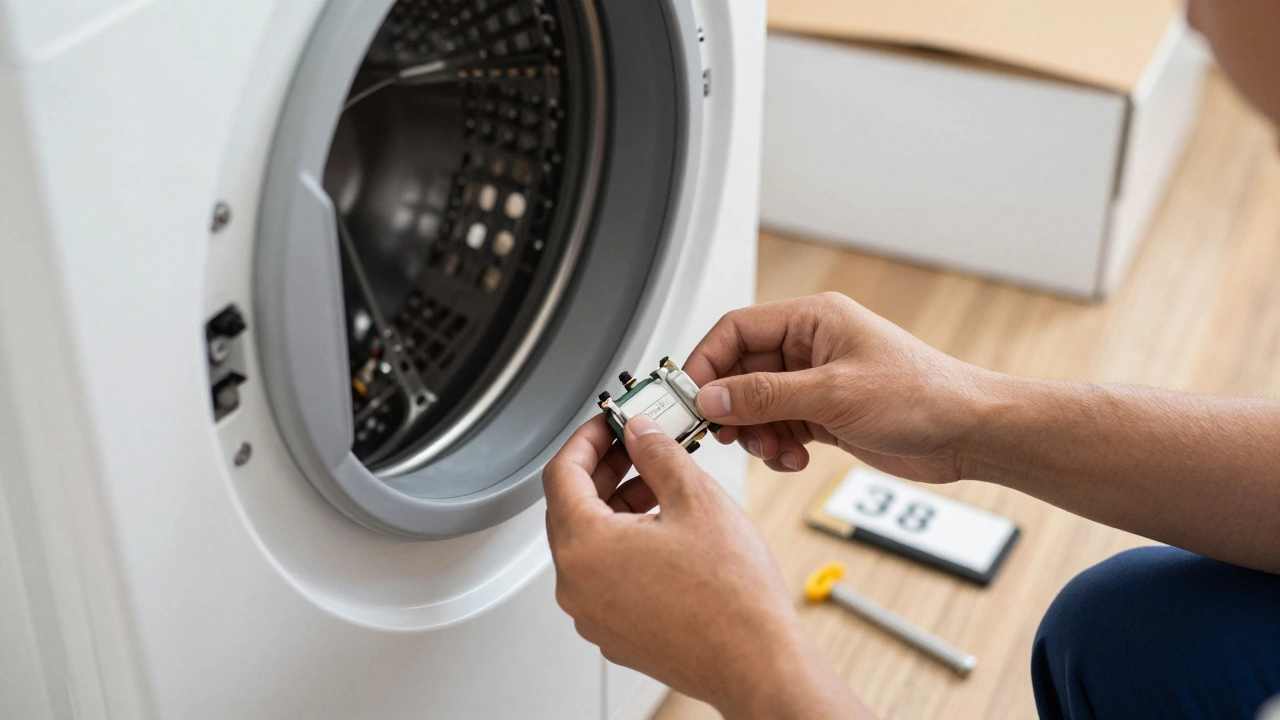
What should you look for in a new dryer?
You don’t need the fanciest model. But you should avoid the cheapest. A $300 dryer from a no-name brand will cost you more in repairs and electricity over time.
Look for:
- Energy Star certification - saves 20-30% on energy
- Moisture sensor - stops the cycle when clothes are dry
- Capacity of 7-8 cubic feet - fits king-size bedding
- Steel drum - not plastic
- 5-year parts warranty
Brands like LG, Whirlpool, and GE consistently score high in reliability. Samsung and Maytag are solid too. Avoid budget brands like Danby or Magic Chef unless you’re renting.
What about selling or donating it?
Don’t just toss it. Even a 10-year-old dryer can have value. If it still spins and heats, local repair shops will take it for parts. Some scrapyards pay $10-$20 for metal. You can also donate it to Habitat for Humanity ReStore - they’ll take working appliances and resell them. It’s better than landfill.
Just don’t donate a dryer that’s broken. They’ll turn it away. And if you’re selling online - be honest. Say: “10 years old, runs but slow.” People will still buy it for a spare or garage use.
Final call: Fix or replace?
Here’s the truth: if your dryer is 10 years old and needs a major repair, you’re not saving money - you’re delaying the inevitable. You’re also risking fire, wasting energy, and spending hours waiting for clothes to dry.
Fix it if:
- The repair is under $100
- It’s a simple part like a fuse or belt
- You plan to move in the next year
Replace it if:
- The repair costs more than $200
- You use it often
- You’re tired of waiting
- You want lower bills and better performance
Most people who wait too long end up with a dryer that dies mid-load. Then they’re stuck with wet clothes, a broken machine, and no backup. Don’t be one of them. A new dryer pays for itself in energy savings within 2-3 years. And it’ll last you another decade - if you clean the lint trap every time.