Boiler Repair Cost Estimator
Estimate your boiler repair costs based on UK average prices (January 2026). Always get a written quote from a Gas Safe registered engineer before work begins.
Enter your postcode and select a repair type to see estimated costs
If your boiler suddenly stops working, you’re not just cold-you’re stuck in a situation that can quickly turn into a crisis. No hot water, no central heating, and the temperature keeps dropping. It’s not just uncomfortable; it can be dangerous in winter. The question isn’t boiler not working-it’s who do you call right now, and how do you make sure you get help fast without getting ripped off?
First, check the basics before calling anyone
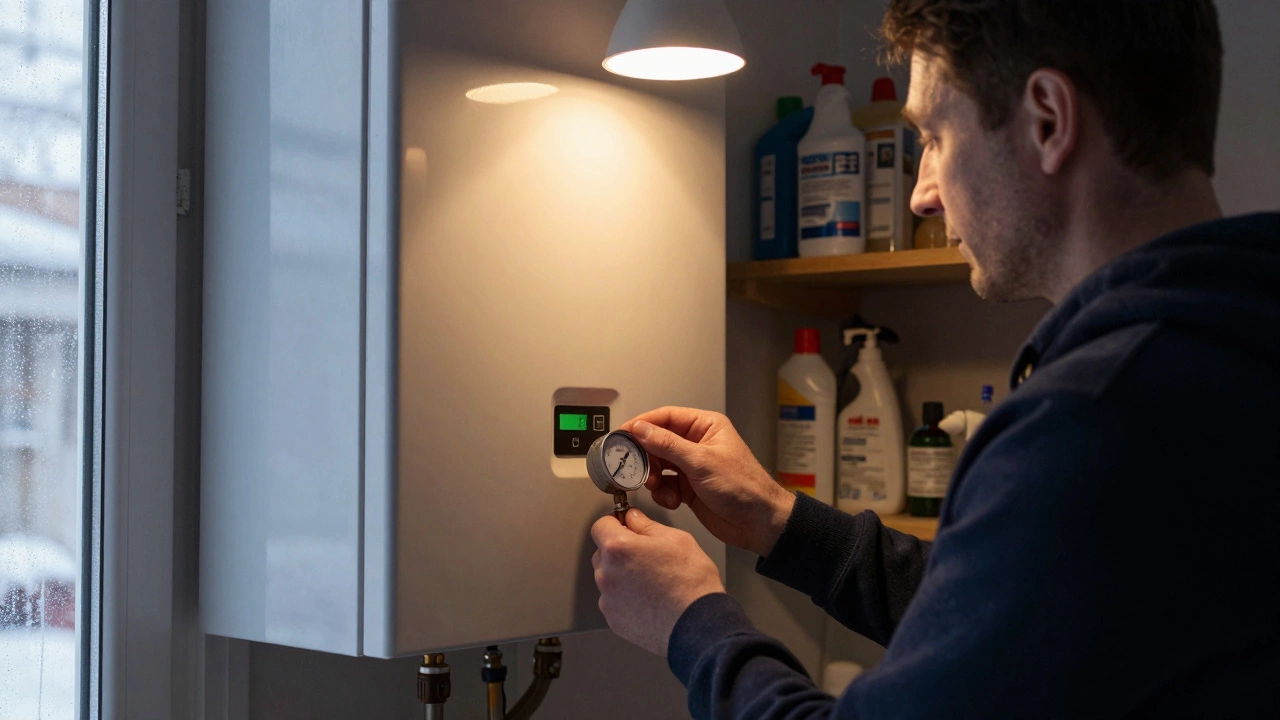
Before you pick up the phone, spend five minutes checking the obvious things. Most boiler issues aren’t emergencies-they’re simple fixes you can do yourself. You might save a service call fee and get your heat back in minutes.- Check the power. Is the boiler plugged in? Is the circuit breaker tripped? Reset it if needed.
- Look at the pressure gauge. Most boilers run between 1 and 1.5 bar. If it’s below 0.5, you need to repressurize. Most manuals show how to do this with a filling loop-usually just turning two valves.
- Is the thermostat set correctly? Sometimes it’s just turned down accidentally. Try turning it up a few degrees.
- Check for error codes. Modern boilers display codes like E1, F22, or L1. Write them down. These tell engineers exactly what’s wrong before they even arrive.
- Is the pilot light out? If you have an older model, relighting it might fix everything. Follow the instructions on the boiler door.
If none of these work, then it’s time to call a professional. But don’t just dial the first number you find online.
Call a Gas Safe registered engineer-no exceptions
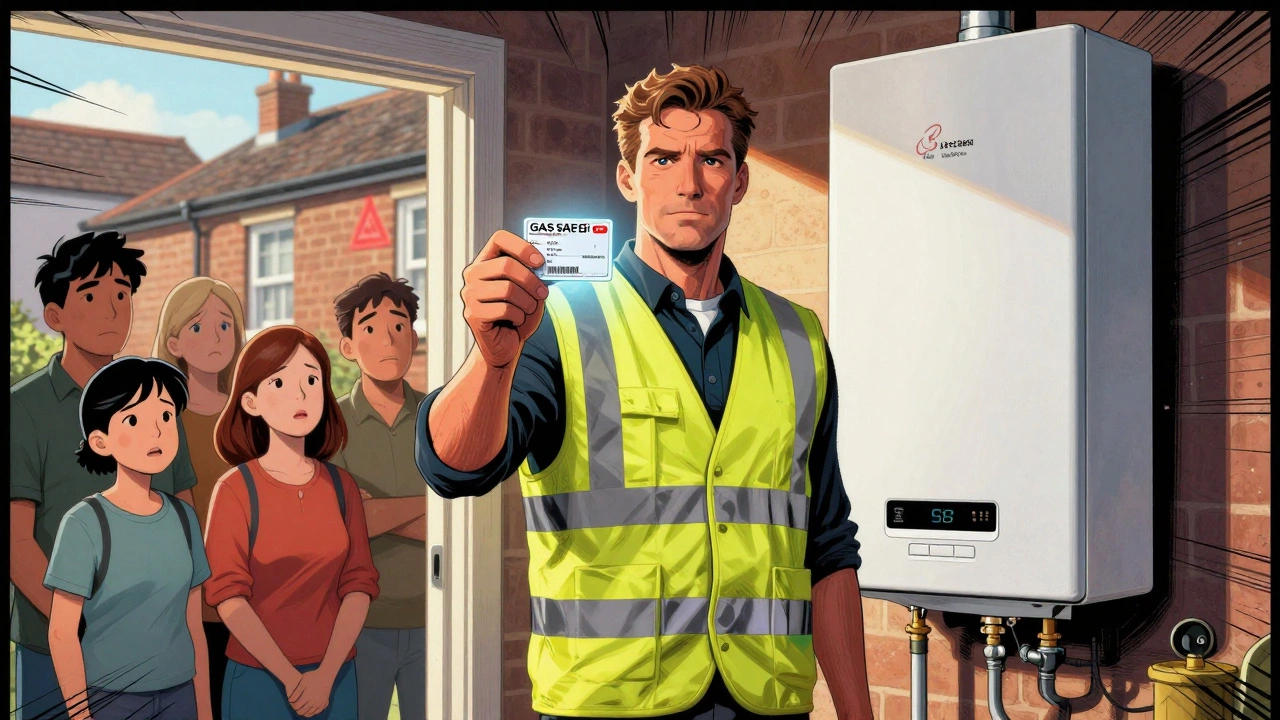
In the UK, only engineers registered with Gas Safe are legally allowed to work on gas boilers. This isn’t a suggestion-it’s the law. Unregistered technicians can cause gas leaks, carbon monoxide poisoning, or even explosions.How do you find one? Go to the official Gas Safe Register website and enter your postcode. You’ll get a list of local engineers with their license numbers, specialties, and customer ratings. Always ask for their Gas Safe ID card before they start work. The card has a photo, expiry date, and license number. If they can’t show it, don’t let them touch your boiler.
Don’t fall for ads that say "24/7 boiler repair" without mentioning Gas Safe. Many unlicensed fitters use flashy websites and fake reviews. A real engineer will have a physical office, a landline number, and a clear business name-not just a WhatsApp number and a Facebook page.
Emergency vs. non-emergency: know the difference
Not every boiler breakdown needs an emergency call-out. Emergency means:- You smell gas (like rotten eggs)
- You see soot, rust, or water leaking from the boiler
- Your carbon monoxide alarm is going off
- You feel dizzy, nauseous, or tired with no other cause
If any of these are true, turn off the gas at the main valve (usually near the boiler or meter), open all windows, get everyone out of the house, and call the National Gas Emergency Service on 0800 111 999. Do not turn anything back on until a professional says it’s safe.
If your boiler just stopped heating but there’s no gas smell or carbon monoxide warning, it’s a non-emergency. You can usually wait until the next business day. Most Gas Safe engineers offer same-day or next-day appointments for non-emergencies, even in winter.
What to expect when the engineer arrives
A good engineer won’t just show up and start guessing. They’ll ask you questions:- When did it stop working?
- Did you see any error codes?
- Has this happened before?
- When was the last service?
They’ll check the pressure, test the thermostat, inspect the flue, and run diagnostics. Most repairs take 1-2 hours. If they say they need to order a part, ask for a quote before they order it. Some engineers will replace a £30 pump for £350-without telling you there’s a cheaper fix.
Ask for a written quote before any work starts. If they refuse, walk away. Legitimate companies always provide one. You should also get a Gas Safe certificate after the repair. This proves the work was done safely and legally. Keep it for your records and insurance.
How much should you expect to pay?
Prices vary by region and boiler type, but here’s what’s normal in early 2026:| Service | Average Cost | What’s Included |
|---|---|---|
| Call-out fee (non-emergency) | £60-£90 | First hour of labor, basic diagnosis |
| Call-out fee (emergency) | £90-£150 | Same-day service, after hours or weekends |
| Pump replacement | £250-£400 | Part + labor, includes system flush |
| Thermostat or control board | £180-£300 | Includes programming reset |
| Full boiler service | £80-£120 | Annual safety check, cleaning, efficiency test |
Watch out for companies that charge more than £150 just to show up. That’s a red flag. Also, avoid anyone who says "I’ll fix it for cash"-no receipt, no warranty, no protection if something goes wrong later.
Prevent future breakdowns
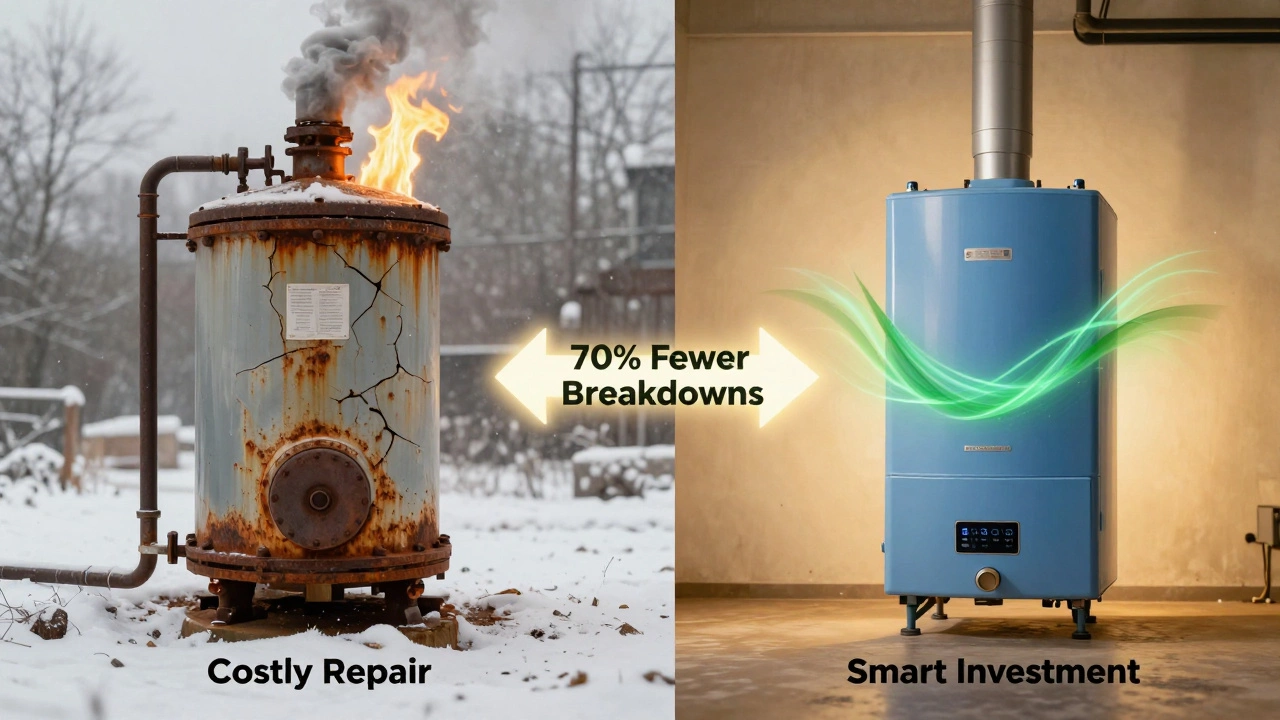
Most boiler failures happen because they weren’t serviced. A yearly service by a Gas Safe engineer reduces breakdown risk by 70%. During a service, they’ll:- Check for carbon monoxide leaks
- Clean the heat exchanger
- Test the gas pressure
- Inspect the flue for blockages
- Update your service record
Set a reminder on your phone for the same month every year. Many engineers offer service plans for £10-£15 a month that include priority call-outs and discounted parts. These usually pay for themselves in one repair.
What if your boiler is old?
If your boiler is over 10-12 years old, repairs might not be worth it. New boilers are 30-40% more efficient. A £300 repair on a 15-year-old unit might cost you £1,200 in wasted gas over the next year.Look for signs:
- More frequent breakdowns
- Loud banging or gurgling noises
- Yellow flame instead of blue
- Increased gas bills
If you see two or more of these, start budgeting for a replacement. Government grants and energy company schemes sometimes cover up to £5,000 of the cost for low-income households or those in older homes.
Can I fix my boiler myself?
You can handle simple tasks like resetting the boiler, repressurizing the system, or relighting the pilot light. But never open the boiler casing, adjust gas valves, or replace internal parts unless you’re Gas Safe registered. Doing so is illegal and dangerous. Even small mistakes can lead to gas leaks or carbon monoxide poisoning.
How long does a boiler repair usually take?
Most repairs take between 1 and 3 hours. Simple fixes like resetting controls or replacing a pump take under 2 hours. Complex issues like a cracked heat exchanger or flue blockage can take longer, especially if parts need ordering. Emergency call-outs usually get you a technician within 4-8 hours.
Do I need a service contract for my boiler?
You don’t need one, but it’s smart. Annual services prevent 70% of breakdowns. Service plans often include priority response, discounted parts, and free annual safety checks. If you’re on a fixed income or live alone, a plan can save you money and stress in the long run.
What if my boiler is under warranty?
If your boiler is still under warranty (usually 5-10 years from installation), contact the manufacturer or the installer first. Many warranties require annual servicing to stay valid. If you didn’t get it serviced, the warranty might be void. Always check your paperwork before calling a repair company.
Why is my boiler making noise?
Knocking or banging usually means limescale buildup in the heat exchanger. This is common in hard water areas. A power flush can fix it for £300-£500. Whistling or gurgling can mean low water pressure or air in the system-easier to fix. Never ignore noise. It’s often a warning sign before a full breakdown.
Can I get financial help to replace my boiler?
Yes. If you receive certain benefits like Pension Credit, Universal Credit, or Child Tax Credit, you may qualify for the Boiler Upgrade Scheme or ECO4 grant. These can cover up to £5,000 of the cost for a new A-rated boiler. Check with your local council or visit the UK government’s Simple Energy Advice website.
Next steps if your boiler breaks
1. Stay calm. Boilers don’t explode. Most issues are fixable.2. Check the basics: power, pressure, thermostat, error codes.
3. If it’s safe and not urgent, book a Gas Safe engineer for the next day.
4. If you smell gas or feel ill, turn off the gas, get out, and call 0800 111 999.
5. Always ask for a quote, a Gas Safe ID, and a certificate after the repair.
6. Schedule your next service before the year ends.
Don’t wait until winter to find an engineer. Keep the contact info of one reliable Gas Safe technician saved in your phone right now. When your boiler fails, you won’t have time to search.