Your house is freezing. The radiators are cold to the touch, and that familiar clanking noise has returned. You’re staring at your gas boiler a central heating unit that burns gas to heat water for domestic use and space heating, wondering if you should call a technician for a quick fix or bite the bullet and buy a new one. It’s one of those moments where every decision feels like it carries a heavy financial weight.
In Adelaide, where winter nights can drop sharply despite our generally mild climate, a broken heating system isn’t just an inconvenience; it’s a crisis. But here is the truth: most homeowners make this decision based on emotion rather than data. They panic-replace a perfectly good unit or they keep patching up a dying beast until it bursts. Neither approach saves money in the long run.
To decide whether to repair or replace, you need to look at three specific factors: the age of your unit, the cost of the repair relative to the price of a new model, and the energy efficiency gap. Let’s break down exactly how to calculate this so you stop guessing and start acting.
The 50% Rule: A Simple Financial Test
There is a golden rule in the HVAC (Heating, Ventilation, and Air Conditioning) industry known as the 50% rule. It’s simple, brutal, and effective. If the cost of repairing your current boiler is more than 50% of the cost of installing a brand-new, high-efficiency unit, you should replace it.
Why? Because boilers don’t fail in isolation. When one major component breaks-like the heat exchanger-it usually means other parts are nearing the end of their life too. You might spend $800 fixing the heat exchanger today, only to face a $400 pump failure next month. A new unit comes with a warranty, typically ranging from 5 to 10 years depending on the brand and installer.
Let’s look at real numbers for the Australian market in 2026. A standard mid-range condensing gas boiler installation in Adelaide runs between $3,500 and $5,500. This includes the unit, labor, and any necessary pipework adjustments. If your repair quote is $1,500 or higher, you have crossed the threshold. You are essentially throwing good money after bad.
| Scenario | Estimated Repair Cost | New Unit Installation Cost | Verdict |
|---|---|---|---|
| Minor Fault (Thermostat/Sensor) | $150 - $300 | $4,500 | Repair (Under 10% of new cost) |
| Moderate Fault (Pump/Circulator) | $400 - $700 | $4,500 | Repair (If unit is under 8 years old) |
| Major Fault (Heat Exchanger) | $900 - $1,500 | $4,500 | Replace (Over 20-30% of new cost) |
| Catastrophic Failure (Leaking System) | $2,000+ | $4,500 | Replace (Immediate safety risk) |
Age Matters More Than You Think
Money isn’t the only factor. Time is. The average lifespan of a modern gas boiler is between 10 and 15 years. Older units, particularly non-condensing models installed before 2010, often last longer but operate at significantly lower efficiencies.
If your boiler is over 10 years old, its components are brittle. Gaskets dry out, metal fatigues, and electronic boards become obsolete. Even if a repair is cheap, the likelihood of another breakdown within 12 months is high. Think of it like an old car. You can change the tires, but if the engine is knocking, you’re planning for the junkyard, not the highway.
However, if your boiler is less than 5 years old, lean heavily toward repair. Modern units are robust. A single part failure in a young machine is usually an anomaly, not a symptom of systemic decay. In this case, replacing it would be throwing away 70-80% of its useful life.
Efficiency: The Hidden Cost of Keeping Old Boilers
This is where many people get it wrong. They focus on the upfront cash outlay and ignore the monthly bills. An old, non-condensing boiler operates at about 60-70% efficiency. That means 30-40% of the gas you pay for goes straight up the flue, unused. A modern condensing boiler a high-efficiency heating system that recovers waste heat from exhaust gases to preheat incoming cold water achieves 90-95% efficiency.
In practical terms, switching from a 10-year-old standard boiler to a new condensing model can reduce your annual gas bill by 15-20%. For an average Adelaide household spending $1,200 a year on heating, that’s a saving of roughly $200 annually. Over five years, that’s $1,000 back in your pocket. This effectively lowers the net cost of the new boiler.
Furthermore, newer models offer better temperature control. Many now integrate with smart thermostats, allowing you to zone your heating. You won’t heat the empty guest room anymore. This behavioral shift, enabled by technology, compounds your savings.
Safety Risks: Carbon Monoxide and Leaks
We cannot talk about boilers without talking about safety. Gas appliances carry inherent risks. As boilers age, seals degrade and cracks form in the heat exchanger. These flaws can allow carbon monoxide-a deadly, odorless gas-to leak into your home.
If your boiler is showing signs of corrosion, rust stains around the unit, or yellow flames instead of blue, do not wait for a cost-benefit analysis. Replace it immediately. No repair is worth the risk to your family’s health. Additionally, older boilers often lack modern safety cut-offs and flame detection systems found in 2026 models.
Check your carbon monoxide detectors regularly. If they alarm, evacuate and call emergency services. Never ignore a CO alarm because you think it’s a false positive. In the context of aging heating systems, false positives are rare; true positives are catastrophic.
When Repair Makes Sense: Specific Scenarios
Despite the push for replacement, there are valid reasons to repair. Here are the scenarios where keeping your current boiler is the smart move:
- Budget Constraints: If you simply cannot afford a $4,500+ installation right now, a targeted repair extends the life of the unit temporarily. Just be aware that this is a short-term bridge, not a long-term solution.
- Minor Component Failure: Issues like a faulty thermostat, a blocked condensate pipe, or a worn-out fan motor are relatively inexpensive to fix ($150-$400). These parts wear out independently of the core system.
- Imminent Relocation: If you plan to sell your home in the next 6-12 months, repairing the existing system maintains functionality without the capital expenditure of a new install. Buyers expect a working system, not necessarily a new one.
- Recent Major Service: If you had a comprehensive service done within the last 12 months and the technician confirmed the main components were healthy, a sudden minor fault is likely isolated.
The Replacement Process: What to Expect
If you decide to replace, know what you’re signing up for. It’s not just swapping boxes. A proper boiler replacement involves several steps to ensure safety and compliance with Australian standards.
- Assessment: The engineer checks your gas pressure, pipework, and ventilation requirements. They may recommend upgrading your radiator valves or adding magnetic filters to protect the new unit.
- Removal: The old boiler is disconnected and removed. This often reveals issues with the surrounding area, such as outdated insulation or poor mounting brackets.
- Installation: The new unit is mounted, connected to gas and water lines, and linked to the control system. Condensate pipes must be routed correctly to prevent freezing in winter.
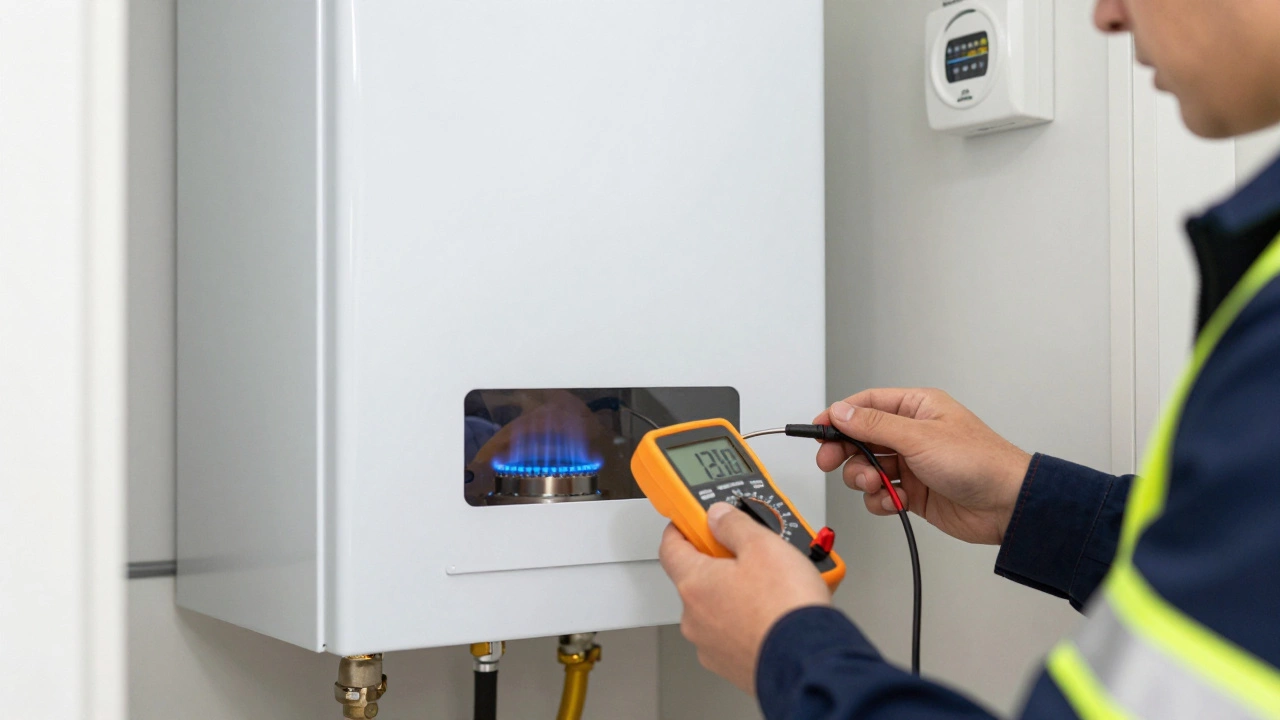
- Commissioning: This is critical. The technician tests for gas leaks, checks combustion efficiency, and ensures the system pressures are correct. They will provide a commissioning certificate, which is required for warranty validity.
Always hire a licensed gas fitter. In South Australia, unlicensed work on gas appliances is illegal and voids insurance. Check their credentials. Look for reviews specifically mentioning punctuality and cleanliness, as boiler installs can be messy.
Environmental Impact and Future-Proofing
Australia is moving towards stricter emissions standards. While gas remains dominant in residential heating, the grid is greening. Newer boilers are designed to meet higher environmental benchmarks. Some even offer hybrid compatibility, allowing integration with heat pumps later on.
Replacing an inefficient boiler reduces your carbon footprint directly. Less gas burned means fewer greenhouse gases emitted. If you care about sustainability, upgrading is one of the highest-impact changes you can make to your home’s energy profile.
How long does a typical boiler last?
A well-maintained modern gas boiler typically lasts between 10 and 15 years. Older, non-condensing models may last up to 20 years but operate much less efficiently. Regular annual servicing can extend this lifespan by preventing minor issues from becoming major failures.
Is it cheaper to repair or replace a 12-year-old boiler?
For a 12-year-old boiler, replacement is usually the better financial choice. At this age, the unit is near the end of its expected life. Unless the repair is very minor (under $300), the cumulative cost of future repairs and higher energy bills will exceed the cost of a new, efficient unit within a few years.
What are the signs my boiler needs replacing?
Key signs include frequent breakdowns, rising energy bills without increased usage, unusual noises (kettling or banging), yellow flames instead of blue, visible rust or leaks, and inconsistent heating across rooms. If your boiler is over 10 years old and showing multiple symptoms, replacement is advisable.
Can I install a new boiler myself?
No. Installing a gas boiler requires a licensed gas fitter in Australia. DIY installation is illegal, dangerous, and will void your home insurance and the manufacturer's warranty. Always hire a qualified professional to ensure compliance with safety standards.
How much does it cost to replace a boiler in Adelaide?
In Adelaide, a complete boiler replacement including supply and installation typically costs between $3,500 and $5,500 for a standard condensing unit. Prices vary based on the brand, complexity of the installation, and any additional work needed like pipework upgrades or flue modifications.