Electric Stove Repair vs. Replace Calculator
Make the Smart Decision
Enter your stove's age and repair estimate to see if repair or replacement is the better choice.
How much does it really cost to fix an electric stove? You turn the knob, nothing happens. The burner won’t heat. The oven won’t reach temperature. You stare at it, wondering: should I just buy a new one? Or is a repair worth the time and money? The answer isn’t simple. It depends on your stove’s age, the problem, and what you’re willing to spend.
When a Repair Makes Sense
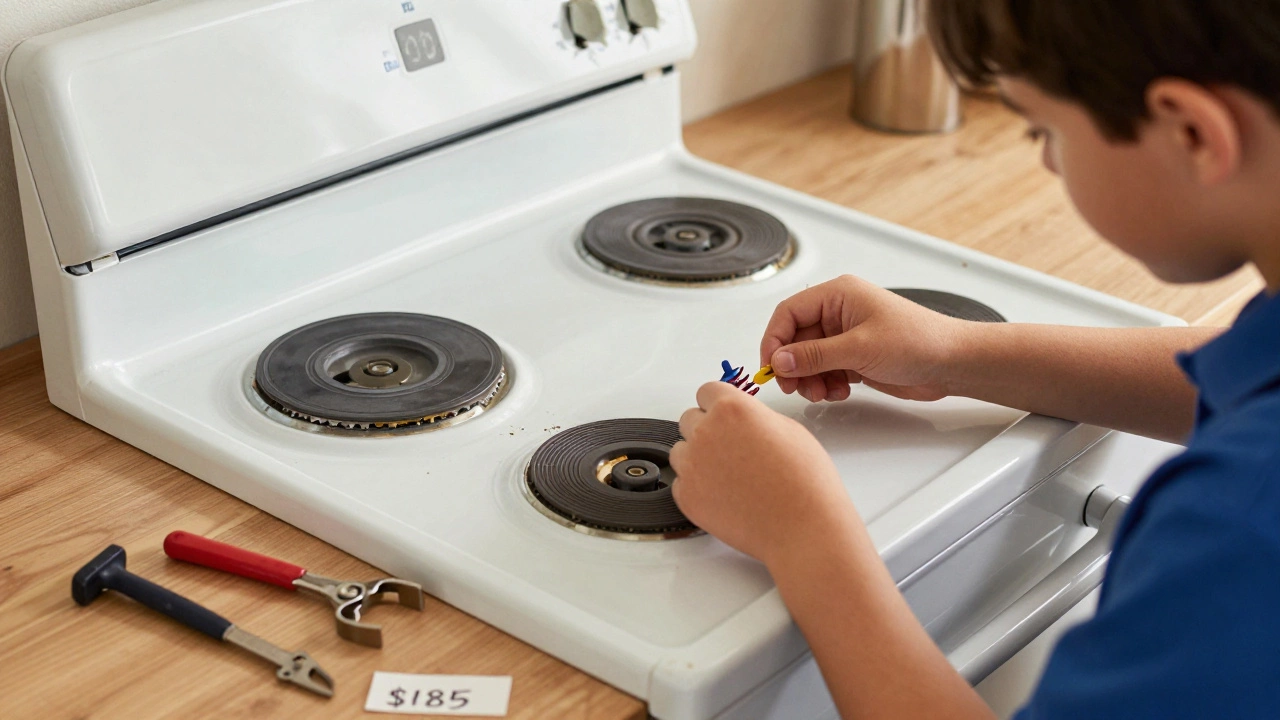
If your electric stove is under 10 years old and the issue is isolated-like a broken heating element, faulty thermostat, or a damaged switch-a repair is often the smart choice. These parts are common, cheap, and easy to replace. A heating element costs between $25 and $50. A thermostat runs $30 to $70. Labor usually adds $100 to $150. That’s $150 to $250 total to fix something that should last another 5 to 10 years.
Real-world example: A 7-year-old GE stove stopped heating. The technician found a failed bake element. Replaced it. Worked perfectly. Total cost: $185. A new mid-range electric range? At least $700. That’s a 75% savings.
Also worth considering: if your stove has special features you like-custom color, built-in timer, dual ovens, or a specific burner layout-it’s harder to find an exact replacement. Repairs preserve your setup without forcing you into a new design you didn’t ask for.
When It’s Time to Replace
But not every problem is fixable. If your stove is 15+ years old, the wiring is outdated, or multiple components are failing, repair becomes a money pit. Older stoves use parts that are no longer made. Technicians have to scavenge from discontinued models or use incompatible replacements. That increases cost and risk.
Here’s a red flag: if the control board is damaged. Modern stoves rely on electronic control boards to manage temperature, timers, and safety. If it fails, replacement costs $200 to $400. That’s nearly half the price of a new entry-level stove. And even if you fix it, other parts are likely to fail soon. The average lifespan of an electric stove is 13 to 15 years. If you’re past that, you’re playing with fire.
Another sign: if the stove is leaking electricity or tripping breakers. That’s not a simple part swap. That’s a wiring issue, possibly in the wall or junction box. Fixing it might require an electrician, adding $200+ to the bill. At that point, replacing the stove is safer and cheaper.
Cost Comparison: Repair vs. Replace
| Option | Typical Cost | Time to Complete | Expected Lifespan After |
|---|---|---|---|
| Repair (single part) | $150-$300 | 1-2 hours | 5-10 years |
| Repair (control board) | $300-$600 | 2-4 hours | 2-5 years |
| New entry-level stove | $600-$900 | Same day | 13-15 years |
| New mid-range stove | $1,000-$1,500 | Same day | 15-20 years |
Notice something? If your repair cost is over $400 and your stove is older than 10 years, you’re probably better off buying new. The math doesn’t lie.
What You Might Not Realize About Modern Stoves
Newer electric stoves aren’t just about looks. They’re more efficient. A 2025 model uses 15-20% less energy than one from 2010. That’s $30 to $60 saved per year on your electric bill. Over five years, that’s $150 to $300 back in your pocket. That’s almost the cost of a basic repair.
Modern units also have better safety features: auto shut-off, child locks, precise temperature control. Older stoves? They might still use mechanical timers that stick, or burners that stay hot long after you turn them off. That’s a fire risk.
And warranty. A new stove comes with a 1-year full warranty. Many parts have 5-year coverage. A repair? You get 90 days. That’s it.
DIY or Call a Pro?
Some fixes you can do yourself. Replacing a heating element? Easy. You unplug the stove, remove the panel, swap the wires, snap it back in. YouTube tutorials walk you through it. But if you’re not comfortable working with 240-volt circuits, don’t risk it. One mistake and you could fry your home’s wiring-or yourself.
For anything involving the control panel, wiring harness, or internal sensors, hire a technician. They carry diagnostic tools that show exactly where the fault is. Most charge $75 to $120 just for the service call. But if they fix it on the spot, that cost gets rolled into the part price.
Pro tip: Ask for a written quote before they start. Some shops will tell you the part is $100, then add $200 in labor. Others bundle it. Get clarity.
What to Do Right Now
Here’s your quick decision flow:
- Check the stove’s age. If it’s older than 10 years, lean toward replacement.
- What’s broken? If it’s one part-element, switch, fuse-repair is likely worth it.
- Is the control panel flickering or showing error codes? That’s a red flag. Get a quote for replacement.
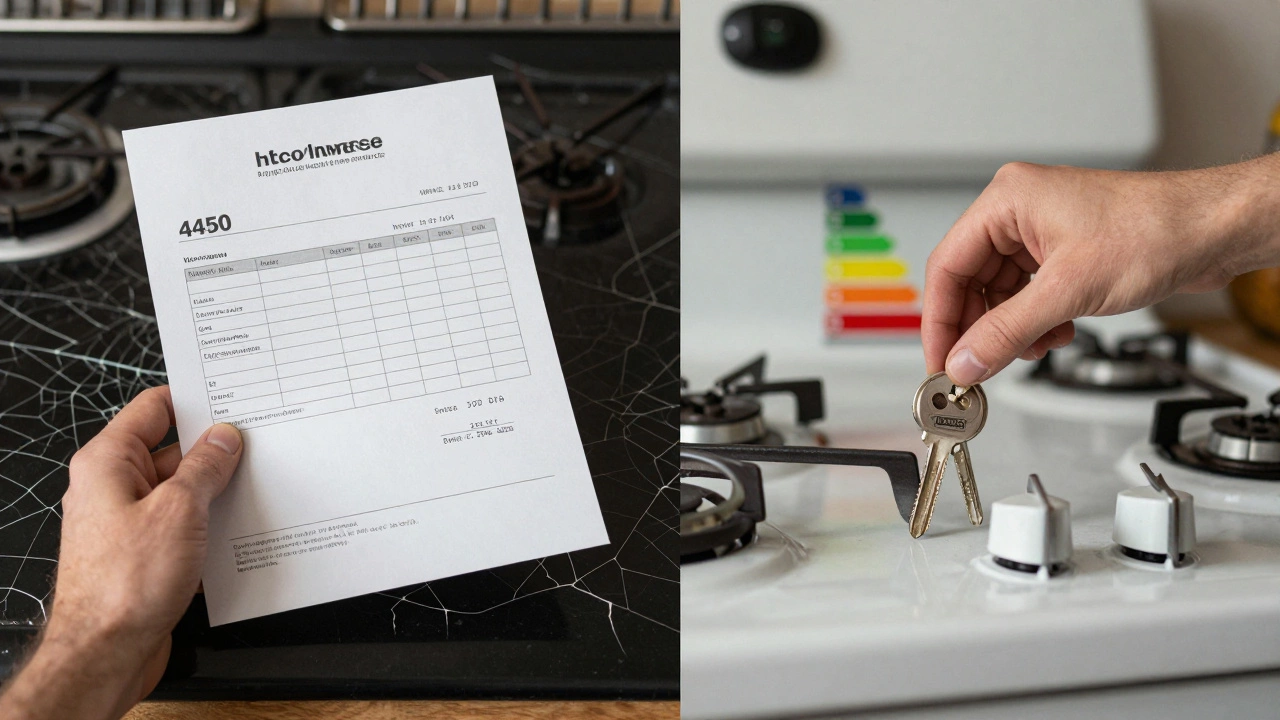
- Get two repair quotes. If one is over $400, consider a new stove.
- Look at energy efficiency ratings. A new stove might pay for itself in 3-5 years.
There’s no one-size-fits-all answer. But if you’re sitting on a 12-year-old stove with a broken oven, and the repair estimate is $450, the smart move isn’t to fix it. It’s to start shopping.
What Happens If You Wait?
Delaying a repair isn’t harmless. A faulty heating element can overheat and damage the cooktop surface. A broken thermostat can cause uneven cooking, wasting food and energy. Worst case? A short circuit sparks a fire. Insurance won’t cover damage from a known, unaddressed fault.
And if your stove dies completely during the holidays, you’re stuck with last-minute replacement prices. Appliances go up 10-15% during November and December. Plan ahead.
Is it cheaper to repair or replace an electric stove?
It depends. If the stove is under 10 years old and only one part is broken, repair is usually cheaper. But if the repair costs more than half the price of a new stove-or if the stove is over 12 years old-it’s smarter to replace it. New models are more efficient, safer, and come with warranties.
How long should an electric stove last?
Most electric stoves last between 13 and 15 years with normal use. Higher-end models with better materials can last up to 20 years. But once you hit 10 years, parts become harder to find, and failure rates increase.
Can I repair my electric stove myself?
You can replace simple parts like heating elements or switches if you’re comfortable with basic tools and electrical safety. Always unplug the stove first. But never attempt to fix the control board, wiring, or power supply unless you’re a licensed electrician. Mistakes here can cause fires or electrocution.
What are the most common electric stove problems?
The top three are: 1) Failed heating elements (burners or oven), 2) Faulty thermostats (oven doesn’t heat right), and 3) Broken infinite switches (burners won’t turn off or on). Control board failures are rising in newer models, especially those with touchscreens.
Should I buy a new stove if mine is still working but slow?
If your stove takes 30 minutes to preheat when it used to take 12, it’s losing efficiency. Modern stoves heat up 40% faster and use less energy. You’ll save money on your bill, and cooking will be more consistent. It’s worth considering a replacement even if it still works.