If your freezer suddenly goes quiet and the ice cream starts softening, you’re not alone. Thousands of households in Adelaide and across Australia face this exact problem every year-especially during heatwaves or power surges. The good news? Most freezer failures aren’t permanent. Before you call a technician or start shopping for a replacement, there are simple things you can check yourself. Many times, fixing it takes less than 15 minutes and costs nothing.
First, unplug it and wait
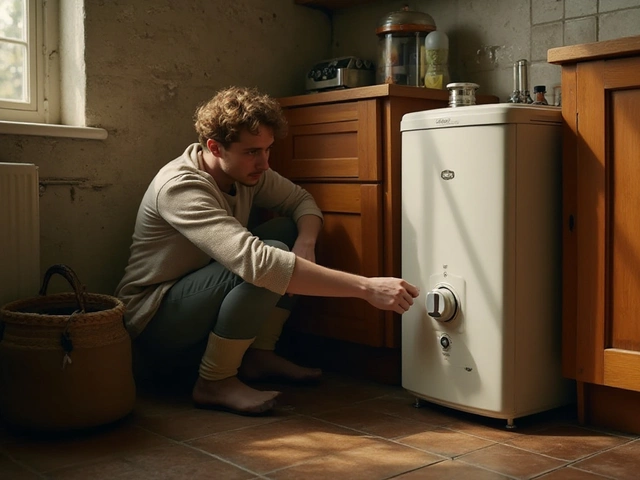
Yes, really. Unplug the freezer for 5 minutes. This isn’t magic-it’s reset. Freezers have electronic control boards that can lock up from power spikes, especially during storms or when the fridge compressor kicks in. Unplugging cuts power completely, letting the board reboot. After 5 minutes, plug it back in. You should hear the compressor hum back to life within 30 seconds. If it does, let it run for 2 hours and check the temperature. If the freezer is now cold again, you dodged a costly repair.
Check the temperature setting
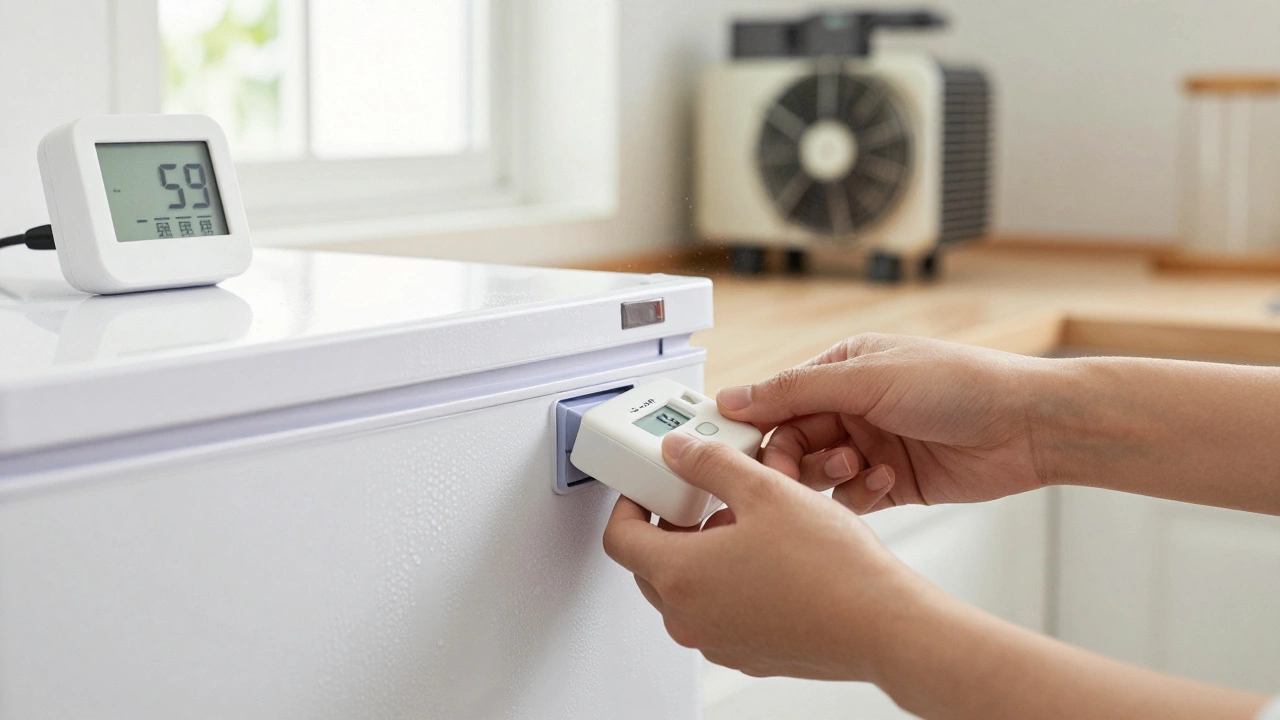
It sounds obvious, but people accidentally bump the dial or press buttons by mistake. Some modern freezers have digital panels with a ‘Child Lock’ feature that disables controls without showing a warning. If your freezer’s display is blank or the buttons don’t respond, look for a lock icon. Hold the lock button for 3 seconds to unlock it. Then confirm the temperature is set to -18°C or lower. If it’s set to ‘0°C’ or ‘Warmer’, that’s why your food is thawing. Reset it and wait 4 hours. No change? Move to the next step.
Inspect the condenser coils
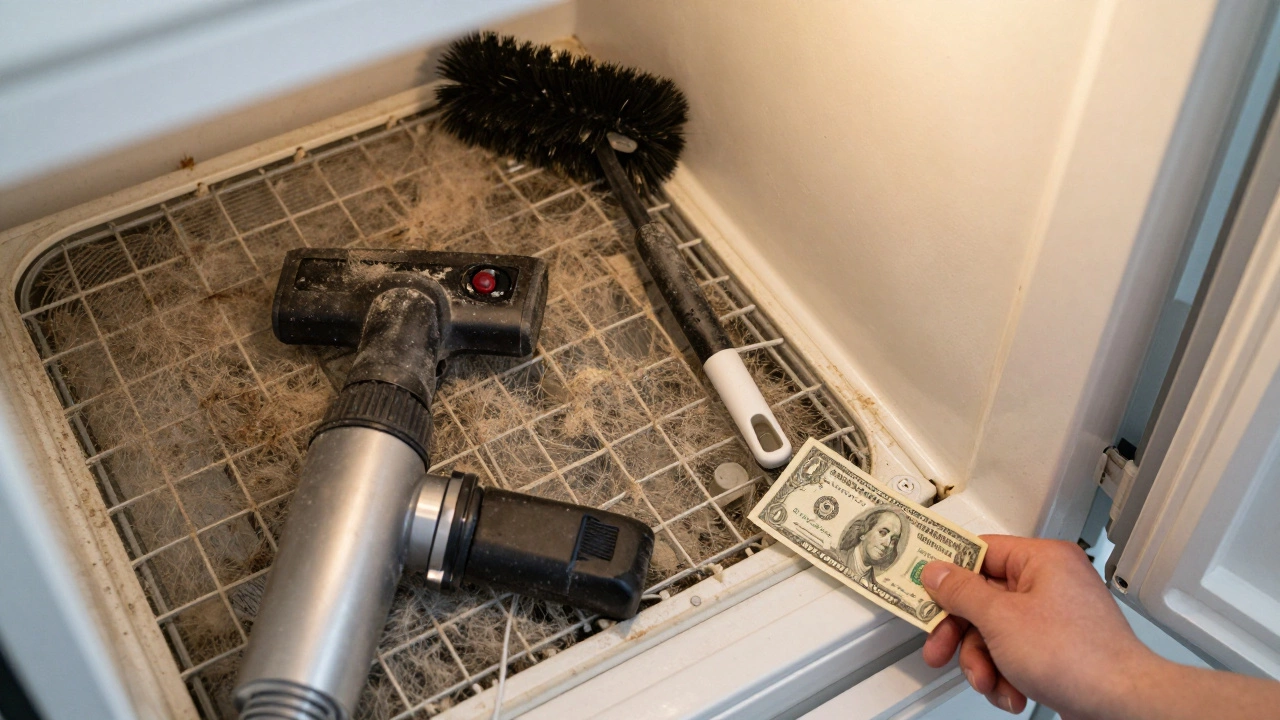
Most freezers have coils at the back or bottom that release heat. If they’re covered in dust, pet hair, or kitchen grease, the freezer can’t cool properly. Pull the unit away from the wall. Use a vacuum with a brush attachment or a coil brush (available at hardware stores for under $15) to clean the coils. Do this every 6 months-it’s the #1 thing that extends freezer life. If you’ve never cleaned them, a thick layer of gunk could be the culprit. After cleaning, plug it back in and wait 6 hours. If the temperature drops, you’ve fixed it.
Listen for the compressor
Get down on the floor and put your ear near the bottom back of the freezer. If you hear nothing-not even a quiet hum-it’s likely the compressor has failed. If you hear a clicking sound every few seconds but no hum, the start relay might be bad. That’s a cheap fix ($20-$40 part) and easy to replace if you’re handy. You can buy a universal start relay kit online. Turn off the power, remove the access panel at the back, swap the relay, and plug it back in. If the compressor runs after that, you saved hundreds.
Check the door seal
A broken door gasket is the silent killer of freezers. If cold air leaks out, the compressor runs non-stop and eventually burns out. Run your hand along the edge of the door. If you feel cold air escaping, or if the seal looks cracked, brittle, or doesn’t stick to the frame, it’s bad. Test it with a dollar bill: close the door on it. If you can pull the bill out easily, the seal is worn. Replacement gaskets cost $30-$70 and usually snap in place. Don’t ignore this. A bad seal can double your electricity bill and kill the compressor in under a year.
Look for frost buildup
If your freezer is covered in thick ice-more than 6mm thick-it’s not cooling properly. This happens when the defrost heater fails or the thermostat is stuck. A manual defrost freezer should be defrosted every 6 months. If yours is automatic and ice is building up, the defrost timer or heater is broken. Unplug the freezer, remove all food, and let it thaw completely. Wipe it dry. Plug it back in. If it cools fine now but ices up again in 2 weeks, the defrost system is faulty. Replacing the defrost heater or thermostat costs $50-$100 and is worth it if your freezer is under 8 years old.
Check the evaporator fan
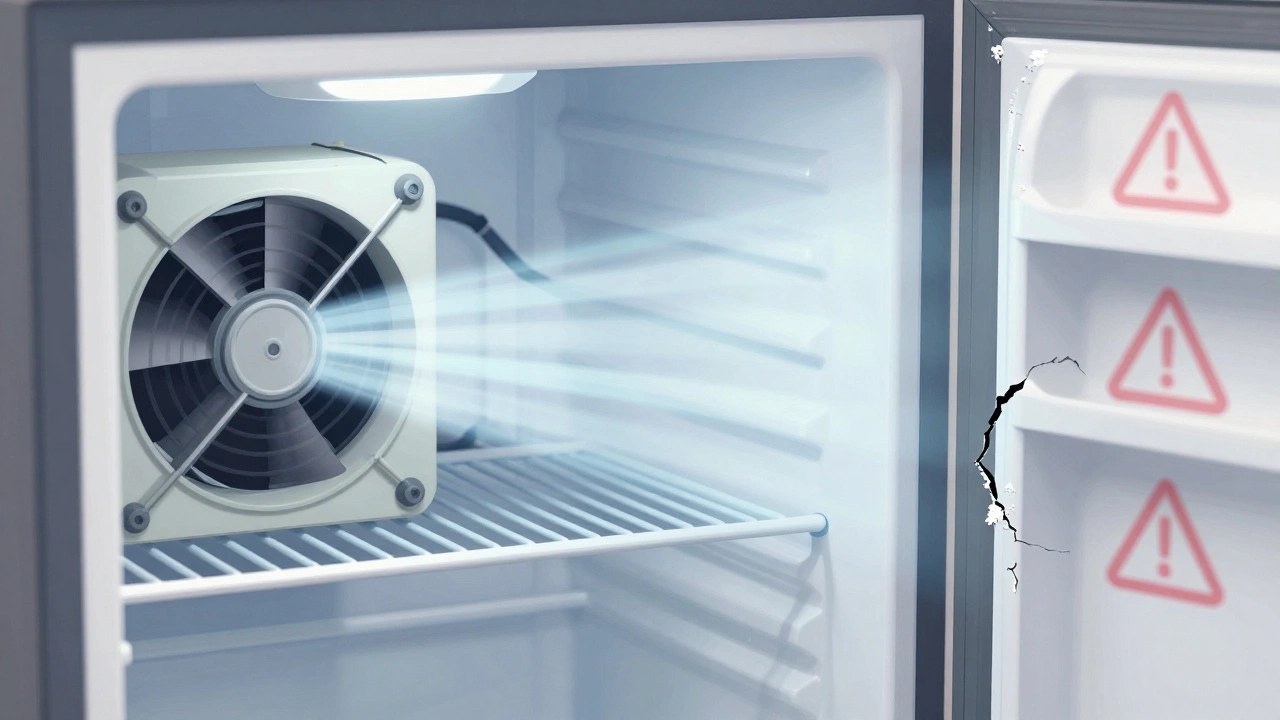
The evaporator fan circulates cold air inside the freezer. If it’s stuck or noisy, cold air won’t reach your food. Open the freezer and listen. If it’s silent while the compressor is running, the fan motor may be dead. In most models, you can access the fan by removing the back panel inside the freezer. Look for ice blocking the blades-if there’s ice, defrost it first. If the blades spin freely but the motor doesn’t turn on, the fan motor needs replacing. It’s a $40 part and takes 20 minutes to swap. You’ll hear the difference immediately.
When to call a professional
If you’ve checked all the above and the freezer still won’t cool, it’s likely a refrigerant leak or a failed compressor. These are serious issues. Refrigerant leaks require certified technicians with special tools and licenses. Compressor replacement costs $400-$800 and often isn’t worth it unless your freezer is less than 5 years old. Check the warranty. If it’s still covered, contact the manufacturer. If it’s older than 8 years, consider replacement. A new energy-efficient freezer will save you $100+ a year on electricity.
Prevent it from happening again
Most freezer failures are preventable. Here’s what to do:
- Keep coils clean every 6 months
- Check the door seal monthly
- Avoid overloading the freezer-it blocks airflow
- Don’t open the door more than 3-4 times a day
- Use a surge protector, especially in areas with unstable power
- Keep the freezer in a cool, dry place, not next to the oven or in direct sunlight
Freezers last 10-15 years with basic care. Skipping maintenance cuts that in half. A quick wipe-down and a check of the seal can add years to your appliance’s life.
What to do with spoiled food
If your food thawed and reached above 4°C for more than 2 hours, it’s unsafe. Don’t taste it. Frozen meat, seafood, and poultry should be thrown out if they’re soft, warm, or have an odd smell. Ice cream and frozen desserts are always a no-go if melted and refrozen. Vegetables and bread can sometimes be refrozen if they’re still cold to the touch and have no odor. When in doubt, throw it out. Food poisoning isn’t worth the risk.
Why is my freezer running but not cold?
If the compressor is running but the freezer isn’t cooling, the problem is usually blocked airflow, a dirty condenser coil, a broken evaporator fan, or a faulty thermostat. Check for frost buildup, clean the coils, and listen for the fan. If those are fine, the thermostat or defrost system may need replacement.
Can a power outage damage my freezer?
A short power outage won’t damage the freezer, but a surge when power returns can fry the control board or start relay. Always plug your freezer into a surge protector. If the freezer doesn’t turn on after a storm, unplug it for 5 minutes, then plug it back in. If it still doesn’t work, the board may be dead.
How long will food stay frozen if the power goes out?
A full freezer will keep food frozen for about 48 hours if the door stays closed. A half-full freezer lasts about 24 hours. Don’t open the door. Keep ice packs or frozen water bottles on top of food to extend cooling time. If the power is out longer than 24 hours, consider moving perishables to a cooler with ice.
Is it worth repairing a 10-year-old freezer?
If the repair cost is over $300, it’s usually not worth it. A new energy-efficient freezer costs $600-$1,000 but saves $80-$120 a year on electricity. Plus, modern models are quieter, hold temperature better, and have better frost control. If your freezer is 10+ years old and needs a compressor or refrigerant fix, replacement is the smarter choice.
Why does my freezer make a loud buzzing noise?
A loud buzzing usually means the compressor is struggling-often because of a dirty condenser coil, low refrigerant, or a failing start relay. Clean the coils first. If the noise continues, the compressor or relay may be failing. If the noise is new and loud, don’t ignore it. It’s a sign the compressor is overheating and could fail soon.
Next steps if nothing works
If you’ve tried every step and your freezer still won’t cool, it’s time to make a decision. If the unit is under warranty, contact the manufacturer. If it’s older than 8 years, compare the cost of repair to a new model. Look for Energy Star-rated freezers-they use 20% less power. Consider a chest freezer for better efficiency and longer cold retention during outages. If you’re in Adelaide, local appliance repair shops often offer free diagnostics. Get a quote before you commit. Sometimes, the fix is simple. Sometimes, it’s time to upgrade.