Microwave Lifespan Estimator
Answer a few questions to estimate your microwave's remaining lifespan and determine when replacement is recommended.
Estimated Remaining Lifespan
Most people treat their microwave like a silent kitchen helper - you press a button, food heats up, and you never think about it again. But when it starts acting up - sparking inside, taking forever to warm your coffee, or just turning off mid-cycle - you start wondering: how long should a microwave last anyway? The truth isn’t as simple as the 7-10 year answer you’ll find on random blogs. Real-world performance depends on how you use it, what kind you own, and even how often you clean it.
Typical Microwave Lifespan: What the Numbers Don’t Tell You
The manufacturer’s estimate for a countertop microwave is usually 7 to 10 years. That sounds solid, right? But in real homes - especially busy ones - most microwaves start showing serious wear by year 5. A 2024 survey of 1,200 Australian households found that 63% of microwaves failed before reaching 8 years, with the average failure age at 6.7 years. Why? Because these aren’t industrial machines. They’re consumer electronics built with cost-cutting in mind. The magnetron (the part that actually generates heat) is the weakest link. It’s not designed for daily heavy use. If you’re reheating meals three times a day, running it for 5 minutes straight, or using it to steam vegetables every morning, you’re pushing it harder than most people realize.
Over-the-range microwaves (the ones built into cabinetry) tend to last a bit longer - around 8 to 10 years - because they’re usually higher-end models with better cooling and more robust components. But even these aren’t immune. Heat buildup from the stove below, grease buildup in vents, and constant exposure to steam all shorten their life.
What Kills a Microwave Faster Than Usual?
It’s not just age. It’s how you treat it. Here are the top five things that kill your microwave early:
- Running it empty. Microwaves need food or liquid to absorb the energy. If you accidentally hit start with nothing inside, the waves bounce back into the magnetron. One time might not break it. Do it weekly? You’re asking for trouble.
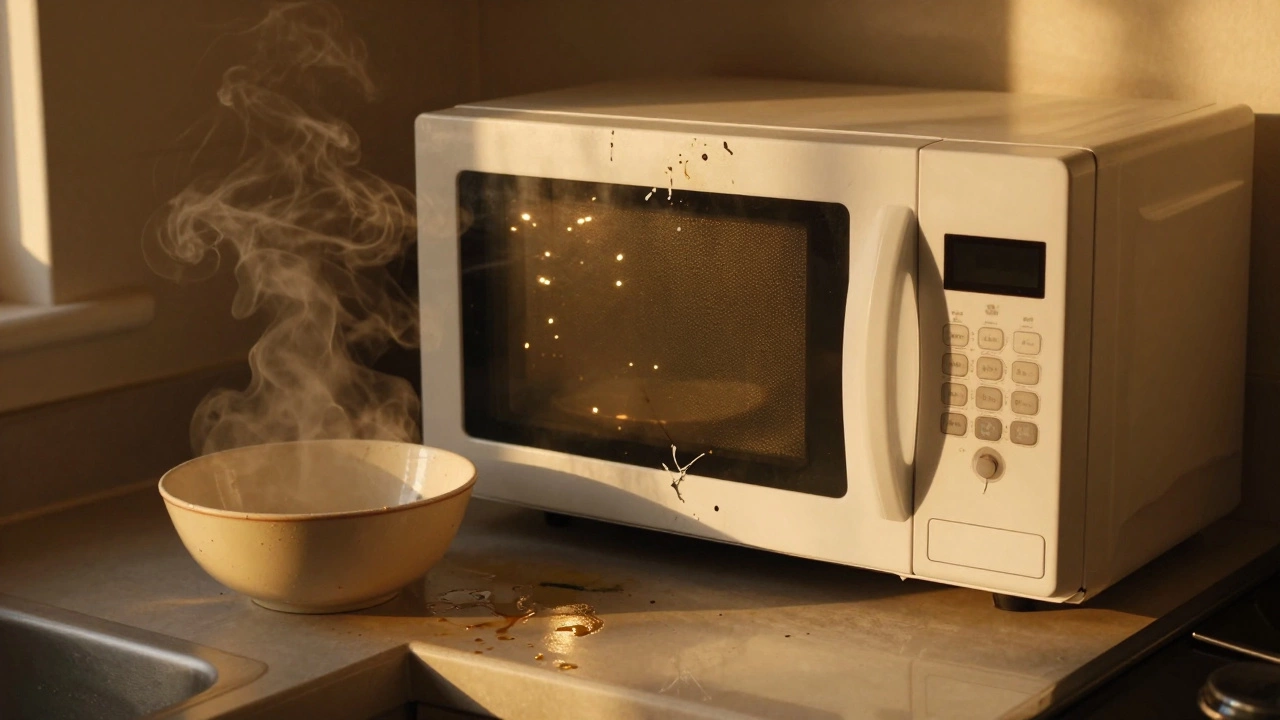
- Using metal or foil. Even small bits of foil or metallic trim on containers can cause arcing. That’s those loud sparks you see. Each spark damages the interior coating and can eventually fry the waveguide cover.
- Not cleaning it. Splattered sauce, burnt popcorn residue, and grease build up over time. This isn’t just gross - it absorbs microwave energy, causing uneven heating and overheating components. A dirty microwave works harder, and that stresses the motor and electronics.
- Overloading it. Trying to heat a full casserole dish or multiple containers at once? That’s asking the magnetron to work beyond its design limits. It’s like revving a car engine nonstop.
- Plugging into a weak circuit. If your microwave shares a circuit with your toaster, kettle, and fridge, voltage drops can cause inconsistent power. That stresses the internal power supply. In older homes, this is a silent killer.
Signs Your Microwave Is Done - Beyond Just Not Working
You don’t need to wait until it stops heating entirely to know it’s time to replace it. Watch for these red flags:
- It takes twice as long to heat food. If your 1-minute coffee now takes 2.5 minutes, the magnetron is losing power. This isn’t a setting issue - it’s hardware decay.
- Unusual noises. Loud humming, buzzing, or clicking that wasn’t there before? That’s often the turntable motor or high-voltage diode failing. A faint whir is normal. A grinding or rattling sound? Not okay.
- Sparks or flashes inside. Even one spark is a warning. Multiple ones? The waveguide cover (a plastic panel inside) is damaged or coated in carbon. This is a fire risk.
- The door doesn’t seal right. If the door feels loose, doesn’t click shut, or you can see light leaking when it’s running, radiation leakage becomes a concern. Microwaves are shielded for a reason. A broken seal means it’s unsafe.
- The keypad is unresponsive or erratic. Buttons that work randomly or don’t respond at all usually mean the control board is failing. Repairing this costs more than replacing the unit.
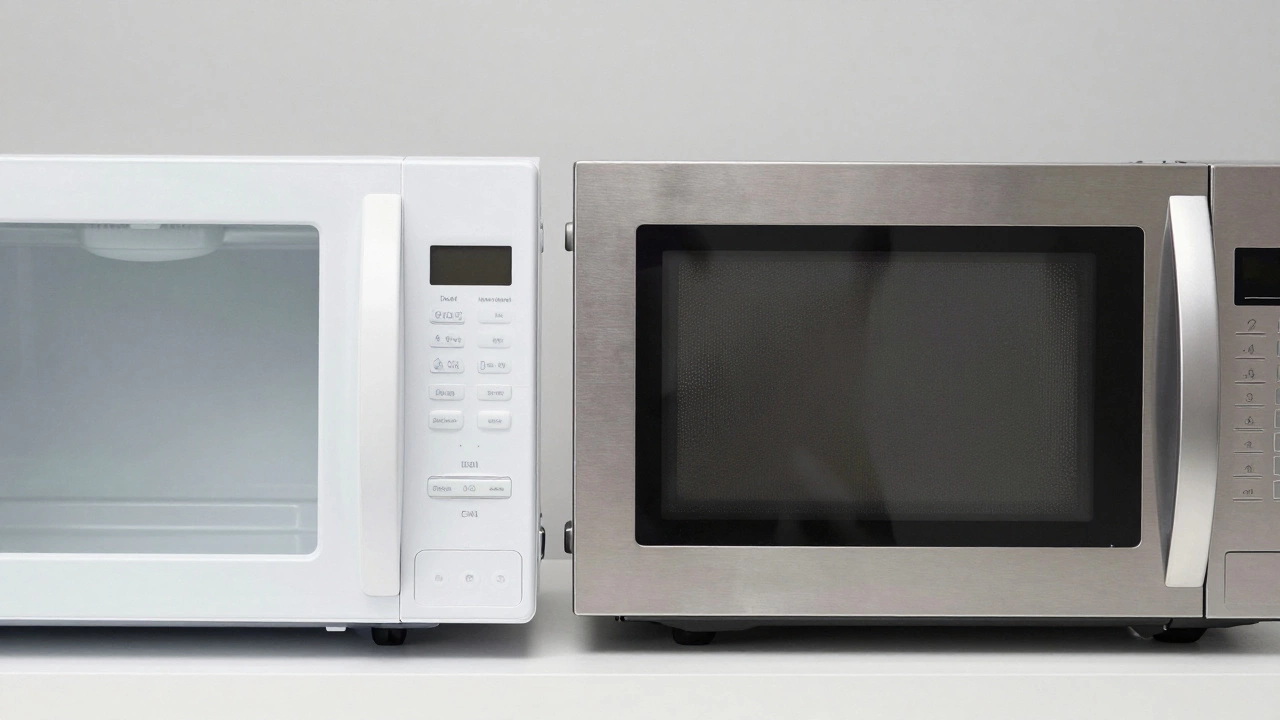
Should You Repair It or Just Replace It?
Here’s the hard truth: most microwave repairs aren’t worth it. A new magnetron costs $80-$150. Labor adds another $100. That’s $180-$250 - more than half the price of a new mid-range microwave. And even if you fix it, you’re only buying another 1-2 years. Most people who repair their microwave end up replacing it within 12 months anyway.
There are two exceptions:
- Your microwave is built into cabinetry - replacing it means cutting into your kitchen, buying a new vent system, and reconfiguring wiring. In that case, repair might make sense if it’s under 6 years old.
- The only issue is the turntable motor or door switch - both are simple fixes under $50. If the heating still works perfectly, it’s worth patching.
For 90% of people, replacing the microwave is smarter. You get a warranty, better efficiency, modern safety features, and often a smarter interface. New models in 2026 use 20-30% less energy than those from 2018. That adds up over time.
How to Pick a Replacement That Lasts Longer
Not all microwaves are created equal. If you want one that lasts past 8 years, look for these features:
- Inverter technology. Instead of turning the power on and off (which stresses the system), inverter microwaves deliver steady power. This reduces wear and heats food more evenly. Brands like Panasonic and Sharp lead here.
- Stainless steel cavity. Cheaper models use painted interiors that chip and rust. Stainless steel lasts longer and resists stains.
- Heavy-duty door latch. A solid, metal latch that clicks firmly is better than a flimsy plastic one. Test it in-store if you can.
- At least a 1-year full warranty. Most brands offer 1 year. If a company offers 2 years on parts, they’re confident in their build.
- Higher wattage (1000W+). Lower-wattage units (700W or less) have to run longer to heat food, which means more strain. Go for 1000-1200W for faster, gentler heating.
What to Do With Your Old Microwave
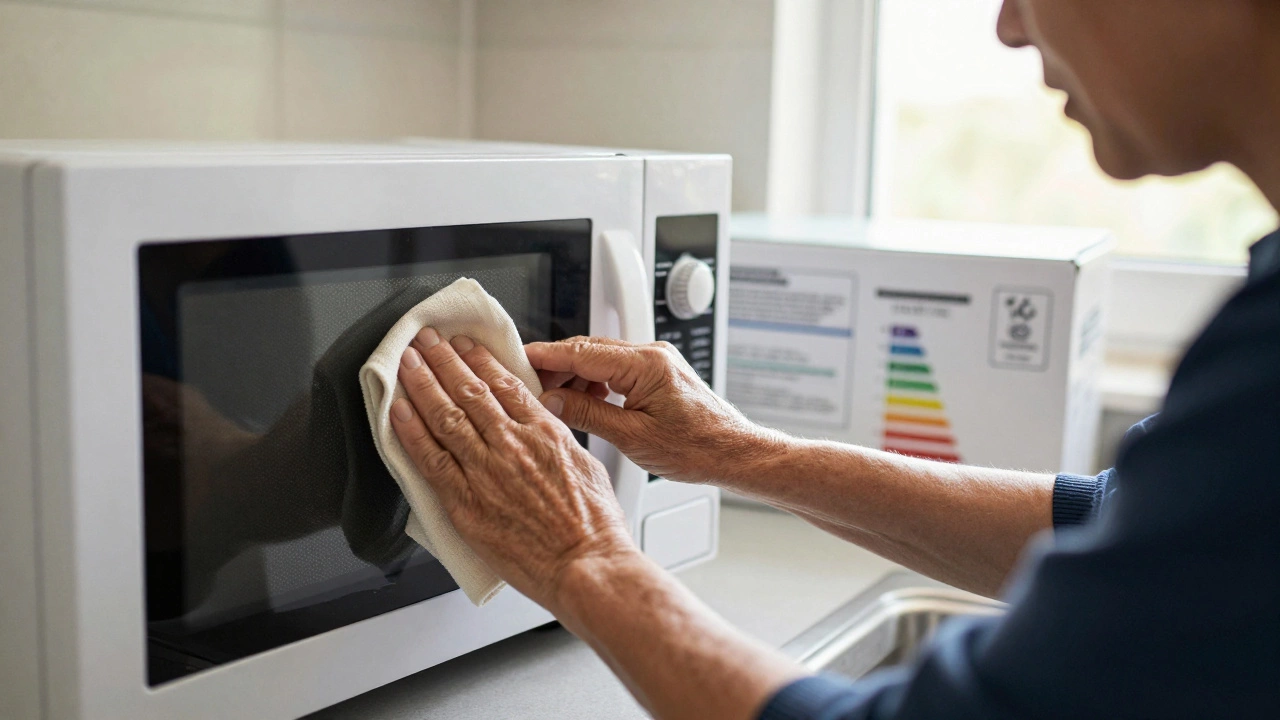
Don’t toss it in the bin. Microwaves contain small amounts of hazardous materials - capacitors, circuit boards, and sometimes even trace metals. Adelaide has free e-waste drop-off points at Recycle It Adelaide and South Australia Waste Exchange. Many appliance retailers also take old units when you buy a new one. Some charities even accept working microwaves for low-income households.
If it still works but is slow or noisy, consider donating it. A microwave that’s 7 years old but still heats food? That’s a gift to someone who needs it.
Final Take: Your Microwave Isn’t Forever - But You Can Make It Last
There’s no magic number. A microwave in a quiet home, used twice a day, cleaned weekly, and never run empty might hit 12 years. One in a family of four, used for reheating, defrosting, and steaming every single day? It’ll likely die by year 5. The key isn’t waiting for it to break - it’s watching for the warning signs and replacing it before it becomes a hazard. Most people wait too long. They keep using a microwave that’s overheating, sparking, or taking forever - and then panic when it dies suddenly. Plan ahead. Keep an eye on performance. And when it’s clear it’s done? Replace it. Not because you have to - but because you deserve a kitchen that works reliably.
How long does a microwave usually last?
Most microwaves last between 5 and 8 years in real-world use, though manufacturers often claim 7-10 years. Heavy daily use, poor maintenance, or electrical issues can cut that down to 3-4 years. Over-the-range models tend to last longer, averaging 8-10 years.
Is it worth repairing a microwave?
In most cases, no. Repairing a microwave - especially replacing the magnetron or control board - costs $150-$250, which is often more than half the price of a new unit. The only exceptions are if the microwave is built into cabinetry or if the issue is a simple, cheap fix like a broken turntable motor.
What causes a microwave to stop heating?
The most common cause is a failing magnetron - the part that generates microwaves. Other causes include a blown high-voltage diode, a faulty capacitor, or a damaged waveguide cover. These are internal components that can’t be easily fixed by the user.
Can a dirty microwave break faster?
Yes. Food residue and grease absorb microwave energy, forcing the unit to work harder to heat food. This creates excess heat that stresses the magnetron and electronics. Regular cleaning - especially wiping the interior after heavy use - can add years to its life.
Should I replace my microwave if it sparks?
Yes. Sparking is a sign of internal damage - usually a damaged waveguide cover or metal debris inside. Even if it still heats, sparks can lead to fire or electrical failure. Stop using it immediately and replace it. Do not attempt to repair it yourself.
What features help a microwave last longer?
Inverter technology delivers steady power instead of cycling on/off, reducing stress on components. Stainless steel interiors resist corrosion. A solid metal door latch ensures proper sealing. Higher wattage (1000W+) heats food faster, reducing run time. Look for models with at least a 1-year full warranty.