Water Heater Brand Selector
Answer these quick questions to see which brand aligns best with your situation.
Your Recommended Brand:
Brand Name
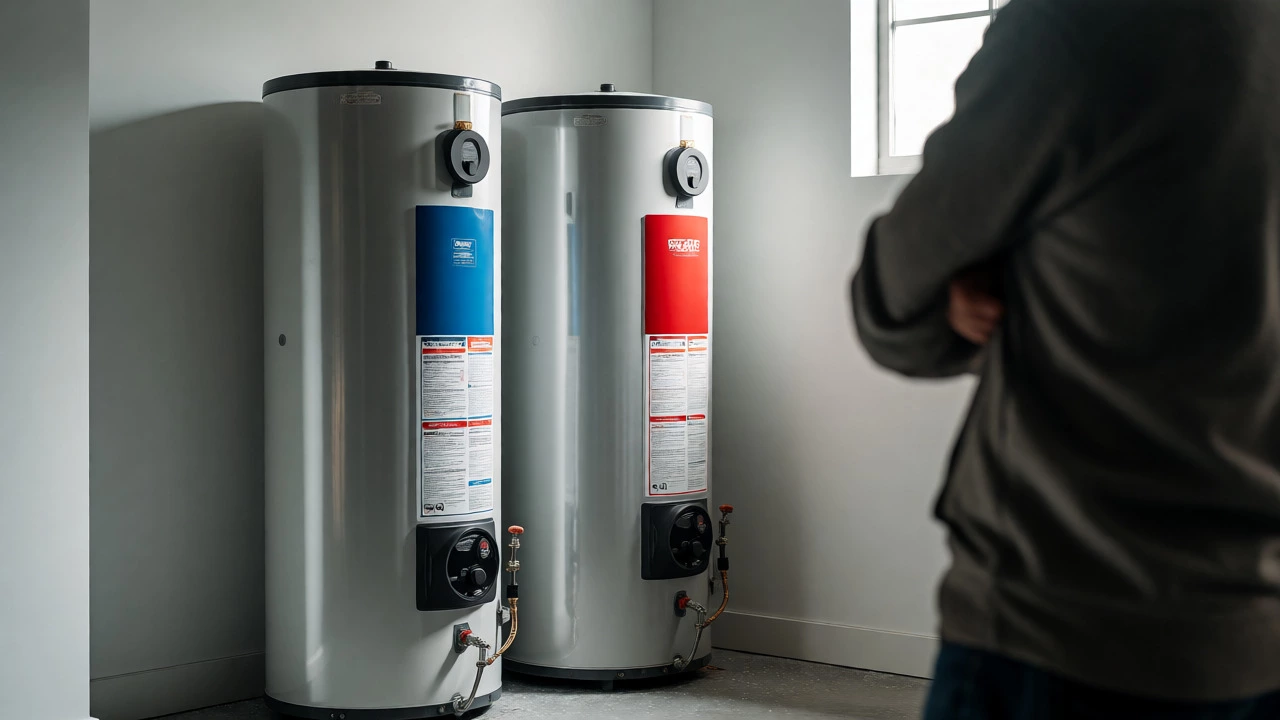
You’re standing in your utility room, staring at two shiny new boxes. One says Rheem and the other AO Smith. You need a hot shower tomorrow morning, but you don’t want to replace this unit in five years. It’s a common dilemma. Both are giants in the industry, both make solid tanks, but they aren’t identical twins. Choosing the wrong one could mean higher energy bills or more frequent repairs down the track.
The Short Answer: Who Wins?
If you want raw durability and premium build quality, AO Smith usually takes the crown. Their commercial-grade components often outlast competitors by several years. But if you’re looking for better value, wider availability of parts, and easier serviceability, Rheem is often the smarter buy. There is no single "best" brand because it depends on whether you prioritize longevity over upfront cost.
| Feature | Rheem | AO Smith |
|---|---|---|
| Price Point | Mid-range to Premium | Premium to High-End |
| Lifespan Expectancy | 8-12 years (standard models) | 10-15+ years (with proper maintenance) |
| Warranty Support | Good network, sometimes slower response | Strong reputation, direct support options |
| Tankless Tech | Excellent mid-tier efficiency | Industry leader in condensing tech |
| Parts Availability | Very high, easy to find locally | High, but specialized techs preferred |
Why AO Smith Often Costs More (And If It’s Worth It)
When you look at the price tag, AO Smith units frequently sit 10-20% higher than comparable Rheem models. Why? It comes down to internal construction. AO Smith heavily utilizes glass-lined steel tanks with enhanced corrosion resistance. They also invest significantly in their heat exchanger designs, particularly for gas models. If you live in an area with hard water-like many parts of Adelaide where mineral buildup kills heaters quickly-an AO Smith might save you money long-term. Their tanks resist scale better. However, if you have soft water or already treat your supply, that premium engineering might be overkill. You’d be paying for protection you don’t strictly need.
Rheem: The Serviceable Workhorse
Rheem dominates the market share for a reason: accessibility. Walk into almost any plumbing supply store, and you’ll find Rheem parts. Heating elements, thermostats, valves-everything is standardized and cheap. This matters when your hot water dies at 2 AM. A plumber can fix a Rheem faster because they’ve likely serviced dozens just like it that week. Their warranty claims process is generally straightforward, though some users report longer wait times for authorized service agents compared to AO Smith’s direct lines. For homeowners who plan to keep their house for 5-7 years before selling, Rheem offers the best return on investment. You get reliable hot water without breaking the budget.
Tankless Showdown: Efficiency Matters
If you’re going tankless, the gap narrows, but AO Smith still leads in innovation. Their condensing tankless units achieve thermal efficiencies upwards of 96%. Rheem’s non-condensing models hover around 80-84%, while their condensing line competes closely with AO Smith. Here’s the catch: tankless units require specific venting materials. AO Smith often requires stainless steel or PVC depending on the model, which can add $300-$500 to installation costs. Rheem’s newer models sometimes allow cheaper venting options. Always check the installation manual before buying. The sticker price isn’t the final price.
Maintenance Tips to Extend Life Regardless of Brand
Whether you pick Rheem or AO Smith, neglect will kill them both. Here’s how to keep yours running:
- Flush the tank annually. Sediment builds up at the bottom, insulating the heating element from the water. This causes overheating and failure. Drain 2-3 gallons until the water runs clear.
- Check the anode rod every 2-3 years. This sacrificial rod attracts corrosive ions instead of your tank walls. If it’s mostly eaten away, replace it. It’s a $20 part that saves a $1,500 tank.
- Set the temperature correctly. Keep it at 120°F (49°C). Higher temperatures accelerate scale buildup and increase energy waste.

Common Failure Points: What Breaks First?
Both brands suffer from similar weak links. In electric models, heating elements fail due to sediment contact. In gas models, thermocouples and igniters wear out. These are consumables, not defects. However, AO Smith has faced criticism regarding leaking pressure relief valves on certain batches manufactured between 2018 and 2021. Rheem had issues with plastic dip tubes cracking in older models. Check recall notices for your specific serial number before installation. It takes two minutes online and could save you a headache.
Installation Complexity: DIY vs Pro
Can you install these yourself? Technically, yes, if you’re handy with plumbing and electrical codes. But warranties often require professional installation to remain valid. AO Smith tends to be stricter about this. Rheem is slightly more forgiving, but always verify local regulations. In Australia, gas work must be done by a licensed gas fitter. Electrical connections usually require a licensed electrician unless you hold the appropriate tickets. Factor labor costs into your decision. Sometimes, paying extra for a pro-installed AO Smith ensures the warranty holds up if things go south.
Final Verdict: Match the Brand to Your Lifestyle
Choose AO Smith if:
- You plan to stay in your home for 10+ years.
- You have hard water and want maximum corrosion resistance.
- You want top-tier tankless efficiency and don’t mind paying for it.
- Budget is a primary concern.
- You want easy access to replacement parts and local service.
- You prefer standard technology with proven reliability.
Which brand has a longer warranty?
Both offer up to 12-year limited warranties on select models. However, AO Smith's warranty terms are often considered more comprehensive regarding labor coverage, whereas Rheem may cover parts only after the first few years. Always read the fine print for your specific model series.
Is Rheem owned by AO Smith?
No, they are separate companies. Rheem Manufacturing Company is owned by Paloma Group, a Japanese corporation. A.O. Smith Corporation is independently traded and headquartered in Milwaukee, Wisconsin. They compete directly in the global market.
Do tankless water heaters really save money?
Yes, but the payback period varies. For households using less than 40 gallons per day, savings can reach 24-34% according to Energy Star data. For heavy usage, savings drop to 8-14%. The initial cost is higher, so calculate your break-even point based on local utility rates.
How often should I replace my water heater?
Standard tank heaters last 8-12 years. Tankless units can last 20+ years with regular descaling. Signs of failure include rusty water, inconsistent temperatures, loud popping noises, or visible leaks around the base.
Can I switch from Rheem to AO Smith easily?
Generally, yes. Most residential water heaters follow standard connection sizes (¾ inch NPT for pipes, standard flue diameters). However, check the physical dimensions. Some AO Smith models are taller or narrower. Ensure your closet or cabinet space accommodates the new footprint.