Dishwasher Repair vs. Replace Calculator
Enter your details below to determine if you should fix your current machine or invest in a new one.
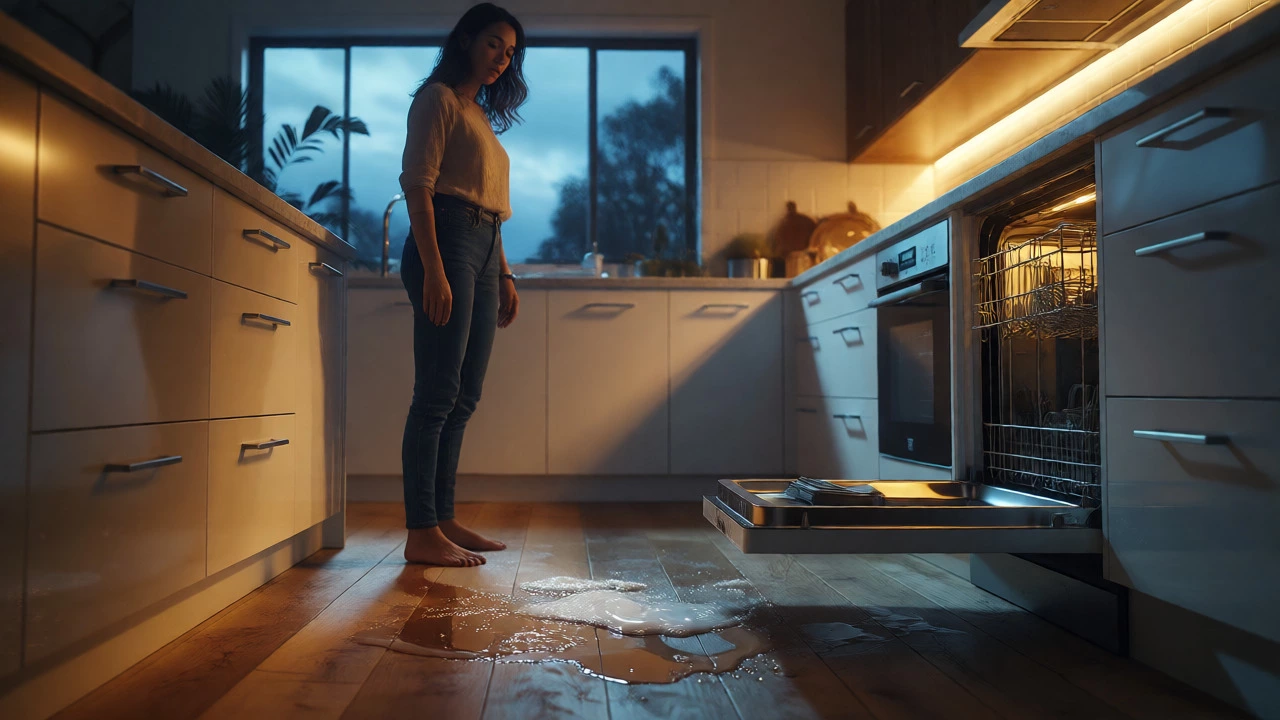
You’re standing in your kitchen, staring at a puddle of soapy water spreading across the floor. Your dishwasher, which has been faithfully cleaning plates for four years, has finally quit. The technician quotes you $250 to fix it. You hesitate. Is it worth fixing a machine that’s already halfway through its expected life, or should you just buy a new one? This is the million-dollar question-well, maybe not a million, but definitely a few hundred dollars.
Here’s the hard truth: there is no single right answer. It depends on the specific fault, the brand of your machine, and your budget. But by the time you finish reading this, you’ll have a clear framework to make that decision without second-guessing yourself. We’re going to break down the math, look at real-world scenarios from Adelaide kitchens, and help you decide whether to grab a screwdriver or head to the store.
The Five-Year Rule and Why Age Matters
Most appliances have a "sweet spot" for reliability. For dishwashers, this usually falls between years two and five. Before year two, you’re likely covered by warranty. After year five, parts become harder to find, and multiple components often fail simultaneously as seals dry out and electronics degrade. At four years old, your dishwasher is in a gray zone. It’s not new, but it’s not ancient either.
Dishwasher is a household appliance used for automatically washing dishes, glassware, flatware, pots, and pans. Modern models typically last between 7 to 12 years with proper maintenance. If yours is failing at year four, it’s either bad luck, poor maintenance, or a cheap build quality issue. Knowing which one it is changes everything.
The 50% Rule: A Simple Heuristic
Appliance technicians often use what’s called the "50% Rule." Here’s how it works: If the cost of the repair is more than 50% of the price of a new comparable model, replace it. If it’s less, repair it.
Let’s put some numbers to this. In Australia, a decent mid-range dishwasher costs between $600 and $900. Let’s say your new equivalent costs $800. Half of that is $400. If the repair quote is $350, you repair. If it’s $450, you replace. It sounds simple, but there are nuances.
- Labor Costs: In cities like Adelaide, call-out fees alone can hit $150-$200 before any parts are touched. If the part is expensive (like a control board), labor + parts can easily cross that 50% threshold.
- Energy Efficiency: Newer models are significantly more efficient. A 4-year-old model might still be good, but if it’s an older budget brand, upgrading could save you money on water and electricity bills over the next decade.
- Feature Set: Do you actually want a new dishwasher? Maybe you’ve always wanted third racks or Wi-Fi connectivity. Sometimes the "repair" option feels like throwing good money after bad when you could get upgraded features for a similar net cost.
Common Faults: Which Repairs Are Worth It?
Not all breakdowns are created equal. Some repairs are quick and cheap; others are a sign of systemic failure. Here’s a breakdown of common issues seen in 4-year-old machines.
| Fault Type | Typical Repair Cost (AUD) | Worth Repairing at 4 Years? | Reasoning |
|---|---|---|---|
| Clogged Filter/Drain | $0 - $150 | Yes | Often DIY. If professional, it's minor labor. |
| Door Seal/Latch | $150 - $250 | Yes | High failure rate but easy fix. Machine lasts longer. |
| Water Pump | $250 - $400 | Maybe | Check brand reputation. Premium brands = yes. Budget = no. |
| Control Board/Electronics | $300 - $500+ | No | Expensive part + high risk of other electronic failures soon. |
| Tub Leak (Inner Tank) | $400+ | No | Often requires full disassembly. Structural integrity compromised. |
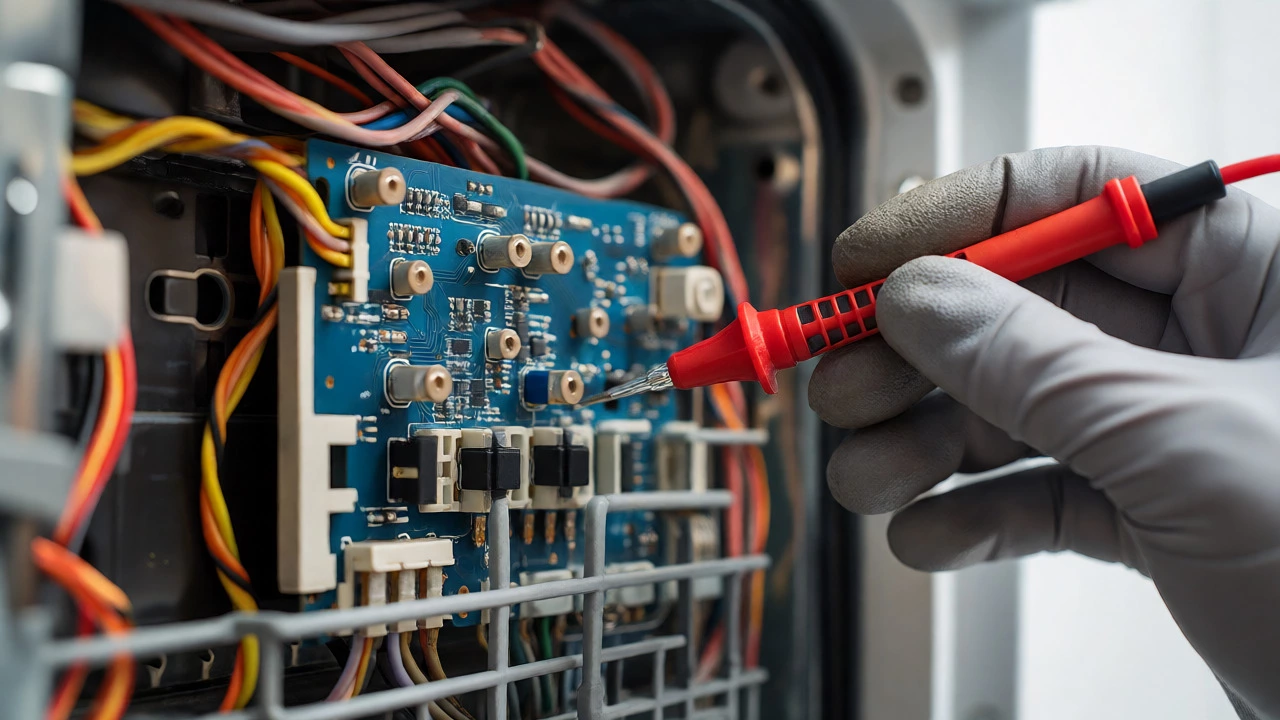
Notice the pattern? Mechanical issues involving moving parts like pumps and motors are often worth fixing because they are isolated failures. Electronic failures, particularly control boards, are risky bets. If the brain of the dishwasher dies, other sensors might follow shortly. Plus, replacing a control board on a 4-year-old unit often involves waiting weeks for a part that might be discontinued for newer models.
Brand Reputation Plays a Huge Role
A four-year-old Bosch dishwasher is different from a four-year-old entry-level generic brand. Bosch, Miele, and Fisher & Paykel generally have better build quality and longer spare part availability. Technicians report that premium brands often survive well past the 10-year mark if maintained. Conversely, many budget-friendly units sold in big-box retailers are designed with planned obsolescence in mind. They work great for 3-5 years, then parts become scarce or prohibitively expensive relative to the unit value.
If you own a premium brand, lean towards repair. The residual value of the machine is higher, and the likelihood of another major failure immediately after repair is lower. If you own a budget brand, be cautious. Spending $300 to fix a $500 machine that might die again in six months is frustrating.
The Hidden Costs of Replacement
Buying a new dishwasher isn't just about the sticker price. You need to factor in the total cost of ownership transition.
- Disposal Fees: Most councils charge for bulky waste removal, or you pay a retailer to haul away the old unit ($50-$100).
- Installation: Unless you're handy with plumbing, you'll need a plumber. Expect to pay $150-$250 for installation and connection.
- Plumbing Adjustments: Older homes in Adelaide might have non-standard fittings. If the new dishwasher doesn't fit the existing cutout perfectly, you might need carpentry adjustments.
- Learning Curve: New models have different cycles. You might ruin a few loads of laundry... er, dishes... while figuring out the new settings.
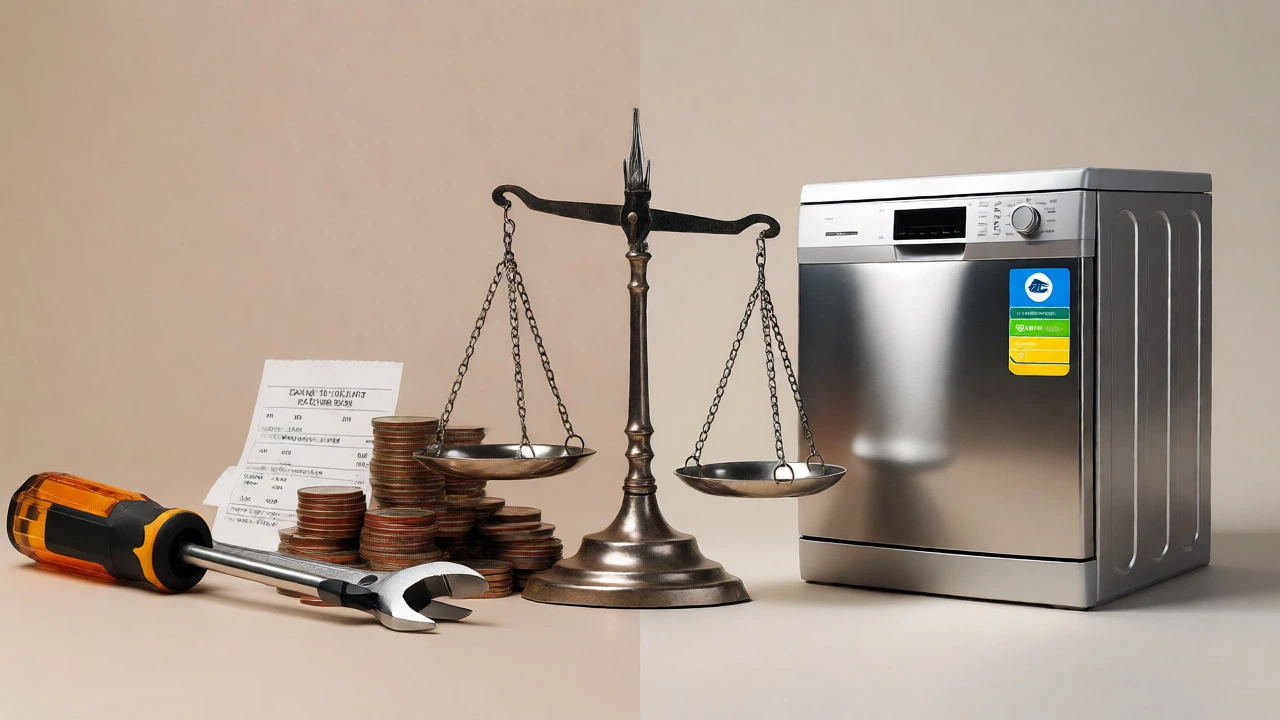
Add these up, and a "$700" dishwasher quickly becomes a $950 project. Compare that to a $300 repair, and the gap narrows significantly.
When to Definitely Replace
There are clear signs that repairing is a waste of money. Listen to your gut if you see these red flags:
- Rust Inside: If the inner tub is rusting, especially around the heating element, the structural integrity is gone. Rust spreads. No sealant will hold forever.
- Multiple Failures: Did the pump go last month? Now the door latch fails? This indicates general wear and tear. One repair won't stop the cascade.
- Discontinued Parts: Ask the technician: "Can you source this part within 48 hours?" If they say they need to order it from overseas and wait 3 weeks, consider walking away. Downtime is annoying.
- Mold Smell Won't Go Away: Deep mold in the insulation or hidden corners often means deep cleaning won't fix it. Replacement is the only hygienic option.
How to Extend the Life of Your Next Appliance
If you decide to repair, or even if you buy new, maintenance is key. Most "premature" failures at year four are due to neglect. Here is how to keep your dishwasher running for a decade:
- Clean the Filter Weekly: Food particles clog the pump and reduce efficiency. Rinse the filter under hot water every week.
- Use Hot Water: Run your sink tap until it's hot before starting the cycle. This ensures the initial wash is effective and helps dissolve grease.
- Don't Overload: Blocking spray arms causes uneven cleaning and puts strain on the motor.
- Run a Cleaning Cycle Monthly: Use a dedicated dishwasher cleaner or a cup of white vinegar on the top rack during an empty hot cycle to remove limescale and odors.
The Verdict: What Would I Do?
If I were in your shoes, standing in my Adelaide kitchen with a broken 4-year-old dishwasher, here is my decision tree:
Scenario A: The Quote is Under $200.
Fix it. Labor is the biggest hurdle, but if the part is cheap, you're getting several more years of service for minimal investment.
Scenario B: The Quote is $200-$350 AND it's a Premium Brand.
Fix it. These machines are built to last. You've already paid for the depreciation; don't throw away the remaining useful life.
Scenario C: The Quote is $200-$350 AND it's a Budget Brand.
Toss a coin, but lean towards replace. You're paying a significant chunk of the original value for a machine that may not have much left.
Scenario D: The Quote is Over $350.
Replace it. You're better off putting that money toward a new unit with a fresh warranty and modern energy ratings.
Remember, the goal isn't just to clean dishes; it's to minimize hassle and long-term cost. Sometimes spending a bit more now saves headaches later.
How long do dishwashers typically last?
The average lifespan of a dishwasher is between 7 and 12 years. High-end brands like Miele or Bosch often reach the upper end of this range, while budget models may fail closer to the 5-7 year mark. Regular maintenance, such as cleaning filters and descaling, can extend this lifespan significantly.
Is it cheaper to repair or replace a dishwasher?
It depends on the age and the fault. Generally, if the repair cost is less than 50% of the price of a new unit, repair is cheaper. However, if the dishwasher is over 7 years old, replacement is often more economical due to improved energy efficiency and reduced risk of subsequent breakdowns.
What is the most common cause of dishwasher failure?
Clogged filters and drain blockages are the most common issues, often caused by food debris. Other frequent failures include faulty door switches, broken spray arms, and failed water inlet valves. Electronics and control boards tend to fail later in the appliance's life.
Can I fix a leaking dishwasher myself?
Yes, if the leak is from the door seal or a loose hose connection. Check the rubber gasket for cracks and ensure hoses are tightly connected. However, if the leak is coming from inside the tub or near the motor, it likely requires professional attention to avoid electrical hazards or further damage.
Do new dishwashers save money on bills?
Newer models are generally more water and energy efficient. While a 4-year-old model is likely already reasonably efficient, upgrading to a top-tier energy-rated model can save modest amounts annually. However, the savings rarely offset the purchase price unless you have very high usage rates or extremely inefficient old units.