Freezer Troubleshooter & Repair Cost Calculator
Check all that apply to your situation.
Select symptoms and click Diagnose & Analyze to see if you should repair or replace your freezer.
There is nothing quite like the panic of opening your freezer to grab a bag of peas and finding them thawed into a soggy mess. You check the temperature dial, it looks fine, but the air feels warm. Is your appliance dying? Do you need to call a technician immediately, or can you fix this yourself?
Most of the time, a freezer that seems "broken" isn't actually dead. It’s usually suffering from a simple issue like a blocked drain, a dirty coil, or a faulty door seal. Before you spend hundreds on a repair bill or toss away expensive food, you need to diagnose the real problem. Knowing the difference between a minor glitch and a major compressor failure saves you money and stress.
The Temperature Test: The First Line of Defense
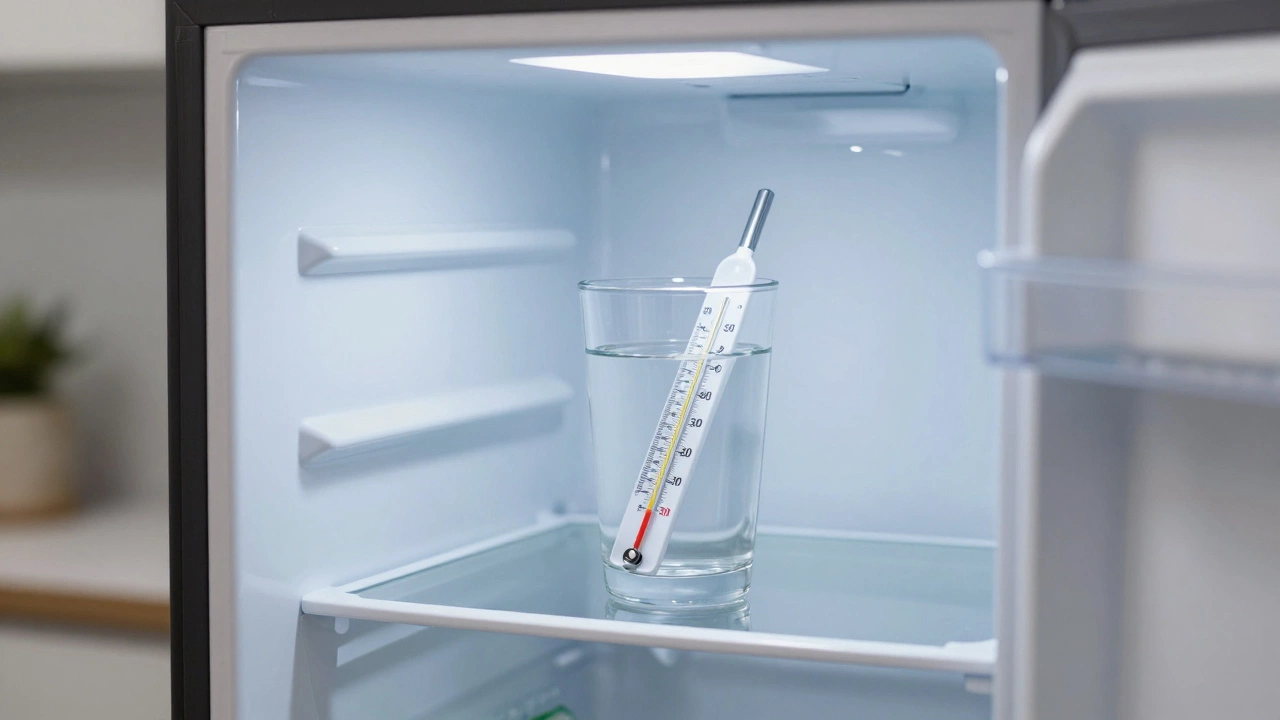
Your eyes can lie to you. Just because the inside looks cold doesn't mean it's safe for long-term storage. The most reliable way to know if your freezer is working correctly is to measure the actual internal temperature. Grab a standard kitchen thermometer and place it in a glass of water. Put that glass in the center of your freezer-away from the walls and the door-and leave it there for at least two hours.
After two hours, check the reading. A properly functioning freezer should maintain a temperature of -18°C (0°F) or lower. If the reading is higher than -15°C, your food is at risk. Bacteria grow slowly at these temperatures, but quality degrades rapidly. If your thermometer reads above -10°C, you have a serious issue. This could be due to a refrigerant leak, a failing compressor, or simply an overloaded unit where air cannot circulate.
If the temperature is correct but you still suspect problems, check for consistency. Does the temperature fluctuate wildly throughout the day? Stable cooling is just as important as low cooling. Large swings indicate a thermostat issue or a defrost system failure.
Visual Clues: Frost, Ice, and Condensation
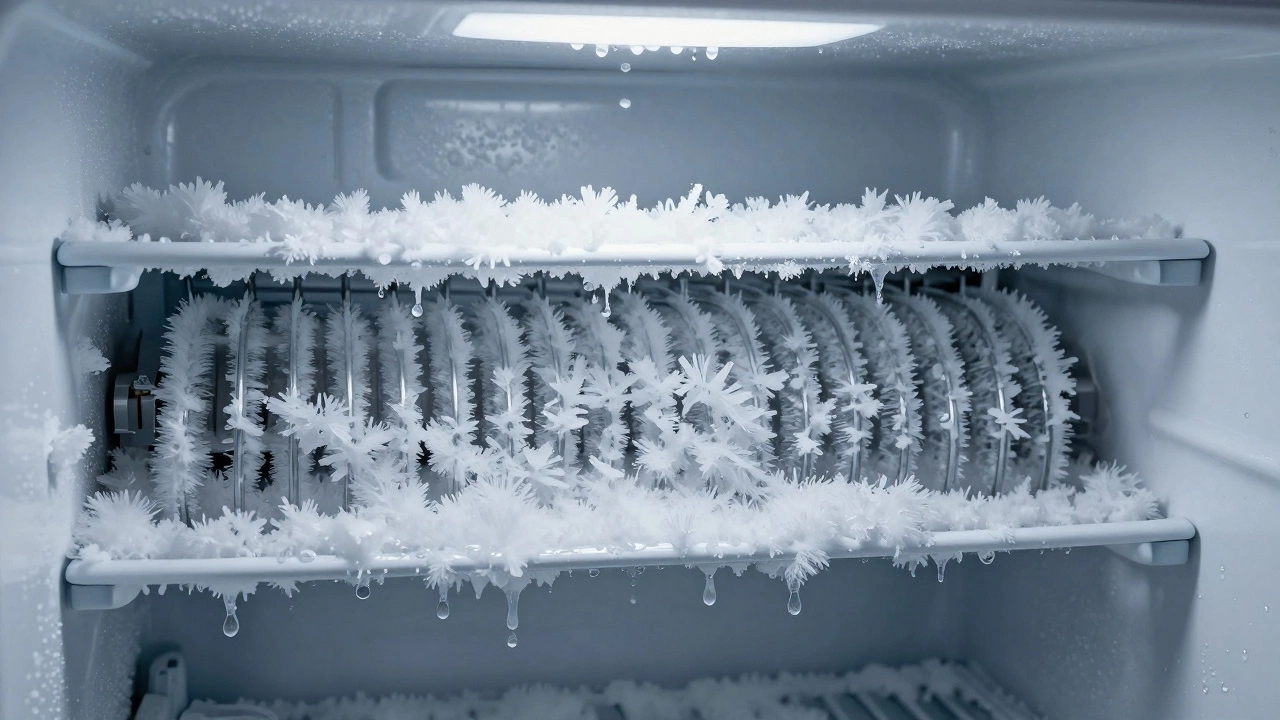
Look closely at the interior walls and shelves. In a modern frost-free freezer, you should see very little to no frost. These units have automatic defrost cycles that melt ice buildup periodically. If you see thick layers of frost or solid blocks of ice forming on the back wall, your defrost system has failed.
This usually happens because of three components:
- The Defrost Heater: This element warms up to melt ice. If it burns out, ice builds up until it insulates the evaporator coils, stopping the cooling process entirely.
- The Defrost Timer or Control Board: This tells the heater when to turn on. If it fails, the heater never activates.
- The Defrost Thermostat: This safety switch turns off the heater once the ice is melted. If it sticks, the heater might run constantly, melting plastic parts, or never turn on at all.
In older manual-defrost models, some frost is normal. However, if the frost layer exceeds half an inch, it acts as insulation. The freezer works harder to stay cold, consuming more electricity and eventually struggling to reach the target temperature. If you see water pooling at the bottom of the freezer or leaking onto the floor, the defrost drain is likely clogged with food debris or mold.
Listen to the Noise: What Sounds Are Normal?
Freezers are not silent machines. They make gurgling, clicking, and humming sounds as refrigerant flows and fans spin. But certain noises signal trouble. Pay attention to the type and timing of the sound.
A loud, continuous humming that gets louder over time often points to a failing compressor. The compressor is the heart of the system; if it’s struggling, it will work overtime, generating heat and noise. If the freezer stops cooling while making this noise, the compressor may be seized.
On the other hand, a rattling or buzzing noise often comes from the fan motor. There are usually two fans: one for the condenser coils (usually at the back or bottom) and one for the evaporator coils (inside the freezer). If the evaporator fan blade hits ice buildup, it will rattle loudly. If the condenser fan is blocked by dust and pet hair, it will buzz and overheat, causing the whole system to shut down as a safety measure.
If your freezer makes a loud ticking sound followed by silence, and then repeats this cycle every few minutes, the start relay on the compressor might be bad. This is a cheap part to replace, but ignoring it can kill the compressor.
Check the Door Seal: The Silent Energy Thief
A significant portion of freezer failures are actually caused by poor sealing. If warm, moist air enters the freezer every time you open the door, or even while it's closed, the unit has to work double-time to compensate. Over time, this wears out the compressor and causes excessive frost.
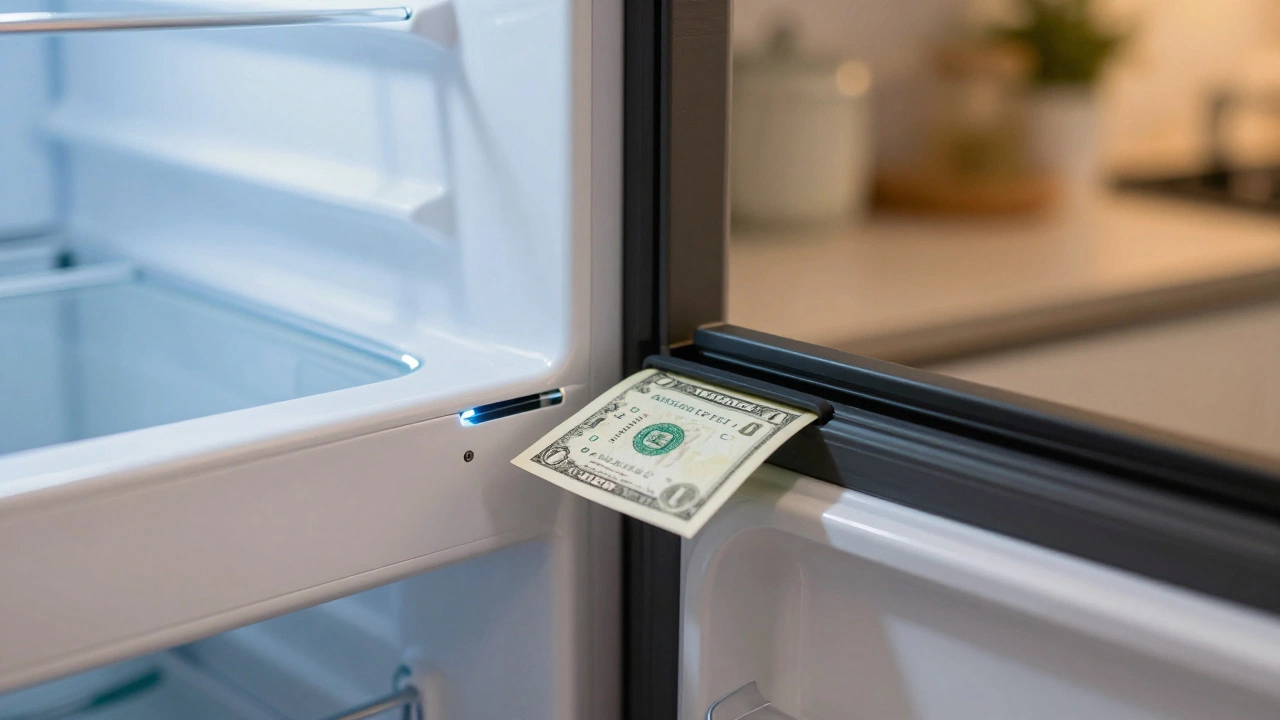
Perform the "Dollar Bill Test." Close the freezer door on a dollar bill (or any piece of paper) so that half of it sticks out. Try to pull the bill out. If it slides out easily with little resistance, your door seal-or gasket-is weak. Repeat this test around the entire perimeter of the door. If the seal is cracked, torn, or warped, it needs replacement.
You can also look for gaps visually. Hold a flashlight inside the freezer and close the door in a dark room. If you see light leaking through the edges, air is getting in. Cleaning the gasket with warm soapy water can sometimes restore its flexibility, but deep cracks require a new part.
External Factors: Location and Usage Habits
Sometimes the freezer isn't broken; it's just unhappy with its environment. Where is your unit located? If it's tucked into a tight cabinet with less than two inches of clearance on the sides and back, it can't breathe. The condenser coils need airflow to dissipate heat. Without it, the compressor overheats and shuts off.
Also, consider how full your freezer is. A completely empty freezer struggles to maintain temperature because there is no thermal mass to hold the cold. Conversely, an overstuffed freezer blocks air vents, preventing cold air from circulating. Aim for about 75% capacity, ensuring items don't block the rear vent.
Finally, check the power source. Is the outlet working? Plug another device into it to verify. Sometimes, a tripped GFCI breaker or a loose plug can cut power intermittently, leading to partial thawing that mimics mechanical failure.
| Symptom | Likely Cause | Difficulty to Fix |
|---|---|---|
| Food thawing, temp > -15°C | Dirty coils, bad seal, or compressor failure | Medium to High |
| Excessive frost/ice buildup | Clogged defrost drain or failed defrost heater | Low to Medium |
| Loud rattling noise | Fan blade hitting ice or debris | Low |
| Water leaking on floor | Clogged defrost drain tube | Low |
| Compressor runs constantly | Bad door seal or low refrigerant | Medium |
When to Call a Professional vs. DIY
Not every issue requires a technician. Simple tasks like cleaning condenser coils, unclogging a defrost drain, or replacing a door gasket are easy DIY jobs. You can find replacement parts online for most brands, and installation guides are widely available.
However, if you suspect a refrigerant leak, a failed compressor, or a complex electronic control board issue, it’s time to call a pro. Handling refrigerants requires certification and specialized tools. Attempting to repair a sealed system without proper training is dangerous and illegal in many regions, including Australia.
If your freezer is older than ten years, weigh the cost of repair against the price of a new, energy-efficient model. Modern freezers use significantly less electricity. If the repair costs more than 50% of the value of a new unit, replacement is usually the smarter financial choice.
Preventive Maintenance Tips
To keep your freezer running smoothly, adopt a few simple habits. Vacuum the condenser coils every six months. Dust and pet hair act as insulation, forcing the compressor to work harder. Clean the interior annually to prevent mold and odors. Always wrap frozen foods tightly to prevent moisture loss and freezer burn. And never leave the door open longer than necessary.
By staying vigilant about these signs and performing regular maintenance, you can extend the life of your freezer and avoid unexpected breakdowns. Remember, early detection is key. If something smells, sounds, or looks wrong, investigate it immediately before a small problem becomes a big one.
How do I know if my freezer compressor is bad?
A bad compressor often presents itself through specific symptoms. If the freezer is not cooling but you hear a loud humming noise that persists, the compressor may be running but not pumping refrigerant effectively. Another sign is if the compressor clicks on and off repeatedly without completing a cooling cycle. Touch the sides of the freezer; if they are hot to the touch while the inside is warm, the compressor is struggling. Finally, if the unit makes no sound at all and isn't cooling, the compressor start relay might have failed, or the compressor itself is dead.
Why is my freezer making a loud buzzing noise?
A buzzing noise typically comes from the condenser fan motor or the compressor. Check the condenser fan, usually located at the back or bottom of the unit. If it is covered in dust, hair, or debris, the motor strains to spin the blades, creating a buzz. Clean the area thoroughly. If the noise persists after cleaning, the fan motor bearings may be worn out and need replacement. Occasionally, a buzzing sound can indicate a failing compressor, which is a more serious issue requiring professional diagnosis.
Is it normal for a freezer to have frost inside?
It depends on the type of freezer. In a frost-free model, significant frost is not normal. These units have automatic defrost cycles. If you see ice buildup, the defrost heater, timer, or thermostat is likely faulty. In a manual-defrost model, some frost is expected, but it should not exceed half an inch. Excessive frost insulates the cooling coils, reducing efficiency and causing the freezer to struggle to maintain temperature. If you have a manual model, defrost it regularly to maintain performance.
What should I do if my freezer is leaking water?
Water leaking from the bottom of the freezer or onto the floor is usually caused by a clogged defrost drain. During the defrost cycle, melted ice flows through a tube to a drip pan where it evaporates. If this tube gets blocked by food particles or mold, water backs up and spills out. Locate the drain hole (usually at the back of the freezer compartment), remove visible debris, and flush it with warm water or a mixture of vinegar and water to clear the blockage.
How can I tell if my freezer door seal is bad?
Use the dollar bill test. Close the freezer door on a dollar bill so half sticks out. Pull the bill; if it slides out easily, the seal is weak. Also, inspect the gasket for cracks, tears, or mold. Look for gaps between the door and the frame. A bad seal lets warm air in, causing the compressor to run constantly, increasing energy bills, and leading to frost buildup. Cleaning the seal with soapy water can help, but damaged seals must be replaced.