Electric Hob Element Tester
Test Your Hob Element
Enter your multimeter reading to determine if your electric hob element is working properly. WARNING: Always turn off power before testing.
- Coil elements: 20-120 ohms (good), Infinite (OL) = faulty
- Induction elements: 10-30 ohms (good), Infinite (OL) = faulty
When your electric hob stops working after a spark, smoke, or a burnt smell, it’s not just an inconvenience-it’s a safety issue. Many people assume they need to replace the whole cooktop, but often the problem is simpler and cheaper to fix. If you’ve got a burnt electric hob, you don’t have to call a technician right away. With basic tools and a little caution, you can diagnose and fix it yourself.
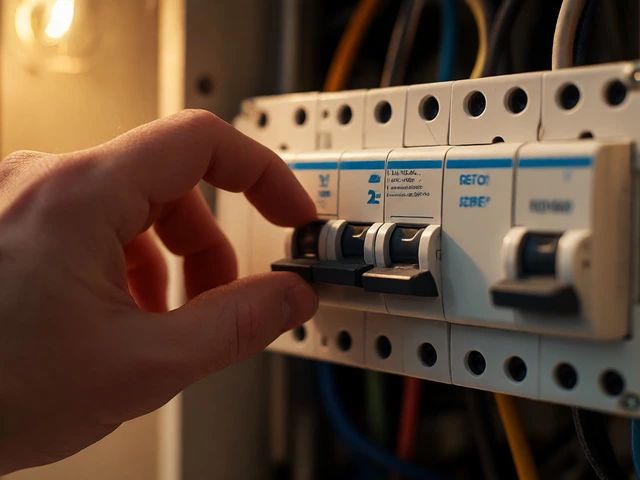
First, turn off the power
Before you do anything else, switch off the circuit breaker that controls your hob. Don’t just unplug it-most electric hobs are hardwired into your home’s electrical system. If you’re not sure which breaker controls it, turn off the main power. Working on live wiring is dangerous and can lead to serious injury or fire. Wait at least 15 minutes after cutting power to let any stored electricity in the capacitors drain out. This isn’t just a safety tip; it’s a non-negotiable step.
Identify the damaged element
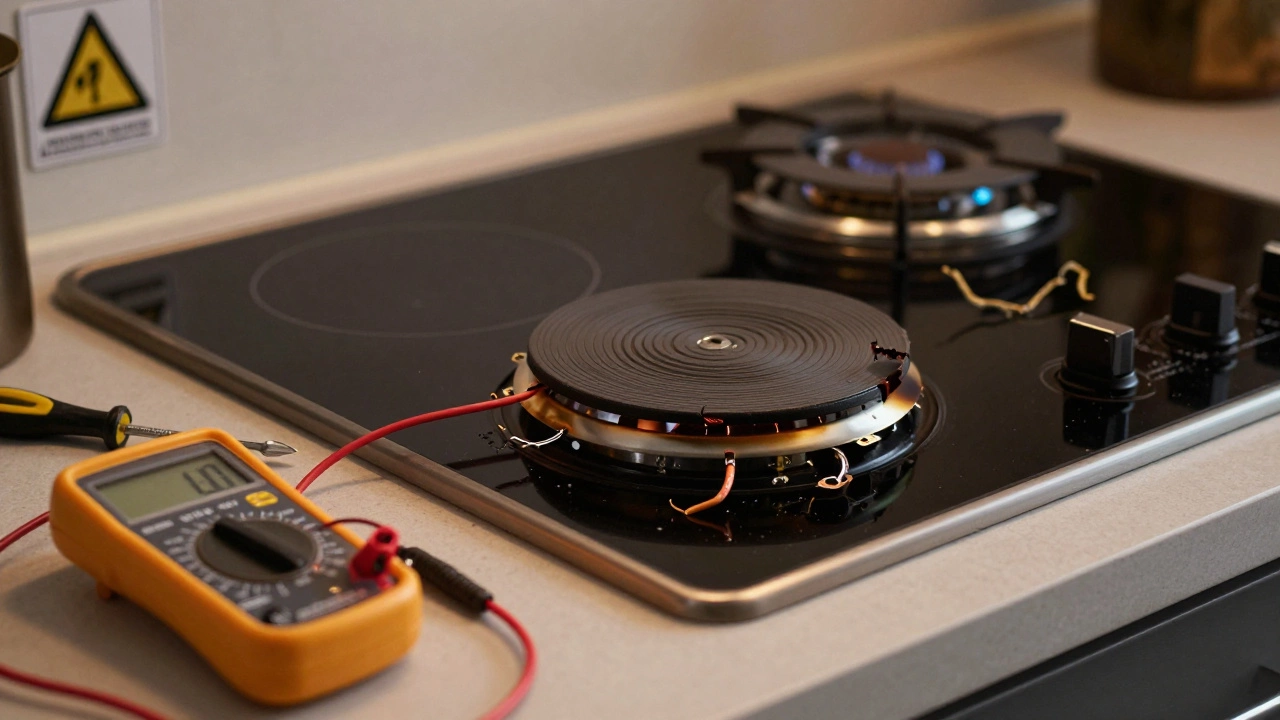
Electric hobs use heating elements-coils or flat ceramic panels-that glow red when they’re working. If one of them looks blackened, cracked, or has visible burn marks, that’s your culprit. For induction hobs, the problem isn’t the element itself but the coil underneath the glass. You won’t see damage there, so you’ll need to test it.
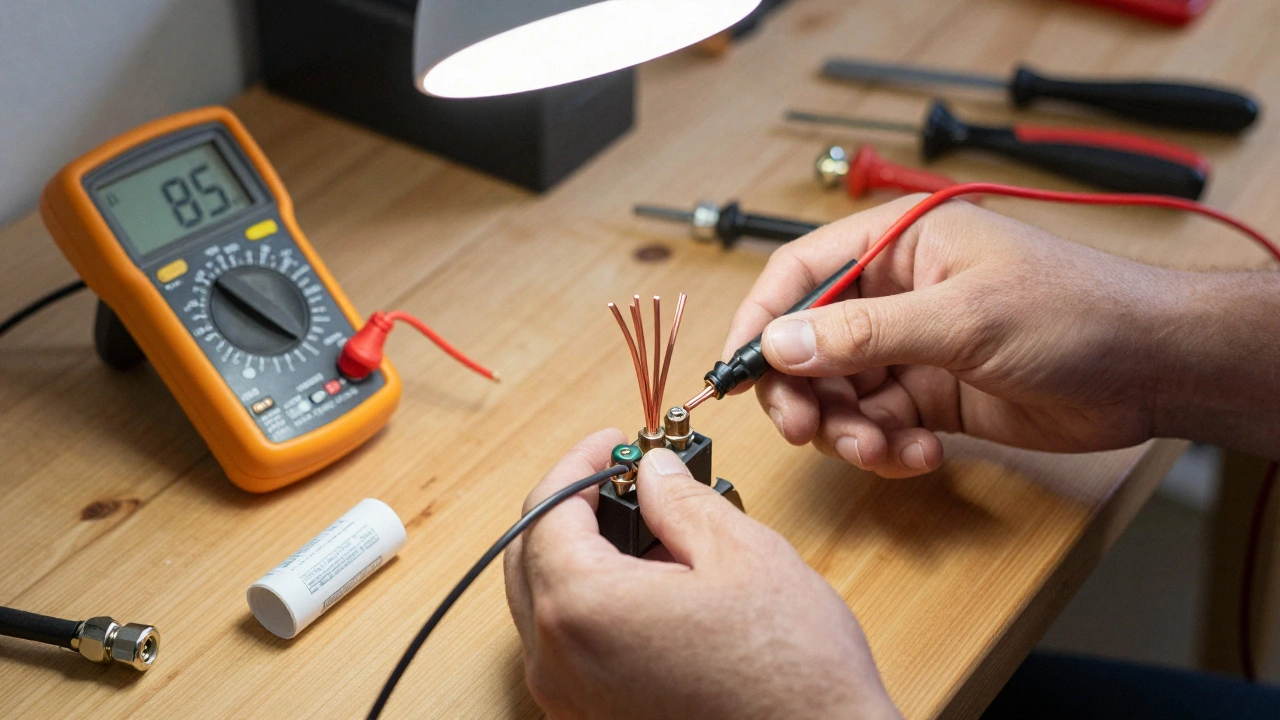
For coil elements, the signs are obvious: dark spots, broken wires, or a coil that doesn’t heat up even when other zones work. For solid hotplates or induction zones, you’ll need a multimeter. Set it to measure resistance (ohms). Remove the element (more on how below) and touch the probes to the two terminals. If the reading is infinite (OL on most meters), the element is dead. A good element usually reads between 20 and 120 ohms, depending on its size and wattage.
Check the socket and wiring
A burnt element isn’t always the root cause. Sometimes the socket it plugs into is damaged. Look for melted plastic, scorch marks, or loose metal contacts. If the socket looks burnt, even if the element is fine, that’s likely what failed. The same goes for the wiring behind the hob. If you see frayed wires, exposed copper, or insulation that’s cracked and brittle, those need replacing.
Some hobs use terminal blocks to connect wires. If those are corroded or loose, they can overheat and burn. Tighten any loose screws with a screwdriver, but only after the power is off. If the terminals are charred, don’t just clean them-replace the whole block. A burnt connection can cause the same problem to return, even with a new element.
Replace the element
Once you’ve confirmed the element is dead, buy a replacement. You can’t use just any element. It has to match the original in shape, size, wattage, and terminal type. Check the model number on your hob-usually found on a sticker under the edge of the cooktop or inside the oven door. Then search for the exact part number. Online retailers like Appliance Spares Australia or eBay often list compatible parts with photos. Don’t guess.
To replace it:
- Remove the hob’s control panel or lift the top (some models have clips or screws under the front edge).
- Unplug the old element from its socket. If it’s wired directly, cut the wires (leave enough length to splice) and disconnect the terminals.
- Feed the new element’s wires through the same hole. If it’s a plug-in type, just snap it in. If wired, strip 1/2 inch of insulation from each wire, twist the copper strands, and connect them to the matching terminals using wire nuts or crimp connectors. Always match live to live, neutral to neutral.
- Secure the element in place and reassemble the hob.
Use heat-resistant silicone sealant around the edges if the original had it. This prevents moisture and debris from getting in.
Test before turning the power back on
Double-check every connection. Make sure no bare wires are touching metal. Confirm the new element is seated properly. Then turn the power back on at the breaker. Start with the lowest setting. If the element heats up slowly and evenly, you’re good. If it sparks, smells like burning plastic, or trips the breaker, turn it off immediately. Something’s still wrong.
What if the whole hob is dead?
If none of the zones work, the issue is likely the main control board or the power relay. These are harder to fix without experience. The control board manages voltage to each zone. If it’s fried, you’ll need to replace it. You can test it with a multimeter if you know how, but most homeowners don’t. If you’ve checked all the elements, sockets, and wiring-and everything looks fine-then the board is probably the problem. Replacement boards cost between $120 and $300, depending on the brand. Some brands like Bosch, Siemens, and Electrolux have boards that are proprietary and only sold through authorized suppliers.
Induction hobs: Different problem, same fix
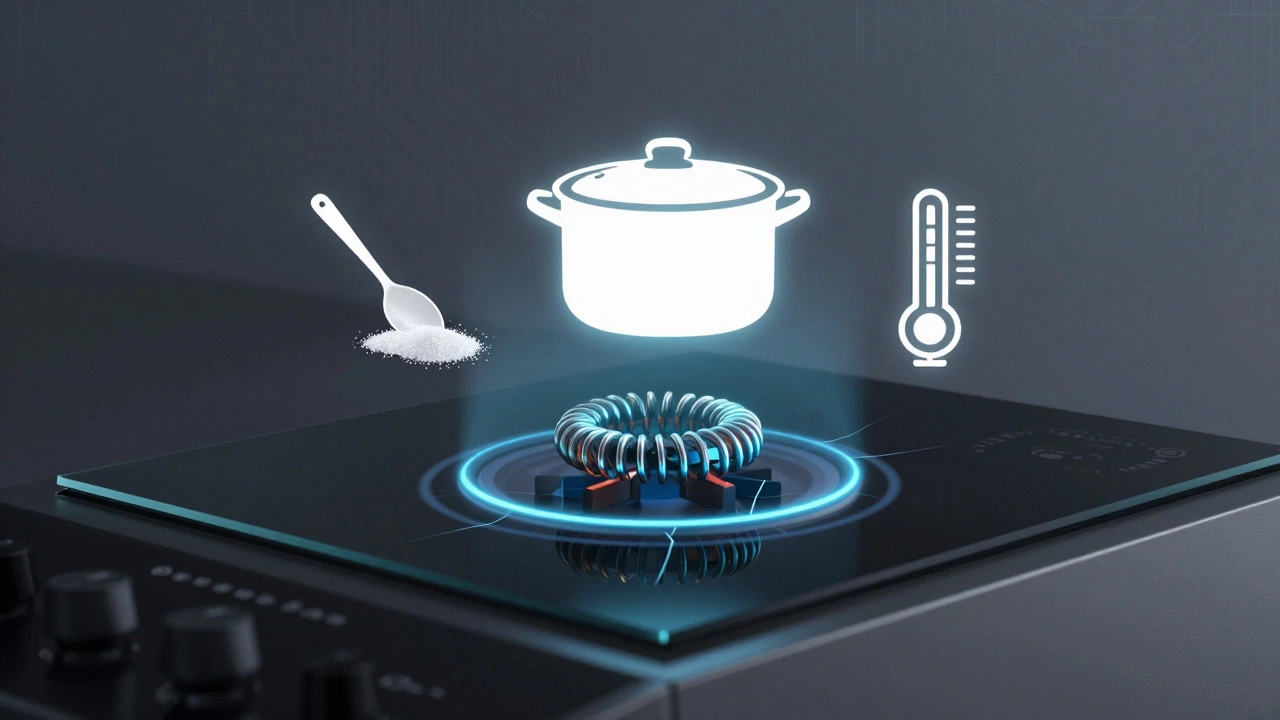
Induction hobs don’t have glowing coils. Instead, they use electromagnetic fields to heat the pan. If one zone doesn’t work, it’s usually a failed coil, a broken sensor, or a faulty inverter module. You can’t see the coil, so testing requires removing the glass top (which is fragile) and checking the coil’s resistance. Most induction coils read between 10 and 30 ohms. If it’s open (OL), the coil is dead. Replacing it means removing the glass, which requires special tools and adhesive. If you’re not confident, leave this to a pro. But if you’ve done the other repairs, you might be ready for this.
Prevent future burns
Why did it burn in the first place? Common causes:
- Pans that are too big and hang over the edge, trapping heat and melting the surface
- Spilled sugar, syrup, or salt that baked onto the element and created a conductive bridge
- Using metal utensils that scratch the surface and expose wiring
- A faulty thermostat that keeps the element on too long
Keep the hob clean. Wipe spills as soon as they cool. Use only flat-bottomed, size-matched cookware. Avoid dragging pots. And if you notice a zone heating slower than usual, don’t ignore it-that’s your early warning sign.
When to call a professional
You can fix most burnt elements yourself. But if you see any of these, stop:
- Water damage or signs of flooding near the hob
- Cracked or broken ceramic glass top
- Smoke or burning smell that doesn’t go away after replacing the element
- Tripped breakers that keep resetting
- No experience with electrical wiring
Electric hobs run on 240 volts in Australia. That’s enough to kill. If you’re unsure at any point, call a licensed electrician. It’s cheaper than a fire.
How long should a hob element last?
Under normal use, a good-quality element lasts 5 to 10 years. Cheaper models or those in high-use kitchens (like restaurants or large families) may fail in 2 to 3 years. If your hob is over 12 years old and multiple elements are failing, it’s time to consider a replacement. Repairing older units often costs more than buying new, especially if parts are discontinued.
What to look for in a new hob
If you’re replacing it, consider:
- Induction for faster heating and better energy efficiency
- Zone sizing that matches your cookware
- Child locks and auto-shutoff
- Brands with local service support (like Smeg, Belling, or Miele in Australia)
Don’t just go for the cheapest. A $500 hob with a 5-year warranty and local repair support is a better long-term value than a $300 one with no support.