Gas Cooktop Troubleshooter
Start by selecting the symptom that best describes your issue.
Imagine you are standing in your kitchen, ready to boil water for pasta. You twist the knob, strike the spark, and nothing happens. Or worse, the flame is sputtering, uneven, or has turned a worrying yellow color instead of crisp blue. Your stomach growls, your patience wears thin, and a single question pops into your head: can I fix this myself, or do I need to call someone?
The short answer is yes, you can repair certain aspects of a gas cooktop is a kitchen appliance that uses natural gas or propane to heat food via open flames. However, the long answer depends entirely on what is wrong with it. Some issues are simple cleaning jobs that take five minutes. Others involve internal gas valves and ignition systems that require specialized tools and legal certification to touch.
In this guide, we will break down exactly what you can safely handle at home and what must be left to the professionals. We will look at common symptoms, quick fixes, and the critical safety rules that keep your home out of danger.
Quick Summary / Key Takeaways
- You can clean burners, clear clogged ports, and check power connections yourself.
- Never attempt to repair gas supply lines, valves, or internal ignition modules without proper certification.
- A yellow or orange flame usually means dirty burners or poor ventilation, not necessarily a broken part.
- If you smell rotten eggs (mercaptan), evacuate immediately and call emergency services; do not try to find the leak yourself.
- Professional repair costs vary but are often cheaper than replacing a high-end unit.
Understanding Your Gas Cooktop Components
Before you decide whether to fix it, you need to know what you are looking at. A gas cooktop isn't just one big metal slab. It is a system of several distinct parts working together to deliver heat safely. Knowing these names helps you diagnose the problem and communicate clearly if you do end up calling a technician.
The main components include:
- Burner Caps and Heads: The removable metal pieces where the flame actually burns. They get dirty quickly from spills and splatter.
- Ignition Electrodes: Small ceramic rods with metal tips near each burner. They create the spark when you turn the knob.
- Gas Valves: Located under the knobs, these control how much gas flows to each burner. They are mechanical and precise.
- Control Knobs and Switches: These send electrical signals to the igniters and open the gas valves.
- Flame Failure Safety Devices: Thermocouples or thermopiles that detect if the flame goes out and cut off the gas supply automatically.
Most user-friendly repairs involve the top two items: the burners and the electrodes. Everything below the surface-valves, wiring, and safety sensors-is where the risk increases significantly.
Safe DIY Repairs: What You Can Do Yourself
Many "broken" gas cooktops are actually just dirty or misaligned. Before spending money on a service call, try these steps. They solve about 80% of common issues.
1. Cleaning the Burner Ports
If your flame is uneven, lifting off the burner, or making a loud roaring noise, the gas ports are likely clogged. Food residue, grease, or even sugar buildup can block the tiny holes where gas escapes.
- Turn off the gas supply and let the cooktop cool completely.
- Remove the burner caps and heads.
- Soak them in warm soapy water for 15-20 minutes.
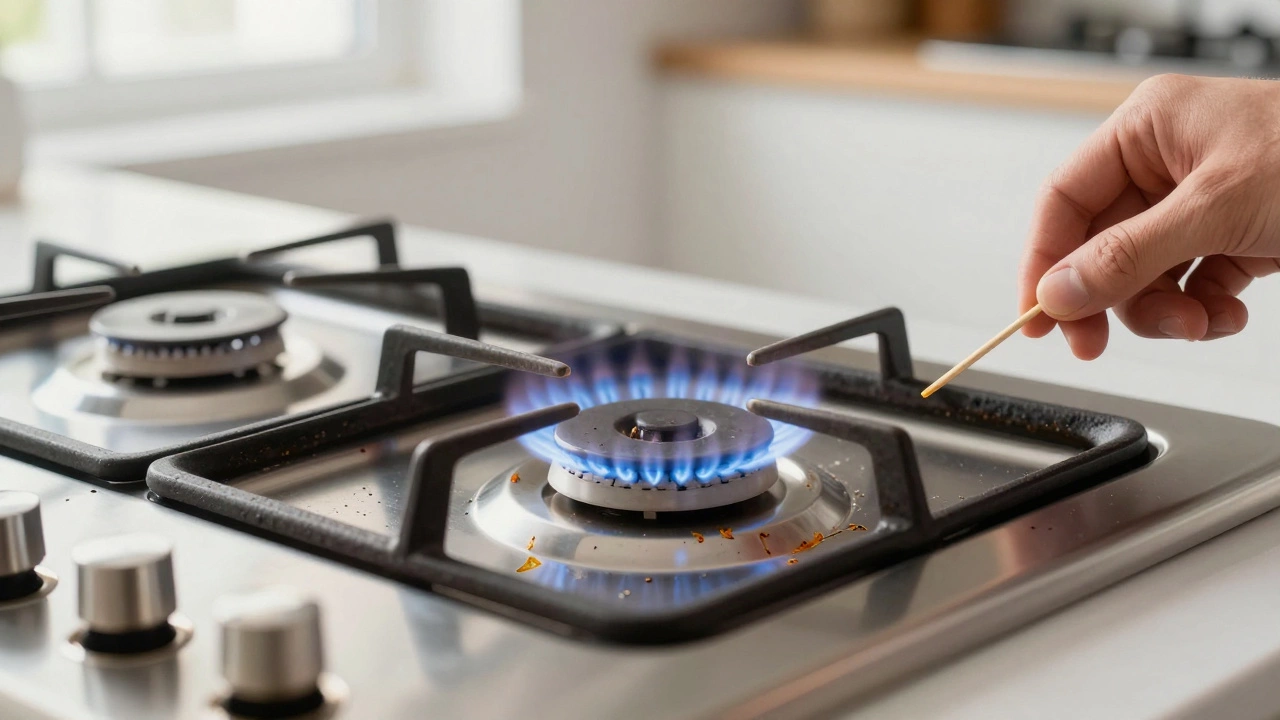
- Use a toothpick or a straightened paperclip to gently clear each hole in the burner base. Never use a needle or pin, as it can widen the hole and alter the gas flow.
- Dry everything thoroughly before reassembling.
2. Fixing Ignition Issues
If you hear no clicking sound when you turn the knob, the igniter might be dirty or disconnected. If you hear clicking but no flame, the electrode might be misaligned.
- Check for dirt: Wipe the ignition electrode tip with a dry cloth. Grease or moisture can stop the spark.
- Check alignment: The metal tip should be about 1/4 inch away from the burner port and angled toward it. If it looks bent, gently adjust it with pliers (be careful not to snap it).
- Power check: Ensure the cooktop is plugged in. Many modern gas hobs require electricity for the spark ignition, even though they run on gas for heating.
3. Adjusting Flame Height
If the flame is too low even on the highest setting, the burner cap might not be seated correctly. Lift the cap and place it back down firmly, ensuring it sits flat on the burner head. An improper seal disrupts the air-gas mixture, leading to weak flames.
When to Call a Professional: The Danger Zone
There is a line between maintenance and repair. Crossing that line can be dangerous, illegal, and void your insurance. Here is what you should never attempt yourself.
Gas Leaks
This is non-negotiable. If you suspect a gas leak, identified by the smell of rotten eggs (mercaptan is added to natural gas for detection), hissing sounds, or dead vegetation near the gas line, leave the house immediately. Do not flip light switches, do not use your phone inside, and do not try to tighten fittings. Call your gas provider or emergency services from outside.
Internal Valve and Wiring Repairs
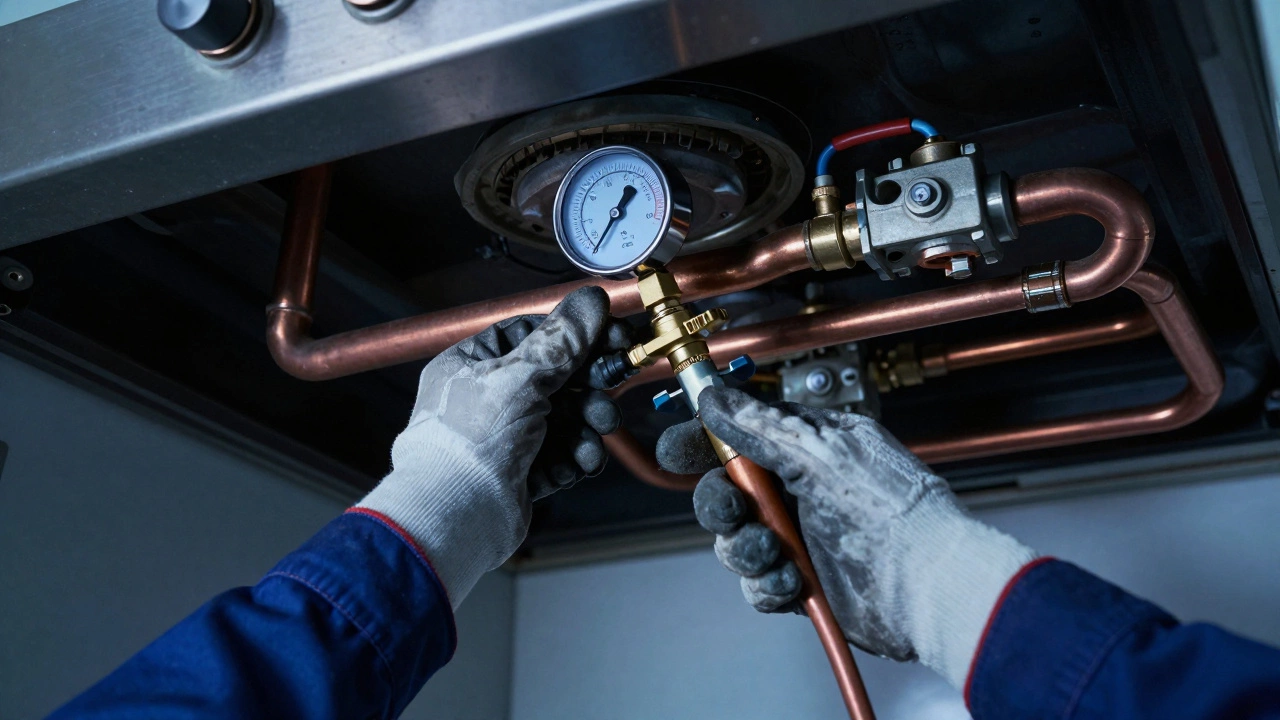
If cleaning the burners doesn't work, the issue might be inside the control panel. Replacing a gas valve involves disconnecting gas lines and testing for leaks with manometers. This requires specific tools and knowledge of local codes. In many regions, including the UK and parts of the US, only certified engineers can legally perform these repairs. Doing it yourself could lead to fines or denied insurance claims if an accident occurs.
Thermocouple Replacement
The thermocouple is a safety device that shuts off gas if the flame dies. While replacing it seems like a simple swap, it requires precise positioning relative to the flame. If installed incorrectly, it may fail to detect a fire, leaving gas flowing unburned. This is a job for a pro.
DIY vs. Professional Repair: Cost and Risk Comparison
| Factor | DIY Approach | Professional Service |
|---|---|---|
| Cost | $0-$20 (cleaning supplies/parts) | $75-$250 (labor + parts) |
| Risk Level | Low (if limited to cleaning) | None (certified technicians) |
| Time Required | 30-60 minutes | 1-2 hours (including travel) |
| Warranty Impact | May void manufacturer warranty | Often preserves warranty |
| Legal Compliance | Illegal for gas line/valve work in many areas | Fully compliant with local codes |
Signs Your Gas Cooktop Needs Immediate Attention
Don't wait for a total breakdown. Watch for these warning signs that indicate a deeper issue:
- Yellow Flames: Blue flames mean efficient combustion. Yellow or orange flames suggest incomplete burning, which produces carbon monoxide. Clean the burners first; if it persists, call a pro.
- No Spark: If multiple burners don't spark, the ignition module might be faulty.
- Smell of Gas When Not Cooking: Even a faint smell indicates a leak in the valve or hose.
- Knobs Feel Loose or Stuck: This suggests internal linkage wear or damage.
- Uneven Heating: If one side of the pan cooks faster than the other, the burner head might be warped or clogged.
Maintenance Tips to Prevent Future Breakdowns
Prevention is cheaper than cure. Regular care extends the life of your gas cooktop and keeps it safe.
- Clean Spills Immediately: Sugar and syrup harden and clog ports quickly. Wipe them up while still warm (but not hot enough to burn).
- Inspect Hoses Annually: Look for cracks, brittleness, or mouse damage in the flexible gas hose connecting the cooktop to the wall supply.
- Keep Ventilation Open: Ensure your range hood is working. Poor airflow causes soot buildup and inefficient burning.
- Use Correct Pot Sizes: Using small pots on large burners wastes gas and heats the surrounding metal unnecessarily.
Frequently Asked Questions
Is it safe to clean a gas cooktop with vinegar?
Yes, white vinegar is excellent for removing grease and mineral deposits from burner caps. Mix equal parts water and vinegar, soak the removable parts, and scrub gently. Avoid getting vinegar directly into the gas ports or ignition electrodes, as acidity can corrode metal components over time.
How much does it cost to replace a gas cooktop ignition switch?
Parts typically cost between $15 and $50 depending on the brand. However, labor charges from a professional technician usually range from $75 to $150 per visit. Total costs often fall between $90 and $200. Always confirm if the quote includes diagnostic fees.
What should I do if my gas cooktop clicks continuously but won't light?
First, ensure the burner cap is seated correctly. Misalignment can prevent the flame from reaching the sensor, causing the system to keep trying to ignite. If the cap is correct, the ignition electrode might be wet or dirty. Dry it thoroughly. If the problem persists across all burners, the ignition control board may need replacement by a professional.
Can I use a gas cooktop during a power outage?
It depends on the model. Older models with manual piezo ignition (a button you press to spark) work without electricity. Modern models with electronic ignition require power to create the spark. In a power outage, you can light these manually with a long-reach lighter or match, but exercise extreme caution to avoid burns or gas buildup.
How often should I have a professional inspect my gas cooktop?
Experts recommend a professional inspection every 1-2 years. This ensures gas lines are secure, connections are tight, and safety devices are functioning correctly. Annual checks are especially important for older units or homes with pets that might chew on hoses.