Water Heater Leak Hotspot Detector
Click on any numbered hotspot on the water heater diagram to discover common leak causes, severity levels, and actionable repair steps.
That sound of dripping water in the laundry or bathroom is never a good start to your morning. You look under the sink or behind the wall panel, and there it is: a puddle forming around your water heater a household appliance that heats and stores water for domestic use. The immediate question isn't just "how do I stop this?" but rather, "where exactly is it coming from?" Identifying the source of a leak is critical because some spots mean a simple washer replacement, while others signal that your entire unit needs replacing before it floods your home.
In Adelaide, where we deal with hard water and fluctuating temperatures, leaks are a common headache for homeowners. Whether you have a traditional storage tank or a modern tankless system, the weak points are surprisingly consistent. Knowing these seven most likely leak locations can save you thousands in water damage repairs and help you decide whether to call a plumber or grab a wrench yourself.
The Cold Water Inlet Connection
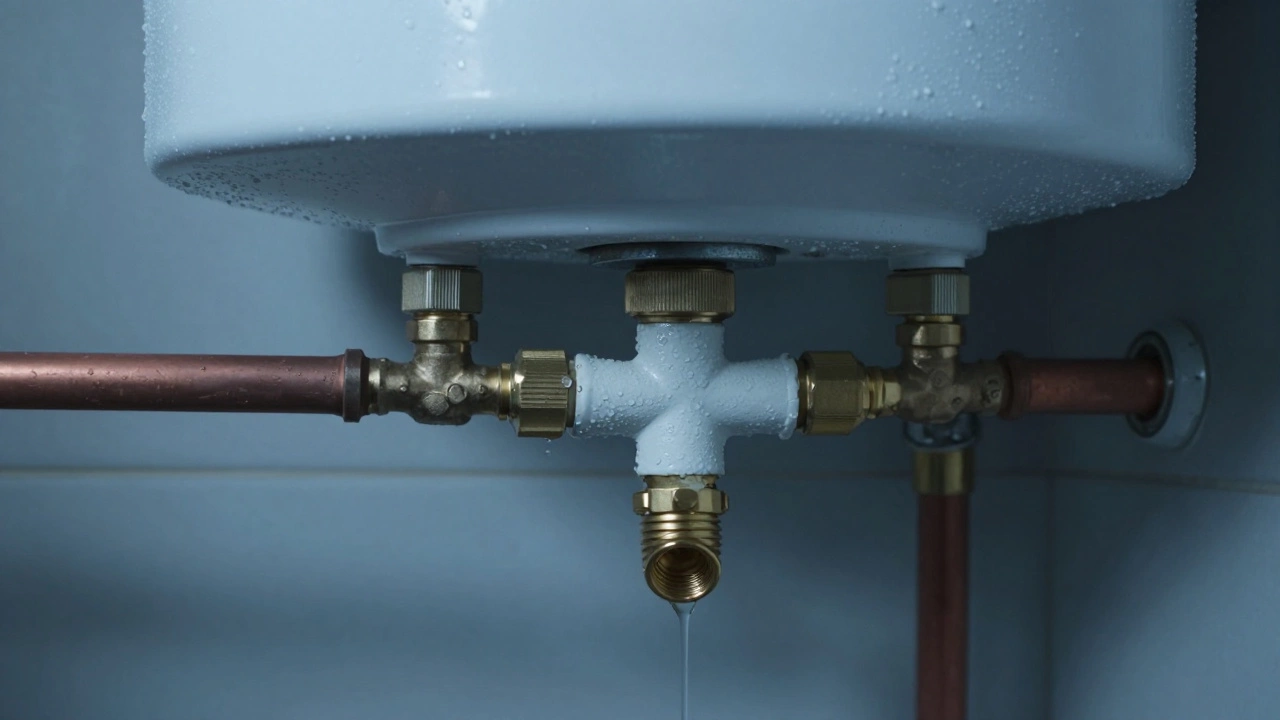
If you see water pooling near the top of your tank on the side opposite the hot water outlet, check the cold water inlet pipe first. This is one of the most frequent culprits. The connection point uses a compression fitting or threaded joint sealed by an olive (in copper pipes) or a rubber gasket. Over time, vibration from the pump or thermal expansion can loosen these fittings slightly.
Here’s how to tell if this is your problem: turn off the hot water taps in your house. If the dripping stops, the issue is likely pressure-related within the tank itself. If it continues, the inlet connection is loose or the internal seal has failed. For threaded connections, tightening them slightly with a wrench often solves the issue. However, be careful not to overtighten, as this can crack the brass fitting. If tightening doesn’t work, you may need to replace the supply line entirely.
The Temperature and Pressure (T&P) Relief Valve
Located on the top or side of the tank, usually near the hot water outlet, is the T&P relief valve a safety device designed to release excess pressure or temperature from the water heater tank. This valve is designed to open if the water gets too hot or the pressure gets too high, preventing the tank from exploding. It’s also a very common source of minor leaks.
You might notice water trickling down the discharge pipe into the floor drain or pooling at the base of the heater. There are two main reasons for this. First, the valve might be faulty and simply stuck open due to mineral buildup-common in areas with hard water like parts of South Australia. Second, and more dangerously, the valve might be working correctly because your thermostat is set too high or your pressure reducing valve (PRV) is failing. If the valve is leaking steadily, try lifting the handle gently to flush out debris. If it continues to drip after closing, replace the valve immediately. Never cap this valve; it’s a critical safety component.
| Leak Location | Likely Cause | Severity | DIY Fix? |
|---|---|---|---|
| Cold Water Inlet | Loose fitting or worn gasket | Low to Medium | Yes (tighten or replace line) |
| T&P Valve | Mineral buildup or high pressure | Medium | Yes (replace valve) |
| Bottom of Tank | Internal corrosion or cracked tank | Critical | No (replace unit) |
| Anode Rod Port | Worn threads or corroded rod | Medium | Yes (seal or replace rod) |
| Drain Valve | Loose handle or damaged stem | Low | Yes (tighten or replace) |
The Bottom of the Tank: The Point of No Return
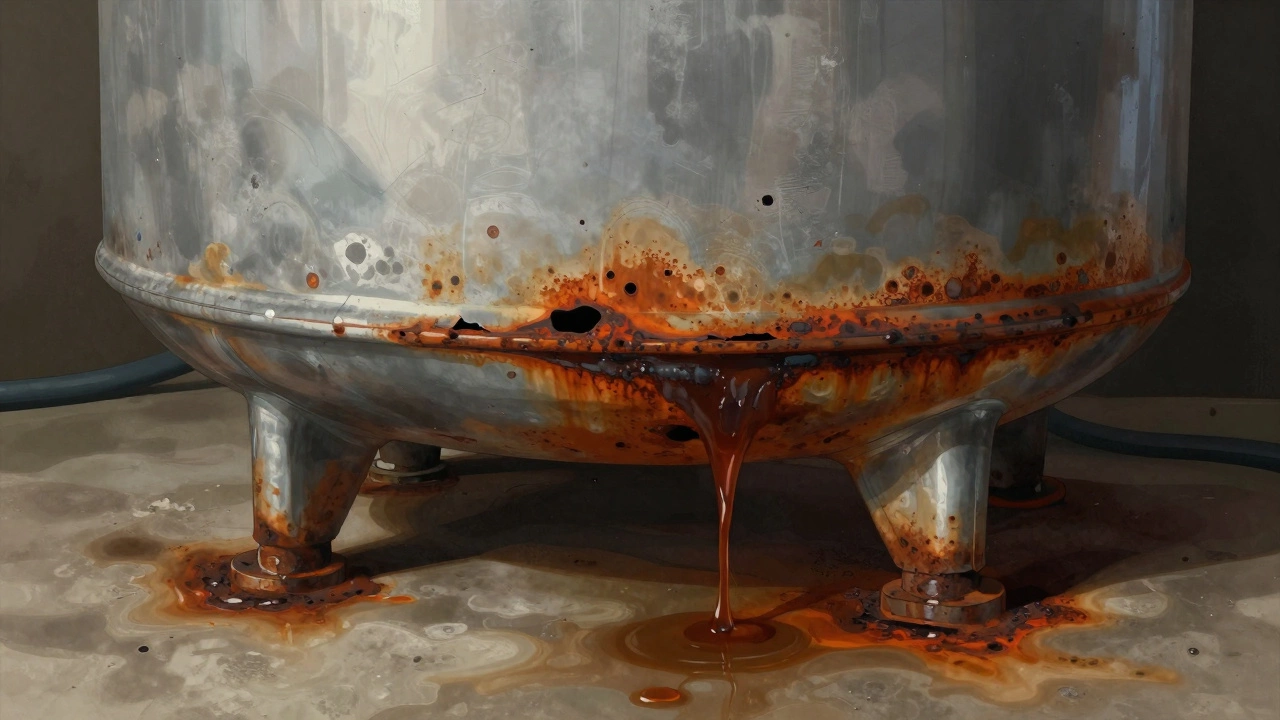
This is the scenario every homeowner fears. If water is seeping from the very bottom of the tank, specifically from the metal shell itself rather than a pipe connection, your water heater is dead. Storage tank heaters rely on a glass lining inside the steel tank to prevent rust. Over years of heating and cooling cycles, this lining cracks. Once the steel is exposed to oxygenated water, corrosion sets in rapidly.
In Adelaide, our semi-arid climate means we don’t get the same soft rain as coastal regions, leading to higher mineral content in mains water. These minerals accelerate corrosion. When the tank rusts through, it creates pinhole leaks that grow quickly. There is no patch for a corroded tank. Attempting to seal it with epoxy will only delay the inevitable failure, which could result in a catastrophic burst. At this stage, the only solution is full replacement. Look for signs like rusty water coming from your taps or a metallic taste, which often precede the physical leak.
The Drain Valve
Located near the bottom of the tank, the drain valve is used to empty the heater for maintenance. It’s essentially a small faucet built into the tank. Leaks here are often caused by the valve not being fully tightened after previous maintenance, or by sediment buildup preventing the internal plunger from sealing properly.
Sediment acts like sandpaper against the valve seat. Over time, it wears away the rubber seal. If you see a slow drip from here, try turning the handle clockwise firmly. If that doesn’t stop it, you may need to replace the valve. Unlike the tank itself, this is a repairable part. However, be aware that opening this valve releases scalding hot water if the heater is active, so always shut off the power and gas/electricity first.
Anode Rod Port
Few people know about the sacrificial anode rod, but it’s the unsung hero of your water heater’s lifespan. This magnesium or aluminum rod attracts corrosive elements in the water, sacrificing itself to protect the steel tank. The port where this rod screws into the top of the tank can develop leaks if the threads become stripped or if the sealant degrades.
If you see water leaking from the top center of the tank, check the anode rod access point. This is often overlooked because it’s hidden behind insulation or other components. If the leak is here, you can sometimes fix it by resealing the threads with PTFE tape or pipe dope. However, if the rod itself is completely consumed (which happens every 3-5 years), replacing it is a smart move to extend the life of your new or existing tank.
Hot Water Outlet Pipe Connections
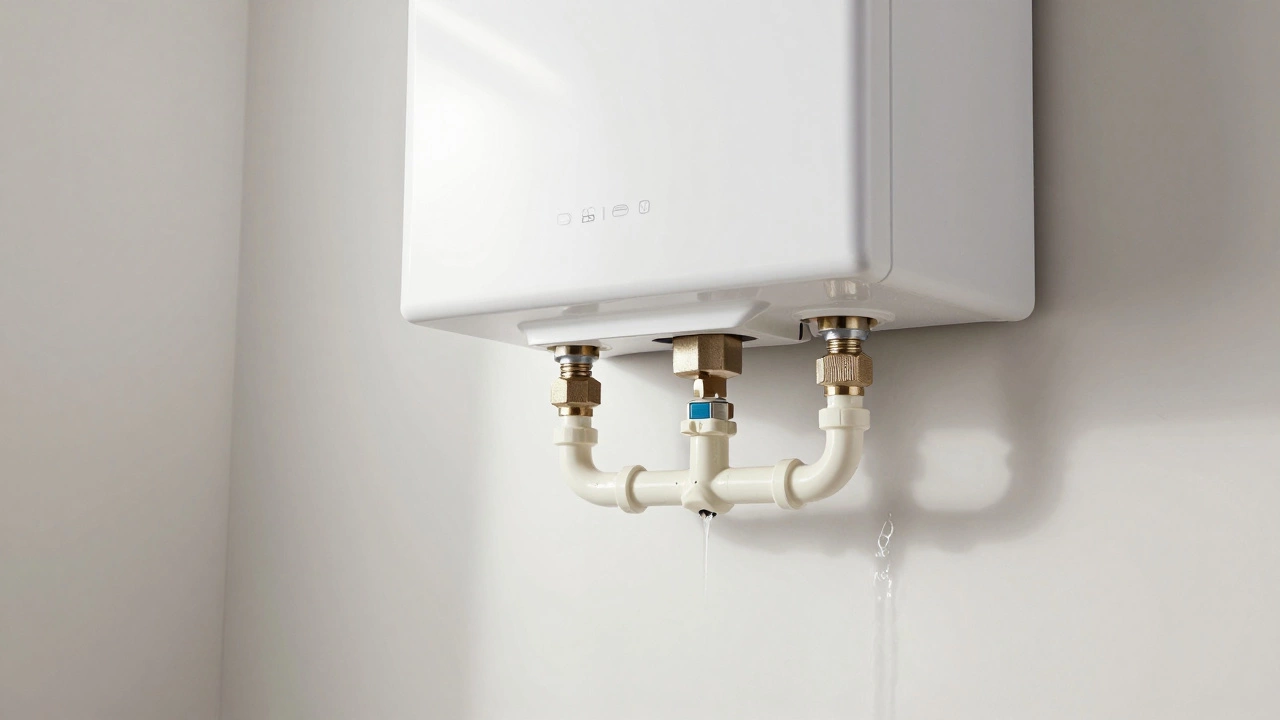
Similar to the cold inlet, the hot water outlet at the top of the tank connects to your home’s piping. Because this water is hot, the pipes expand and contract more than cold lines. This movement can stress the joints over time. If you have older galvanized steel pipes, the threads themselves can corrode and crack.
Check the union nuts connecting the heater to the rigid piping. If they are loose, tighten them. If the pipes are old and brittle, avoid excessive force. A leak here is usually easy to fix with a new washer or by re-threading the connection. Keep in mind that hot water pipes should have proper clearance from combustible materials, as per Australian Standards AS/NZS 3000, to prevent fire hazards.
Tankless Water Heaters: Different Rules Apply
If you have a tankless water heater an on-demand water heating system that heats water directly without using a storage tank, the leak dynamics change completely. Since there is no large storage vessel, you won’t face the risk of a catastrophic tank rupture. Instead, leaks usually occur at the water inlet/outlet connections or the condensate drain line.
Tankless units produce condensation when burning gas, similar to how a car exhaust produces water vapor. This condensate is acidic and must be drained via a PVC pipe. If this drain line clogs or disconnects, water will pool under the unit. Check the drain trap and ensure it’s clear. Another common spot is the heat exchanger. If the internal tubes corrode, you’ll see water leaking from the sides or back of the unit. This is a serious issue requiring professional repair, as the heat exchanger is the core component of the system.
When to Call a Professional Plumber
While many leaks are DIY-friendly, some situations demand expert intervention. If you suspect a gas leak (smell of rotten eggs) alongside a water leak, evacuate immediately and call emergency services. If the leak is from the bottom of a storage tank, you need a replacement quote, not a repair. Additionally, if you’re unsure about shutting off the correct valves or dealing with pressurized systems, hiring a licensed plumber in Adelaide is worth the peace of mind. They can also perform a pressure test to ensure your home’s overall water pressure isn’t damaging your appliances.
How do I stop a water heater leak temporarily?
First, turn off the power (electricity or gas) to the heater. Then, close the cold water inlet valve to stop fresh water from entering. Place a bucket under the leak to catch dripping water. If the leak is from a loose pipe fitting, you can try tightening it with a wrench. Do not attempt to seal a leaking tank bottom with tape or glue as a permanent fix.
Is it normal for a water heater to sweat?
Condensation, or "sweating," can occur if the ambient humidity is high or if cold water enters a warm tank rapidly. However, significant sweating can indicate poor insulation or a broken dip tube. If the water on the floor is clear and cool, it might be condensation. If it’s warm or smells like heated water, it’s a leak.
How long does a typical water heater last in Adelaide?
Traditional storage tanks typically last 8 to 12 years, depending on water quality and maintenance. Tankless models can last 15 to 20 years. Regular flushing of sediment and anode rod replacement can significantly extend these lifespans.
Can high water pressure cause leaks?
Yes. If your home’s water pressure exceeds 60 psi, it puts excessive strain on all connections and the tank itself. Installing a pressure reducing valve (PRV) can prevent premature leaks and extend the life of your water heater and other plumbing fixtures.
What are the signs my water heater tank is rusting from the inside?
Look for brown or reddish water coming from your hot water taps. You might also hear rumbling noises as sediment burns off the bottom of the tank. If you see any moisture at the very bottom of the exterior tank, internal corrosion has likely breached the steel.