If your oven won’t heat up, takes forever to cook, or keeps shutting off mid-bake, you’re not alone. These aren’t random glitches-they’re the same problems that show up in over 80% of oven repair calls in Adelaide this year. Most people assume their oven is broken beyond repair, but the truth is, nine times out of ten, it’s just one simple part that’s failed. You don’t need to replace the whole unit. You just need to know what to look for.
The Heating Element Is the Most Common Culprit
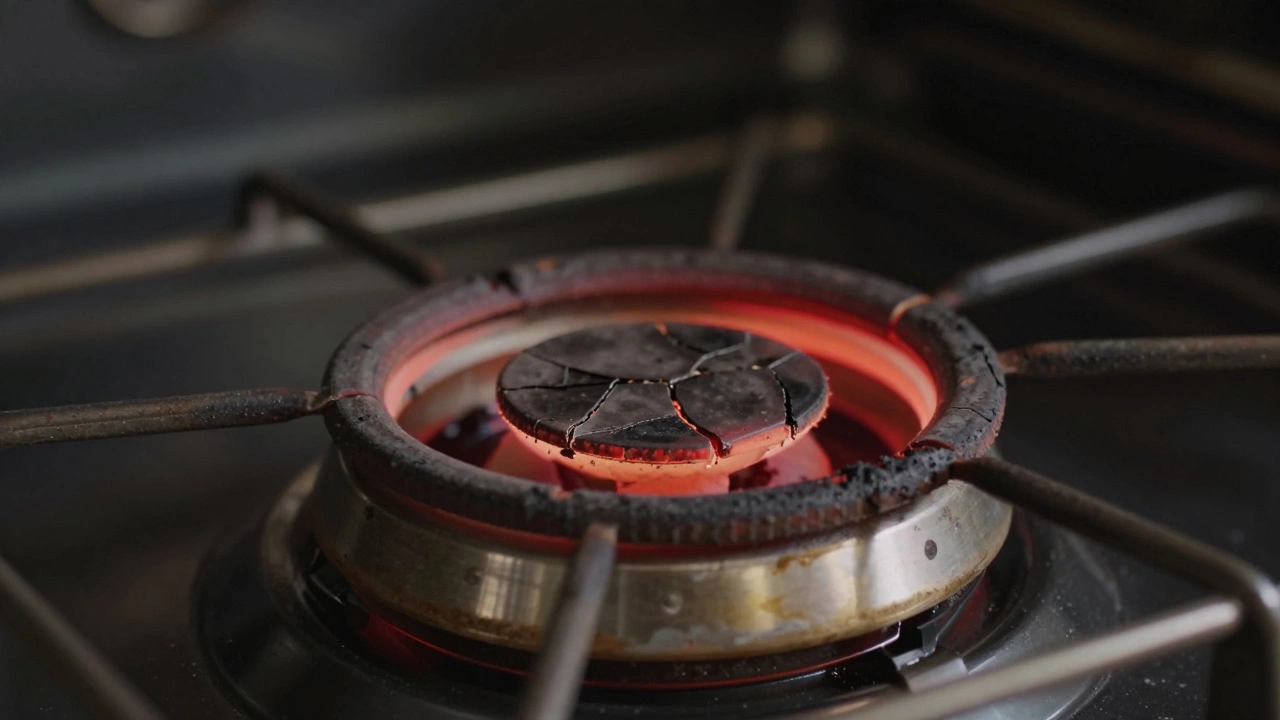
The heating element is the coil inside your oven that glows red when it’s working. It’s the heart of the oven. When it burns out, the oven either doesn’t heat at all or heats unevenly. You’ll notice the bottom element (used for baking) isn’t glowing, or the top element (used for broiling) stays dark. Sometimes, you’ll see visible cracks, blisters, or sections that are burnt black. A broken element doesn’t always make noise or trigger an error code. It just stops working quietly.
Most oven elements last 5 to 10 years. If your oven is older than seven years and the element looks damaged, it’s time to replace it. Replacing it yourself is doable if you’re comfortable turning off the power and unplugging the oven. You’ll need to remove the back panel, disconnect the wires, and swap in a new one. Make sure the replacement matches the wattage and shape exactly. Using the wrong part can cause overheating or fire risk.
Thermostat Failure Causes Inconsistent Temperatures
Ever baked cookies and ended up with burnt edges and raw centers? Or roasted chicken that took twice as long as the recipe said? That’s often not your cooking skill-it’s a failing thermostat. The thermostat is the sensor that tells the oven when to turn the heat on and off to maintain the set temperature. When it gets inaccurate, the oven might think it’s at 180°C when it’s really at 140°C.
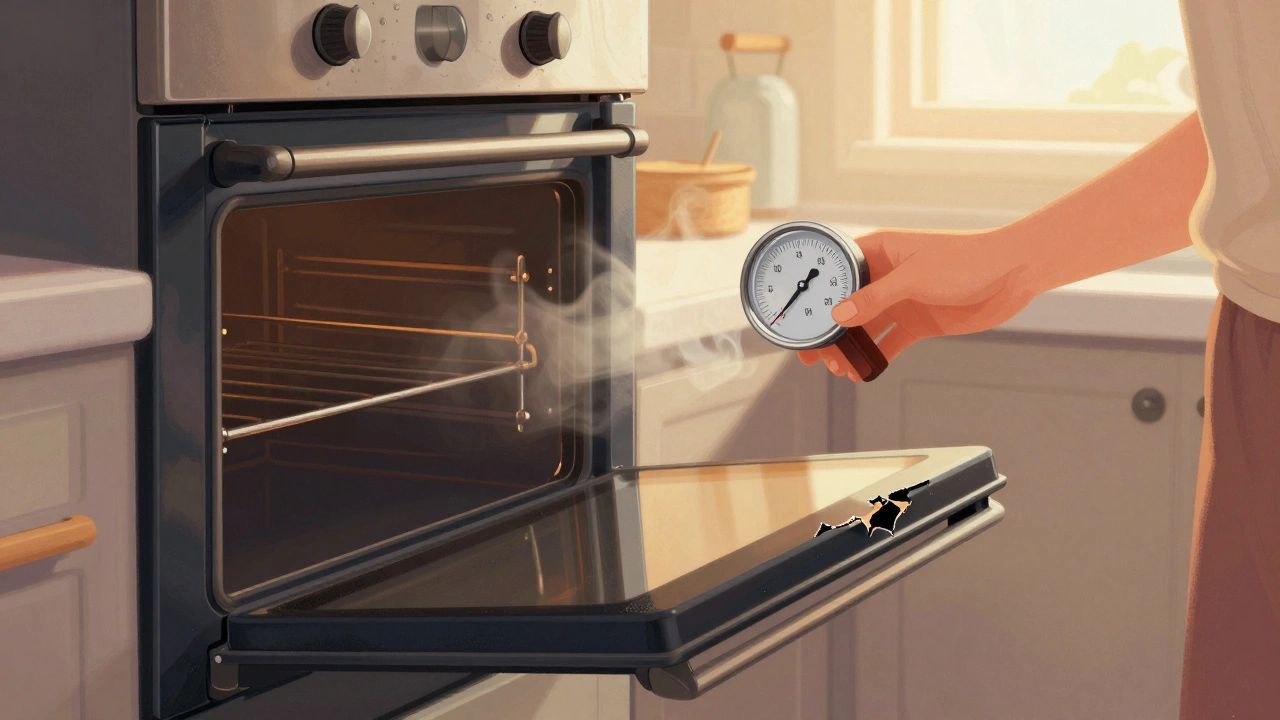
There’s no easy visual check for a bad thermostat. The best way to test it is with an oven thermometer. Place it in the center of the oven, set the temperature to 180°C, and wait 20 minutes. If the thermometer reads more than 15°C off, your thermostat is off. Many modern ovens use digital sensors instead of mechanical thermostats. These can fail due to moisture, grease buildup, or just age. If you’ve ruled out the heating element and the oven still won’t hold temperature, the thermostat is likely the issue.
Broken Oven Door Seal Lets Heat Escape
A damaged door seal is easy to miss because the oven still turns on. But if the rubber gasket around the door is cracked, brittle, or falling off, heat leaks out. That means your oven has to work harder to reach temperature, which increases your electricity bill and slows down cooking. You might notice the door feels hot to touch even when the oven isn’t on full blast. Or the kitchen gets noticeably warmer than usual during baking.
Test the seal by closing the door on a piece of paper. Try to pull it out. If it slides out easily, the seal isn’t holding. Replacing the gasket is cheap and simple-usually under $40. You can order the right one by your oven’s model number. Don’t ignore this. A bad seal doesn’t just waste energy-it makes your oven unreliable. Food takes longer, burns unevenly, and you’ll keep thinking something’s wrong with the settings.
Igniter Problems in Gas Ovens
If you have a gas oven and it won’t light, the igniter is probably the problem. The igniter is a small ceramic piece that glows red-hot to ignite the gas. Over time, it weakens. You might hear the gas hissing but no flame. Or you see the igniter glow for 30 seconds and then go out without lighting the burner. That’s a classic sign.
Some people think the gas line is clogged, but that’s rare. More often, the igniter is just worn out. Gas ovens use a different kind of igniter than electric ones, and they’re more sensitive to grease buildup. Clean it gently with a toothbrush and baking soda paste if it’s dirty. But if it’s old or cracked, cleaning won’t fix it. Replacement igniters cost between $50 and $100. Always turn off the gas supply before working on it.
Control Panel and Electronic Failures
Modern ovens have touchscreens, digital displays, and fancy settings. When they glitch, it’s tempting to think the whole oven is dead. But often, it’s just the control board or keypad that’s faulty. If the display is blank, shows error codes like E1 or F3, or buttons don’t respond, the control panel might be the issue. Water damage from spills, steam buildup, or power surges can fry the circuitry.
Before replacing the control board, try a simple reset: turn off the power at the circuit breaker for 5 minutes, then turn it back on. If the problem returns, the board likely needs replacing. Control boards are expensive-$150 to $300-but they’re still cheaper than a new oven. Make sure you get the exact model match. Using a generic board can cause more errors or even safety risks.

When to Call a Professional
There are times when DIY isn’t safe. If you smell gas, hear a loud pop, see sparks inside the oven, or notice burning plastic, turn off the power and gas immediately. Call a licensed technician. These aren’t fixes you should attempt yourself. Even if the oven seems to work after a reset, hidden damage could be present.
Also, if you’ve tried replacing the element, thermostat, and seal-and the oven still doesn’t work-it’s time to get help. A technician can test voltage, check wiring, and diagnose deeper issues like faulty relays or thermal fuses. Many repair shops in Adelaide offer free diagnostics. If the repair quote is more than half the price of a new oven, it’s usually smarter to replace it.
Preventing Future Problems
Regular cleaning keeps your oven running longer. Wipe spills as soon as they cool. Avoid using harsh abrasives on the heating elements-they can damage the coating. Run the self-clean cycle once every 6 months, but only if your oven is in good condition. Older ovens can overheat during self-clean and damage internal parts.
Don’t overload the oven. Crowding it blocks airflow and makes the heating element work harder. Keep the door closed while cooking. Opening it every few minutes to check on food can drop the temperature by 25°C, forcing the oven to burn more energy to recover.
Check the door seal every six months. A quick pull test with a piece of paper takes 10 seconds. If it slips out, replace the gasket before winter hits. Cold weather makes your oven work harder, and a bad seal will cost you more in electricity.
Why does my oven take so long to heat up?
A slow-heating oven usually means one of three things: a weak heating element, a faulty thermostat, or a damaged door seal. The element might be partially burned out and not producing full heat. The thermostat could be misreading the temperature, causing the oven to cycle on and off too soon. Or heat is escaping through a cracked door gasket. Test each part one by one-start with the door seal, then use an oven thermometer to check accuracy, and finally inspect the element for damage.
Can a dirty oven cause it not to heat?
A dirty oven won’t stop it from heating, but it can make it less efficient. Thick grease buildup around the heating elements can insulate them, preventing proper heat transfer. This forces the oven to run longer to reach temperature. It can also cause smoke or strange smells when you turn it on. Clean the oven regularly, especially under the racks and around the element housing. Never spray cleaner directly on the heating element-it can damage the coating.
Is it worth repairing an old oven?
If your oven is over 10 years old and needs more than one major part replaced, it’s often better to replace it. New ovens are 20-30% more energy efficient and come with better safety features. But if it’s under 8 years old and only one part (like the element or thermostat) has failed, repair is almost always the smarter choice. A $60 heating element is cheaper than a $1,000 new oven. Plus, many modern ovens have the same parts failing in the same way-so a well-repaired older oven can last another 5 years easily.
Why does my oven turn off by itself?
An oven that turns off unexpectedly is usually protected by a safety feature. The most common cause is a thermal fuse that trips when the oven overheats. This can happen if the ventilation is blocked, the door seal is broken, or the thermostat is stuck. Other reasons include a faulty control board or a failing cooling fan in built-in models. If it turns off after 20-30 minutes, the thermal fuse is likely the issue. Replacing the fuse is inexpensive, but you must find out why it overheated in the first place-or it will happen again.
Do oven error codes mean I need a new oven?
No. Most error codes point to a specific part that’s failing, not the whole oven. For example, E1 often means a temperature sensor issue, F3 means the heating element isn’t responding, and E5 can mean a door lock malfunction. Look up your oven’s model number and error code online-most manufacturers list what each code means. Many of these issues can be fixed with a $30-$100 part. Don’t assume the oven is dead because of a code. A technician can usually diagnose it in under 15 minutes.
Final Thoughts
Most oven problems are simple, cheap, and fixable. You don’t need to replace your oven every time something goes wrong. Start with the basics: check the door seal, test the temperature with a thermometer, and look at the heating element. These three things cover 90% of cases. If you’re unsure, take a photo of the issue and ask a local repair shop. Most offer free advice. Fixing your oven now saves you money, reduces waste, and keeps your kitchen running without disruption.