If your gas oven won’t light, you’re not alone. Many people assume it’s a gas supply issue or a broken thermostat-but more often than not, the real culprit is a failing gas oven igniter. It’s a small part, but it does the heavy lifting every time you turn on the oven. When it starts to go bad, it doesn’t just stop working-it gives you plenty of warning signs before it fully quits.
Slow or No Ignition
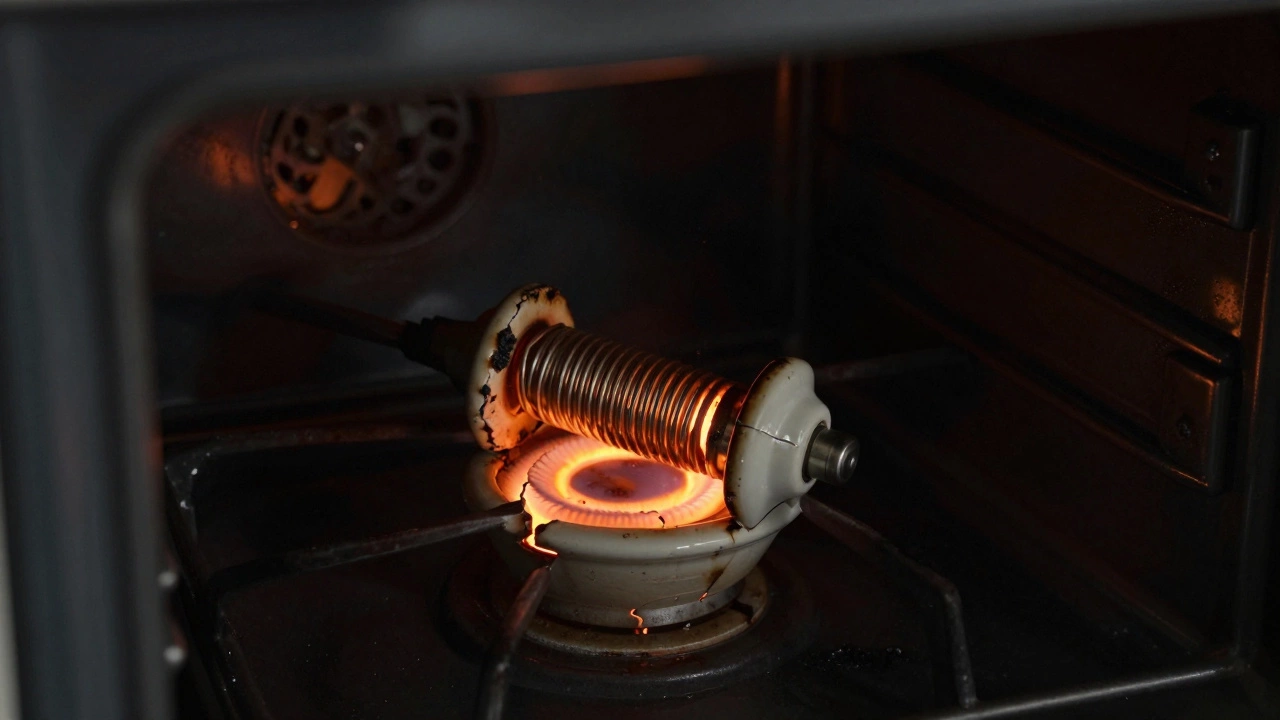
The most obvious symptom is a delay-or complete failure-when you turn the oven on. A healthy igniter glows bright orange within 30 to 60 seconds and then clicks as the gas valve opens. If you wait a full two minutes and still hear nothing, or see no glow at all, the igniter is likely worn out. It’s not that the gas isn’t flowing; it’s that the igniter can’t get hot enough to trigger the safety valve. Think of it like a car battery that’s too weak to turn the engine over-you’ve got fuel, but no spark.
Intermittent Lighting
Some igniters don’t die all at once. They fade slowly. You might notice that the oven lights fine on Monday, but on Wednesday it takes three tries. Or maybe it works on the top burners but not the oven. That inconsistency is a classic sign of a weak igniter. Over time, the heating element inside the igniter loses its resistance. It still glows, but not brightly enough to heat the gas valve’s sensor. The valve stays closed, and the gas just sits there-sometimes smelling like a faint gas leak.
Visible Damage
Take a look at the igniter if you can safely access it. Remove the oven floor panel and shine a flashlight down. A healthy igniter looks like a smooth, solid ceramic rod with metal coils. A bad one often has cracks, chips, or blackened, burnt areas. If you see a gap in the coil or a section that’s turned white or brittle, that’s a dead giveaway. Ceramic doesn’t flex. Once it cracks, it can’t conduct electricity properly. I’ve seen igniters with a quarter-inch chunk missing-still glowing faintly, but never hot enough to ignite the gas.
Gas Smell Without Ignition
This one’s dangerous, and it’s a red flag. If you smell gas but the oven doesn’t light, the igniter isn’t doing its job. The gas valve opens briefly, releasing gas into the oven cavity, but without a hot enough igniter, it doesn’t ignite. That gas just builds up. Modern ovens have safety shutoffs, but older models can keep releasing gas for several seconds before shutting down. That’s why you might catch a whiff after a failed ignition attempt. If this happens more than once, don’t keep trying. Turn off the gas at the valve and get it checked.
Clicking Sounds Without Flame
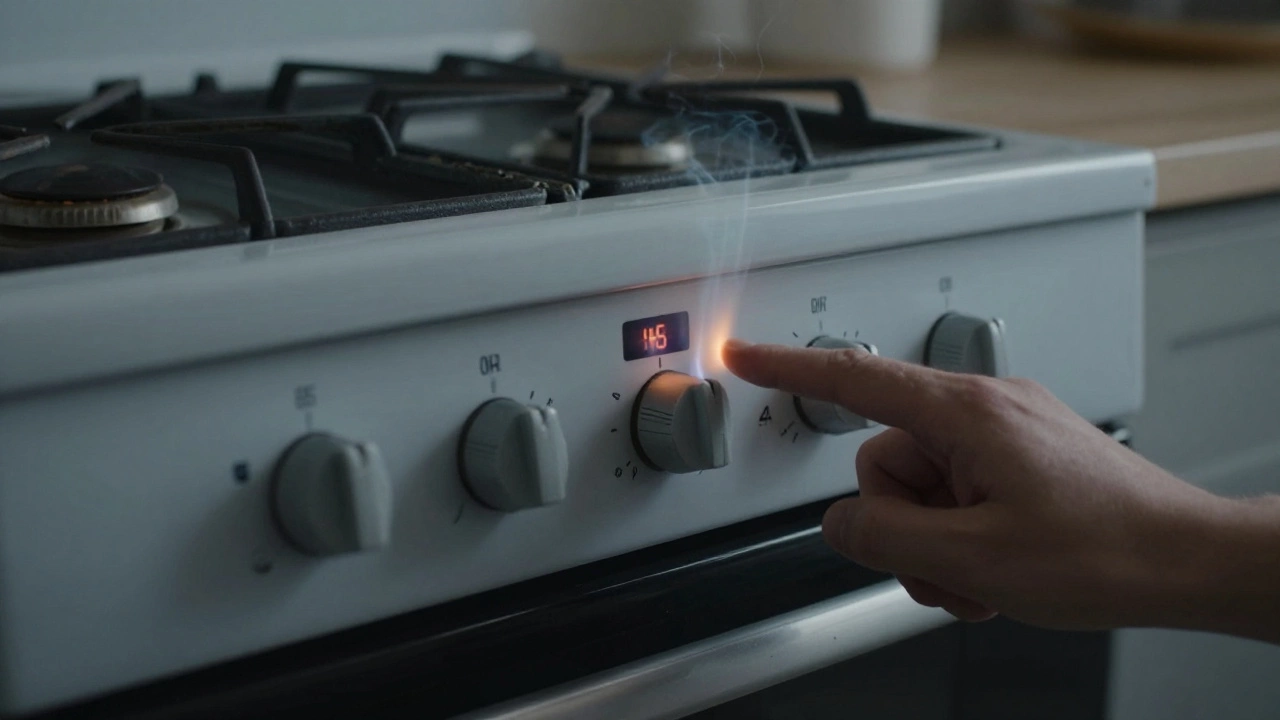
You hear clicking-like a lighter trying to spark-but no flame appears. That clicking is the gas valve opening and closing as the igniter struggles. It’s the oven’s safety system cycling: “Try again. Try again. Try again.” Each cycle releases a small puff of gas. Over time, this wears out the valve and increases the risk of gas buildup. It’s not just annoying-it’s a potential hazard.
Uneven Heating or Burner Failure
A weak igniter doesn’t just affect the oven. In some models, the same igniter serves both the oven and the cooktop burners. If the burners light fine but the oven doesn’t, the igniter is still the likely issue. The oven needs a hotter, longer glow to open its larger gas valve. The burners need less heat, so they’ll still work even when the igniter is failing. This mismatch is a telltale sign that the igniter is on its last legs.
Increased Energy Bills
It sounds odd, but a bad igniter can raise your electricity bill. The igniter draws power every time it tries to light the oven. If it’s weak, it stays on longer-sometimes for minutes-trying to get hot enough. That extended draw adds up. One customer in Adelaide noticed her monthly bill jumped by $18 after her oven started taking forever to light. She replaced the igniter, and the bill dropped back to normal. It’s not a huge cost, but it’s a silent drain you don’t notice until it’s gone.
Why Igniters Fail
Igniters don’t last forever. Most last 5 to 10 years, depending on usage. Every time you use the oven, the igniter heats up to over 2,000°F. That repeated thermal stress cracks the ceramic over time. Grease and food debris can also build up on the igniter, insulating it and preventing it from reaching full temperature. In coastal areas like Adelaide, salt air can accelerate corrosion on the metal contacts. And if you’ve ever cleaned the oven with harsh chemicals, you’ve probably shortened the igniter’s life. The ceramic is tough, but not indestructible.
How to Test It
You don’t need a multimeter to check the igniter. Just turn the oven on and watch. If it glows orange but takes longer than 90 seconds to light, it’s weak. If it glows faintly or not at all, it’s dead. You can also gently tap the igniter with a non-metal object-like the handle of a wooden spoon-while it’s glowing. If it suddenly lights up after a tap, it’s loose or cracked. That’s a temporary fix at best. Replacement is the only real solution.
What to Do Next
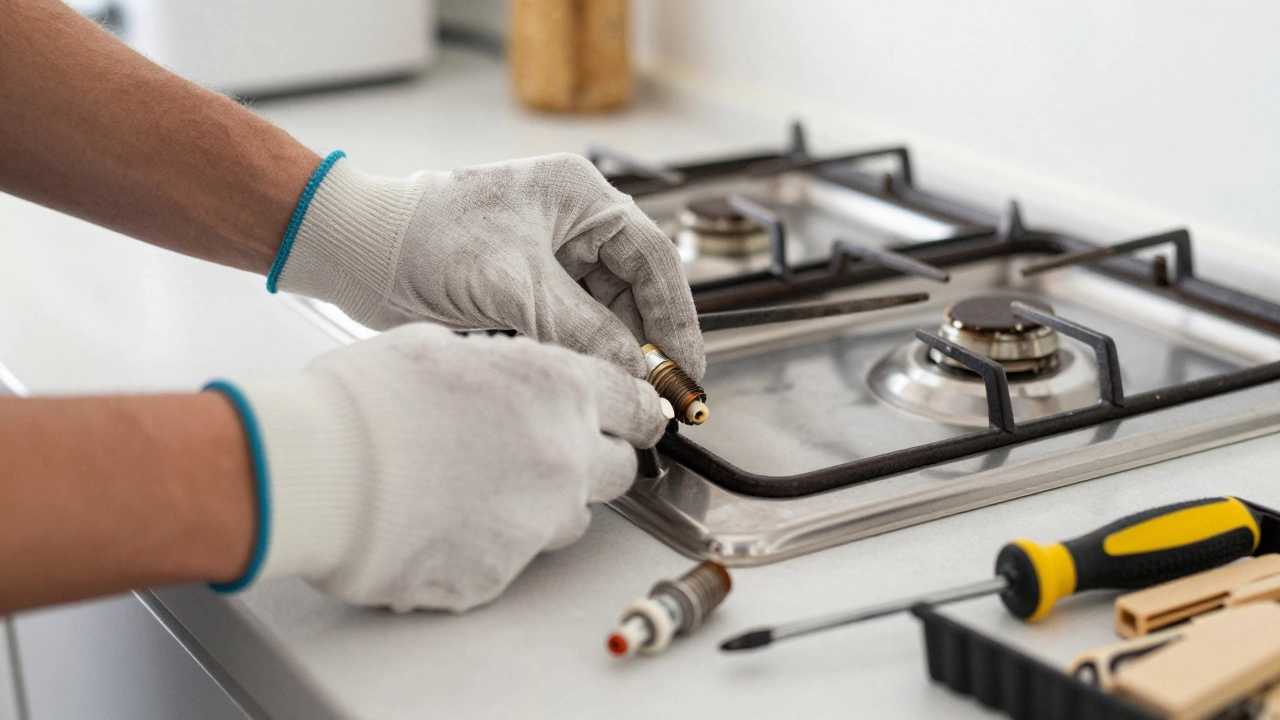
If you’ve noticed any of these symptoms, don’t wait. A failing igniter can lead to gas leaks, repeated failed ignitions, or even a buildup of unburned gas that could ignite suddenly. Replacing the igniter is usually a $50 to $120 job, depending on the model. Most DIYers can swap it out in under an hour with a screwdriver and a new part. Make sure you match the part number exactly-igniters vary by brand and model. A Whirlpool igniter won’t work in a Bosch, and vice versa.
Preventing Future Issues
Keep the area around the igniter clean. Wipe it down with a dry cloth every few months-no cleaners, no water. Avoid slamming the oven door; the shock can crack the ceramic. And if your oven is over 8 years old, consider replacing the igniter proactively. It’s cheaper than paying for a service call when it dies in the middle of holiday cooking.
Can a bad igniter cause a gas leak?
Yes. A failing igniter can cause the gas valve to open without igniting the gas. This releases gas into the oven cavity, which can build up and leak out when you open the door. If you smell gas after a failed ignition, turn off the gas supply immediately and ventilate the area.
How long does a gas oven igniter usually last?
Most igniters last between 5 and 10 years. Heavy use, frequent cleaning with harsh chemicals, or exposure to moisture can shorten that lifespan. In coastal areas, salt air can also speed up corrosion on the metal components.
Is it safe to keep using an oven with a bad igniter?
Not for long. While modern ovens have safety shutoffs, repeatedly trying to light a failing igniter increases the risk of gas buildup. If the oven takes more than 90 seconds to ignite, or you smell gas, stop using it until the igniter is replaced.
Can I replace the igniter myself?
Yes, if you’re comfortable with basic tools. Turn off the gas and electricity first. Remove the oven floor, unplug the old igniter, and swap in the new one. Match the part number exactly. Most replacements take less than an hour. If you’re unsure, call a technician.
Why does my oven light sometimes but not always?
This happens when the igniter is weak but not completely dead. It heats up enough to ignite the gas on some attempts, but not others. Temperature changes, humidity, or even a dusty igniter can affect its performance. This inconsistency is a clear sign it’s time for a replacement.