Water Heater Health Estimator
Enter your details below to estimate how much sediment might be affecting your unit and when you should schedule a flush.
Estimated Condition
--You turn on the shower, expecting warmth, but get a lukewarm blast of cold air-or worse, no water at all. It’s frustrating, especially when you’re already late for work. While broken heating elements and failed thermostats are frequent culprits, they aren’t actually the most common issue facing homeowners today. The real silent killer of water heaters is something far more mundane: sediment buildup.
This isn’t just a minor inconvenience. Sediment accumulation reduces efficiency, increases energy bills, and eventually causes irreversible damage to your unit. Whether you have a traditional tank model or a modern tankless system, understanding how minerals from your tap water wreak havoc is the first step toward extending the life of your appliance. Let’s break down why this happens, how to spot it early, and what you can do before a plumber becomes your only option.
Why Sediment Is the Silent Killer of Water Heaters
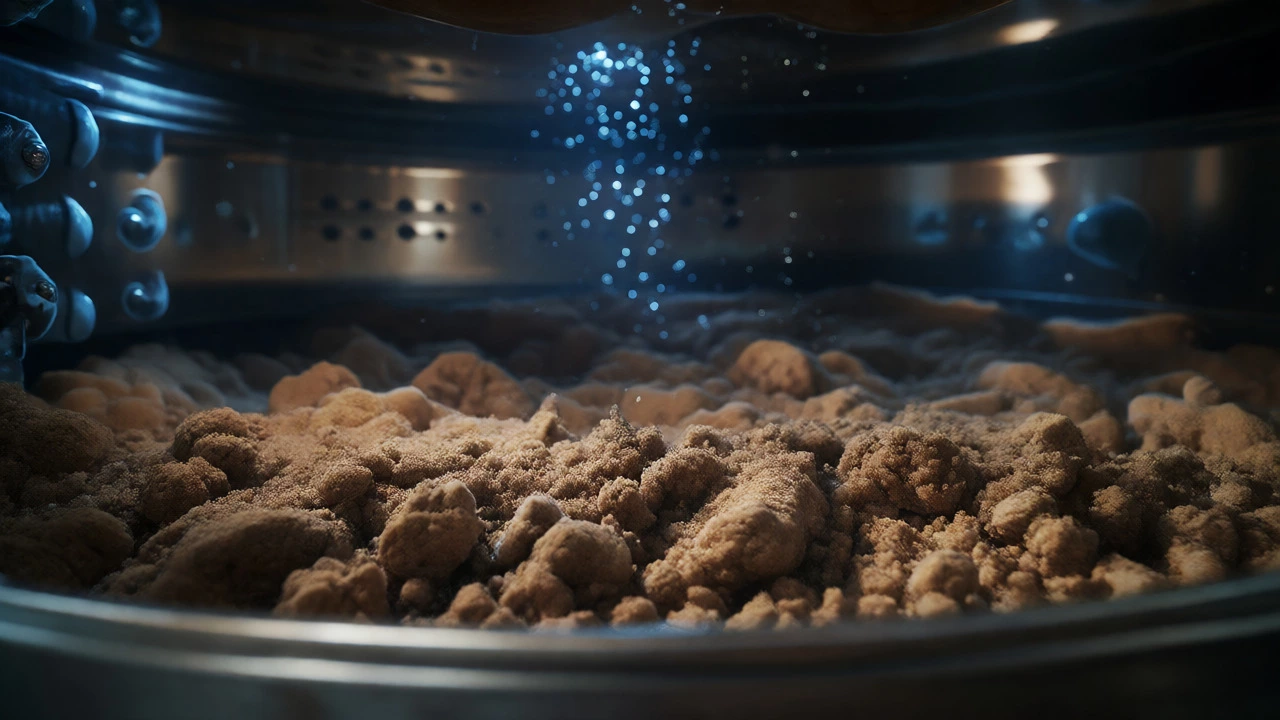
Tap water isn’t pure H2O. In most regions, it contains dissolved minerals like calcium and magnesium. When water enters your water heater, it heats up. As water temperature rises, these minerals precipitate out of the solution and settle at the bottom of the tank. Over time, this creates a layer of sand-like grit known as sediment.
In gas water heaters, this sediment sits directly between the burner flame and the tank’s steel bottom. Think of it as putting a pot on a stove with a thick layer of dirt in the bottom. The heat has to travel through that dirt to reach the water, which takes longer. This inefficiency means your heater runs longer cycles, burning more gas or electricity than necessary. But the bigger problem is thermal stress. The sediment insulates the metal, causing hot spots that can crack the tank lining, leading to leaks.
For electric water heaters, the sediment buries the lower heating element. Since the element is designed to be submerged in water to cool itself, being covered in mineral crust causes it to overheat and burn out prematurely. Replacing a heating element is a $50-$150 job, but if you ignore the sediment, you might end up replacing the entire tank.
Tank vs. Tankless: Different Systems, Same Enemy
Many people assume that because tankless water heaters don’t store water, they’re immune to mineral issues. That’s a dangerous myth. While tankless units don’t suffer from the same type of bulk sediment accumulation at the bottom, they face a different challenge: scale buildup inside the heat exchanger coils.
| Feature | Traditional Tank Heater | Tankless Water Heater |
|---|---|---|
| Primary Issue | Sediment layer at bottom of tank | Scale buildup in heat exchanger |
| Efficiency Loss | High (insulation effect) | Moderate (flow restriction) |
| Damage Risk | Tank corrosion/burnout | Overheating/shutdown errors |
| Maintenance | Annual drain flush | Annual descaling cycle |
In hard water areas, the small diameter tubes in a tankless heat exchanger can clog with calcium carbonate. This restricts water flow, causing the unit to overheat and shut down repeatedly. You’ll notice this as inconsistent water temperatures-showering feels like riding a rollercoaster between scalding and freezing. Unlike tanks, where sediment settles, tankless scale adheres to the walls of the copper or stainless steel coils, requiring chemical flushing rather than simple draining.
The Role of the Anode Rod in Preventing Corrosion
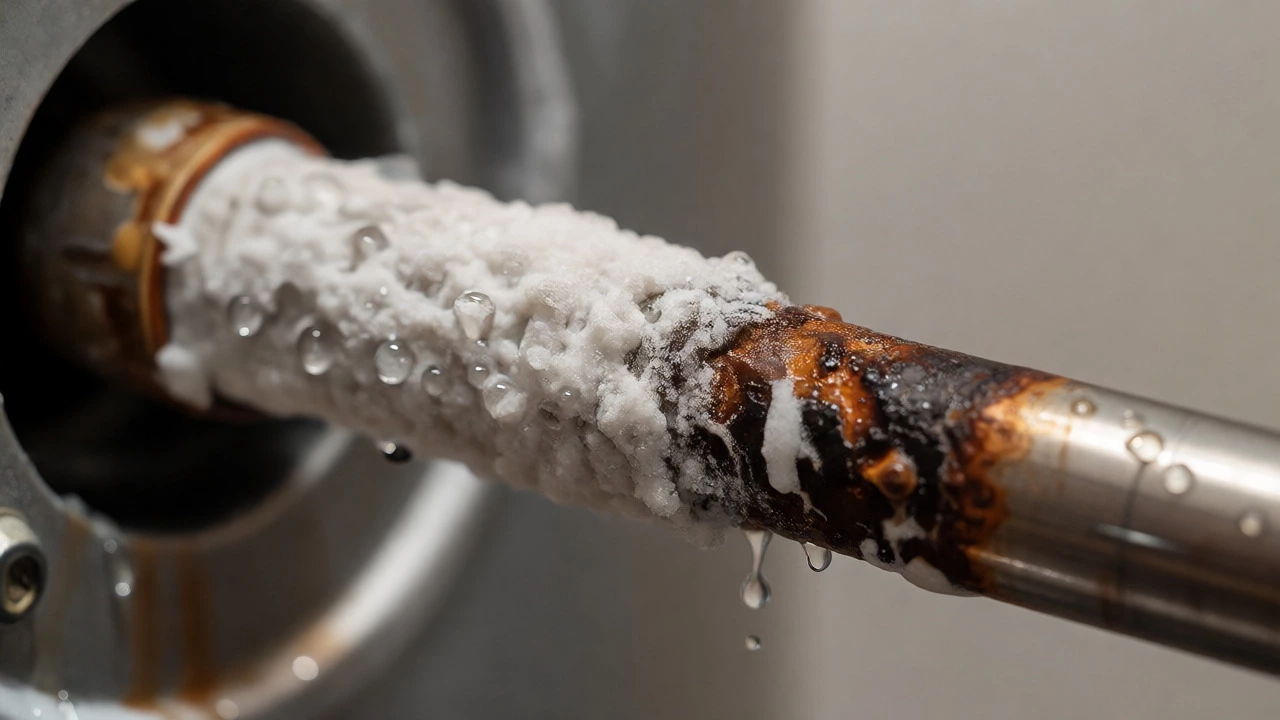
While sediment affects performance, another related issue often goes unnoticed until it’s too late: internal corrosion. Inside every steel-tank water heater lives a sacrificial component called the anode rod. Its job is to attract corrosive ions in the water, rusting away instead of the steel tank.
If your anode rod is depleted, the corrosion process attacks the tank itself. This leads to pinhole leaks, which are notoriously difficult to patch reliably. Often, sediment buildup accelerates anode rod depletion because the minerals trap moisture against the rod, speeding up the electrolytic reaction. If you’ve noticed rotten egg smells coming from your hot taps, it’s likely a sign of sulfate-reducing bacteria thriving in the sediment around a depleting anode rod. Switching to an aluminum-zinc anode rod can sometimes mitigate this odor while still protecting the tank.
How to Diagnose Sediment Buildup Early
You don’t need a degree in plumbing to spot the warning signs. Your water heater will tell you if it’s struggling with mineral deposits. Listen closely when the heater fires up. A popping, cracking, or rumbling noise is the sound of steam bubbles forming under the sediment layer and bursting through it. This acoustic symptom is one of the earliest indicators that maintenance is overdue.
Visually inspecting the pressure relief valve discharge pipe can also help. If you see rusty or discolored water dripping from the T&P valve, it suggests internal corrosion or heavy sediment disturbance. Additionally, if your hot water supply runs out faster than usual during a shower, the effective volume of the tank has decreased due to sediment occupying space. A standard 50-gallon tank might effectively hold only 40 gallons if neglected for several years.
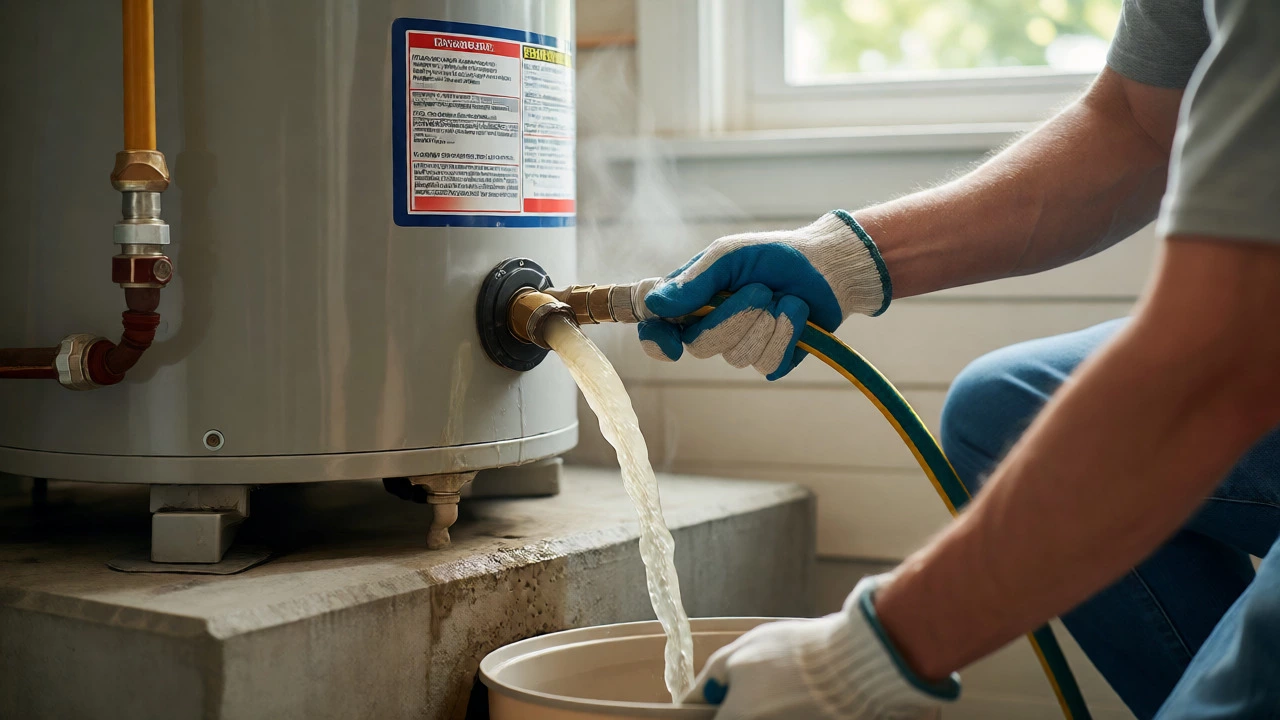
Step-by-Step Guide to Flushing Your Water Heater
Regular flushing is the single best way to combat sediment. For traditional tanks, aim to do this once a year, or twice a year if you live in an area with very hard water. Here’s how to do it safely:
- Turn off the power or gas: For electric units, switch off the breaker. For gas units, set the control knob to "Pilot" or "Off."
- Connect a hose: Attach a garden hose to the drain valve at the bottom of the tank. Run the other end to a floor drain or outside.
- Open a hot water faucet: Go to the nearest sink or tub and open the hot tap. This breaks the vacuum, allowing water to flow freely.
- Open the drain valve: Slowly open the valve. Be careful; the water will be hot. Let it run until it flows clear. If you see chunks of sediment, let them flush out.
- Agitate the sediment: If the water stays cloudy, briefly close the drain valve and open the cold water inlet to stir up debris, then reopen the drain. Repeat until clear.
- Close and refill: Close the drain valve, remove the hose, and close the hot water faucet. Open the cold water inlet to refill the tank. Wait until water flows steadily from the opened hot water faucet before closing it.
- Restore power/gas: Once the tank is full, restore the energy source.
For tankless systems, the process involves a pump kit and white vinegar. You circulate the acid through the heat exchanger to dissolve scale. It’s slightly more complex but equally vital for longevity.
When to Call a Professional
DIY maintenance handles most sediment issues, but some situations require expert intervention. If your water heater is over 10 years old and leaking, flushing won’t save it-the tank is likely corroded through. Similarly, if you hear loud banging noises even after flushing, you might have a failing heating element or a cracked dip tube.
Also, consider installing a whole-house water softener if you constantly battle scale. While expensive upfront ($600-$2,500 installed), it protects not just your water heater but also your washing machine, dishwasher, and pipes. According to the U.S. Geological Survey, nearly 75% of American households deal with hard water conditions, making proactive treatment a smart investment for many.
How often should I flush my water heater?
Manufacturers generally recommend flushing your water heater once a year. However, if you live in an area with extremely hard water, doing it every six months can significantly extend the lifespan of the unit.
Can sediment cause my water heater to leak?
Yes, indirectly. Sediment traps heat against the tank's bottom, causing thermal stress that can crack the glass lining. Once the lining cracks, the steel tank corrodes and eventually develops leaks.
Does a water softener really help water heaters?
Absolutely. By removing calcium and magnesium before the water enters the heater, you prevent scale formation entirely. Studies show softened water can double the lifespan of a water heater and reduce energy consumption by up to 29%.
What does it mean if my hot water smells like rotten eggs?
This smell usually indicates bacterial growth within the tank, often associated with a depleted anode rod and sediment buildup. Replacing the anode rod with an aluminum-zinc alloy version often solves the problem.
Is it safe to flush a water heater myself?
Yes, provided you follow safety steps like turning off the power/gas and letting the water cool slightly if possible. Always wear gloves and eye protection, as the water can be near boiling point.