Water Heater Sediment: Causes, Effects, and How to Fix It
When water heater sediment, Mineral deposits like calcium and magnesium that settle at the bottom of water tanks over time. Also known as scale, it’s the silent killer of water heaters. It doesn’t make noise, it doesn’t leak, but it slowly robs your heater of efficiency, pushes up your energy bills, and cuts its life in half. If your hot water runs out faster than it used to, or you hear popping or rumbling noises, sediment is likely the culprit.
Water heater maintenance, Regular tasks like flushing the tank and checking the anode rod to keep the system running efficiently is the only real defense. Most people don’t realize their heater needs flushing until it’s too late. Hard water areas—like many parts of the UK—build up sediment faster. A tank that should last 10 years might die in 5 if it’s never flushed. And it’s not just about age. Even new heaters can get wrecked by sediment if the water is untreated. The water heater lifespan, The typical number of years a water heater operates before needing replacement, usually 8–12 years with care depends more on how well you treat it than the brand on the side.
What happens when sediment builds up? It acts like insulation between the heating element and the water. Your heater has to work harder, longer, and hotter to get the same result. That means higher bills and more strain on parts. The element can overheat and burn out. The tank lining can corrode faster. And if the sediment gets thick enough, it can block the drain valve—making it impossible to flush without professional help. You might think you need a new heater, but often, a simple flush could’ve saved you hundreds.
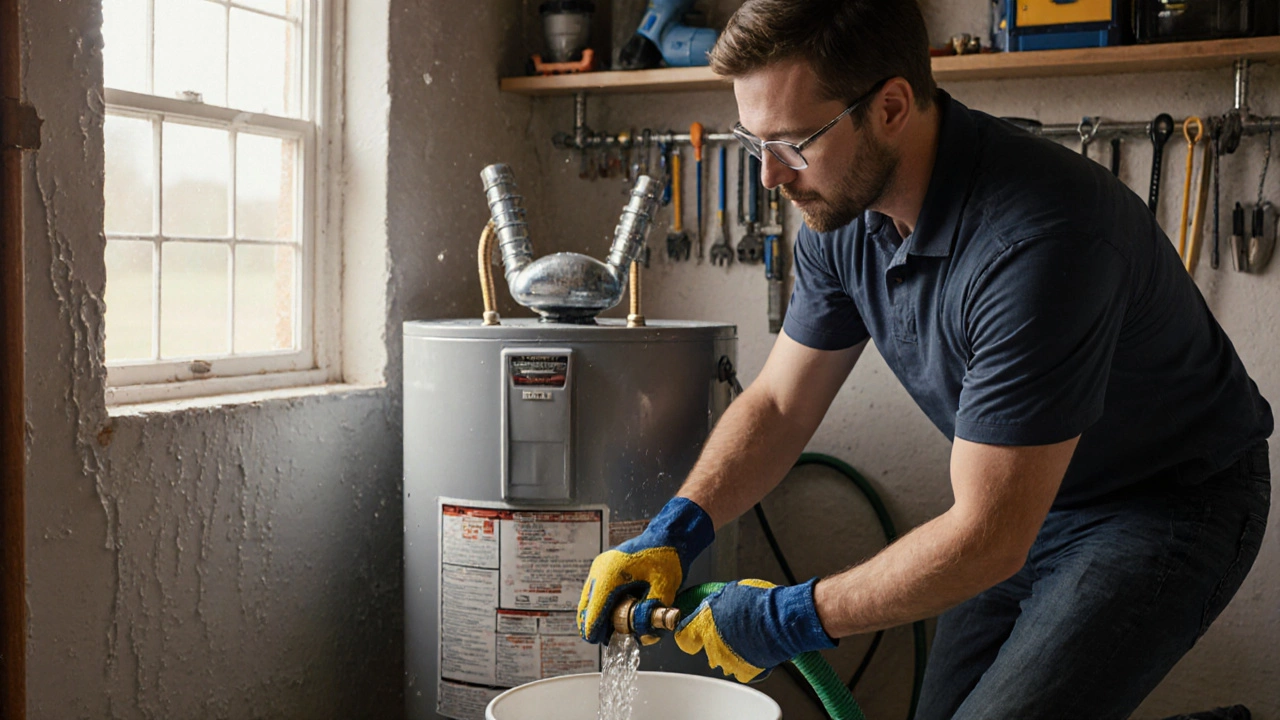
Fixing it isn’t hard, but it’s not something you should ignore. Flushing your tank once a year takes an afternoon and maybe $20 in supplies. You’ll get better hot water, quieter operation, and longer life. If you’ve never done it before, don’t worry—most tanks have a standard drain valve. Just turn off the power, shut the cold water inlet, attach a hose, and let it run until the water clears. No fancy tools. No magic tricks. Just regular care.
And if your heater’s already acting up—no hot water, strange noises, rust-colored water—that’s not always a sign it’s dead. Sometimes, it’s just drowning in sediment. A professional repair might be all you need. But if you wait too long, you’ll end up paying for a full replacement when a simple flush could’ve avoided it.
Below, you’ll find real fixes, real advice, and real stories from people who dealt with the same problem. Some tried DIY. Others called a pro. All of them learned the hard way that sediment doesn’t wait. It builds up quietly—and it doesn’t care how old your heater is.