Water Heater Element Test: How to Diagnose a Bad Heating Element
When your hot water suddenly turns cold, it’s rarely the whole water heater that’s done for—it’s often just the water heater element, a simple metal coil inside the tank that heats the water when electricity passes through it. Also known as a heating element, this part wears out over time, especially in areas with hard water. Most electric water heaters have two of these elements, and if one fails, you’ll still get some warm water—but never enough for a proper shower.
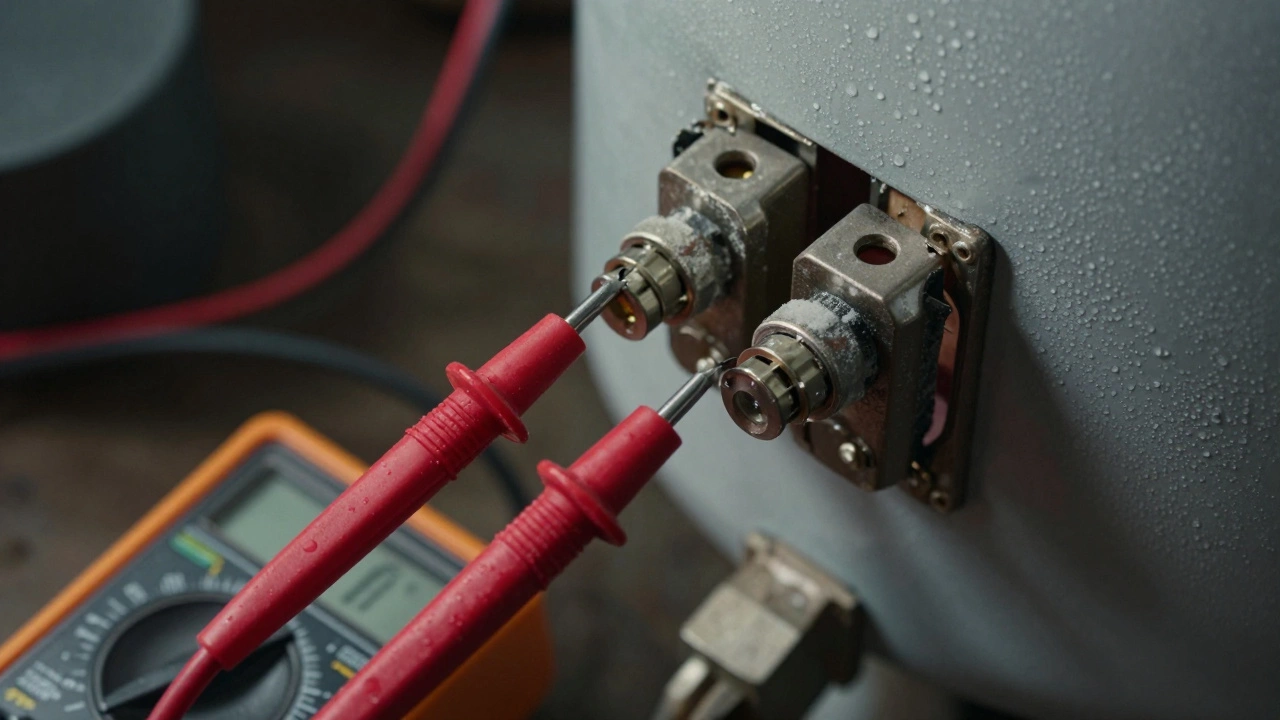
Testing a water heater element doesn’t require a plumber. All you need is a multimeter, a bit of caution, and the right safety steps. First, turn off the power at the breaker—never skip this. Then drain a few gallons to lower the water level below the element. Remove the access panel and insulation, and disconnect the wires. Set your multimeter to ohms and touch the probes to the element’s terminals. If it reads zero or infinity, the element is dead. A good one usually shows between 10 and 16 ohms. If you’re not comfortable with electricity, call a pro. But if you are, replacing it yourself can save you $200 or more.
The electric water heater is one of the most overlooked appliances in the home. People forget about it until there’s no hot water. But regular maintenance—like flushing out sediment once a year—can double its life. Sediment buildup forces the heating element to work harder, which burns it out faster. And if you’re seeing rust on the tank or strange noises, that’s not just the element—it might be the tank itself failing. Knowing the difference helps you avoid replacing a perfectly good element when you actually need a whole new unit.
Many homeowners confuse a bad element with a faulty thermostat or a tripped reset button. That’s why testing is key. A thermostat can fail too, but it won’t show up on a multimeter the same way. The element is the part you can physically touch and test. And if you’ve already flushed the tank, checked the breaker, and reset the high-limit switch, and you’re still cold, the element is the next logical suspect.
Below, you’ll find real guides from people who’ve been there—how to test the element safely, how to tell if it’s really the problem, and when it’s better to walk away and replace the whole unit. No fluff. Just clear steps, common mistakes to avoid, and what to expect when you open up your water heater.