Electric Oven Overnight Cost & Safety Calculator
Enter your details below to estimate how much that forgotten oven is costing you and what risks are involved.
Estimated Financial Cost
Total Energy Consumed:
-- kWh
Cost for this session:
$0.00
Note: This assumes a duty cycle where the element cycles on/off to maintain temperature. Older ovens consume significantly more due to heat loss.
Safety Risk Assessment
Analysis pending...
Why does age matter?
Insulation degrades over time. An older oven loses heat faster, forcing the heating element to run longer (higher duty cycle) to maintain the set temperature, increasing both cost and wear on components.
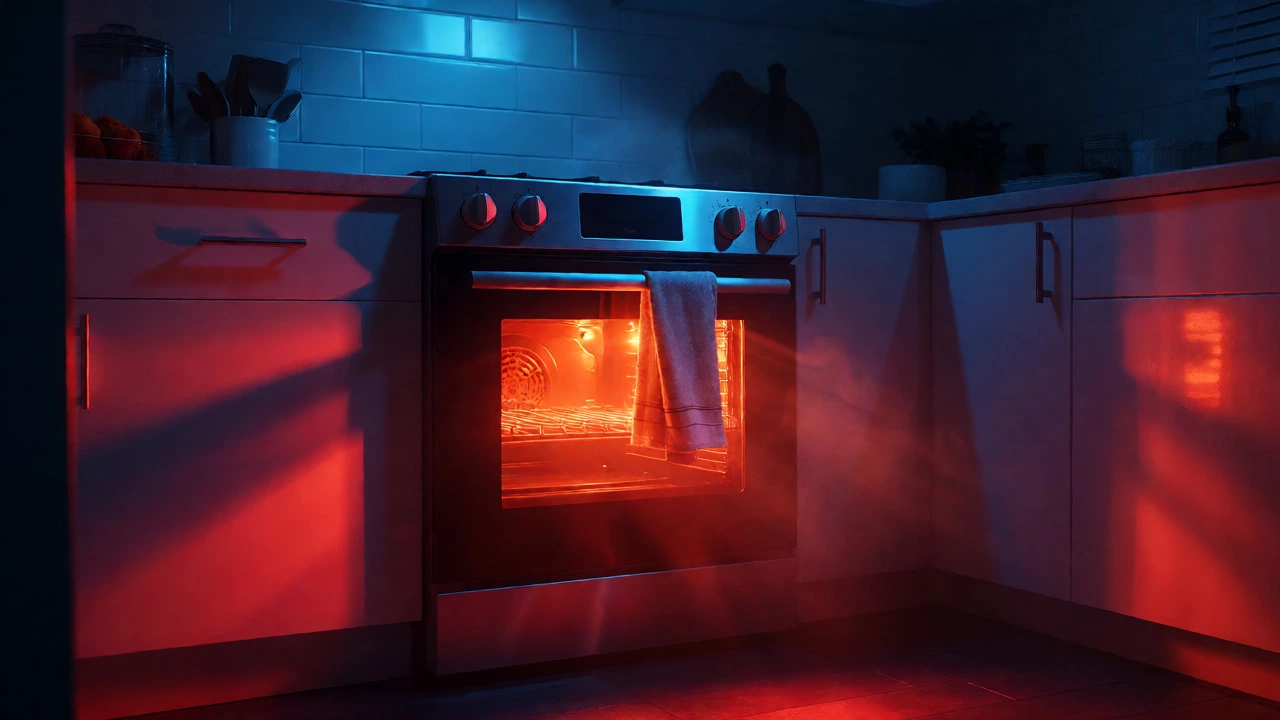
You wake up in a cold panic. Did you turn the electric oven off? For most of us, this isn't just a hypothetical nightmare; it's a recurring anxiety that hits at 3 AM. We’ve all done it-baked a casserole, got distracted by a movie or a phone call, and drifted off to sleep with the heating elements still glowing red. The immediate question screaming through your brain is usually: "Did I just burn my house down?" The short answer is no, probably not. But the long answer involves a mix of physics, appliance age, and plain old luck.
Leaving an electric oven on all night isn't inherently catastrophic for modern appliances, but it is rarely smart. It drains your wallet, wears out components faster than necessary, and introduces a small but non-zero risk factor. If you live in Adelaide and rely on standard grid power, that overnight hum translates directly into higher bills. Let’s break down exactly what happens when you leave the heat running while you dream, so you can stop worrying and start cooking with confidence.
The Real Fire Risk: Myth vs. Reality
People often confuse electric ovens with gas stoves when it comes to overnight dangers. With a gas hob, leaving a burner on means leaking natural gas or LPG into your kitchen, which can lead to explosions or carbon monoxide poisoning. An electric oven doesn’t have that problem. It simply converts electricity into heat. There is no fuel leak, no flame, and no combustion byproduct filling your home.
So, why do we fear it? Because heat is still heat. If you leave an empty oven on at 180°C (356°F) for eight hours, the exterior casing gets hot, the surrounding cabinetry absorbs warmth, and if there’s anything flammable nearby-like a tea towel draped over the handle or plastic packaging left inside-you have a potential ignition source. According to data from the Australian Bureau of Statistics, cooking equipment remains a leading cause of residential fires, though most involve unattended stovetops rather than closed ovens.
| Risk Factor | Electric Oven | Gas Stove |
|---|---|---|
| Fuel Leak | No | Yes |
| Carbon Monoxide | No | Yes |
| Fire Source | Heating Elements | Open Flame |
| Automatic Shut-off | Common in newer models | Rare |
The biggest danger isn't the oven itself exploding; it's the interaction between the heat and its surroundings. If your oven door seal is broken, heat escapes into the cabinet woodwork. Over years, this constant thermal stress can dry out timber, making it more susceptible to catching fire if a spark ever occurs. But for a single night? You’re likely safe, provided the oven is clean and empty.
Your Wallet Takes a Hit: The Cost of Idling Heat
If fire isn’t the primary concern, money definitely is. Electric ovens are power-hungry beasts. A standard domestic electric oven draws between 2,000 and 5,000 watts depending on size and insulation quality. Let’s do the math for a typical Adelaide household.
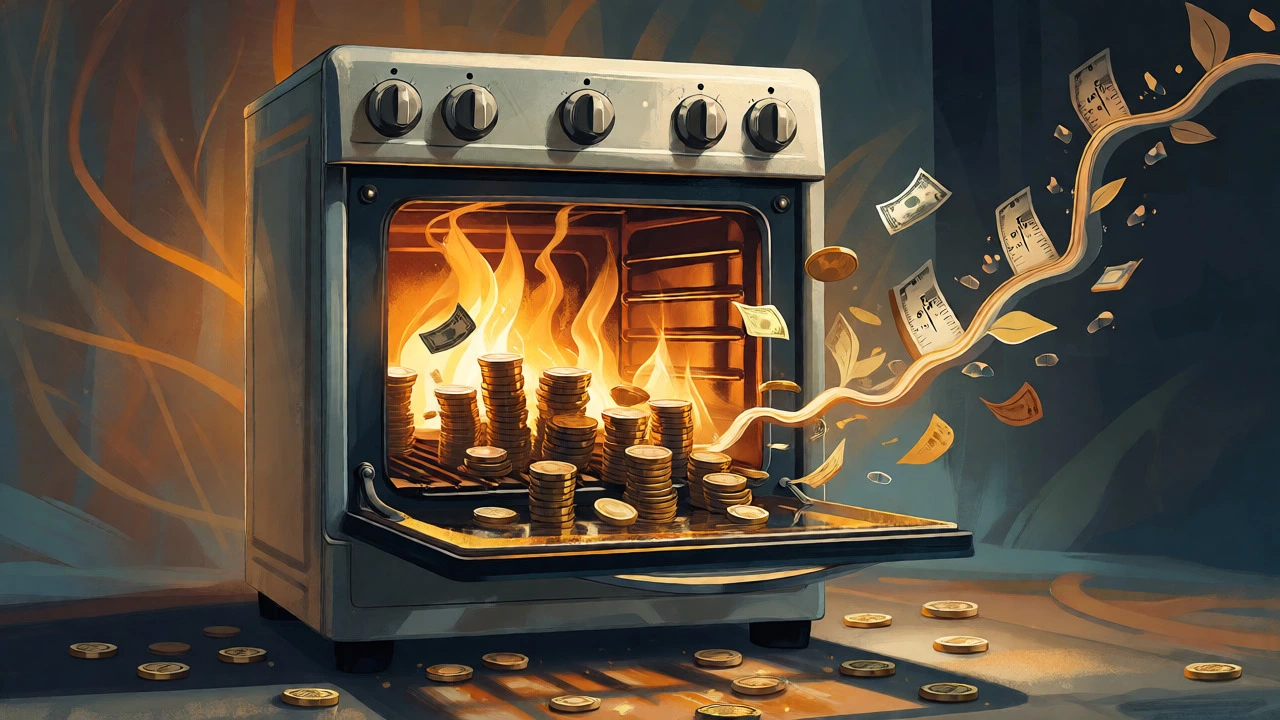
Assume you leave a mid-sized oven on at 180°C for 8 hours. Modern ovens cycle the heating element on and off to maintain temperature, so they don’t run at full wattage continuously. However, even at a 50% duty cycle, you’re consuming significant energy. At the current average rate of roughly $0.30 per kWh in South Australia, leaving an oven on overnight could cost you anywhere from $2.40 to $6.00. That doesn’t sound like much until you realize you did nothing productive with that heat. Multiply that by a few times a month, and you’re buying a decent dinner out every quarter just because you forgot to press 'Off'.
Older ovens fare worse. Poor insulation means the thermostat works harder to keep the interior warm against the cool ambient air of a sleeping house. If your oven is more than 10 years old, expect these costs to double. The heating elements themselves also degrade. Constant cycling without rest accelerates wear on the thermostats and relays, potentially leading to earlier oven repair needs.
What Happens Inside the Oven?
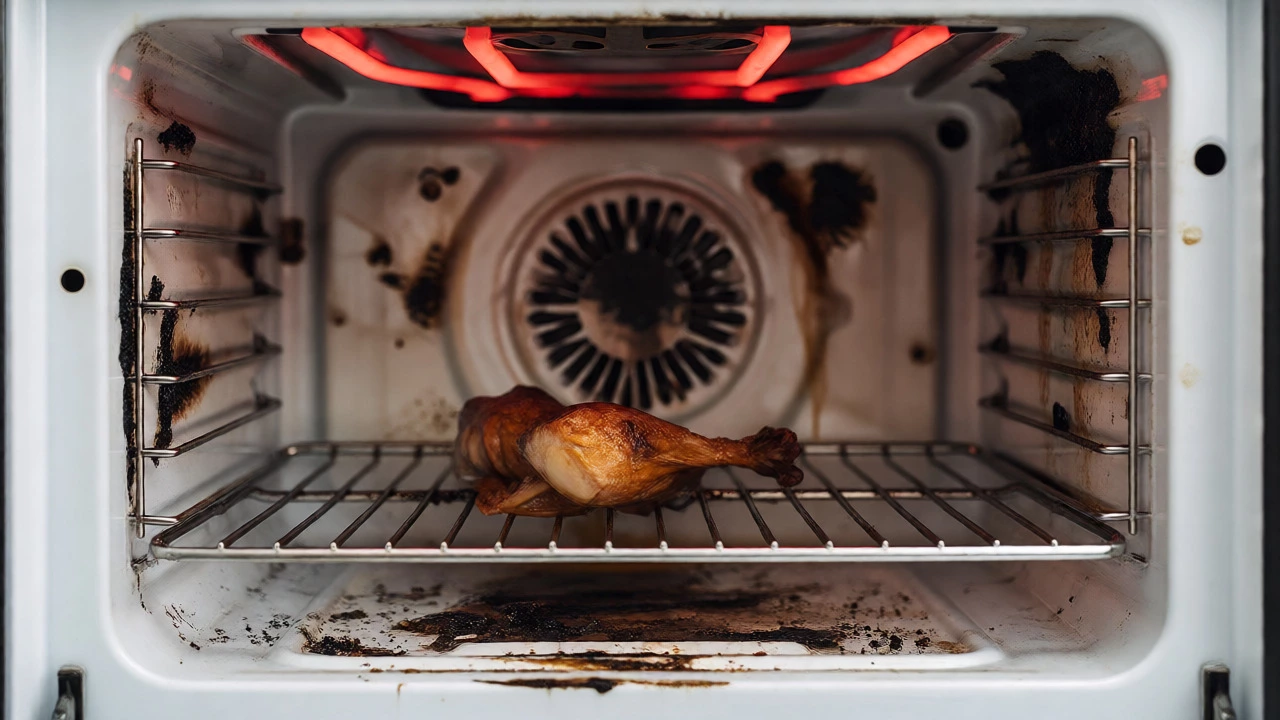
Beyond the external risks and costs, consider the internal impact. Leaving food in an oven for 8+ hours after cooking finishes is a recipe for disaster-not necessarily fire, but culinary ruin. Proteins like chicken or beef continue to cook via residual heat and active warming. They dry out, become tough, and lose flavor. Vegetables turn to mush. If you left a cake in there, it’s now charcoal.
There’s also the hygiene aspect. Warm environments encourage bacterial growth if the temperature drops below 60°C (140°F) during cooling cycles. While the initial high heat kills most pathogens, as the oven cools down or cycles, bacteria can multiply rapidly in moist foods. This creates a breeding ground for mold and unpleasant odors that linger in the cavity. Cleaning a burnt-on mess from a forgotten lasagna is far harder than wiping down a clean, cooled oven.
Furthermore, grease splatters bake onto the walls and floor of the oven. When heated repeatedly over many hours, fats polymerize and harden, creating those stubborn black crusts that require harsh chemical cleaners or self-cleaning cycles to remove. Self-cleaning cycles use extreme temperatures (up to 500°C), which already stresses the enamel lining. Adding unnecessary runtime only exacerbates this wear.
Safety Features That Save Your Sleep
If you’re worried about forgetting the switch, check your appliance’s specs. Most modern electric ovens manufactured after 2010 include safety timers or automatic shut-off features. These systems monitor how long the oven has been on. Typically, if the oven runs for 12 to 24 hours without user input, it will automatically power down. Some models shut off after just 6 hours if the door hasn’t been opened.
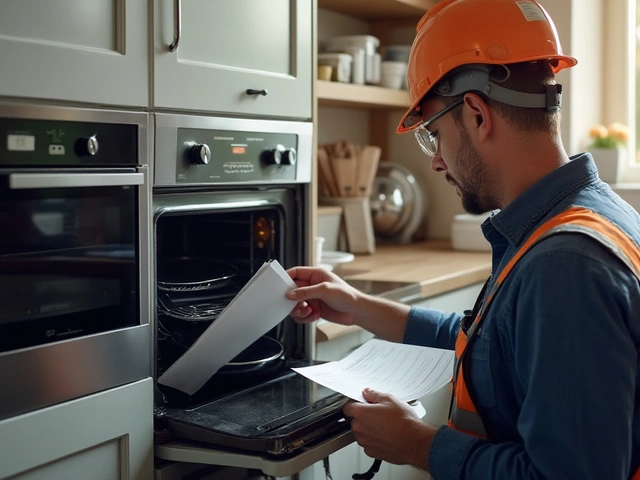
To verify this, look for a "Safety Timer" or "Auto-Off" indicator on your control panel. Consult your user manual-yes, the one buried in the drawer-to find the specific duration for your model. If you have an older oven without these digital safeguards, you’re relying entirely on human memory. In that case, physical habits matter more than technology.
- Use a visual cue: Place a magnet or a sticky note on the oven door saying "OFF?" before you go to bed.
- Set a phone alarm: Name it "Check Oven" and set it for 9 PM.
- Install a smart plug: If your oven plugs into a wall socket (common for smaller units), a Wi-Fi-enabled smart plug lets you check status and turn it off remotely via your smartphone.
When to Call a Professional
While leaving an oven on occasionally is survivable, certain signs indicate your appliance is struggling under the load. If you notice the oven takes longer to reach temperature, heats unevenly, or makes strange clicking noises from the thermostat, it might be time for professional attention. Ignoring these symptoms while frequently leaving the unit on accelerates component failure.
In Adelaide, local technicians often see issues related to faulty door seals and worn heating elements. A bad seal allows heat to escape, forcing the element to work overtime, which increases energy bills and fire risk. If your oven feels unusually hot on the outside or the glass front is excessively warm to the touch, the insulation or seal may be compromised. Don’t wait for a complete breakdown. Early intervention prevents minor electrical faults from becoming major repairs.
Regular maintenance helps too. Clean the oven regularly to prevent grease buildup, which acts as extra fuel in case of overheating. Check the ventilation fans to ensure they aren’t clogged with dust, as poor airflow causes overheating. If you’re unsure about the condition of your wiring or connections, especially in older homes, have an electrician inspect the dedicated circuit breaker for your oven.
Will leaving the electric oven on all night blow a fuse?
It is unlikely to blow a fuse unless there is a pre-existing fault in the wiring or the heating element. Fuses and circuit breakers are designed to handle the continuous load of the oven. However, if the oven is drawing excessive current due to a failing element, the breaker might trip eventually. It’s more common for the issue to manifest as tripping when multiple high-power appliances are used simultaneously.
Is it cheaper to leave the oven on low or turn it off and reheat?
Turning it off and reheating later is almost always cheaper. Keeping an oven at temperature requires constant energy input to combat heat loss through insulation gaps. Reheating from cold uses a burst of energy, but since the total duration of operation is shorter, the overall kWh consumption is lower. Think of it like driving: cruising at a steady speed is efficient, but idling the engine for hours burns fuel without moving.
Can leaving the oven on damage the countertops?
Yes, particularly if you have laminate or wooden countertops adjacent to the oven. Prolonged exposure to radiant heat from the oven sides can warp laminate surfaces or cause wood to crack and discolor over time. Stone countertops like granite or quartz are more resistant but can still suffer thermal shock if exposed to extreme localized heat for extended periods.
What should I do if I smell smoke after finding the oven was on?
Turn the oven off immediately and open windows to ventilate the area. Do not open the oven door right away if you suspect a large amount of smoke, as oxygen can feed a fire. Once the air clears, inspect the interior for burnt food residue. If the smell persists or you see scorch marks on the electrical components near the back, contact a technician for an inspection before using it again.
Do convection ovens have different risks when left on?
Convection ovens circulate hot air with a fan, which can actually reduce cooking time and temperature requirements. However, if left on all night, the fan motor runs continuously, adding mechanical wear. The risk of fire is similar to conventional ovens, but the forced air might spread heat more evenly to surrounding cabinets if the door seal is poor. The primary difference is increased noise and potential fan motor burnout over repeated long-duration uses.
Final Thoughts: Build Better Habits
So, is it bad to leave an electric oven on all night? Physically, it’s not lethal to the appliance in one go. Financially, it’s wasteful. Practically, it’s a gamble with your peace of mind. The best approach is prevention. Treat your oven like a car: don’t leave the engine running when you park. Use timers, install smart monitoring devices, and perform regular checks on seals and elements.
If you find yourself constantly forgetting, it might be worth investing in an oven with better safety features or upgrading to a model with automatic shut-off. For those in Adelaide dealing with frequent power fluctuations or older wiring, ensuring your oven is in top repair condition adds another layer of safety. Keep your kitchen safe, your bills low, and your sleep uninterrupted.