Appliance vs. Electronics Classifier
Not sure who to call when your device breaks? Answer these three questions to find out if you need an Appliance Technician or an Electronics Specialist.
Classification Result
Who to Call
Insurance Note
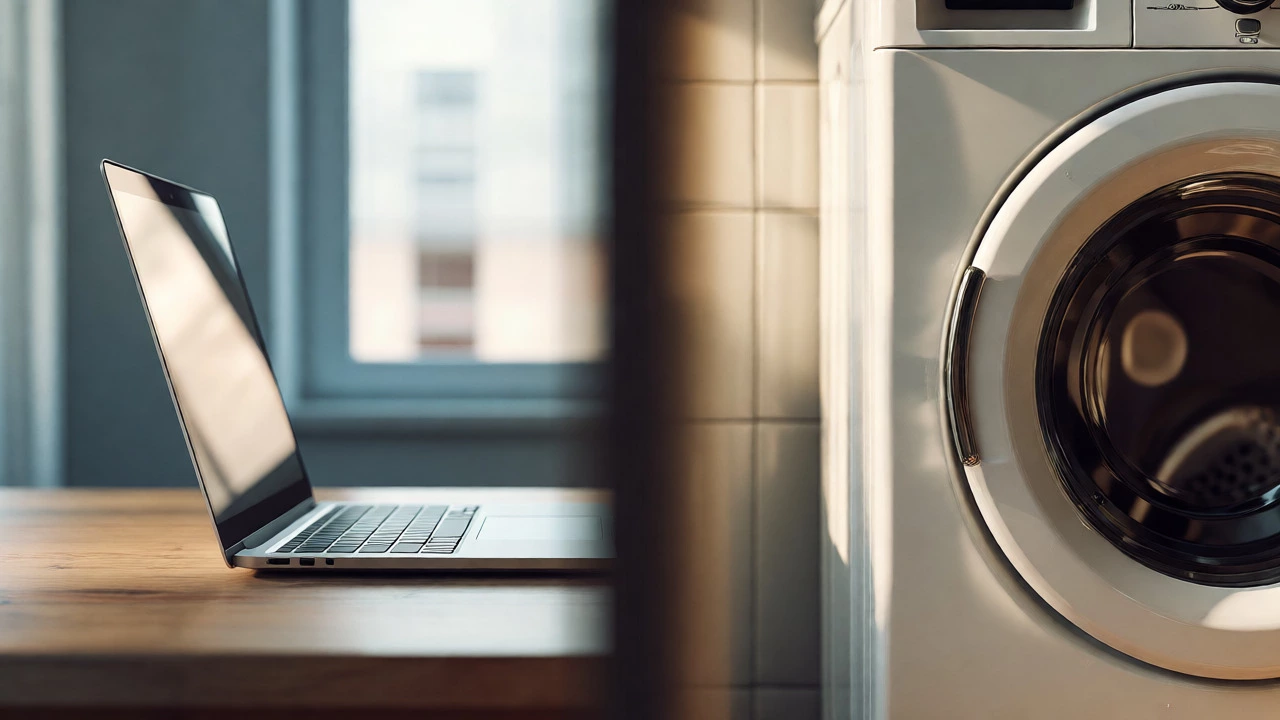
You’re staring at your broken laptop screen, wondering if you should call the same guy who fixed your washing machine last week. It’s a fair question. Both are machines in your house, both have plugs, and when they break, life gets annoying. But is a laptop an appliance? The short answer is no. While laptops fall under the broader umbrella of consumer electronics, they are distinct from traditional household appliances like fridges or ovens. This distinction isn’t just semantic; it changes who fixes them, how much it costs, and whether your home insurance actually covers the damage.
The Core Definition: What Actually Counts as an Appliance?
To understand why your laptop doesn’t fit the box, we need to look at what defines a "home appliance." In the industry, specifically within standards set by organizations like the International Electrotechnical Commission (IEC), an appliance is generally defined as a device that uses electricity to perform a specific household task. Think about the function. A fridge keeps food cold. A dishwasher cleans plates. A heater warms air. These devices automate physical labor or environmental control.
A laptop, on the other hand, processes information. It doesn’t wash clothes or heat water. It handles data, media, and communication. Because of this functional difference, laptops are classified as consumer electronics. Electronics focus on signal processing, computing, and entertainment, whereas appliances focus on mechanical or thermal tasks. If you walk into a store, you’ll see these categories separated. You won’t find laptops next to the microwaves in the "major appliances" aisle.
| Feature | Home Appliance (e.g., Fridge) | Consumer Electronics (e.g., Laptop) |
|---|---|---|
| Primary Function | Mechanical/Thermal task (cleaning, cooling) | Data processing/Information display |
| Lifespan | 10-15 years typically | 3-5 years typically |
| Repairability | High (replaceable parts like belts, pumps) | Low (often requires board-level soldering) |
| Insurance Class | Building/Contents (Standard Cover) | Personal Property/Electronics (Specific Cover) |
| Power Source | Direct Mains (AC) usually | Battery + AC Adapter |
Why the Distinction Matters for Your Wallet
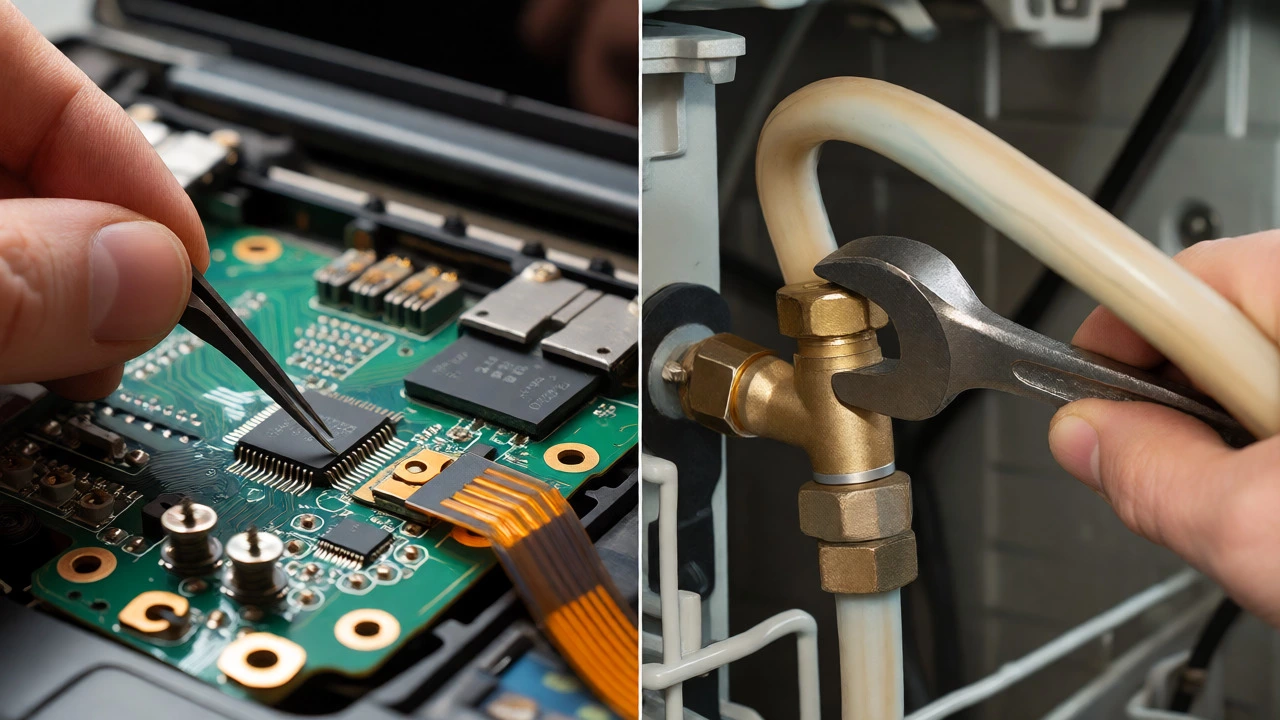
If you treat a laptop like an appliance, you might waste time calling the wrong technician. Imagine calling a local fridge repair person because your laptop won’t turn on. They’ll likely tell you they don’t touch computers. Why? Because the skill sets are totally different. An appliance tech deals with motors, compressors, thermostats, and water valves. A laptop tech deals with motherboards, RAM slots, SSDs, and operating systems.
This also impacts cost. Appliance repairs are often cheaper relative to the unit's value because parts are standardized and easier to source. A heating element for an oven is a generic part. A motherboard for a specific model of Dell XPS 13 is proprietary and expensive. When you factor in labor, fixing an old laptop can sometimes cost more than buying a new one. With appliances, replacing a $50 pump in a $800 dishwasher makes financial sense. Replacing a $400 logic board in a $600 laptop? Not so much.
Insurance Coverage: Are Laptops Covered Under "Appliances"?
This is where things get tricky. Many homeowners assume their standard home and contents policy covers everything plugged into a wall socket. It doesn’t always work that way. Most standard policies cover "household contents," which includes furniture, clothes, and yes, electronics. However, there are exclusions and limits.
Check your policy for a sub-limit on "personal electronics" or "portable equipment." Since laptops move around, they are at higher risk of theft or accidental damage than a stationary washing machine. Some insurers require you to schedule high-value items separately. If you drop your laptop down the stairs, will your insurer pay out? Often, yes, but only if you have accidental damage cover. Standard appliance breakdown cover (like extended warranties) rarely applies to laptops unless you bought a specific gadget warranty at the point of sale.
The Rise of "Smart" Devices: Blurring the Lines
Technology moves fast, and the line between appliance and electronics is getting blurry. Consider a modern smart fridge with a touchscreen interface running Android. Or a washing machine with Wi-Fi connectivity that sends alerts to your phone. Is that now an electronic device with an appliance attached, or an appliance with electronics inside?
For repair purposes, manufacturers still classify these as appliances. If the compressor fails, it’s an appliance job. If the touchscreen freezes, it’s often considered an electronics issue, though many major brands now send generalist technicians who handle both basic hardware and software resets. However, if you buy a standalone smart speaker like an Amazon Echo, that is purely consumer electronics. It has no mechanical function. It’s a computer with a microphone. Don’t expect your boiler man to fix your Alexa.
How to Find the Right Repair Help
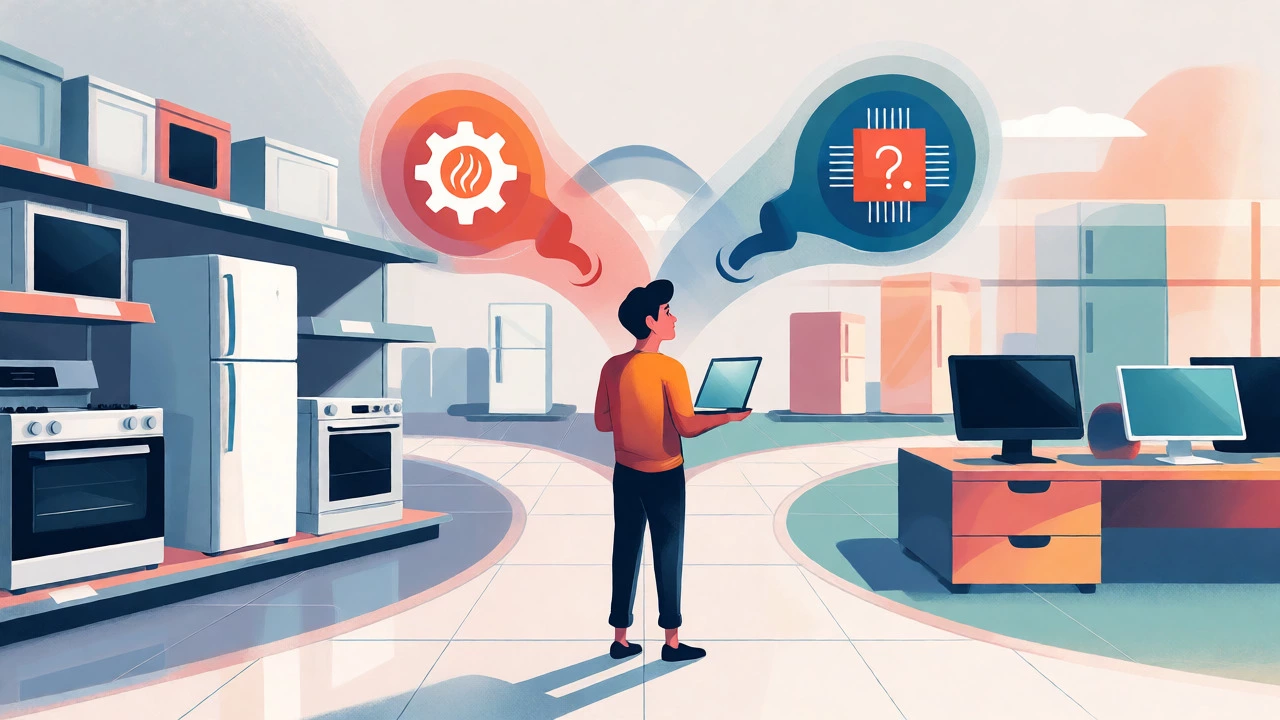
So, your device is broken. How do you know who to call? Here is a quick heuristic:
- Does it move, heat, cool, or clean? Call an appliance repair service. Examples: Vacuum cleaner, dryer, air conditioner.
- Does it display images, play sound, or process data? Call a computer or electronics repair shop. Examples: Laptop, tablet, TV, gaming console.
- Is it a hybrid? For smart appliances, start with the manufacturer’s support line. They can often diagnose if it’s a software glitch (remote fix) or a hardware failure (needs a visit).
In Adelaide, for instance, you’ll find specialized IT support shops in the CBD and suburbs for laptops, while large white goods retailers often have their own authorized service networks for fridges and ovens. Trying to use a general handyman for either can lead to frustration. Handymen are great for mounting TVs or installing shelves, but they rarely carry the diagnostic tools needed for circuit board faults or refrigerant leaks.
Common Misconceptions About "White Goods" vs. "Brown Goods"
You might hear older terms like "white goods" and "brown goods." White goods traditionally referred to large appliances like fridges and washing machines (historically painted white). Brown goods referred to electronics like radios and TVs (historically housed in wood cabinets). Laptops would technically fall under the modern equivalent of brown goods-electronics. This terminology is fading, but it helps explain why retail stores separate them. You buy a fridge at Harvey Norman’s appliance section; you buy a laptop at their technology counter. Different departments mean different supply chains, different warranty providers, and different repair protocols.
What to Do Before Calling Anyone
Before you spend money on a call-out fee, try these steps. For appliances, check the power outlet, reset the circuit breaker, and clean filters (for dryers and vacuums). For laptops, restart the device, check the charger connection, and boot into safe mode. Many "broken" laptops are just stuck in a bad update loop. Many "broken" dishwashers are just clogged with debris. Solving it yourself saves the hassle of finding a specialist.
Can I use my home insurance to cover a broken laptop?
Yes, usually under your "contents" policy, but check for excess fees and sub-limits. Accidental damage may require a specific add-on, unlike some built-in appliances which are covered for breakdown due to age or wear.
Do appliance repair technicians fix laptops?
Generally, no. Appliance technicians specialize in mechanical and thermal systems (motors, heaters, compressors). Laptop repair requires expertise in micro-electronics, soldering, and software diagnostics, which are different skill sets.
Is a microwave considered an appliance or an electronic?
A microwave is classified as a small kitchen appliance. Even though it has electronic controls, its primary function is heating food using magnetrons, which aligns it with cooking appliances rather than information-processing electronics.
Why are laptop repairs more expensive than appliance repairs?
Laptop components are highly integrated and proprietary. Replacing a single chip often requires replacing the entire motherboard, whereas appliances use modular parts like belts and switches that are cheaper and easier to swap without specialized micro-soldering skills.
Does an extended warranty on a fridge cover its digital screen?
Typically, yes, if the screen is part of the appliance's main assembly. However, if the screen is a separate smart hub or tablet-like device attached to the fridge, it might be excluded. Always read the fine print regarding "electronic boards" versus "mechanical parts."