Boiler Problem Diagnostic Tool
Step 1: Check the Basics
Before diving deep, let's rule out simple user errors.
Step 2: Inspect the Pressure Gauge
Locate the dial on your boiler. What does the needle say?
Step 3: Decode Error Codes
Is there a flashing light or specific code displayed?
Step 4: Listen to the Boiler
Turn off background noise and listen closely to the unit.
Step 5: Check Your Radiators
Touch your radiators. Are they all hot?
Step 6: External Check
Look outside your home for the white plastic condensate pipe.
Your house is freezing, the radiators are cold as ice, and you’re staring at a blinking error code on your boiler is a central heating appliance that heats water for domestic hot water and space heating systems. It’s the worst feeling. You don’t want to call an expensive engineer just yet, but you also can’t wait around in the dark. So, what do you do? You diagnose it yourself.
Before you panic, take a breath. Most boiler issues aren’t catastrophic failures. They are often simple glitches like low pressure, air trapped in the system, or a tripped safety switch. By following a logical diagnostic path, you can identify the problem, fix minor issues instantly, and know exactly what to tell a professional if you need one. This saves you time, money, and stress.
1. Check the Obvious First: Power and Thermostats
It sounds silly, but we’ve all been there. Before you tear into any settings, check the basics. Is the boiler actually plugged in? Did a power surge trip the main breaker? Look at your circuit breaker box. If the switch for the heating system is in the middle or off position, flip it back on.
Next, look at your thermostats. Are they set higher than the current room temperature? If your smart thermostat has lost its Wi-Fi connection, it might think the house is already warm enough. Reset the thermostat to a high setting (like 25°C) to see if the boiler kicks in. If it does, the issue was user error, not mechanical failure. Always check the battery in wireless thermostats; dead batteries are a surprisingly common cause of "heating failures."
2. Inspect the Pressure Gauge
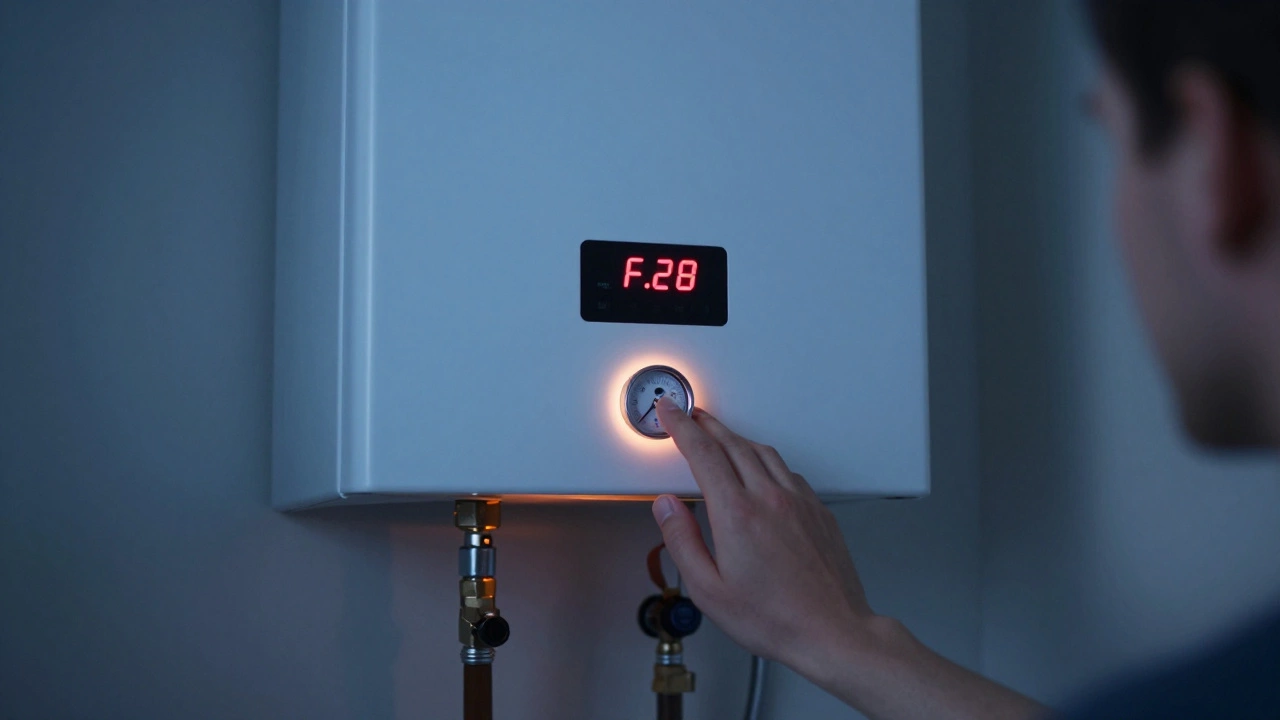
The most common reason a boiler stops working is low water pressure. Locate the pressure gauge on your boiler unit. It’s usually a small dial with a needle. For most modern gas boilers, the ideal pressure sits between 1 and 1.5 bar when the system is cold. If the needle is below 1 bar, the boiler will likely lock out to prevent damage from running dry.
If the pressure is low, you need to repressurize the system. Here is how you do it:
- Find the filling loop: This is a flexible metal hose connecting the two pipes coming into the bottom of the boiler. On some models, it’s a built-in key or lever under a flap.
- Open the valves: Turn the handles on both ends of the loop slowly. You should hear water hissing as it enters the system.
- Watch the gauge: Keep an eye on the pressure dial. Once it hits 1.2 or 1.3 bar, close the valves immediately. Do not overfill it, or you risk triggering a safety valve later.
- Reset the boiler: Press the reset button (usually marked with a circular arrow) to restart the ignition sequence.
If the pressure drops again within 24 hours, you have a leak. Check under sinks, behind radiators, and around the expansion vessel for damp spots. A persistent drop in pressure means you need a professional to find and fix the leak.
3. Decode the Error Codes
Modern boilers talk to you through lights and numbers. Ignoring these clues is like ignoring a check engine light in your car. Every brand has a specific code system. Here is a quick reference for the major brands:
| Brand | Error Code/Light | Meaning | Immediate Action |
|---|---|---|---|
| Bosch | F.28 / F.75 | Loss of flame / Ignition failure | Check gas supply, reset boiler |
| Vaillant | F53 / F54 | Flue gas sensor fault / Overheat | Ensure flue is clear, call engineer |
| Worcester Bosch | A.110 / A.120 | Low water pressure / Airlock | Repressurize system, bleed radiators |
| Baxi | Err 1 / Err 6 | Ignition failure / Flame loss | Check gas meter, reset unit |
| Combi Boiler Generic | Red Light Flashing | System Lockout | Consult manual, try reset |
If you see a code related to "flame loss" or "ignition failure," first check if your other gas appliances (like the hob) are working. If the hob works, the gas supply is fine, and the issue is likely with the boiler’s internal gas valve or ignition electrode. If the hob doesn’t work either, you have no gas supply-check your meter credit or isolation valve.
4. Listen to the Sounds
Your boiler should hum quietly. If it starts making noise, it’s trying to tell you something is wrong. Pay attention to the type of sound:
- Kettling (Whistling/Rumbling): This sounds like a kettle boiling over. It happens when limescale builds up inside the heat exchanger. The water gets trapped in pockets and boils locally, creating steam bubbles that bang against the metal. This is common in hard water areas. It requires a power flush or chemical clean by a pro.
- Gurgling/Bubbling: If you hear gurgling from the radiators or the boiler, you have air trapped in the system. Air prevents hot water from circulating properly. You need to bleed your radiators.
- Clicking Repeatedly: If you hear rapid clicking but no flame, the spark igniter is trying to light the gas but failing. This could be a dirty electrode, a faulty gas valve, or a blocked jet.
- High-Pitched Whine: This often comes from the fan. If the fan motor bearings are wearing out, it will squeal. This is a safety component; if it fails, the boiler won’t ignite to prevent carbon monoxide buildup.
5. Bleed Your Radiators
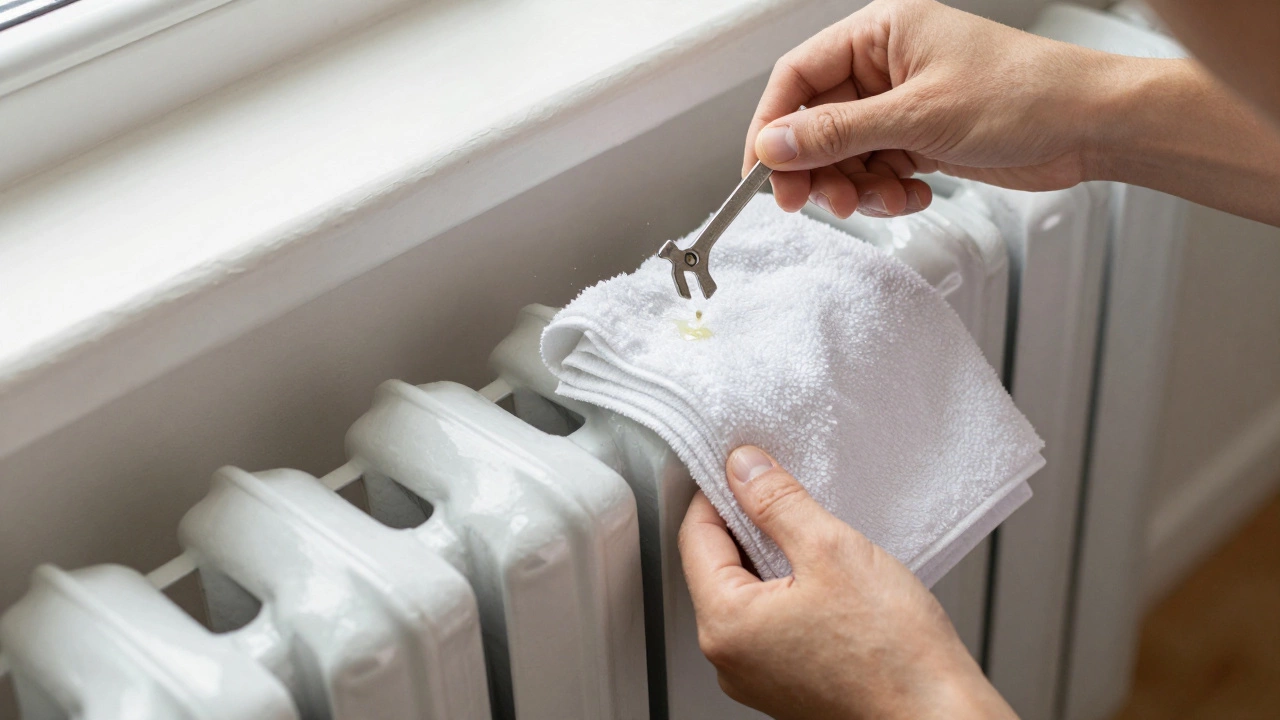
If some radiators are cold at the top but warm at the bottom, you have an airlock. Air rises, so it gets stuck in the highest points of your heating system. This restricts flow and makes the boiler work harder, potentially causing overheating errors.
To bleed a radiator:
- Turn off the heating: Let the system cool down completely. Hot water under pressure can spray out and burn you.
- Get a radiator key: Most older radiators need a special square-key tool. Newer ones often have a plastic bleed screw you can turn with a flathead screwdriver.
- Place a towel underneath: Water will come out with the air.
- Open the valve slightly: You’ll hear a hiss. That’s the air escaping.
- Close it when water drips steadily: Don’t let too much water out. Just until the hissing stops.
- Repeat for all cold radiators: Start from the ground floor and work up.
After bleeding, check your boiler pressure again. Bleeding radiators releases water from the closed system, which will lower the pressure. You may need to repressurize (see Step 2) after this process.
6. Check the Condensate Pipe
This is the number one cause of boiler breakdowns in winter. Modern condensing boilers produce acidic waste water (condensate) that drains away via a small plastic pipe, usually outside your home. If this pipe freezes in sub-zero temperatures, the boiler detects a blockage and shuts down to prevent overflow. It will display a "condensate trap full" or similar error.
How to fix a frozen condensate pipe:
- Locate the pipe: It’s usually a white or grey plastic tube running along the exterior wall.
- Apply heat: Use a hot water bottle, a hairdryer, or carefully pour warm (not boiling) water over the frozen section. Avoid using boiling water as it can crack the plastic.
- Reset the boiler: Once the ice melts and water starts dripping freely, reset the unit.
To prevent this in the future, insulate the pipe with foam lagging. It’s cheap and effective. If the pipe is exposed to wind, consider rerouting it internally during your next service.
7. When to Call a Professional
You can diagnose many issues, but some require certified engineers. In the UK and many other regions, only Gas Safe registered engineers (or equivalent local certification) can legally work on gas boilers. Call a pro if:
- You smell gas: Evacuate immediately, open windows, and call the emergency gas line from outside.
- There is a visible leak: Water leaking from the expansion vessel or heat exchanger indicates internal failure.
- The boiler keeps locking out: If resetting fixes it for only a few hours, there is a deeper fault like a failing pump or control board.
- No hot water: If you have heat but no hot water (in a combi boiler), the diverter valve or plate heat exchanger may be broken.
- Carbon Monoxide alarm triggers: Leave the house and call emergency services. Never ignore this.
Preventative Maintenance Tips
Diagnosing problems is good, but preventing them is better. A yearly service costs far less than an emergency repair. During a service, an engineer will:
- Clean the heat exchanger and burner to improve efficiency.
- Check the combustion analysis to ensure safe emissions.
- Inspect seals and valves for wear.
- Test the pressure relief valve.
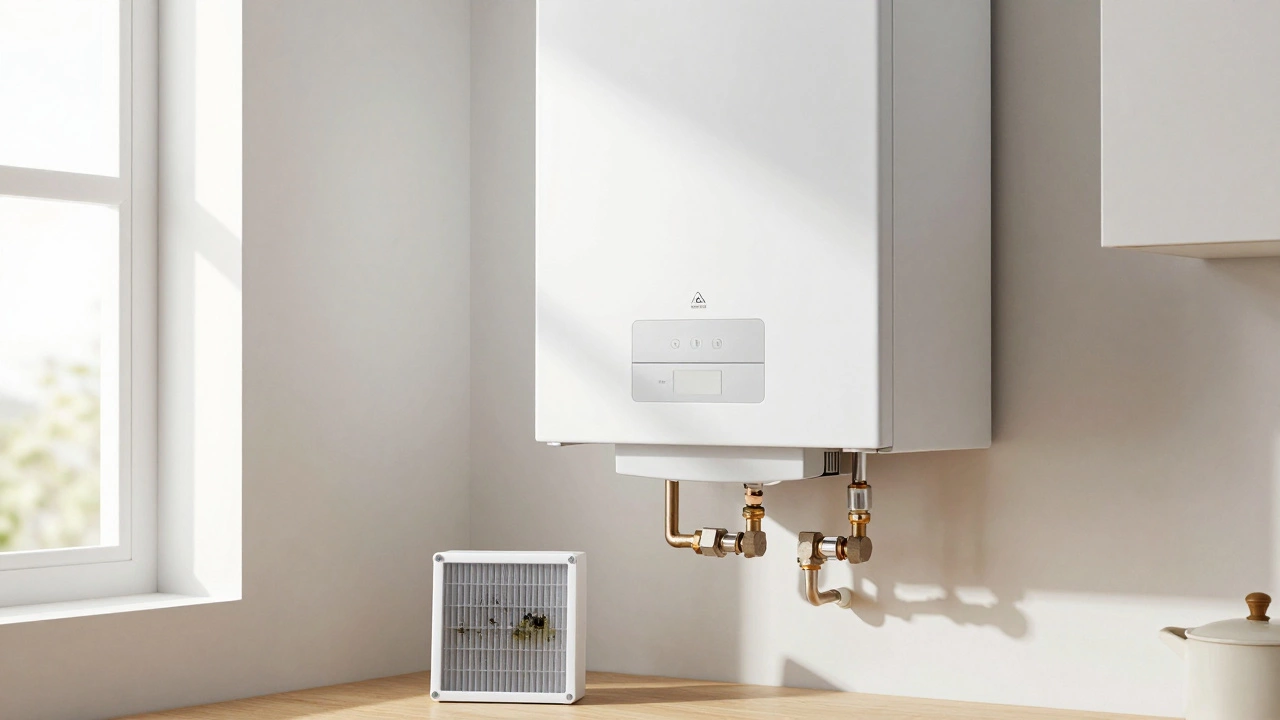
You can help by keeping the area around the boiler clear of clutter. Boilers need airflow. Don’t store boxes or clothes against the unit. Also, install a magnetic filter on your return pipe if you don’t have one. It catches sludge before it reaches the boiler, extending its life significantly.
Why is my boiler making a kettling noise?
Kettling is caused by limescale buildup inside the heat exchanger. As water heats up, trapped pockets boil and create steam bubbles that bang against the metal. This requires a professional power flush or chemical clean to resolve.
What should my boiler pressure be?
For most residential gas boilers, the ideal pressure is between 1 and 1.5 bar when the system is cold. If it drops below 1 bar, the boiler may lock out. If it exceeds 2 bar, the pressure relief valve may open to release excess water.
Can I fix a frozen condensate pipe myself?
Yes. You can thaw a frozen condensate pipe by applying warm water, a hot water bottle, or a hairdryer to the frozen section. Ensure water flows freely afterward and reset the boiler. Insulate the pipe to prevent recurrence.
Why are some radiators cold at the top?
Cold tops on radiators indicate trapped air. You need to bleed the radiators to release the air. After bleeding, check your boiler pressure, as this process removes water from the system and may require repressurizing.
When should I call a gas engineer?
Call a certified engineer if you smell gas, see water leaks from the boiler, experience repeated lockouts despite resets, or if your carbon monoxide alarm triggers. Only qualified professionals should handle internal gas components.