Extractor Fan Blockage Checker
How Bad Is Your Blockage?
Answer these questions to determine your fan's blockage level and get personalized cleaning instructions
If your kitchen extractor fan is making noise but not pulling out smoke or steam, you’re not alone. A blocked extractor fan is one of the most common kitchen appliance problems - and it’s usually easy to fix yourself. You don’t need to call a technician or replace the whole unit. Most clogs come from built-up grease, dust, or even nests from small animals. With a few tools and 30 minutes, you can get your fan running like new again.
Why Your Extractor Fan Gets Blocked
Extractor fans work by pulling air through a duct and pushing it outside. Over time, grease from cooking gets sucked into the filter and duct. It doesn’t just stick to the filter - it slowly builds up inside the ductwork, especially if you fry or sauté often. Dust, lint, and even insects can get pulled in too. In rare cases, birds or mice build nests in the external vent if the flap isn’t sealing properly.The result? Reduced airflow. Your fan spins, but the air barely moves. You notice lingering smells, steam that won’t clear, or grease stains on your ceiling. The motor might overheat because it’s working harder to push air through the blockage. That’s when you hear louder humming or buzzing.
What You’ll Need to Clean It
Before you start, gather these items:- Warm water and dish soap
- White vinegar or baking soda (for grease-cutting power)
- A soft brush or old toothbrush
- Microfiber cloths or paper towels
- Screwdriver (usually Phillips head)
- Gloves and safety goggles
- A vacuum with a narrow nozzle attachment
- Flashlight
Don’t skip the gloves and goggles. Grease buildup can be sticky and unpleasant. You’re also working near electrical components, so safety comes first.
Step 1: Turn Off the Power
Never work on an extractor fan while it’s plugged in. Even if the switch is off, the wiring might still carry current. Go to your breaker panel and shut off the circuit that powers the kitchen fan. Use a non-contact voltage tester if you have one - just to be sure.Step 2: Remove the Filter
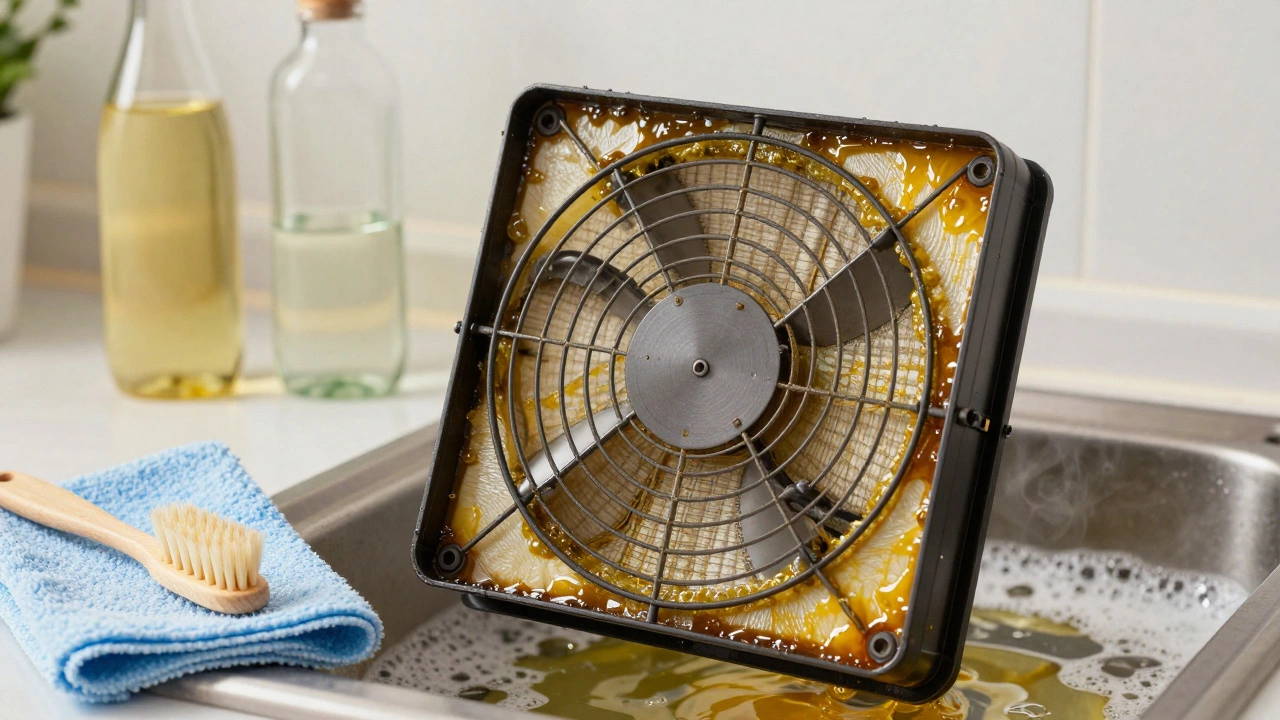
Most extractor fans have a removable filter - usually made of metal mesh or aluminum. It’s either held in place by clips or screws. Slide or unscrew it out carefully. If it’s covered in thick, yellow grease, don’t just rinse it under the tap. Soak it in a sink filled with hot water and two tablespoons of dish soap. Add half a cup of white vinegar to cut through the grease. Let it sit for 20 minutes.After soaking, scrub gently with a toothbrush. Rinse thoroughly. Let it air dry completely before putting it back. A wet filter can cause the fan to short out or mold over time.
Step 3: Clean the Fan Blades and Motor Housing
Once the filter is out, you’ll see the fan blades and motor housing. Use a flashlight to look inside. If you see thick layers of grease coating the blades, wipe them with a microfiber cloth dipped in soapy water. Avoid spraying water directly into the motor. Use a dry brush to loosen debris, then vacuum it out with the narrow nozzle. Be gentle - fan blades are often made of thin plastic or metal and can bend easily.If the motor housing is covered in grime, use a cloth dampened with vinegar. Don’t use abrasive scrubbers. You’re not trying to polish it - you’re just removing buildup that’s restricting airflow.
Step 4: Check the Ductwork
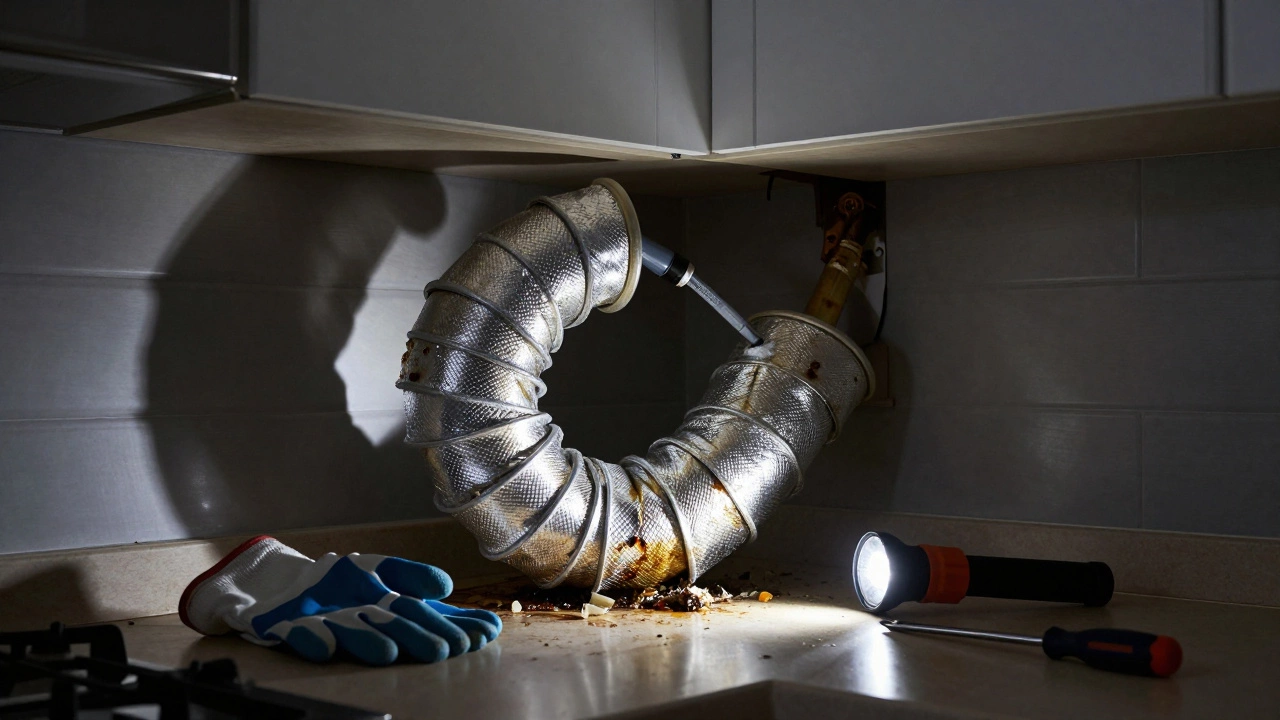
This is where most people stop - and where the real problem often hides. The duct runs from the fan to the outside wall or roof. If it’s a flexible aluminum duct, it might be kinked or crushed behind the cabinet. Straighten it out. If it’s rigid metal, you might need to disconnect it.Use a vacuum with a long attachment to pull out debris from both ends. Shine a flashlight down the duct. If you see a solid mass of grease or feathers, you’ve found your blockage. You can use a long, flexible brush (like a chimney sweep brush) to scrape the inside. For stubborn clogs, a plumber’s snake or a wire hanger bent into a hook can help pull out clumps.
Don’t use chemical drain cleaners. They can corrode metal ducts and create toxic fumes when heated.
Step 5: Inspect the External Vent
Go outside to the vent opening on your roof or exterior wall. Check if the flap opens freely. If it’s stuck shut, grease or debris might be jamming it. Clean the flap with soapy water and a cloth. Make sure it closes tightly when not in use - otherwise, cold air, pests, or rain can get in.If the vent is covered in bird nests or leaves, remove them carefully. Wear gloves. If you find signs of rodents - droppings, chewed insulation - you may need to call an exterminator. A blocked vent isn’t just annoying; it’s a fire hazard.
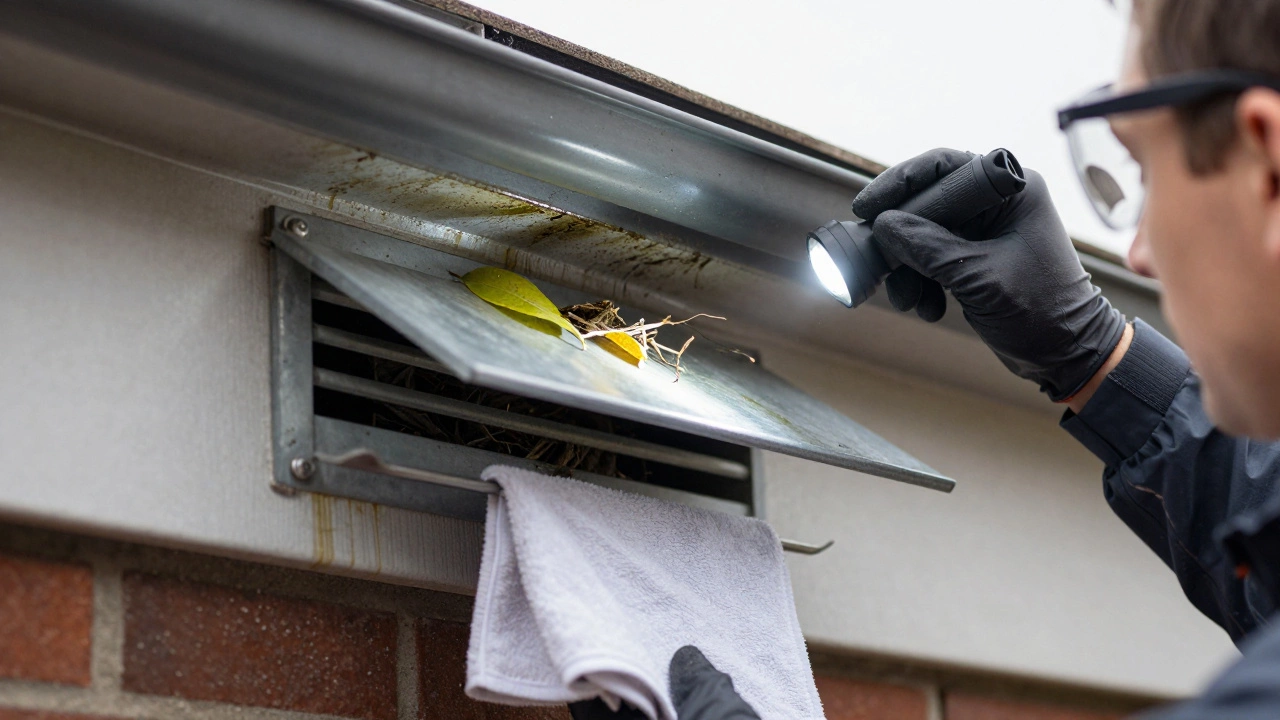
Step 6: Reassemble and Test
Once everything’s clean and dry, put the filter back in. Reattach the duct if you disconnected it. Turn the power back on. Run the fan on high for 10 minutes. Stand near the external vent - you should feel strong airflow. If you still feel weak suction, the issue might be deeper: a failing motor, a broken impeller, or a blocked duct you missed.When to Call a Professional
You can fix most blockages yourself. But if you notice any of these, it’s time to call a technician:- The fan makes grinding or screeching noises - likely a damaged motor bearing
- The blades won’t spin at all - could be a burnt-out capacitor or wiring issue
- Smoke or steam is still trapped after cleaning - the duct may be collapsed or improperly installed
- You smell burning plastic or see scorch marks - stop using it immediately
Older fans (over 10 years) often have worn-out motors that aren’t worth repairing. If cleaning doesn’t restore performance, replacing the unit is more cost-effective than repeated fixes.
Prevent Future Blockages
The best way to avoid this mess again is to clean your extractor fan every 3-6 months. If you cook with oil daily, clean it monthly. Here’s how to stay ahead:- Replace charcoal filters every 3 months - they’re not cleanable
- Wipe the exterior housing weekly with a damp cloth
- Install a grease trap or mesh screen over the intake if your model allows it
- Use the fan during and after cooking - even on low - to keep airflow consistent
- Check the external vent twice a year for nests or debris
Keeping your extractor fan clear isn’t just about smell. It reduces moisture buildup that leads to mold, prevents grease fires, and saves energy. A clean fan uses less power and lasts longer.
Why does my extractor fan make a loud humming noise?
A loud humming usually means the motor is straining because air can’t flow freely. Grease buildup on the blades or in the duct forces the motor to work harder. Clean the filter and duct first. If the noise continues after cleaning, the motor bearings may be worn out and need replacement.
Can I use a vacuum cleaner to clean the duct?
Yes, but only if you have a vacuum with a long, narrow nozzle and strong suction. Use it on both ends of the duct - from the fan side and the external vent. For heavy grease buildup, a vacuum alone won’t be enough. You’ll need to scrub with brushes or use a duct cleaning kit.
Is it safe to use chemical cleaners on the fan filter?
No. Harsh chemical cleaners can damage the metal mesh or leave toxic residues. Stick to hot water, dish soap, and vinegar. These are effective, safe, and won’t corrode the filter. Rinse thoroughly and let it dry completely before reinstalling.
How often should I clean my extractor fan?
Clean the filter every 1-3 months if you cook frequently. Deep clean the whole unit - including duct and blades - every 6 months. If you rarely cook, once a year is fine. Regular maintenance prevents serious blockages and extends the life of your fan.
My fan runs but doesn’t pull air - what’s wrong?
This usually means the duct is blocked, the fan blades are covered in grease, or the motor is weak. Start by cleaning the filter and blades. Then check the duct for kinks or buildup. If airflow still doesn’t improve, the impeller might be damaged or the motor may need replacing. Test by running the fan for 5 minutes after cleaning - if you don’t feel air at the external vent, the issue is likely mechanical.