Freezer Compressor Reset Timer Calculator
Recommended Waiting Time
Based on your specific conditions
If your freezer has stopped cooling and the light still turns on, the compressor might be stuck-not broken, just stuck. Resetting it is often the quickest fix, and you don’t need to call a technician right away. Most freezer compressors don’t have a dedicated reset button, but they can be reset by cutting power and letting them cool down. This isn’t a magic fix for every problem, but it solves more issues than people realize.
Why Your Freezer Compressor Might Need Resetting
The compressor is the heart of your freezer. It circulates refrigerant to keep things cold. Over time, it can overheat from dust buildup, blocked vents, or too many items stuffed inside. When it overheats, safety sensors shut it off to prevent damage. You might hear a clicking sound every few minutes-that’s the overload protector trying to restart it. If it keeps clicking and never runs, it’s not broken. It’s waiting.
Freezers in garages or kitchens with poor airflow are especially prone to this. In Adelaide’s hot summers, a freezer near a window or next to the oven can overheat fast. A compressor that’s been running non-stop for days, especially after a power outage, often just needs a break.
What Resetting Actually Does
Resetting doesn’t fix a faulty compressor. It gives it time to cool down and lets the internal overload protector reset itself. Think of it like restarting a computer that’s frozen. The hardware is fine-it just needs a moment to recover.
Some compressors have a manual reset button, usually red and tucked behind a panel on the back or bottom. But most modern freezers don’t. If yours doesn’t have one, the only reset method is unplugging it.
Step-by-Step: How to Reset Your Freezer Compressor
- Unplug the freezer from the wall. Don’t just turn it off with the control panel-unplug it. This cuts all power to the compressor and control board.
- Wait at least 15 minutes. Some experts recommend 30 minutes. This gives the refrigerant time to settle and the compressor time to cool down fully. If you plug it back in too soon, you risk damaging it.
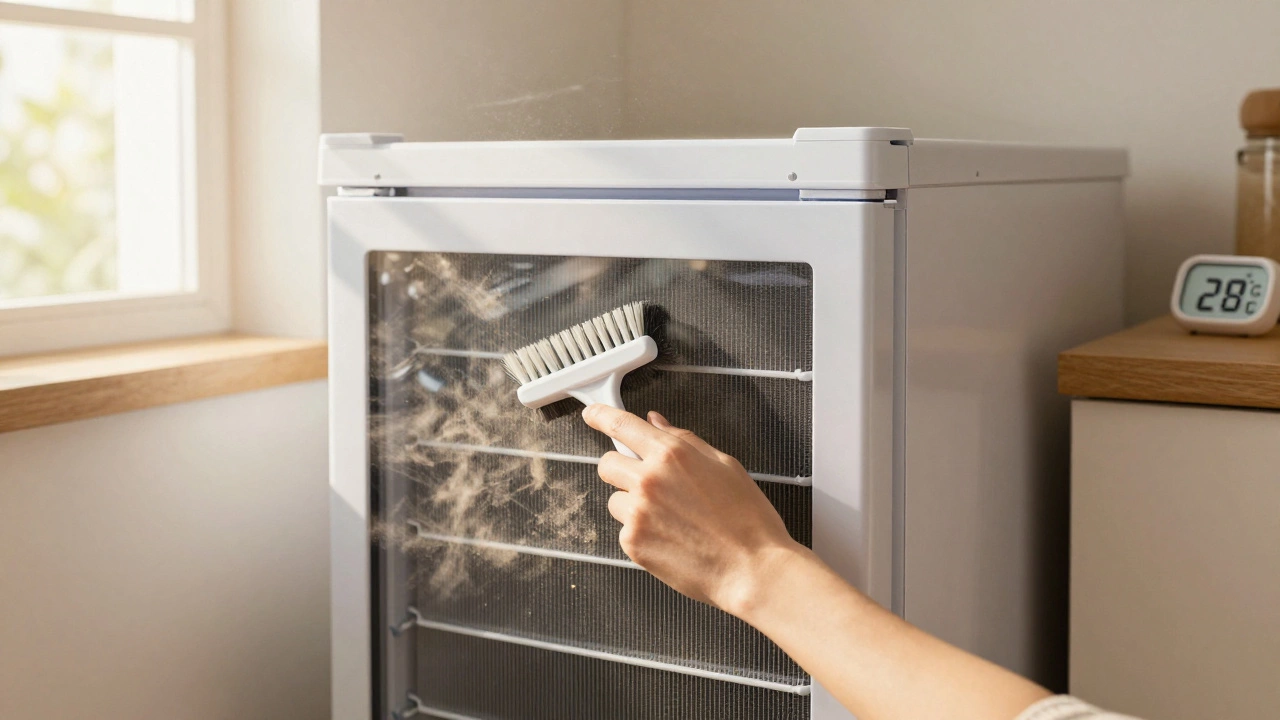
- While it’s unplugged, clean the condenser coils. These are usually at the back or bottom of the freezer. Use a vacuum with a brush attachment or a coil brush. Dust here is the #1 cause of overheating.
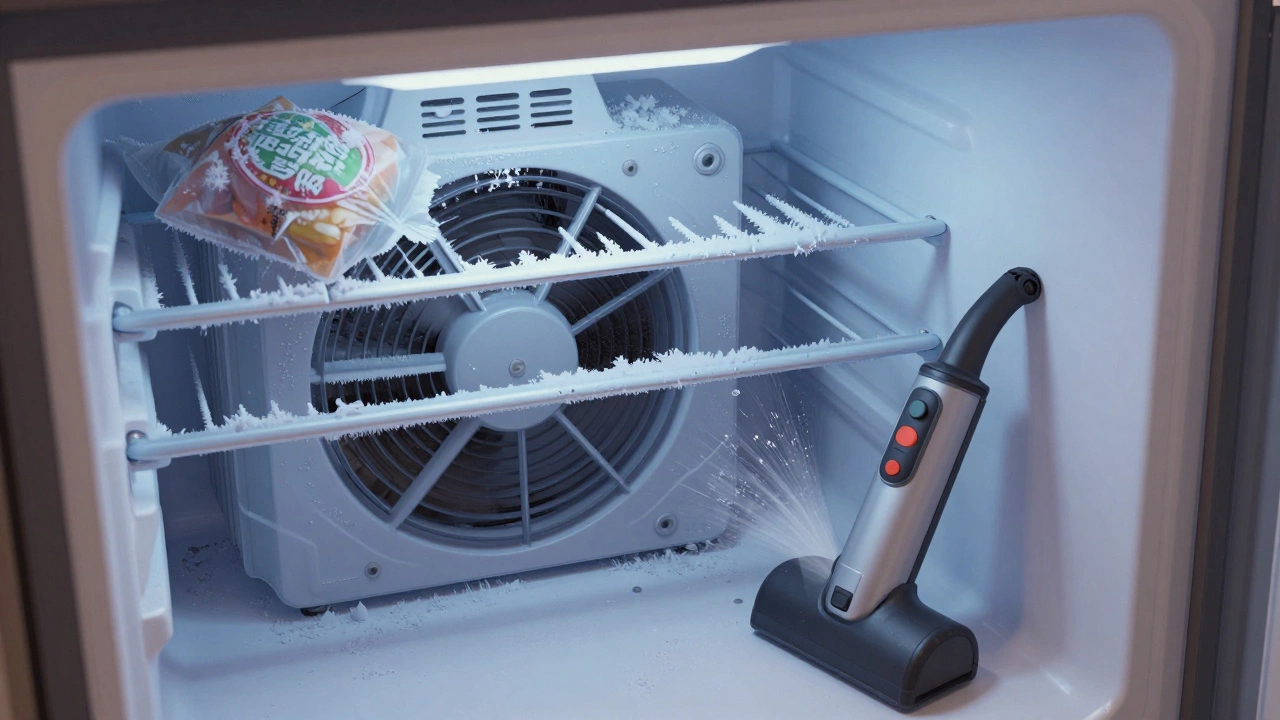
- Check the freezer vents inside. Make sure nothing is blocking airflow around the back wall or near the evaporator fan. Ice buildup can also block vents. If you see thick frost, you may have a defrost system issue-but that’s a separate fix.
- Plug the freezer back in. Turn the temperature dial to the coldest setting for 10 minutes, then reset it to your normal setting (usually around -18°C).
- Wait 24 hours. Don’t expect instant results. The freezer needs time to reach full cold again. Check the temperature with a standalone thermometer placed inside.
What to Do If It Still Doesn’t Work
If the compressor still doesn’t start after resetting, you’re likely dealing with something deeper:
- No hum, no click - Could be a failed start relay, capacitor, or control board. These are common on older models.
- Humming but not cooling - The compressor might be running but failing to pump refrigerant. This usually means it’s worn out.
- Loud buzzing or grinding - Internal damage. Continuing to run it can destroy the motor.
Freezers under 8 years old are usually worth repairing. Older units often cost more to fix than to replace. If you hear unusual noises or smell burning, stop using it immediately.
Signs You Need a New Freezer
Resetting works about 60% of the time on freezers under 10 years old. If you’ve tried it twice and nothing changes, consider these red flags:
- Ice buildup inside even after cleaning
- Condensation on the outside of the cabinet
- Food thawing faster than usual
- High electricity bills despite low usage
- Compressor runs constantly, even when the freezer is cold
These aren’t just inconveniences-they’re signs the system is failing. Replacing a freezer now might save you from spoiled food later.
Preventing Future Problems
Once your freezer is running again, keep it that way:
- Clean the coils every 6 months. Dust acts like insulation-it traps heat.
- Keep the freezer at least 5 cm away from the wall. Air needs to flow around the back.
- Avoid overfilling. Leave space for air to circulate.
- Don’t set the temperature colder than -18°C. Lower temps don’t help and strain the compressor.
- Check the door seal regularly. A leaky seal makes the compressor work twice as hard.
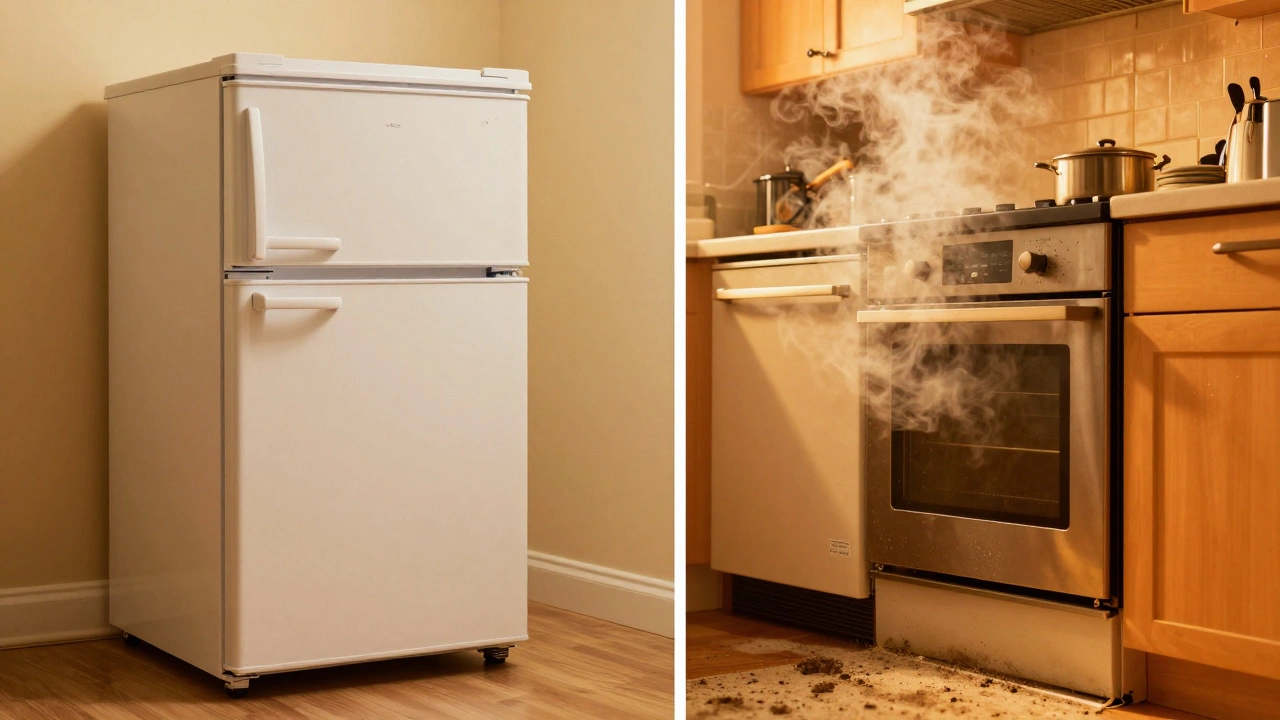
In Adelaide’s climate, where summer temps regularly hit 35°C, proper ventilation is non-negotiable. A freezer in a closed cupboard or next to a dishwasher is asking for trouble.
When to Call a Professional
You don’t need to be an expert to reset a freezer. But if you’re uncomfortable unplugging or cleaning internal parts, or if you suspect a refrigerant leak (oil residue around pipes, hissing sound), call a certified technician. Refrigerant is hazardous and regulated. Only licensed people can handle it.
Look for repair services with experience in your brand-Samsung, LG, Whirlpool, and Bosch all have different designs. A good tech will check the start relay, capacitor, and compressor windings before recommending replacement.
Common Mistakes People Make
Most failed reset attempts come from skipping steps:
- Plugging it back in after only 5 minutes
- Not cleaning the coils
- Assuming the compressor is dead when it’s just the start relay
- Using extension cords or power strips-always plug directly into the wall
- Ignoring the door seal-this causes 40% of cooling problems
One customer in Salisbury replaced their $1,200 freezer because they didn’t clean the coils. The compressor was fine. After cleaning, it ran like new for another 5 years.
How Long Should a Freezer Compressor Last?
On average, a freezer compressor lasts 10 to 15 years. With good maintenance, some last 20. The brand matters less than how you treat it. A well-kept Whirlpool can outlast a poorly maintained Samsung.
If your freezer is older than 12 years and the compressor has failed twice, replacement is the smarter choice. Newer models use 30% less energy and have better temperature control.
Can I reset my freezer compressor without unplugging it?
No. Most freezers don’t have a reset button. The only reliable way to reset the compressor is to unplug it for at least 15 minutes. Turning it off with the control panel doesn’t cut full power to the compressor circuit.
Why does my freezer keep clicking but not starting?
That clicking is the overload protector trying to restart the compressor after it overheats. If it clicks every 5-10 minutes and never runs, the compressor is too hot or the start relay is failing. Unplug it for 30 minutes, clean the coils, and try again. If it still clicks, the relay or capacitor may need replacing.
Is it safe to reset the compressor multiple times?
Yes, but only if you wait at least 15 minutes between attempts. Repeatedly cycling power without waiting can damage the compressor or start relay. If it doesn’t work after two resets, the issue isn’t overheating-it’s a mechanical or electrical fault.
How do I know if the compressor is actually running after resetting?
Stand near the freezer. A running compressor makes a steady, low hum-not a buzz or rattle. You might also feel slight vibrations. If you hear nothing, or just a click, it’s not running. Check the temperature inside with a thermometer after 12 hours.
Will resetting the compressor fix ice buildup?
Not directly. Ice buildup is usually caused by a faulty defrost heater, thermostat, or door seal. Resetting the compressor might help if the ice is blocking airflow and causing overheating. But if ice returns quickly, you need to fix the defrost system, not just reset the compressor.