Hot Water Heater Diagnostic Tool
Follow the steps below to identify why your system isn't producing heat.
Check Power Supply
Have you checked your main switchboard?
Identify System Type
Do you know if your unit runs on Gas or Electricity?
Check Thermal Cut-Out
If you have an electric unit, check the access panel for a red reset button.
Temperature & Settings
Diagnostic Result
Complete the checklist on the left and click "Diagnose Issue" to see if you can fix it yourself or need a professional.
Imagine stepping into the shower on a cold Adelaide morning, only to be hit by a blast of icy water. It’s not just uncomfortable; it stops your entire day before it starts. Your hot water heater is a household appliance designed to heat and store water for domestic use has failed you. Panic sets in. Do you call a plumber immediately? Maybe. But before you pay for a service call, there are several things you can check yourself. Often, the issue isn’t a broken unit but a tripped switch, a blown fuse, or a simple setting error.
Most homeowners assume that if there’s no hot water, the tank is dead. In reality, about 40% of "broken" water heaters are actually working fine-they’re just disconnected from power or blocked by a safety mechanism. This guide walks you through the exact steps to diagnose why your system stopped producing heat, tailored to both electric and gas systems common in Australian homes.
The Quick Power Check: Is It Even On?
Before tearing apart panels or messing with gas lines, look at the obvious. Electricity doesn’t always stay connected. A recent storm in South Australia might have caused a surge, or perhaps a vacuum cleaner plugged into the same circuit overloaded it. For electric water heaters are appliances that use resistance elements to heat water stored in an insulated tank, the first place to look is your main switchboard.
- Check the Circuit Breaker: Open your electrical panel. Look for the breaker labeled "Hot Water" or "HW." If it’s in the middle position (tripped), flip it fully off, then back on. If it trips again immediately, stop. You have a short circuit inside the element or wiring, and you need an electrician.
- Inspect the Isolator Switch: Many older homes in Adelaide have a separate double-pole isolator switch near the water heater itself. Ensure this hasn’t been accidentally switched off during cleaning or maintenance.
- RCD Trips: If your home has Residual Current Devices (RCDs), check if one has popped. Reset it carefully. If it keeps tripping, moisture may have entered the electrical components.
If you restore power and still get no heat after two hours, move to the next step. Remember, never touch electrical components with wet hands or while standing on a damp floor.
Gas Systems: The Pilot Light and Thermocouple
If you have a gas storage water heater is a system that burns natural gas or LPG to heat water via a burner at the bottom of the tank, electricity isn’t the primary fuel source, but it powers the ignition. However, many older units rely on a standing pilot light. If the flame goes out, the burner won’t fire, and your water stays cold.
Locate the glass window on the front of your heater. Do you see a small blue flame? If not, follow these steps:
- Turn the Gas Valve to "Pilot": Rotate the control knob to the pilot position.
- Press and Hold: Press the ignition button (or push down the knob) while holding it for 30-60 seconds. This allows the thermocouple to heat up.
- Release Slowly: Let go gently. If the flame stays lit, turn the knob to "On." If it dies, repeat once more.
- Failure to Stay Lit: If the pilot won’t stay lit, your thermocouple is a safety device that detects the presence of the pilot flame and keeps the gas valve open is likely dirty or faulty. This is a cheap part ($15-$30) but requires careful replacement. If you’re unsure, call a gas fitter.
Also, check your gas supply. Are other gas appliances like the stove or dryer working? If not, the issue is with your meter or street supply, not the heater.
Electric Heaters: The Thermal Cut-Out and Elements
Electric water heaters have built-in safety features that shut off heating if temperatures get too high. This is called the thermal cut-out is a safety switch that disconnects power to the heating elements if the water temperature exceeds safe limits. Over time, sediment buildup can cause overheating, triggering this switch.
To reset it:
- Turn Off Power: Flip the circuit breaker to OFF. Safety first.
- Remove Access Panel: Unscrew the metal cover near the top or middle of the tank. You’ll see insulation.
- Find the Button: Behind the insulation, look for a red or black button labeled "Reset" or "High Limit."
- Press It: Push the button firmly. You should hear a click. If it pops back out immediately, do not keep pressing it. This indicates a serious fault with the thermostat or element.
- Replace Panel and Restore Power: Put everything back together and turn the breaker on. Wait 1-2 hours to see if the water heats up.
If resetting doesn’t work, one of your heating elements may have burned out. Electric tanks usually have two elements: upper and lower. If you have some hot water but it runs out quickly, the lower element is likely dead. If you have no hot water at all, the upper element or thermostat is the culprit.
Temperature Settings and Thermostats
Sometimes, the heater works perfectly, but you’ve set it too low. In Australia, energy efficiency guidelines recommend setting water heaters to 60°C to prevent scalding and reduce Legionella risk. However, if someone accidentally bumped the dial to 40°C or lower, you might think it’s broken because the water feels lukewarm.
Check the temperature dial on the side of the unit. Turn it slightly higher (no more than 65°C). Give it an hour to reheat. Also, inspect the thermostat. If the dial turns freely without clicking into positions, the internal linkage might be broken. This is a common failure point in units older than 10 years.
Sediment Buildup: The Silent Killer
In areas with hard water, minerals like calcium and magnesium settle at the bottom of the tank. Over years, this layer thickens. It acts as an insulator between the burner/element and the water. The result? The heater works harder, uses more energy, and eventually fails to reach the desired temperature.
Signs of severe sediment buildup include:
- Popping or rumbling noises coming from the tank.
- Discolored or rusty water from hot taps.
- Hot water taking significantly longer to heat up than usual.
You can flush the tank yourself to remove loose sediment. Attach a hose to the drain valve at the bottom of the tank, run it to a floor drain, and open the valve. Let water flow until it runs clear. If the water remains muddy, the sediment is compacted, and you may need professional descaling or a new tank.
When to Call a Professional
While DIY checks save money, some issues are dangerous or require specialized tools. Call a licensed plumber or gas fitter if:
- Leaking Tank: Any water pooling around the base means the tank has corroded internally. It cannot be repaired and must be replaced.
- Gas Smell: If you smell rotten eggs near the heater, evacuate and call emergency services. Never try to relight a gas heater if you suspect a leak.
- Repeated Tripping: If the thermal cut-out or circuit breaker trips repeatedly, there’s an electrical fault that could cause a fire.
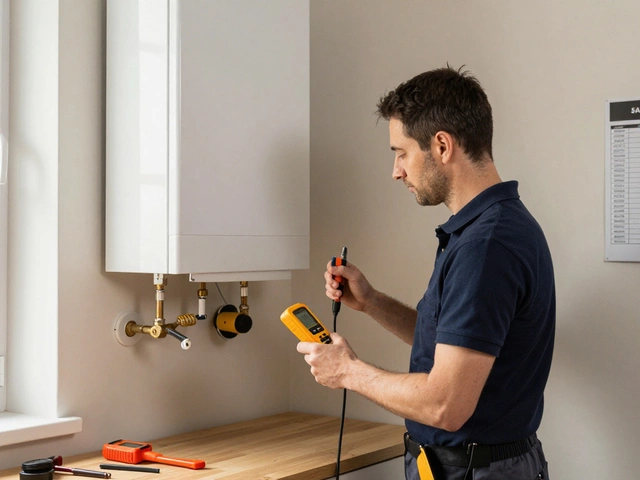
- No Hot Water After Checks: If you’ve verified power, gas, settings, and reset switches, but still have no heat, the internal components (elements, thermostats, valves) need testing with a multimeter.
| Symptom | Likely Cause | DIY Fix? | Pro Required? |
|---|---|---|---|
| No hot water at all | Tripped breaker, dead pilot, blown element | Yes (check power/pilot) | If reset fails |
| Lukewarm water | Low temp setting, cross-connection, bad element | Yes (adjust temp) | If adjustment fails |
| Rumbling noise | Sediment buildup | Yes (flush tank) | If flushing doesn't help |
| Water leakage | Corroded tank, loose fittings | No | Always |
| Gas smell | Gas leak | No | Emergency |
Maintenance Tips to Prevent Future Failures
Prevention is cheaper than repair. To keep your water heater running efficiently in Adelaide’s climate:
- Flush Annually: Drain and flush the tank once a year to remove sediment.
- Check Anode Rod: Every 3-5 years, have a pro inspect the sacrificial anode rod. It protects the tank from corrosion. When it’s gone, the tank rusts.
- Insulate Pipes: Wrap hot water pipes in foam insulation to reduce heat loss, especially in unheated garages or outdoor installations.
- Monitor Pressure: Install a pressure relief valve tester annually to ensure it opens correctly under high pressure.
By understanding how your system works, you can avoid unnecessary service calls and extend the life of your appliance. Most water heaters last 8-12 years. If yours is older and failing frequently, consider upgrading to a heat pump or solar system for better efficiency.
How long does it take for a water heater to heat up?
An electric storage water heater typically takes 1-2 hours to fully heat a fresh tank of water. Gas models are faster, often taking 30-60 minutes. Instantaneous (continuous flow) systems heat water on demand, so you get hot water within seconds.
Why does my water heater keep tripping the circuit breaker?
This usually indicates a short circuit in the heating element, a faulty thermostat, or moisture intrusion in the electrical connections. It can also happen if the breaker is undersized for the heater’s load. Do not ignore this-resetting it repeatedly can cause a fire. Call an electrician.
Can I replace a water heater element myself?
Yes, if you are comfortable working with electricity and have basic tools. You must turn off the power, drain the tank partially, remove the old element, and install a new one with a new seal. However, if you’re unsure, hire a licensed electrician to avoid shock hazards.
Is it normal for a water heater to make popping sounds?
Occasional light popping is normal as water expands. Loud rumbling or knocking noises indicate heavy sediment buildup. The minerals boil underneath the solid layer, creating steam bubbles that burst against the tank bottom. Flushing the tank usually fixes this.
What temperature should I set my water heater to?
In Australia, the recommended setting is 60°C. This temperature kills most bacteria, including Legionella, while minimizing scalding risk and energy usage. Setting it higher increases energy bills and accelerates sediment buildup.