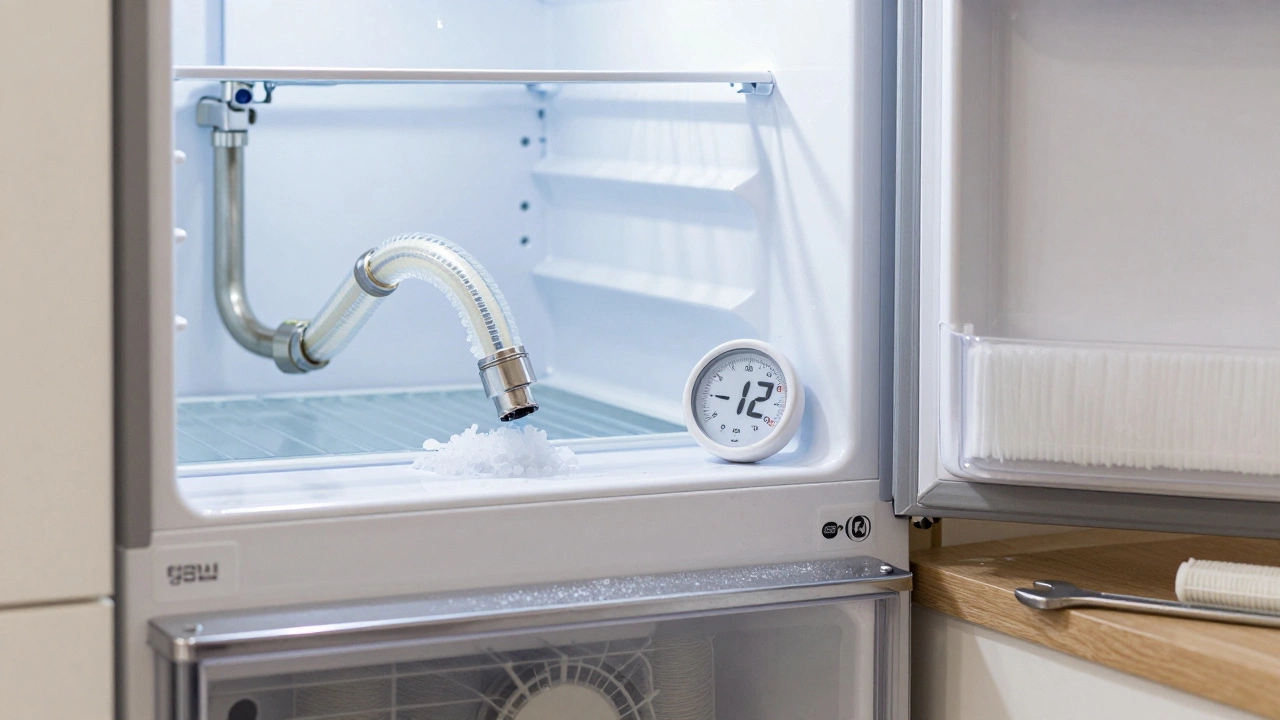
If your freezer used to churn out ice cubes like a machine and now it’s just sitting there silent, you’re not alone. Thousands of households in Adelaide and beyond face this same frustrating issue every year. It’s not magic-it’s mechanics. And most of the time, it’s not a costly breakdown. It’s something simple you can fix yourself in under an hour.
Check the Water Supply First
Your freezer’s ice maker doesn’t work because it’s out of water-not because it’s broken. Sounds obvious, but people overlook this all the time. Start by checking the water line that runs from your kitchen sink to the back of your freezer. Is it kinked? Is it turned off? Many freezers have a shut-off valve behind or under the sink. Make sure it’s fully open. If you’ve recently moved the fridge or did any plumbing work, that valve might’ve been accidentally closed.Also, look for ice buildup around the water inlet tube inside the freezer. If it’s frozen solid, water can’t flow through. Unplug the freezer, let it thaw for a few hours, then wipe the tube dry. If the problem comes back fast, your water line might be too close to cold air. Try repositioning it or adding insulation.
Is the Freezer Cold Enough?
Ice makers need the freezer to stay at or below -18°C to work properly. If the temperature is even a few degrees too warm, the water won’t freeze fast enough-or at all. Use a standalone freezer thermometer (not the one on the door) to check the actual internal temp. If it’s above -15°C, your freezer isn’t cooling right.Why would it be warm? Dirty condenser coils are the #1 culprit. These are the metal grids at the back or bottom of your freezer. Dust and pet hair clog them over time, making the compressor work harder. Unplug the unit, pull it out, and vacuum the coils. Do this every six months. If you’ve got pets or live near the coast, do it every three.
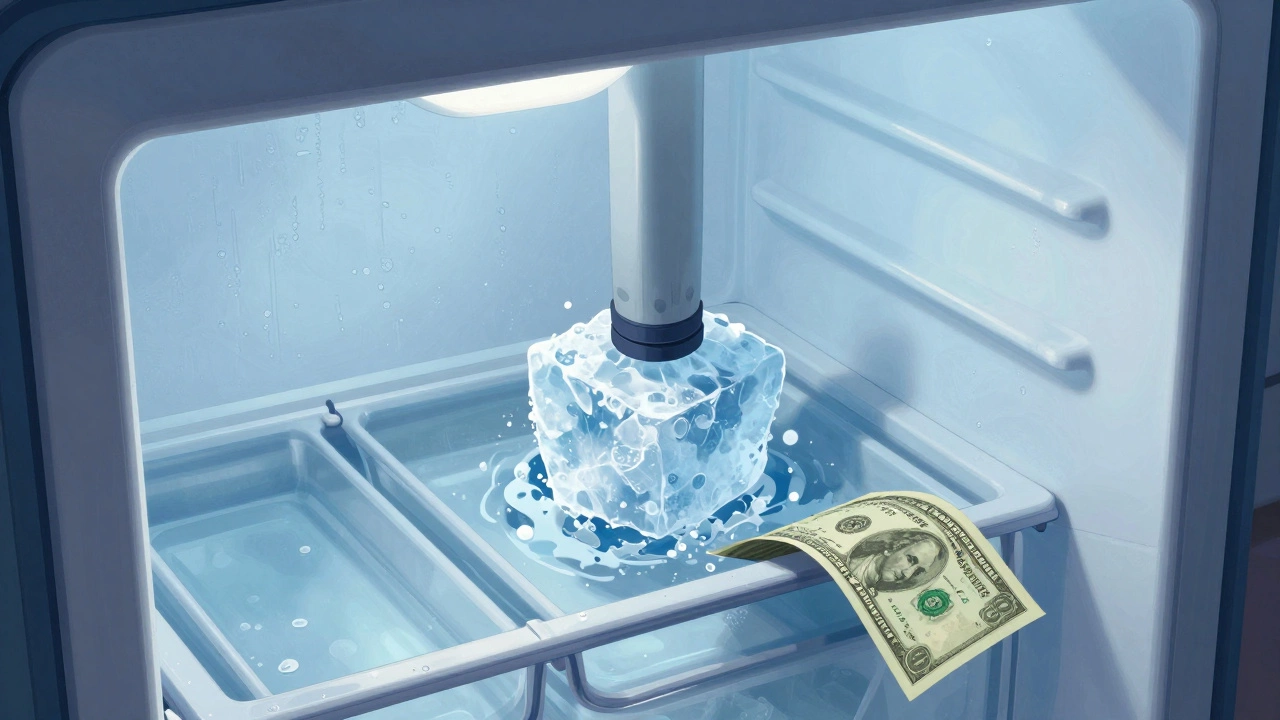
Another cause? A faulty door seal. If cold air leaks out, the freezer struggles to stay cold. Close the door on a dollar bill. If you can pull it out easily, the seal is worn. Replace it-it costs less than $50 and takes 20 minutes.
Ice Maker Switch or Arm Is Off
Most ice makers have a little wire arm or lever that you push down to turn it on. If it’s up, the ice maker thinks the bin is full-even if it’s empty. Check that the arm is hanging down. Sometimes, a big chunk of ice gets stuck underneath and lifts the arm. Clear out the bin, then gently lower the arm. Wait 24 hours. If ice starts forming, that was your fix.Some newer models have a toggle switch inside the freezer compartment. Look for a small button labeled "Ice Off" or "Off". It’s easy to hit by accident when reaching for frozen food. Flip it back on.
Replace the Water Filter
If your freezer has a built-in water filter (most side-by-side models do), it could be clogged. Filters last about six months. After that, water flow drops to a trickle. No water flow = no ice. Check your manual for the filter location-it’s usually in the top right corner of the fridge compartment or inside the grille at the bottom front.Don’t wait for a warning light. If your ice cubes are small, hollow, or taste funny, that’s your filter screaming for help. Replace it with the exact model number. Generic filters often don’t seal right and cause leaks. A genuine filter costs $30-$60, but it’s cheaper than calling a technician.
Ice Maker Assembly Is Faulty
If you’ve checked the water, temperature, and filter-and you still get no ice-it’s probably the ice maker unit itself. The motor, mold heater, or gear assembly can wear out. You’ll know this if you hear a faint humming sound but no water filling the tray, or if the tray is cracked or misaligned.Before you replace the whole unit, try this: unplug the freezer, remove the ice maker, and manually pour a cup of water into the mold. Wait two hours. If it freezes into a solid block, the mold works. If not, the freezer’s cold enough, but the ice maker’s not releasing water. That points to a faulty fill valve or control board.
Ice maker assemblies are model-specific. Find your freezer’s model number (usually inside the door frame or on the back wall) and order the correct part. Installation takes about 45 minutes with a screwdriver and pliers. YouTube has step-by-step videos for most brands-LG, Samsung, Whirlpool, GE, and Frigidaire all have common repair patterns.
Control Board or Sensor Issues
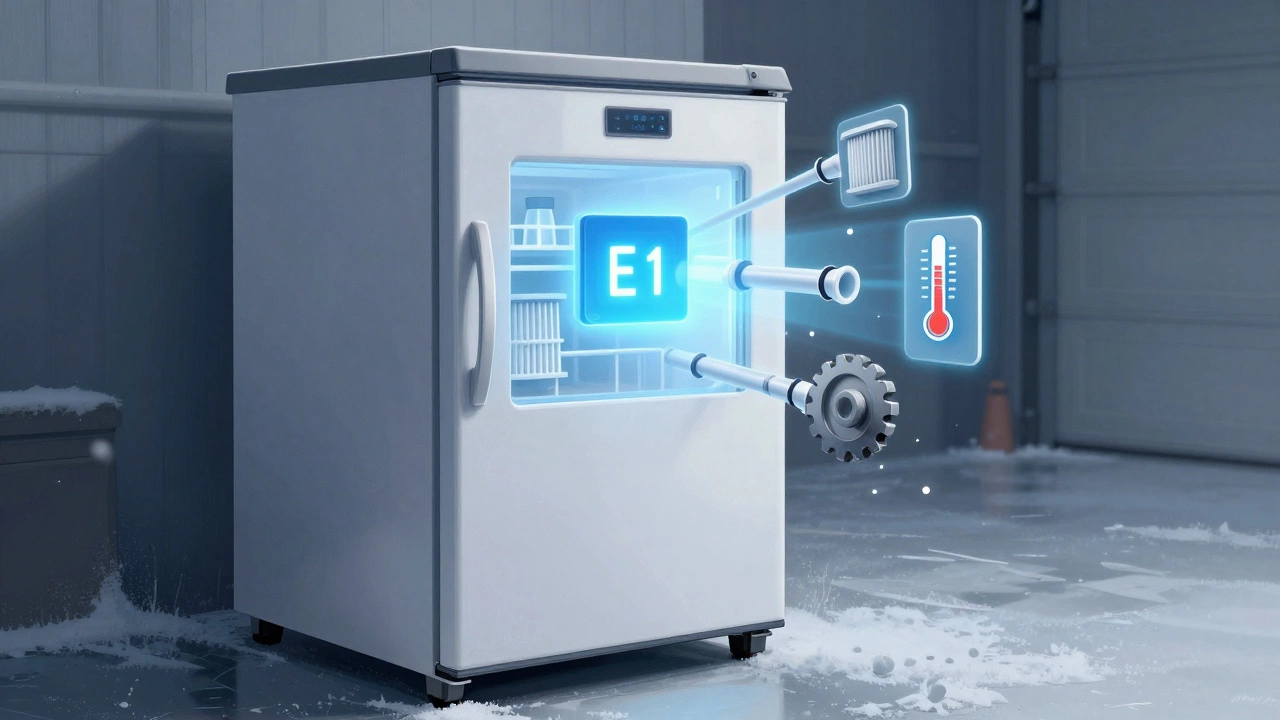
Modern freezers use electronic sensors to detect when the ice bin is full or when it’s time to cycle. If a sensor fails, the ice maker shuts down even if the bin is empty. This is harder to diagnose without tools, but here’s a trick: if your freezer’s display shows error codes like "E1", "F8", or "Ice Fault", Google the code with your model number. Many of these point directly to ice maker sensor failure.Control boards can also fail from power surges. If you’ve had recent storms or flickering lights, that could be the cause. If you’re comfortable with electronics, use a multimeter to test continuity on the ice maker’s wiring harness. If you’re not, call a technician. A board replacement costs $150-$300, but it’s better than buying a new freezer.
Don’t Ignore the Big Picture
If your freezer is over 10 years old and you’re replacing parts left and right, it might be time to think bigger. Older models aren’t as efficient. A new Energy Star-rated freezer can cut your electricity bill by 40%. If you’re spending more than $100 a year on repairs, a new unit pays for itself in 2-3 years.Also, check your freezer’s location. If it’s in a garage or unheated room, the ambient temperature can drop too low in winter. Some freezers shut down ice-making below 10°C because the compressor can’t cycle properly. Move it to a warmer spot if you can.
Quick Checklist: What to Do Today
- Check the water shut-off valve-make sure it’s fully open
- Inspect the water line for kinks or ice blockages
- Verify freezer temperature is below -18°C with a thermometer
- Clean the condenser coils at the back or bottom
- Test the door seal with a dollar bill
- Make sure the ice maker arm is down
- Replace the water filter if it’s older than 6 months
- Manually test the ice mold by pouring water in
If you’ve done all this and still no ice, it’s time to call a professional. But 8 out of 10 times, one of these fixes does the job.
Why is my freezer making ice but not dispensing it?
If ice forms in the tray but won’t drop into the bin, the ejection mechanism is stuck. This usually happens when ice builds up around the auger or the motor is weak. Unplug the freezer, remove the ice bin, and clear any ice chunks with warm water. Dry everything thoroughly. If the auger still doesn’t turn, the motor or gear assembly needs replacing.
Can a power outage cause my ice maker to stop working?
Yes. After a power outage, some freezers need to be manually reset. Unplug the unit for 5 minutes, then plug it back in. Wait 24 hours for the ice maker to cycle. Also, check if the water filter needs replacing-pressure changes during outages can push debris into the filter, reducing flow.
Why are my ice cubes small and cloudy?
Small, cloudy ice cubes mean water isn’t flowing in fast enough. This is almost always a clogged or old water filter. Cloudiness comes from trapped air and minerals-clean water freezes clearer. Replace the filter and flush the line with 2-3 gallons of water after installation.
Is it normal for my ice maker to stop working in winter?
Only if your freezer is in a cold garage or unheated room. Most freezers are designed to operate between 10°C and 43°C. Below 10°C, the compressor may not run long enough to trigger the ice-making cycle. Move the freezer indoors or install a temperature-controlled outlet that keeps the area above 10°C.
How often should I replace my freezer’s water filter?
Every six months, or sooner if you notice slower ice production, smaller cubes, or odd tastes. Some models have indicator lights, but they’re not always accurate. If you use a lot of ice or have hard water, replace it every 3-4 months. Keep a note on your fridge with the replacement date.