Washing Machine Repair Decision Tool
Staring at a broken washer? Use this tool to diagnose common issues and determine if the fix is worth your time and money.
Step 1: Identify the Symptom
Select the issue that best matches your situation:
- Machine won't start
- Won't drain water
- Won't spin / Drum stuck
- Excessive vibration/shaking
- Leaking from underneath/back
- Bad smell / Mold
Likely Cause:
Step 2: Cost-Benefit Calculator
Enter details to see if repair is financially viable.
Financial Verdict:
Final Recommendation
Why?
*Note: Always prioritize safety. Unplug the machine before any inspection. If unsure, consult a professional.
You’re standing in the laundry room, staring at a puddle of soapy water or a drum that refuses to spin. The first instinct is often panic, followed quickly by the dread of calling a technician and watching your bank account shrink. But here’s the truth: you don’t always need a pro. Washing machine repair is one of the most accessible home maintenance tasks if you know what to look for. Many common issues-like clogged filters, broken belts, or faulty hoses-are fixable with basic tools and an hour of patience.
This guide isn’t about promising you can rebuild a motor from scratch. It’s about helping you decide when to grab a screwdriver and when to pick up the phone. We’ll walk through the safety checks, the easy fixes that save hundreds of dollars, and the complex repairs that are better left to experts.
Safety First: Before You Touch Anything
Electricity and water are a dangerous mix. Before you even think about unscrewing a panel, follow these non-negotiable steps:
- Unplug the machine: Never rely on the power button alone. Pull the plug from the wall socket.
- Turn off the water supply: Locate the taps behind the machine and turn them clockwise to shut off the flow.
- Check for residual heat: If you’ve just finished a hot wash cycle, wait 30 minutes before opening the door or touching internal components.
- Have towels ready: Water will spill when you disconnect hoses or remove pumps. Lay down old towels to catch drips.
If you smell gas (in older models) or see sparks, stop immediately and call a professional. For standard electric machines, though, unplugging is usually all you need to stay safe.
The Easy Fixes: What You Can Do in Under 15 Minutes
A surprising number of "broken" washing machines are actually just clogged or misused. These fixes require no tools other than maybe a pair of pliers.
Clean the Drain Pump Filter
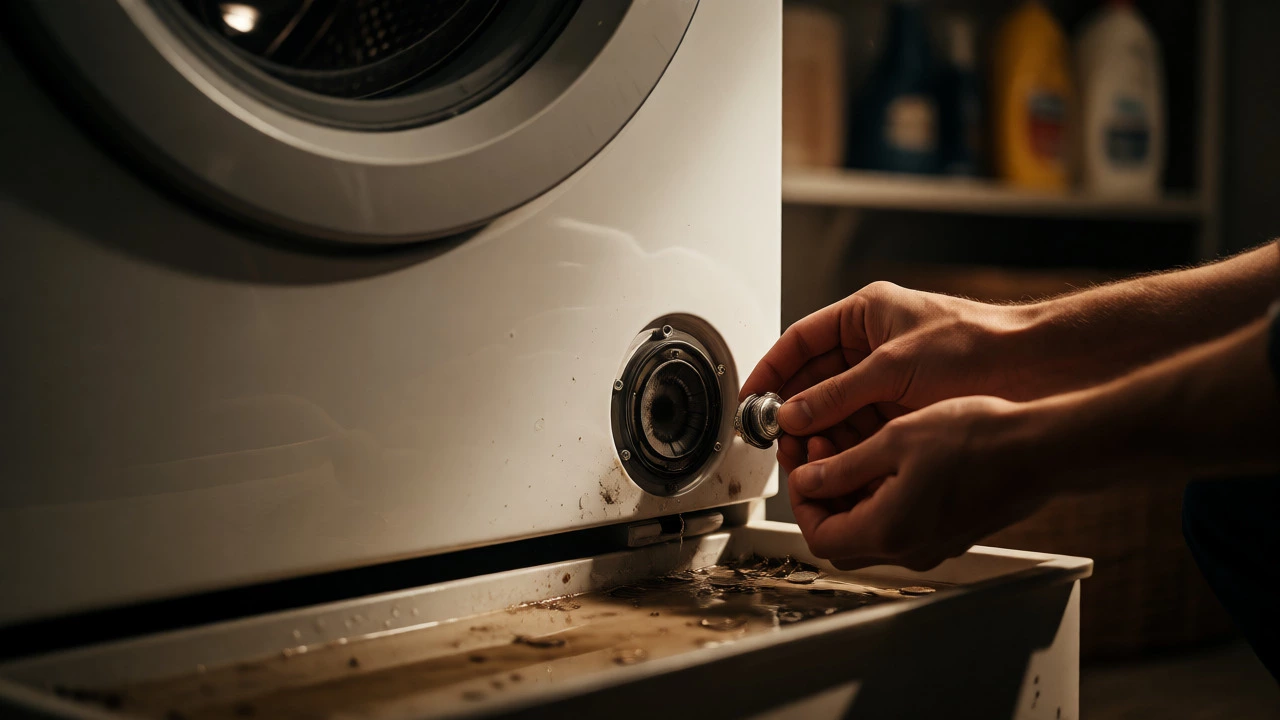
This is the #1 cause of drainage issues. Coins, hairpins, lint, and buttons get trapped here, stopping the water from draining. Most front-loaders have a small access panel at the bottom right corner.
- Open the small hatch.
- Place a shallow tray under the spout to catch dirty water.
- Unscrew the filter cap counter-clockwise.
- Pull out the filter and remove any debris.
- Rinse it under the tap and screw it back in tightly.
If your machine wasn’t spinning because it couldn’t drain, this simple step often solves the problem instantly.
Check the Hoses for Kinks or Blockages
Behind the machine, the inlet hoses can get crushed against the wall, restricting water flow. Or, the drain hose might be pushed too far into the standpipe, creating a siphon effect that drains water as fast as it fills.
Ensure the drain hose is inserted only 4-6 inches into the pipe. Secure it with a clip if necessary. Check the inlet hoses for kinks; straighten them out and ensure the connections are tight but not over-tightened.
Verify the Door Lock Mechanism
If the machine won’t start, check if the door is fully closed. Modern machines have safety interlocks that prevent operation if the latch isn’t engaged. Sometimes, a piece of clothing gets caught in the seal, preventing a proper lock. Open and close the door firmly once more. If you hear a click, try starting the cycle again.
Intermediate Repairs: Tools Required
If the easy stuff didn’t work, you might need to open the cabinet. This requires a screwdriver set (usually Phillips head), needle-nose pliers, and possibly a multimeter. Always take photos before disconnecting wires so you know where they go.
Replace the Drive Belt
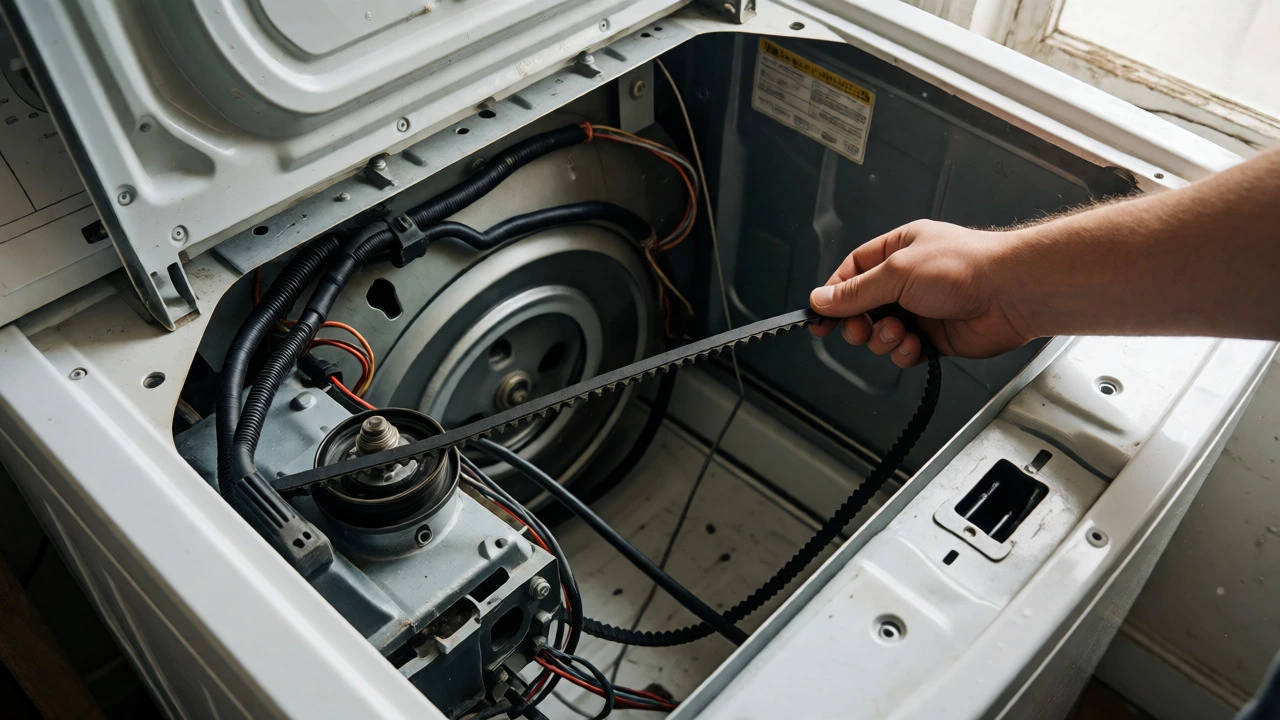
If the drum doesn’t spin but the motor hums, the belt might be broken or slipped off. On many top-loaders, you can access the belt by removing the rear panel. Look for a rubber loop connecting the motor pulley to the drum pulley.
If the belt is cracked, frayed, or missing, buy a replacement using your model number. Loop the new belt around the motor pulley first, then twist it onto the drum pulley while rotating the drum by hand. Test it by manually turning the drum-it should move smoothly without slipping.
Fix a Leaking Water Inlet Valve
Water pooling at the back of the machine near the hoses? The water inlet valve is likely leaking. This component controls how much water enters the tub. Over time, seals degrade or debris prevents the valve from closing fully.
- Disconnect the hoses and unplug the electrical connectors from the valve.
- Remove the screws holding the valve to the cabinet.
- Install the new valve, reconnect hoses and wires.
- Turn on the water and check for leaks before powering up.
Clear a Blocked Drain Pump
If cleaning the filter didn’t help, the pump impeller itself might be jammed. You’ll need to remove the pump assembly, which is usually located at the bottom of the machine. Disconnect the wiring harness and hoses, then pull the pump out. Spin the impeller by hand-it should move freely. If it’s stuck, clear any foreign objects. If it spins loosely but makes grinding noises, the bearings may be shot, and you’ll need a new pump.
When to Call a Professional
Not every repair is worth your time or risk. Some issues involve sealed units, high-voltage capacitors, or computer boards that are expensive to replace incorrectly.
| Issue | DIY Difficulty | Recommended Action |
|---|---|---|
| Clogged filter/drain | Easy | Do it yourself |
| Broken belt | Moderate | DIY if comfortable with panels |
| Faulty control board | Hard | Call a pro (expensive part) |
| Leaking tub seal | Very Hard | Call a pro (requires disassembly) |
| Burnt motor | Hard | Compare cost vs. new machine |
Specifically, avoid DIY if:
- The machine is under warranty: Opening the case often voids the warranty.
- You suspect a main bearing failure: Replacing bearings requires splitting the entire tub shell, a job that takes hours and specialized tools.
- The control panel is dead: Diagnosing electronic faults often requires a multimeter and schematic knowledge.
Cost-Benefit Analysis: Is It Worth Fixing?
Before ordering parts, do the math. A basic washing machine costs between $400 and $800 AUD. If a repair involves buying a $150 control board plus $100 labor (if you hire someone), you’re spending nearly half the price of a new unit.
For DIYers, the rule of thumb is simple: if the part costs less than $50 and the fix takes under an hour, do it. If the part is over $100 and the machine is older than 7 years, consider replacing it instead. Newer models are significantly more energy and water-efficient, which can offset the purchase price over time.
Troubleshooting Common Symptoms
Here’s a quick cheat sheet for matching symptoms to likely causes:
- Machine won’t start: Check power supply, door lock, lid switch (top loaders), or control board.
- Won’t drain: Clogged filter, blocked drain hose, or failed drain pump.
- Won’t spin: Broken drive belt, worn motor coupler, or overloaded drum.
- Excessive vibration: Unbalanced load, loose transit bolts (new machines), or worn shock absorbers.
- Leaks from underneath: Cracked tub, loose hose connection, or damaged door boot seal.
Remember, diagnosing correctly saves money. Don’t replace the pump if the issue is just a kinked hose.
How long does a washing machine typically last?
The average lifespan of a modern washing machine is between 10 and 12 years. However, usage frequency, brand quality, and maintenance play huge roles. Regularly cleaning the filter and leaving the door ajar after use to dry the seal can extend this life significantly.
What tools do I need for basic washing machine repair?
For most DIY repairs, you need a Phillips-head screwdriver, a flat-head screwdriver, needle-nose pliers, and adjustable wrenches. A multimeter is helpful for testing electrical components like switches and valves. Having a smartphone camera handy to photograph wire configurations before disassembly is also crucial.
Why is my washing machine smelling bad?
Bad smells are usually caused by mold and mildew buildup in the rubber door gasket or the detergent dispenser drawer. Run a hot empty cycle with two cups of white vinegar or a dedicated washing machine cleaner monthly. Also, wipe down the door seal after every wash and leave the door open to air out.
Can I use any type of detergent in my machine?
No. High-efficiency (HE) machines require low-sudsing HE detergent. Using regular detergent creates excess foam, which can confuse the sensors, cause overflow, and damage the pump over time. Always check your manual for recommended detergent types.
Is it cheaper to repair or replace a washing machine?
If the repair cost exceeds 50% of the price of a new equivalent model, replacement is usually the better financial decision. Additionally, if the machine is over 10 years old, newer models offer better energy efficiency, which saves on utility bills long-term.