Boiler Troubleshooting Decision Tool
Select the issue that best describes your current situation:
Please select a symptom and click "Analyze Fixability" to see recommendations.
| Task | Who Should Do It? | Risk Level |
|---|---|---|
| Top up water pressure | Homeowner | Low |
| Bleed radiators | Homeowner | Low |
| Clear condensate pipe (external) | Homeowner (Careful) | Medium |
| Replace pump or fan | Licensed Pro | High |
| Fix gas valve or burner | Licensed Pro | Critical |
There’s a specific kind of panic that sets in when your boiler stops working. It’s usually the middle of winter, you’re standing in a cold shower, and the error code on the display looks like alien hieroglyphics. Your first instinct might be to grab a screwdriver and try to fix it yourself. After all, YouTube has a video for everything, right? But here is the hard truth: while some minor tweaks are safe for homeowners, most serious boiler repairs involve high-pressure water, electricity, and combustible gas, making them dangerous if handled incorrectly.
The question isn’t just about saving money on a call-out fee. It’s about safety and legality. In many places, including Australia where I live, messing with gas fittings without a license can void your home insurance or even lead to fines. So, before you open that casing, let’s break down exactly what you can handle, what you absolutely shouldn’t touch, and how to decide if you need a pro.
What You Can Safely Do Yourself
Believe it or not, there is a decent list of things you can do to get your heating back online without calling a technician. These tasks don’t require special tools or licenses, just a bit of common sense and caution.
- Check the Power Supply: Is the boiler actually off, or did a fuse trip? Check your consumer unit (fuse box). If the switch has tripped, reset it once. If it trips again immediately, stop. You have an electrical fault that needs a professional.
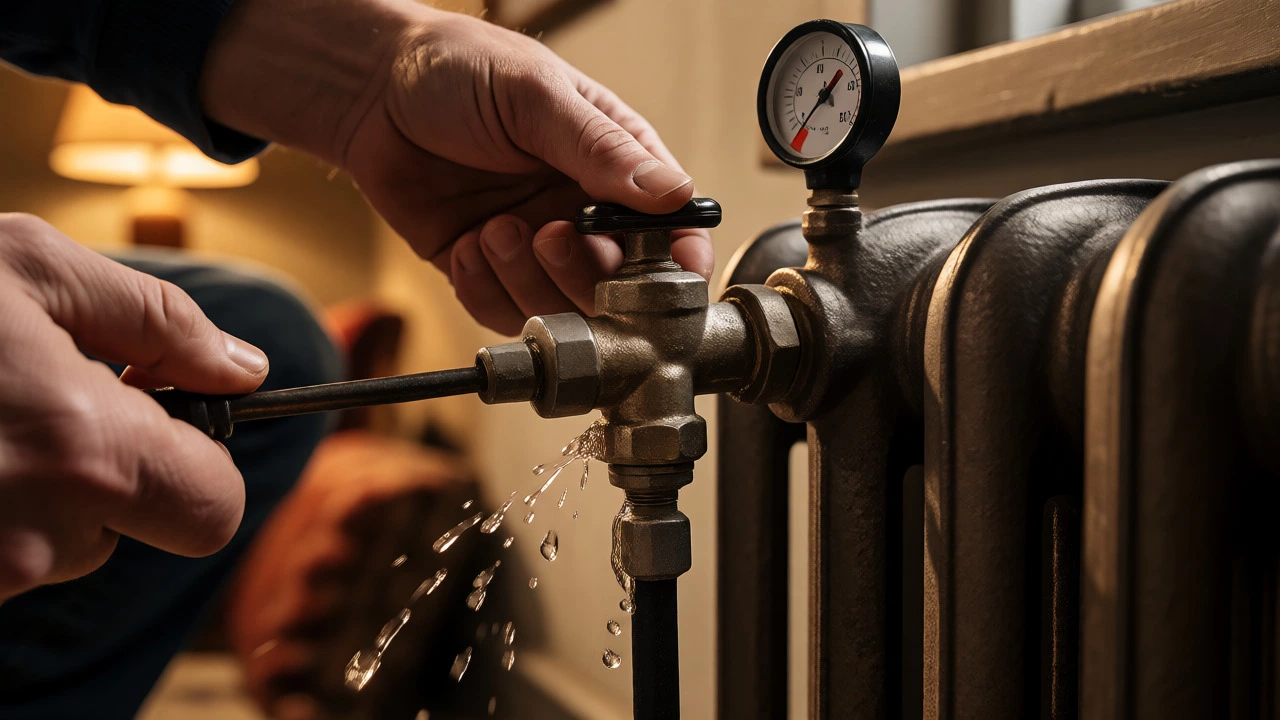
- Repressurize the System: Most modern boilers have a pressure gauge. If the needle is in the red zone (usually below 1 bar), the system has lost pressure. You can often top this up using a filling loop under the boiler. This is the number one reason for "no hot water" complaints that aren't actually broken parts.
- Bleed Radiators: If your radiators are cold at the top but warm at the bottom, they have air trapped inside. Use a radiator key to bleed them until water comes out, then recheck your boiler pressure. Low pressure from bled radiators will stop the boiler from firing.
- Reset the Boiler: Sometimes a temporary glitch causes a lockout. Pressing the reset button once can clear the error. Don’t press it repeatedly; if it doesn’t work the first time, pressing it ten more times won’t help and might confuse the internal sensors.
- Check the Thermostat Settings: Sounds obvious, but check if the room thermostat is set higher than the current room temperature. Also, check the timer settings. Did someone accidentally change the schedule?
If none of these simple steps work, you’ve likely hit a mechanical or electronic failure. That’s where the DIY road ends for most people.
The Big No-Go Zone: Gas and Combustion
Here is the critical distinction between electric appliances and gas boilers. An electric kettle uses electricity and water. A gas boiler uses gas, electricity, and water, plus it creates combustion gases like carbon monoxide. Because of this complexity, regulations are strict.
In Australia, any work involving the gas supply line or the burner assembly must be performed by a licensed gas fitter. Why? Because a loose connection can leak gas into your living space. Worse, a blocked flue can cause carbon monoxide to spill into your home instead of going out the chimney. Carbon monoxide is odorless and colorless-it kills quietly. You cannot see it, smell it, or taste it. Only a qualified professional with the right detectors can ensure the combustion process is safe.
| Task | Who Should Do It? | Risk Level |
|---|---|---|
| Top up water pressure | Homeowner | Low |
| Bleed radiators | Homeowner | Low |
| Replace thermostat batteries | Homeowner | Low |
| Clear condensate pipe blockage | Homeowner (carefully) | Medium |
| Replace pump or fan | Licensed Plumber/Gas Fitter | High |
| Fix gas valve or burner | Licensed Gas Fitter | Critical |
| Service annual inspection | Licensed Gas Fitter | Mandatory |
The Condensate Pipe Trap
One issue that frequently confuses homeowners is the condensate pipe. Modern condensing boilers produce acidic wastewater as a byproduct of their efficiency. This drains away through a white plastic pipe, often exiting outside near the ground.
In winter, this pipe can freeze over, causing the boiler to shut down as a safety measure. You might hear gurgling noises or see a specific error code related to "condensate." If the pipe is accessible and visible, you can pour warm (not boiling) water over the external section to melt the ice. Some people use a turkey baster to inject warm water directly into the pipe opening. This is a safe DIY fix. However, if the blockage is inside the house or the pipe is damaged, you’ll need a plumber to replace the section. Trying to force water back up the pipe can flood your boiler’s internal components, turning a $50 fix into a $500 disaster.
Why "Just Replacing the Part" Is Rarely Enough
Let’s say you diagnose a faulty diverter valve. You look online, find the part for $80, and think, "I'll save $300 by doing it myself." Here’s why that math rarely works out.
First, diagnosis is half the battle. A noisy boiler could be a failing pump, a seized diverter valve, or limescale buildup in the heat exchanger. If you replace the wrong part, you still pay for the labor later, plus the cost of the new part. Second, access is tricky. Boilers are compact units packed with wires and pipes. Removing the front panel often requires disconnecting gas lines or electrical connections that are tight and fragile. One stripped screw or cracked plastic connector can render the whole unit useless.
Third, warranties matter. If your boiler is less than seven years old, it likely has a manufacturer warranty. Most manufacturers void this warranty if unauthorized persons tamper with the internal components. You might save on the immediate repair bill but lose coverage for a major component failure next year.
Safety Checks Before You Touch Anything
If you are determined to investigate further, follow these safety protocols strictly. Never skip them.
- Isolate the Electricity: Turn off the power supply to the boiler at the isolator switch or the circuit breaker. Don’t just rely on the boiler being switched off at the dial.
- Turn Off the Gas: If you need to remove any panels that expose gas connections, turn off the gas tap leading to the boiler. This is usually a yellow-handled valve on the pipe coming into the unit.
- Wear Protective Gear: Boiler internals can have sharp metal edges and hot surfaces. Wear gloves and eye protection.
- Document Everything: Take photos before you disconnect anything. Wiring diagrams are helpful, but photos of how cables were routed are better. When you put it back together, you want to match the original setup exactly.
When to Call a Pro Immediately
Stop reading and pick up the phone if you notice any of these signs. These indicate potential hazards that require expert attention.
- Smell of Gas: If you smell rotten eggs or sulfur near the boiler, evacuate the area and call emergency services or your gas provider. Do not operate light switches.
- Water Leaking from the Bottom: While a small drip from the condensate pipe is normal, significant leaking from the main body indicates a failed seal or cracked heat exchanger.
- Strange Noises: Banging, whistling, or rumbling sounds can indicate "kettling" (limescale buildup) or a failing pump. Ignoring this can destroy the heat exchanger.
- Pilot Light Keeps Going Out: If you have an older non-condensing boiler and the pilot light won’t stay lit, it could be a faulty thermocouple. While replacing a thermocouple is technically a simple job, it involves gas connections, so we recommend leaving it to a licensed fitter.
The Cost-Benefit Analysis
So, is DIY worth it? Let’s look at the numbers. A standard service call-out in Adelaide ranges from $150 to $250 depending on the company and time of day. A simple repair like replacing a pump might cost $400-$600 total.
If you attempt a complex repair and fail, you end up paying the full repair cost anyway because the technician now has to undo your work and fix the actual problem. Plus, you’ve spent hours of your weekend wrestling with rusted nuts. On the other hand, if you correctly identify a low-pressure issue and top up the system yourself, you’ve saved $200 and learned something valuable about your home.
My advice? Treat your boiler like your car. You can check the oil and tire pressure yourself. You probably shouldn’t rebuild the transmission in your driveway unless you know what you’re doing. For 90% of boiler issues, a quick check of pressure, power, and thermostats solves the problem. For the rest, call a licensed professional. It’s cheaper than fixing a flooded ceiling or treating carbon monoxide poisoning.
How much does it cost to hire a plumber for boiler repair?
In Australia, hourly rates for licensed plumbers and gas fitters typically range from $90 to $150 per hour, plus a call-out fee of $100 to $200. Parts are charged separately. Simple fixes like repressurizing or bleeding might only incur the call-out fee if done during a scheduled service, but emergency repairs will be at the higher end of the scale.
Can I replace my own boiler pump?
Technically, yes, if you are competent with plumbing and electrics. However, it is risky. The pump is connected to the mains water and heating circuits. Incorrect installation can lead to leaks or electrical faults. Furthermore, in many jurisdictions, altering the hydraulic circuit may require certification. It is generally recommended to leave pump replacement to professionals to maintain warranty and safety standards.
What happens if I ignore a leaking boiler?
Ignoring a leak can lead to severe structural damage. Water dripping onto electrical components can cause short circuits or fire. Dripping onto floorboards or drywall can cause mold, rot, and expensive renovations. Additionally, a drop in system pressure caused by the leak will eventually make the boiler ineffective or cause it to lock out completely.
How often should I service my boiler?
Manufacturers and safety experts recommend an annual service by a licensed gas fitter. This ensures the burner is clean, the flue is unobstructed, and safety devices are working. Regular servicing also maintains the manufacturer's warranty, which often lasts between 7 to 10 years for new installations.
Is it safe to sleep with the boiler on?
Yes, provided the boiler is properly installed, serviced, and has a functioning carbon monoxide detector nearby. Modern sealed-system boilers vent exhaust gases directly outside via a balanced flue, preventing indoor pollution. However, if you suspect a fault, such as strange smells or noises, it is safer to turn the boiler off until a professional inspects it.