Exhaust Fan Repair vs. Replace Decision Tool
Enter the symptoms you are experiencing to determine if your exhaust fan can be repaired or needs replacement.
Your kitchen is a mess of steam, your bathroom smells like last night’s dinner, and the fan on the ceiling isn’t doing a thing. You reach for the switch, hear nothing but a faint hum-or maybe just silence-and wonder if you’ve just been scammed by a cheap appliance that died in three years. The big question hanging in the stale air is simple: can an exhaust fan be repaired, or is it time to throw it away and buy a new one?
The short answer is yes, most of the time. But the long answer depends on what exactly is broken. Is it a clogged filter? A loose wire? Or has the motor itself given up the ghost? Knowing the difference saves you hundreds of dollars and a trip to the hardware store. In Adelaide, where summer humidity hits hard and winter brings condensation issues, a working extractor fan isn't just about comfort-it's about preventing mold growth behind your tiles.
Quick Summary / Key Takeaways
- Most failures are minor: Dust buildup, loose wiring, or a stuck capacitor account for over 70% of "dead" fans.
- Motors are rarely replaceable: If the motor is burnt out, buying a new unit is usually cheaper than sourcing a specific replacement part.
- Safety first: Always cut power at the circuit breaker before touching any internal components.
- Noise vs. Silence: Grinding noises mean bearing failure (replace); humming without spinning means a bad capacitor (fixable).
- DIY limit: Cleaning and capacitor swaps are easy; rewiring motors requires professional help.
Diagnosing the Problem: Why Isn't It Working?
Before you decide to repair or replace, you need to know what’s wrong. An extractor fan is a ventilation device designed to remove stale air, moisture, odors, and pollutants from indoor spaces. These units have few moving parts, which makes them reliable, but also means when they fail, the cause is usually obvious once you look inside.
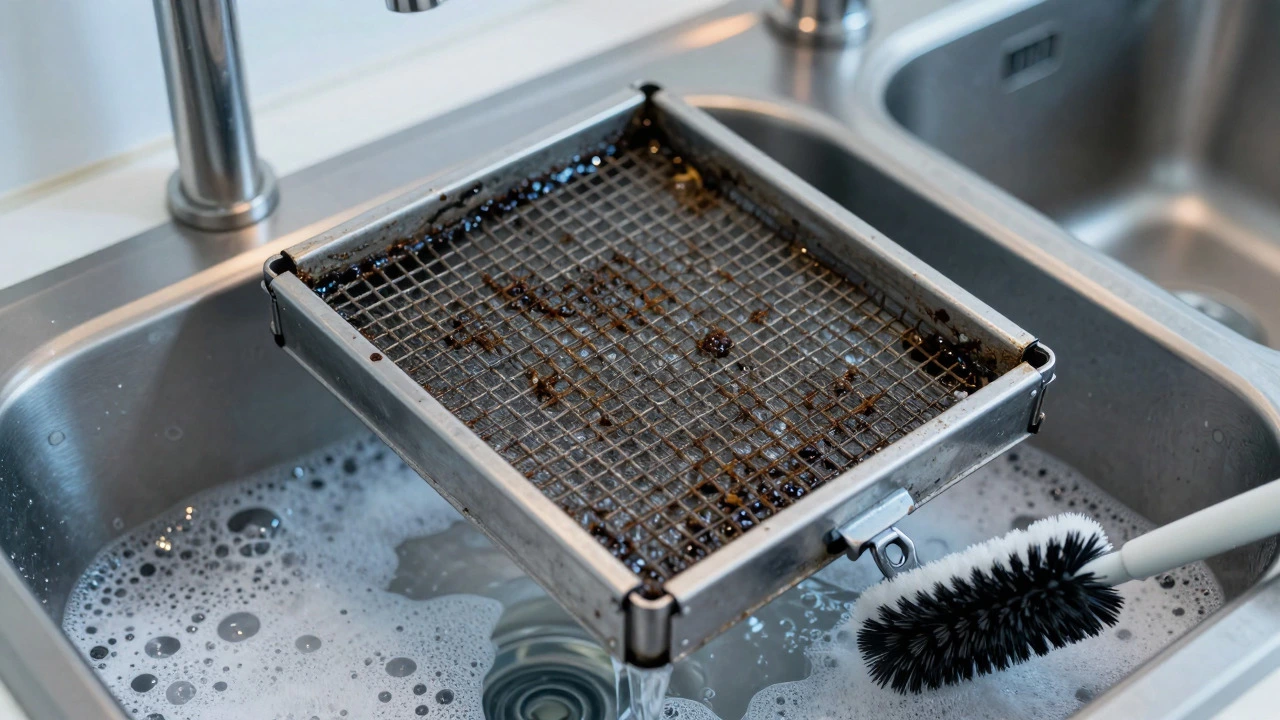
Start with the simplest possibility: obstruction. Over time, grease in kitchens and dust in bathrooms coat the blades. This imbalance causes vibration and noise, eventually slowing the fan down until it stops. If your fan is making a rattling sound but still spins, clean it. Use a soft brush and vacuum cleaner to remove debris from the housing and blades. For kitchen range hoods, check the grease filters. If they’re caked in black sludge, no amount of motor power will push air through them. Wash them in hot soapy water or the dishwasher.
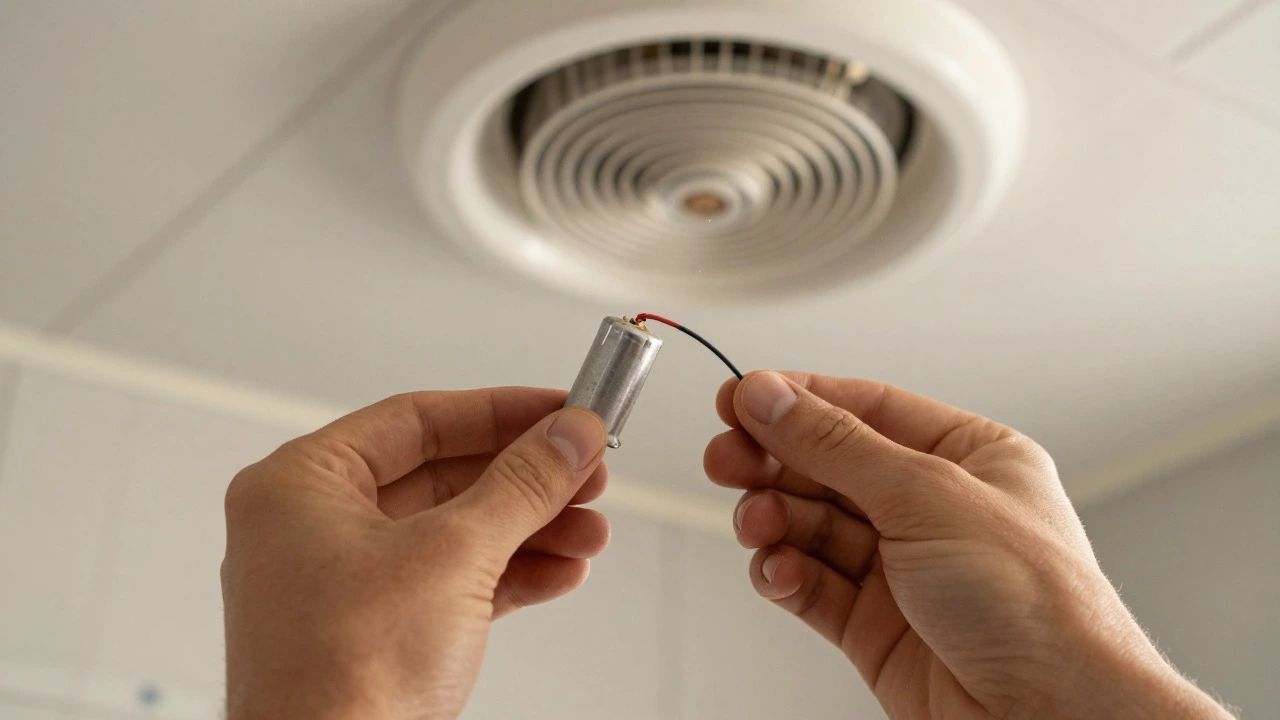
If cleaning doesn’t work, listen closely. Does the fan hum but not spin? This is a classic sign of a failed start capacitor is an electrical component that provides the initial torque needed to start the fan motor. Capacitors wear out over time, especially in humid environments like Adelaide bathrooms. They are cheap-often under $15-and easy to replace if you can identify the correct microfarad (µF) rating printed on the old one.
However, if the fan is completely silent and the switch clicks normally, the issue might be electrical. Check the connections at the wall switch and the fan junction box. Loose wires are common after renovations or if the house settles. If you’re comfortable using a multimeter, test for voltage at the fan terminals. No voltage means the problem is in your home’s wiring, not the fan itself.
When Repair Makes Sense: The DIY Fixes
There are three main scenarios where repairing your exhaust fan is cost-effective and straightforward. These fixes require basic tools: a screwdriver, a multimeter, and possibly a replacement capacitor.
- Cleaning and Lubrication: If the fan is noisy or slow, disassemble the cover and wash the impeller (the blade assembly). Dry it thoroughly. Some older models have oil ports on the motor shaft. A drop of lightweight machine oil can revive a squeaky bearing. Note: Most modern fans have sealed bearings, so oil won’t help these.
- Replacing the Capacitor: As mentioned, a humming fan that won’t start often needs a new capacitor. Turn off the power at the breaker. Open the fan housing. Locate the small cylindrical or rectangular box with two wires. Note the polarity if it’s polarized (marked + and -). Disconnect the old one and install the new one with the same µF rating. Secure it back in place and restore power.
- Tightening Electrical Connections: If the fan works intermittently, open the junction box inside the fan housing. Tighten any loose terminal screws. Corroded wires should be stripped back and reconnected. Ensure the ground wire is securely attached to the metal chassis.
These repairs extend the life of your fan significantly. For a budget model costing $80-$120, spending $15 on a capacitor and an hour of labor is a win. For high-end inline ducted fans, which can cost $300+, even more effort is justified.
When to Replace: The Motor Failure Dilemma
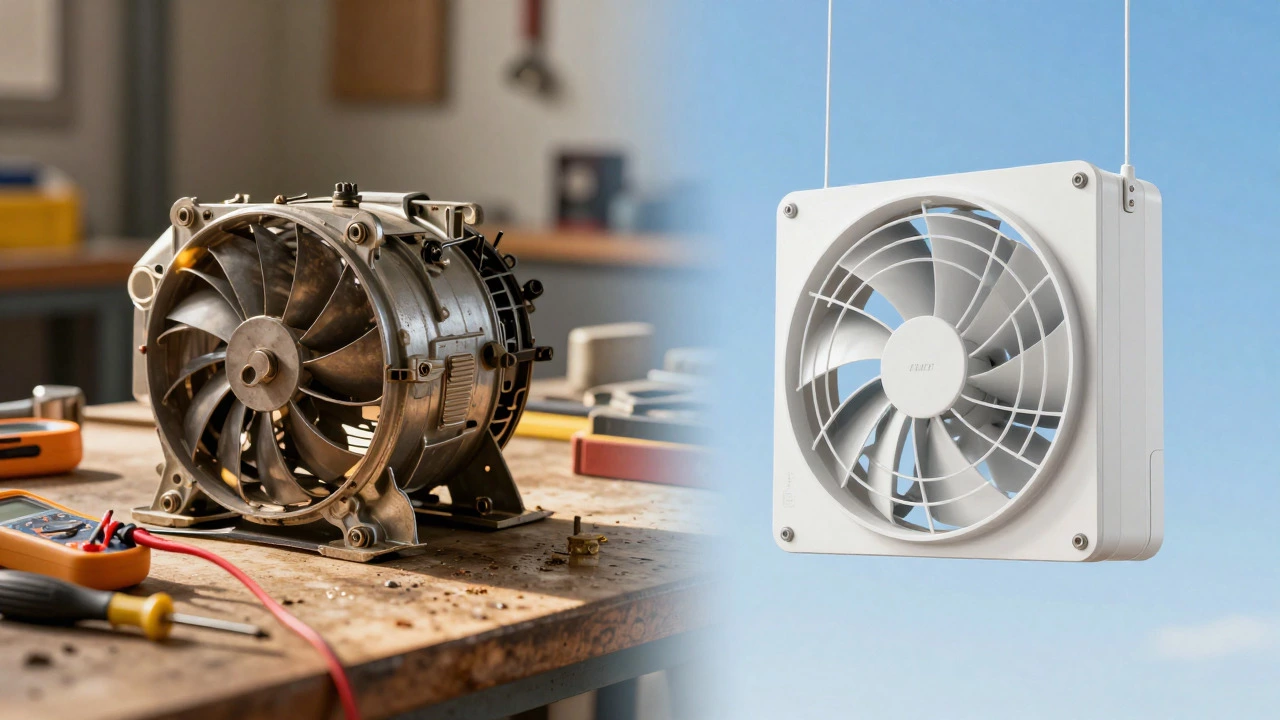
Here’s the hard truth: if the motor itself is dead, replacing the fan is almost always better than repairing it. Motors in residential extractor fans are typically universal series motors or shaded-pole AC motors. They are not modular. You can’t just buy a new motor and bolt it on unless you find an exact match from the same manufacturer, which is rare for older models.
Signs of motor failure include:
- Burning smell: Indicates overheated windings. Immediate shutdown required.
- Grinding noise: Bearings are shot. The motor shaft is wobbling, causing friction.
- Visible damage: Scorch marks on the housing or melted plastic near the motor.
In these cases, sourcing a replacement motor might cost $60-$100, plus shipping. A new entry-level extractor fan costs similar money and comes with a warranty. Plus, newer models are quieter and more energy-efficient. According to Australian Energy Rating standards, fans manufactured after 2020 consume less power while moving more air (measured in liters per second, L/s).
Consider this: if your current fan is more than 10 years old, its efficiency has likely degraded. Even if you fix the motor, it will run hotter and louder than a modern equivalent. Replacement becomes a smart upgrade rather than a loss.
Comparison: Repair vs. Replace Decision Matrix
| Problem Symptom | Likely Cause | Action | Estimated Cost |
|---|---|---|---|
| Fan runs slow/noisy | Dust/grease buildup | Clean blades and housing | $0 |
| Humming but not spinning | Bad start capacitor | Replace capacitor | $10-$20 |
| Intermittent operation | Loose wiring | Tighten connections | $0 |
| Burning smell/grinding | Motor failure | Replace entire unit | $80-$300+ |
| No air movement, silent | Blown fuse/breaker | Check circuit breaker | $0 |
Special Cases: Kitchen Range Hoods vs. Bathroom Ventilation
Kitchen and bathroom fans differ in design and failure modes. Kitchen range hoods deal with grease, which is sticky and corrosive. If your hood has a blower motor inside the cabinet, access is difficult. Often, the entire blower assembly must be removed. If the motor is integrated into the housing, replacement of the whole hood may be necessary. However, many high-end brands like Fisher & Paykel or Bosch offer serviceable motors. Check your model number online before giving up.
Bathroom fans, especially those with heat recovery ventilators (HRVs), are more complex. HRVs exchange warm outgoing air with cool incoming air, saving energy. If your HRV stops working, don’t assume the fan is dead. Check the dampers. Stuck dampers block airflow. Also, inspect the heat exchanger core for mold or ice buildup (in winter). Cleaning the core can restore performance without motor repair.
In Adelaide, where homes are increasingly sealed for energy efficiency, proper ventilation is critical. AS/NZS 1668.2 standard specifies minimum ventilation rates for bathrooms and kitchens. Ignoring a broken fan violates building code intent and risks structural damage from moisture.
Pro Tips for Long-Term Reliability
Prevention beats repair. Here’s how to keep your extractor fan running for decades:
- Clean filters monthly: Grease filters in kitchens, mesh filters in bathrooms. Set a calendar reminder.
- Run the fan longer: Leave it on for 15-20 minutes after showering or cooking. Moisture lingers long after you leave the room.
- Check external vents: Ensure the outside grille isn’t blocked by bird nests, leaves, or snow. Poor draft reduces efficiency.
- Use a timer switch: Install a mechanical or electronic timer so the fan runs automatically after use. This ensures consistent operation.
- Inspect annually: Once a year, unplug the fan and check for loose screws, frayed wires, or excessive dust accumulation.
If you live in a coastal area like Glenelg or Henley Beach, salt air accelerates corrosion. Choose stainless steel or coated aluminum fans. Avoid cheap plastic housings that become brittle and crack.
Frequently Asked Questions
How much does it cost to repair an exhaust fan?
Simple repairs like cleaning or tightening wires cost nothing. Replacing a capacitor costs $10-$20. Professional electrician call-out fees in Adelaide range from $80-$120 for the first hour. If the motor fails, expect to pay $80-$300 for a new unit depending on type and brand.
Can I replace just the motor in my extractor fan?
Rarely. Most residential fans have motors integrated into the housing. Unless you have a commercial-grade or high-end model with modular parts, you’ll need to replace the entire fan assembly. Search your model number online to confirm part availability.
Why is my fan humming but not spinning?
This is usually a failed start capacitor. The capacitor gives the motor the initial kick to start rotating. When it dies, the motor hums due to electrical current flowing but lacks torque to turn. Replace the capacitor with one matching the original microfarad (µF) rating.
Is it safe to clean a running exhaust fan?
No. Always turn off the power at the circuit breaker before cleaning. Water and electricity mix poorly. Even if the fan seems off, residual charge or accidental switch activation can cause shock. Wait 5 minutes after cutting power before handling internal parts.
How do I know if my fan is powerful enough?
Check the airflow rating in liters per second (L/s). Bathrooms need at least 15 L/s for small rooms, up to 25 L/s for larger ones. Kitchens require 50-100 L/s depending on cooktop size. Measure your room volume and consult AS/NZS 1668.2 guidelines for exact requirements.
Can a blocked duct cause fan failure?
Yes. A severely blocked duct increases backpressure, forcing the motor to work harder. This leads to overheating and premature failure. Inspect the external vent for obstructions like bird nests or debris. Clear the duct with a flexible brush or vacuum attachment.
Should I hire an electrician or DIY?
For cleaning, capacitor replacement, and tightening wires, DIY is fine if you’re comfortable with basic tools. For anything involving mains wiring, switch installation, or motor replacement, hire a licensed electrician. Safety and compliance with Australian Standards are paramount.
Next Steps & Troubleshooting
If your fan is still acting up after trying these steps, consider these final actions:
- Test with a multimeter: Verify voltage reaches the fan. If yes, but no response, the motor is dead. If no voltage, trace the circuit back to the switch and breaker.
- Consult a specialist: In Adelaide, local appliance repair shops often stock common fan models. Call ahead with your model number to ask about part availability.
- Upgrade wisely: Look for fans with IP44 or higher ratings for bathrooms. Choose low-decibel models (<30 dB) for bedrooms or open-plan living areas.
- Document everything: Keep receipts and manuals. Warranty claims require proof of purchase and proper installation records.
Remember, a functioning extractor fan protects your home’s structure and your health. Don’t ignore persistent problems. Whether you repair or replace, taking action now prevents costly mold remediation later.