Gas Hob Troubleshooter
Select Your Issue
Diagnosis Result
How to Fix Your Gas Hob
If your gas hob suddenly stops working, it’s not just inconvenient-it’s a safety concern. You’re standing there with a pot of food ready to cook, and not a single burner lights. No click, no flame, no gas smell. What’s going on? The good news is that most gas hob failures are simple to fix, and you don’t always need a professional. But you do need to know what to check-and what to avoid.
Gas hob won’t light at all
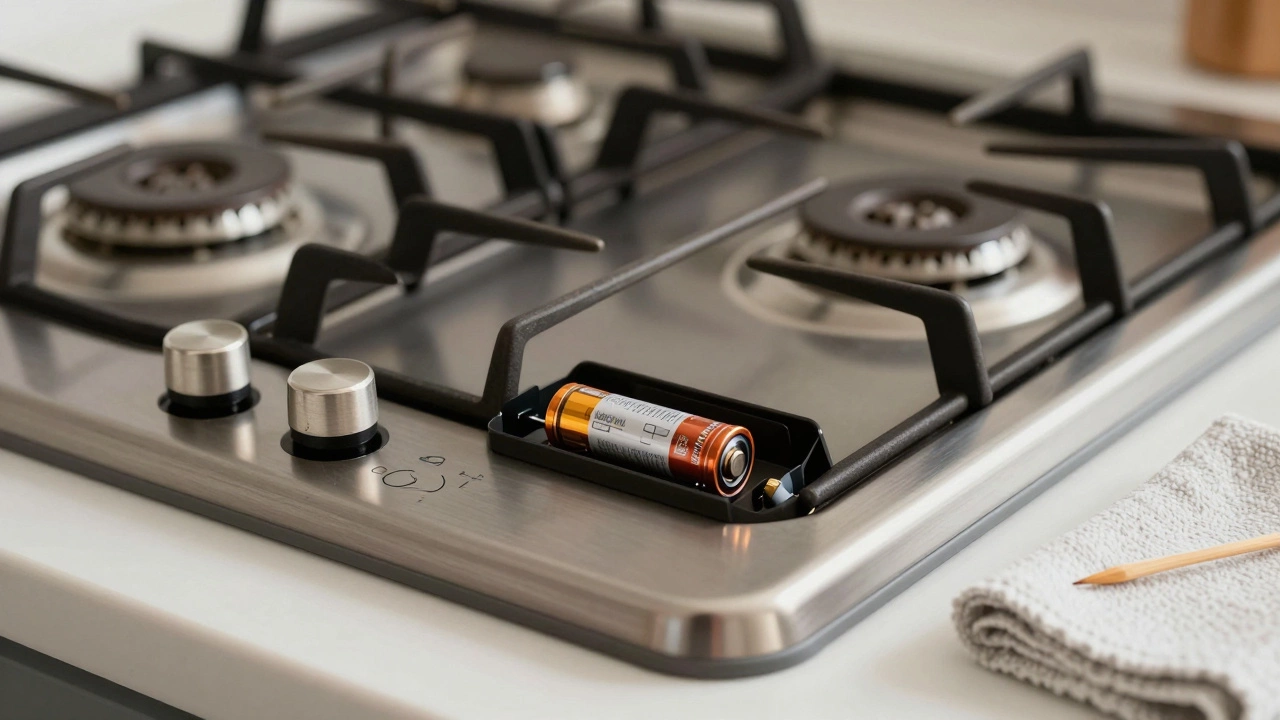
The most common reason a gas hob stops working is a dead or weak igniter battery. Most modern gas hobs use electronic ignition systems powered by a small 9-volt battery tucked under the control panel or behind the burner caps. If the battery dies, you won’t hear the familiar clicking sound when you turn the knob. It’s not a gas leak-it’s just a power issue.
To check: Remove the burner grates and caps. Look for a small rectangular battery compartment near the control knobs. Replace the battery with a fresh one (even if it looks fine). Many people overlook this because they assume the hob runs on mains electricity. It doesn’t. The igniter is battery-powered. After replacing it, turn the knob again. If you hear clicking, the problem’s solved.
Clicking but no flame
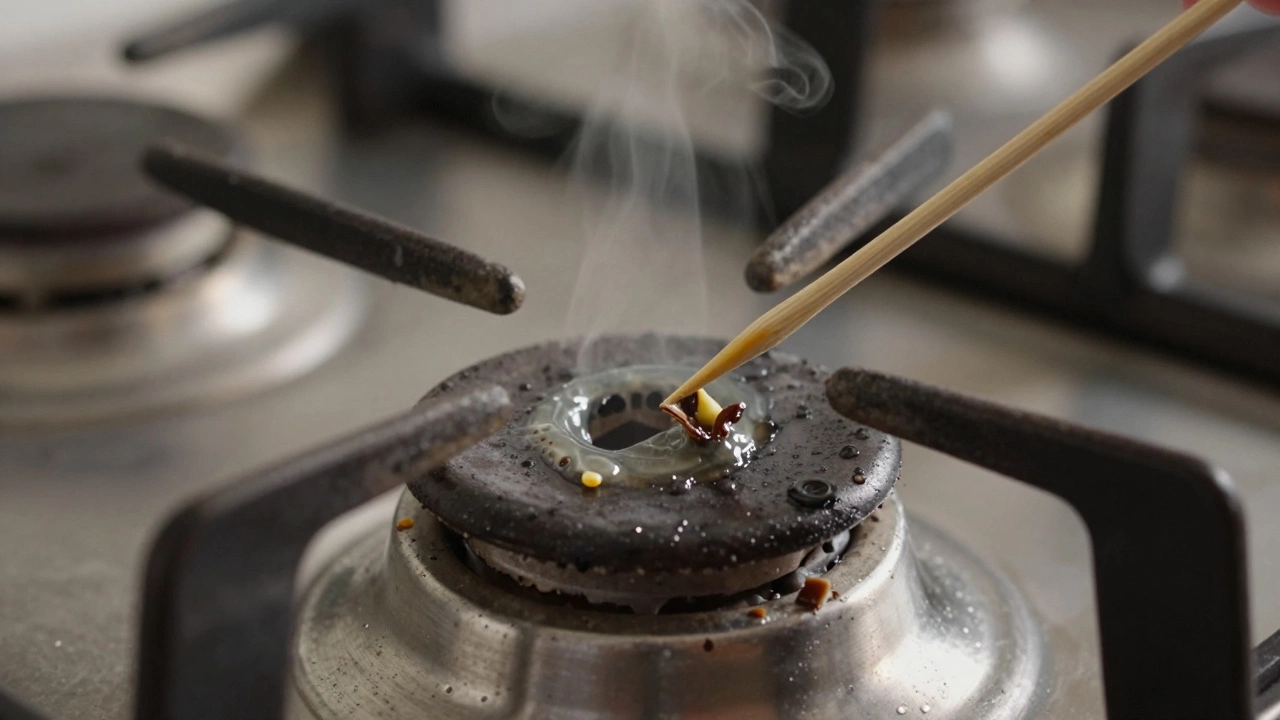
If you hear the igniter clicking but no gas comes out or no flame appears, the issue is likely clogged burner ports. Over time, grease, food debris, and even sugar from boiling over can harden inside the tiny holes around the burner head. This blocks gas from escaping, so even if the spark is perfect, there’s nothing to ignite.
Fix it yourself: Turn off the gas and let the hob cool completely. Remove the burner caps and heads. Use a toothpick or a dry toothbrush to gently clear out each hole. Don’t use metal pins-they can damage the ports. A needle works if you’re careful. Then wipe the burner head with a damp cloth. Reassemble and test. If the flame comes back uneven or weak, you might need to clean the gas valve or replace the burner head. But 90% of the time, cleaning the ports fixes it.
One burner works, others don’t
If only one or two burners fail while others work fine, it’s almost never a gas supply issue. Gas flows through a common manifold. If the whole hob had a gas problem, none of the burners would light. This points to a localized fault: a bad igniter, a blocked port, or a faulty switch.
Test each burner individually. If a specific burner never clicks, the igniter under that knob may be worn out. These are cheap to replace-usually under $20. You can find the part number by checking the model label under the hob or on the back panel. Swap the igniter from a working burner to the broken one to confirm. If the problem moves, you know it’s the igniter. If not, the switch behind the knob is likely faulty.
Gas smell without flame
This is serious. If you smell gas but the burner doesn’t light, stop everything. Turn off the gas supply at the valve behind the hob. Open windows. Don’t flip any switches, light matches, or use your phone. Gas buildup can ignite from a spark-even a small one from a light switch.
Why is gas leaking? It could be a cracked gas line, a loose connection, or a faulty valve. These aren’t DIY fixes. Call a certified gas engineer immediately. Don’t wait. Even a small leak can lead to an explosion. If your hob is over 10 years old, older rubber hoses connecting it to the gas line may have degraded. They’re not visible unless you pull the hob out, so regular professional checks are wise.
Intermittent problems
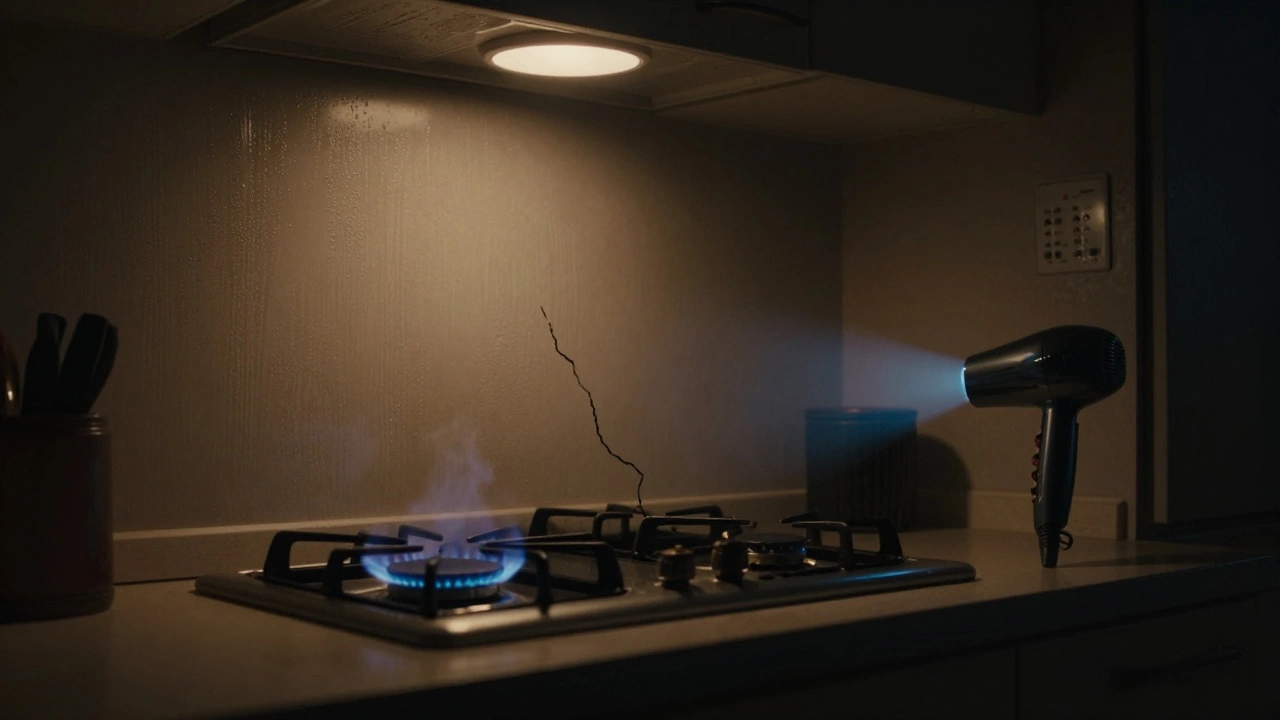
Some gas hobs work fine most of the time but randomly fail. This often happens in humid kitchens. Moisture can seep into the ignition system, causing short circuits. Condensation from boiling pots, steam from kettles, or even a leaky sink nearby can trigger this. The fix? Dry everything out. Use a hairdryer on a cool setting to blow air into the control panel area. Let it sit for a few hours. If the problem returns after a humid day, install a small dehumidifier near the hob or improve kitchen ventilation.
Ignition sparks but flame goes out
Another common issue: the burner lights, but the flame dies after a few seconds. This usually means the thermocouple is faulty. The thermocouple is a safety device that senses whether the flame is burning. If it doesn’t detect heat, it shuts off the gas to prevent leaks. If it’s dirty, bent, or worn out, it won’t work right.
Check the thermocouple: It’s a thin metal rod next to the burner. Make sure it’s positioned so the flame touches the tip. If it’s bent away, gently adjust it. Clean it with fine sandpaper if it’s blackened. If cleaning doesn’t help, replace it. Thermocouples cost under $15 and are easy to swap. Turn off the gas, disconnect the wire, unscrew the old one, and screw in the new one. Reconnect the wire and test.
What to avoid
Don’t use WD-40 on gas valves or igniters. It attracts dust and can gum up the works. Don’t try to force a stuck knob. If it won’t turn, something’s jammed inside the control mechanism. Forcing it can break the gas valve. Don’t ignore a faint gas smell-even if it goes away. Gas leaks can worsen over time. And never bypass the safety features. The thermocouple and flame failure device exist for a reason.
When to call a professional
You should call a Gas Safe registered engineer if:
- You smell gas consistently, even when the hob is off
- There’s visible damage to the gas pipe or connector
- The hob has been submerged in water
- Multiple burners fail at once with no clear cause
- You’ve tried all the fixes above and nothing works
Gas work is dangerous if done wrong. Even experienced DIYers can make mistakes that lead to carbon monoxide leaks or explosions. A professional inspection costs between $80 and $150, depending on your location. It’s cheaper than replacing a kitchen after a fire.
Preventing future problems
Keep your gas hob clean. Wipe spills immediately. Don’t let grease build up under the burners. Replace the igniter battery every 12-18 months, even if it still works. Use pots that fit the burners-too small, and flames lick the sides, causing soot buildup. Check the gas hose every 2 years for cracks or stiffness. If it’s older than 10 years, replace it. And if your hob is over 15 years old, consider upgrading. Newer models have better safety sensors and more reliable ignition systems.
Gas hobs are built to last. Most failures aren’t catastrophic-they’re just annoying. With a little knowledge and some basic tools, you can fix most problems yourself. But when in doubt, stop. Call someone who knows what they’re doing. Safety always comes first.
Why does my gas hob click but not light?
If your gas hob clicks but doesn’t light, the most common cause is clogged burner ports. Grease and food debris block the tiny holes where gas escapes. Clean them with a toothpick or dry toothbrush. Also check if the igniter battery is dead-replace it if needed. If the problem persists, the thermocouple might be misaligned or faulty.
Can a gas hob run without a battery?
Most modern gas hobs need a battery for the electronic igniter. Without it, you won’t hear the clicking sound. But you can still light the burners manually with a match or lighter. Hold the flame to the burner while turning the knob to release gas. This is a temporary fix. Replace the battery as soon as possible.
Is it safe to use a gas hob if one burner doesn’t work?
Yes, it’s generally safe to use other burners if only one fails. But don’t ignore the problem. A faulty burner can indicate a deeper issue like a dirty gas valve or a worn-out switch. If you smell gas, stop using the hob immediately and call a professional. Even if there’s no smell, get the faulty burner checked-it could worsen.
How often should I replace the gas hose on my hob?
Replace the gas hose every 10 years, or sooner if it shows signs of cracking, stiffness, or discoloration. Rubber hoses degrade over time, especially in hot, humid kitchens. A damaged hose can leak gas without you noticing. If your hob is over 15 years old, consider replacing the hose even if it looks fine.
Can moisture cause a gas hob to stop working?
Yes. Moisture from steam, spills, or high humidity can short-circuit the electronic ignition system. If your hob works fine one day but fails after a humid day or boiling a pot, moisture is likely the culprit. Dry the control panel with a hairdryer on a cool setting. Install a kitchen exhaust fan if you don’t have one, and keep the area around the hob dry.