Oven Repair vs. Replacement Calculator
Use this tool to apply the "50% Rule" (adjusted for your oven's age) to see if a repair is financially sound.
Enter values above to see if it's worth repairing.
Your oven has stopped heating evenly, or maybe the door won’t stay shut. You’re staring at that broken kitchen workhorse, wondering if you should call a technician or just head to the store for a new one. It’s a frustrating spot to be in, especially when you have dinner plans looming. The age of your appliance-five years old-is the biggest clue here. In the world of home appliances, five is young. But "young" doesn't always mean "fixable."
Deciding between electric oven repair and buying a replacement isn't just about the price tag on the invoice. It involves looking at part availability, energy efficiency changes since you bought it, and how much longer you plan to live in your current home. Let’s break down exactly what makes sense for your wallet and your kitchen.
The 50% Rule: A Simple Financial Check
Before you pull out your phone to search for technicians, apply the industry-standard "50% Rule." This heuristic suggests that if the cost of the repair exceeds 50% of the price of a comparable new unit, you should replace it instead. However, because your oven is only five years old, this rule needs a slight tweak. For an appliance this young, you might stretch that threshold to 60% or even 70%, provided the core components are still healthy.
Consider the math. If a high-quality replacement oven costs $1,200 AUD (a realistic figure for a mid-to-high range model in Australia), a repair costing $400 is a no-brainer. You’re saving $800 by fixing it. But if the quote comes back at $750, you’re barely saving anything compared to getting a brand-new machine with a fresh warranty.
Keep in mind that labor rates in Adelaide vary. As of 2026, average call-out fees plus hourly labor can range from $90 to $150 per hour. Parts add another layer. A simple thermostat might cost $80 for the part, but a faulty control board could run you $300 to $500 just for the component. Always ask for a written estimate before authorizing any work.
Common Faults in Five-Year-Old Ovens
At the five-year mark, most ovens aren’t failing due to general wear and tear of the entire unit. Instead, specific components reach their end-of-life. Knowing which part is broken helps you predict whether this is a one-off fix or the beginning of a cascade of failures.
| Component | Typical Symptom | Est. Repair Cost (AUD) | Worth Fixing? |
|---|---|---|---|
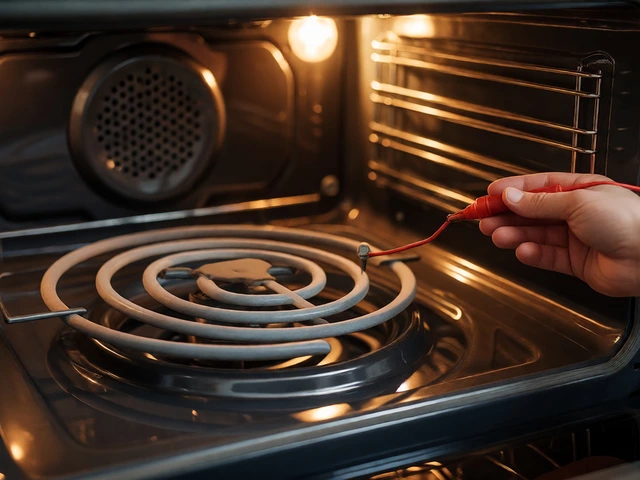
| Heating Element | Oven doesn't heat or heats unevenly | $150 - $250 | Yes, highly recommended |
| Door Seal/Gasket | Heat escapes, oven runs hot/long | $100 - $200 | Yes, easy fix |
| Thermostat/Sensor | Temperature inaccurate, food burns | $200 - $350 | Yes, if calibration fails |
| Control Board | Display dead, erratic behavior | $400 - $600+ | No, consider replacing |
| Door Hinges/Latch | Door won't stay open/closed | $150 - $300 | Yes, mechanical fix |
If your issue is a burnt-out heating element or a worn door seal, these are consumable parts. They wear out regardless of how good the rest of the oven is. Replacing them is almost always worth it. On the flip side, electronic control boards are more complex. If the main brain of your oven dies, it often signals moisture damage or power surges that may affect other sensitive electronics soon after.
Energy Efficiency: Are You Paying More to Cook?
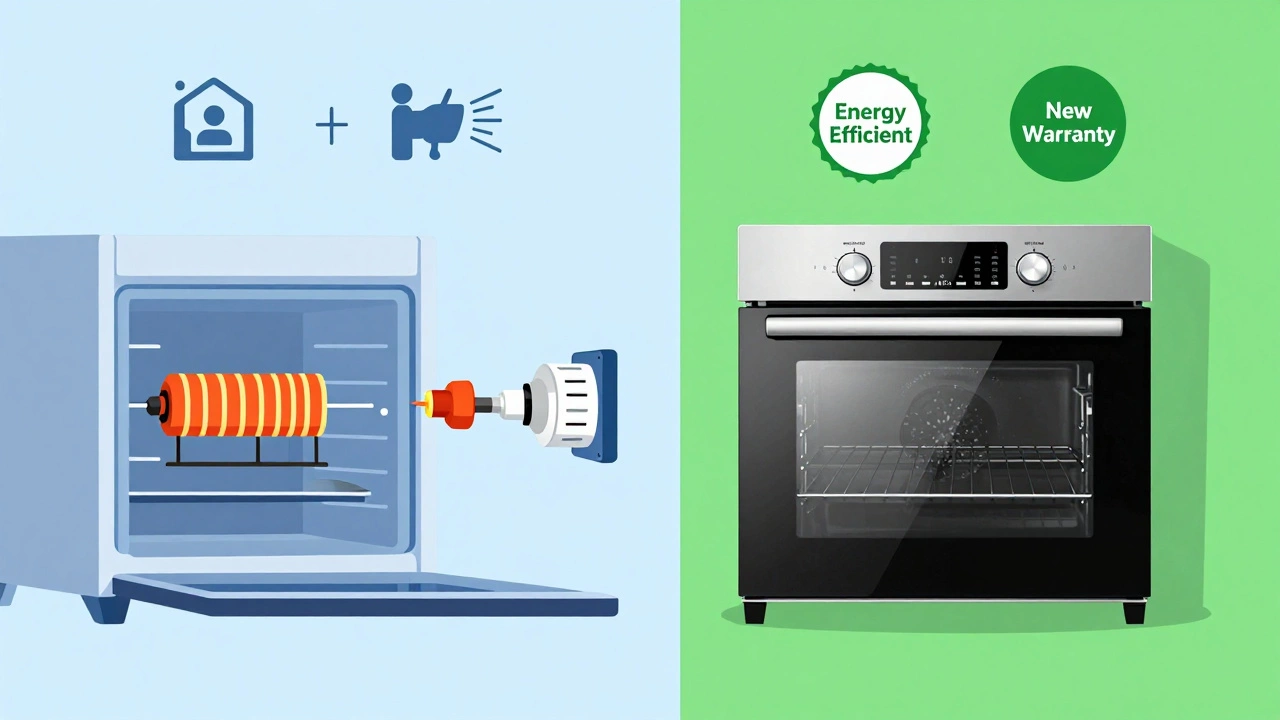
You might not realize it, but your five-year-old oven is likely less efficient than models available today. Energy standards have tightened significantly over the last decade. Newer Electric Ovens designed with better insulation and smarter heating elements consume less electricity to achieve the same cooking results.
In Australia, we look at the star rating system. An older oven might have a 3-star rating, while a new equivalent could be 5-star. Over time, that difference adds up. If you cook daily, the savings on your electricity bill from switching to a more efficient model can offset the purchase price within two to three years. However, if you only use the oven for roasts on weekends, the energy savings will be negligible, making repair the financially smarter choice.
Also, consider technology upgrades. Many modern ovens now feature convection fans as standard, self-cleaning cycles, and precise temperature controls that prevent burning. If your current oven lacks these features, a repair keeps you stuck with outdated tech. A replacement gives you better cooking performance, which can improve the quality of your meals.
Part Availability and Manufacturer Support
This is a hidden trap many homeowners fall into. Just because your oven is five years old doesn’t mean spare parts are easily available. Some manufacturers discontinue support for certain models after seven to ten years. Others stop producing specific sensors or display panels earlier if they redesign the line.
Before committing to a repair, ask the technician if the part is currently in stock or if it needs to be special ordered. If a part takes four weeks to arrive, ask yourself if you want to wait that long without an oven. Furthermore, check if the manufacturer offers extended warranties or service plans that might cover this specific fault. If you paid for an extended warranty when you bought the oven five years ago, using it now saves you significant money.
Brand reputation matters here too. Brands like Bosch, Siemens, and Fisher & Paykel generally have robust supply chains in Australia, meaning parts are easier to find. Cheaper, off-brand ovens might have been discontinued entirely, leaving you with no option but to buy new if a major component fails.
When Replacement Makes More Sense
There are scenarios where repairing a five-year-old oven is a mistake. Here are the red flags:
- Multiple Recent Repairs: If you’ve already fixed something else on this oven in the last 12 months, the reliability of the unit is compromised. One more failure suggests systemic issues.
- Outdated Features: If your oven is a basic static model and you crave the convenience of steam functions or smart connectivity, repair locks you into the past.
- Safety Concerns: If the issue involves gas leaks (for gas ovens) or exposed wiring/sparking, do not risk a repair. Safety mechanisms degrade, and a new unit ensures compliance with current electrical safety standards.
- Moving House Soon: If you plan to sell or rent out your property in the next year, buyers expect working appliances. A repaired oven might raise questions during inspection, whereas a new one adds value.
Additionally, think about the environmental impact. While repairing is generally greener, manufacturing waste is a concern. If your old oven is inefficient, keeping it running consumes more resources (electricity) over its remaining life than a new, efficient model would. It’s a trade-off between immediate e-waste and long-term energy consumption.
How to Get an Accurate Quote
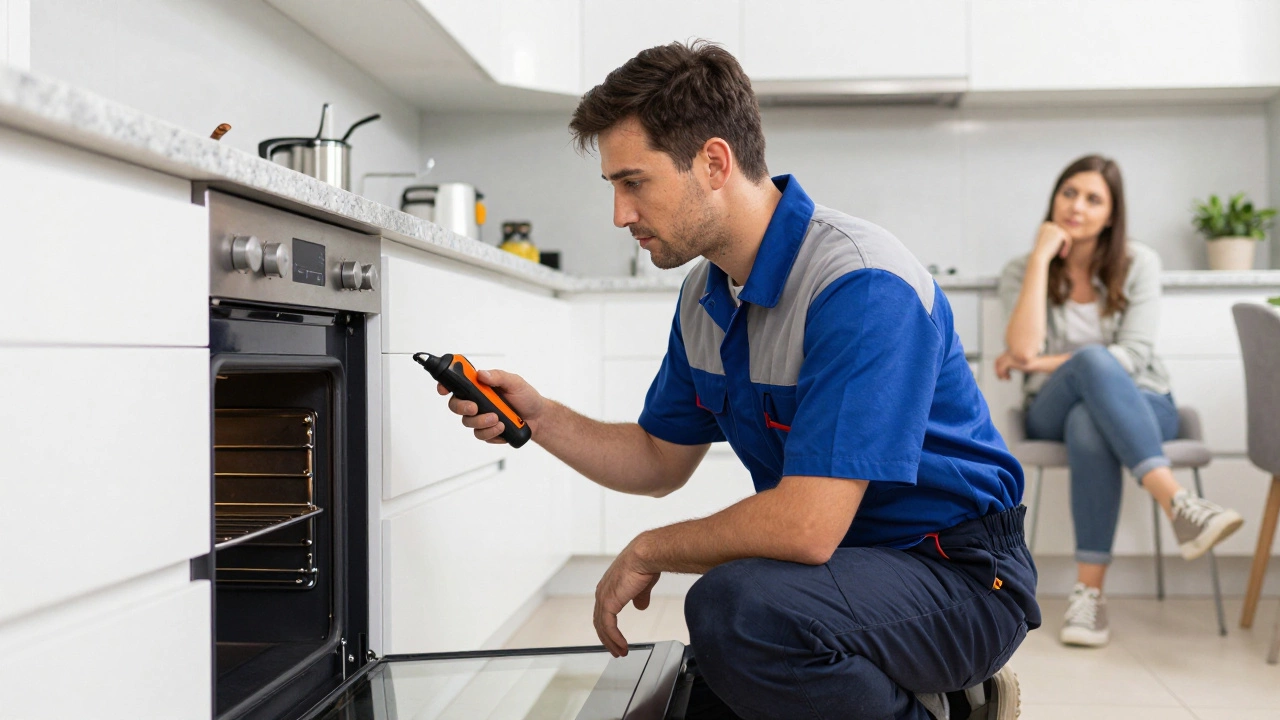
To make an informed decision, you need accurate data. Don’t just guess. Call a licensed appliance repair technician in Adelaide. Provide them with the exact model number, usually found on a sticker inside the door frame or on the back of the oven. Ask for a diagnostic fee upfront-this is standard practice. Most technicians charge a flat rate (around $80-$100) to inspect the issue, which is often waived if you proceed with the repair.
Get quotes for both the repair and a similar new installation. Remember to factor in the cost of removing the old oven and installing the new one, which can add $150-$250 to the replacement total. Sometimes, retailers offer free delivery and installation with purchase, which tips the scales back toward replacement.
Final Verdict: Fix or Replace?
For a five-year-old oven, the default answer is usually **repair**, unless the problem is with the main control board or the cost exceeds $500 AUD. At this age, the appliance still has several years of potential life left. Investing in a $200 repair to extend its life by three more years is economically sound. You get a return on investment by avoiding the full cost of a new appliance.
However, if the repair cost is high, or if you’re tired of the current model’s limitations, replacement offers peace of mind, better efficiency, and modern features. Ultimately, trust your gut. If you love your oven and it’s just a minor glitch, fix it. If you’ve been eyeing a new model anyway, let this breakdown be the push you needed to upgrade.
What is the average lifespan of an electric oven?
The average lifespan of an electric oven is between 10 to 15 years, depending on usage frequency and maintenance. With proper care, some units can last up to 20 years. Since your oven is only five years old, it is statistically halfway through its expected life, making repair a viable option for most non-catastrophic failures.
Is it cheaper to repair or replace an oven in Australia?
It depends on the fault. Minor repairs like replacing a heating element or door seal typically cost $150-$300 AUD, which is much cheaper than buying a new oven ($800-$2,000+ AUD). Major repairs involving control boards or motors can cost $500+, making replacement more economical. Use the 50% rule: if the repair costs more than half the price of a new unit, replace it.
Can I repair my oven myself to save money?
Simple tasks like cleaning the self-clean cycle vents or replacing a visible heating element can sometimes be DIY projects if you are handy. However, working with high-voltage electricity and internal wiring poses serious safety risks. In Australia, electrical work must comply with strict safety standards. For anything beyond basic cleaning or obvious external part swaps, hiring a licensed technician is safer and often required to maintain insurance validity.
Why does my 5-year-old oven smell like burning?
A burning smell can indicate several issues: grease buildup on heating elements, a damaged wire insulation, or a failing heating element that is overheating. If the smell persists after cleaning, it could be an electrical short circuit. This is a safety hazard. Turn off the oven immediately and contact a professional technician to inspect for fire risks.
Do new ovens really save enough electricity to justify replacement?
If you cook daily, yes. Modern ovens with higher star ratings and better insulation can reduce energy consumption by 10-20%. Over two to three years, these savings can amount to $100-$200 AUD annually, helping offset the initial purchase cost. For occasional users, the savings are minimal, so the decision should rely more on performance features and repair costs rather than energy bills.