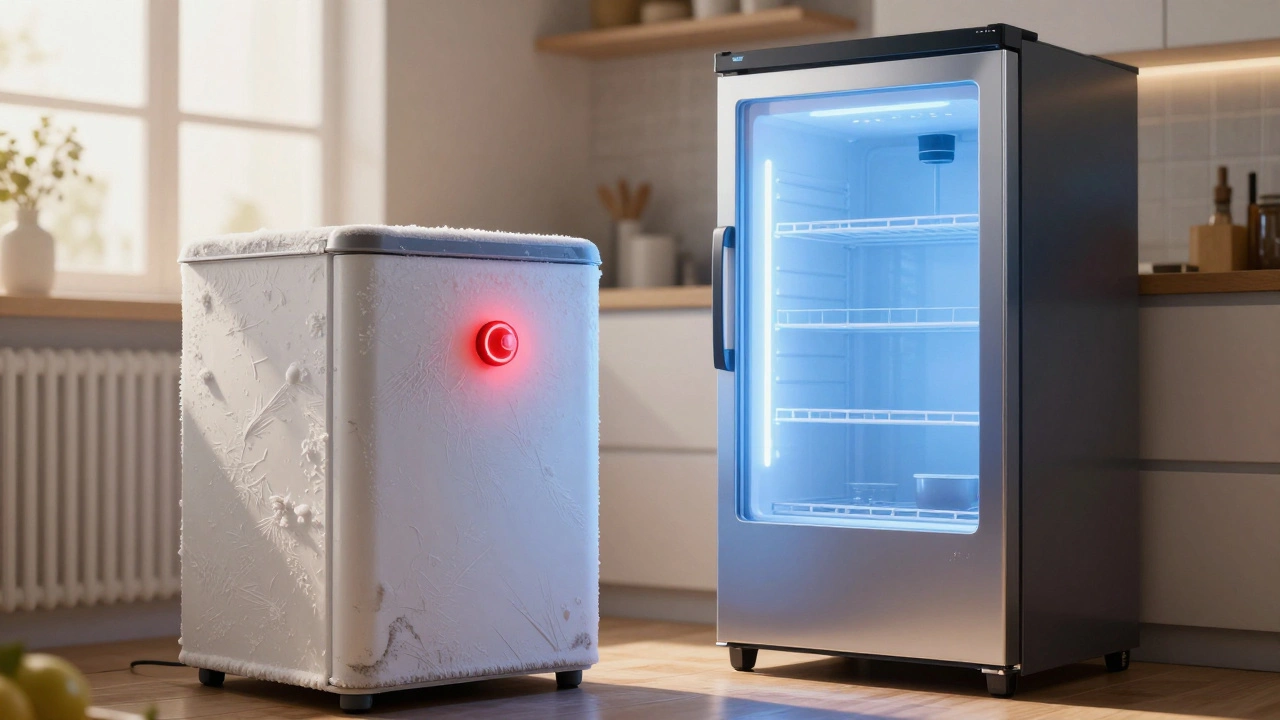
Freezer Repair vs. Replace Calculator
Freezer Decision Calculator
Results
Enter your freezer details to see whether repair or replacement saves you money.
When your freezer stops working, you face a simple but expensive question: fix it or buy new? Most people panic and rush to replace it, but that’s not always the smart move. In Australia, where power bills are rising and appliance prices keep climbing, knowing when to repair versus replace a freezer can save you hundreds - or even thousands - of dollars. The answer isn’t just about the price tag on a new unit. It’s about age, energy use, repair costs, and how much longer the freezer can realistically last.
How old is your freezer?
The single biggest factor in this decision is age. Most freezers last between 10 and 15 years. If yours is under five years old, a repair is almost always worth it. Even if it’s seven or eight years old, you’re still in the sweet spot for getting more life out of it. But if it’s 12 years or older, replacement usually makes more sense - not just because parts are harder to find, but because older models are energy hogs.
Take a 1990s freezer, for example. It might use 1,200 kWh per year. A modern Energy Star-rated freezer uses around 400 kWh. That’s a difference of $300 a year in electricity alone in South Australia. Over five years, that’s $1,500. If your repair costs $400 and your freezer is 14 years old, you’re essentially paying to keep a money pit running.
What’s wrong with it?
Not all freezer problems are created equal. Some fixes are cheap and quick. Others are signs of deeper, expensive trouble.
- Thermostat or control board issues - These are common and usually cost $100-$250 to fix. Easy win.
- Door seal leak - A worn gasket costs $40-$80 to replace. It’s one of the easiest fixes and can restore efficiency fast.
- Compressor failure - This is the big one. Replacing a compressor costs $400-$700, and that’s if you’re lucky. Often, the compressor is so worn that other parts are failing too. At this point, you’re basically rebuilding the freezer.
- Refrigerant leak - Fixing a leak and recharging the system runs $300-$500. But if the leak keeps coming back, you’re throwing money down a hole. Older freezers use refrigerants that are now banned or hard to source.
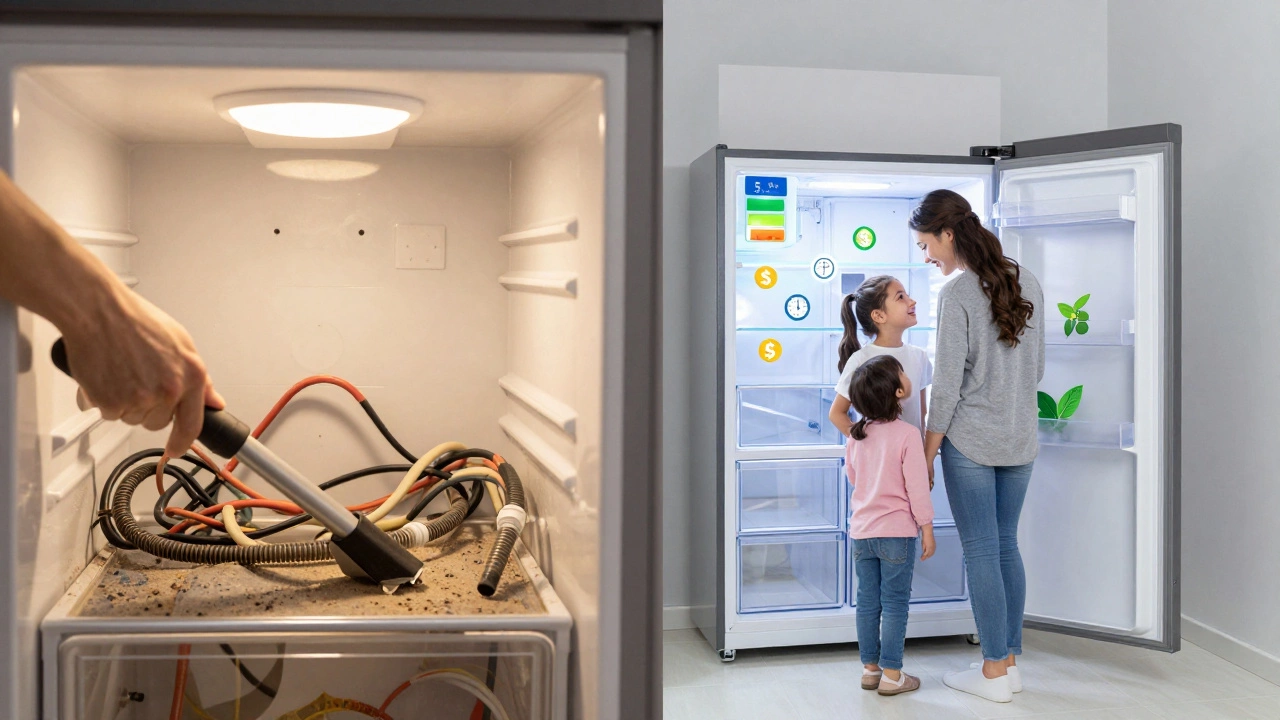
If the problem is something you can fix yourself - like cleaning the condenser coils or adjusting the temperature setting - do it. A dusty coil can make your freezer work 30% harder. A quick vacuum and brush might give you another two years.
Repair cost vs. new unit cost
In Australia, a basic upright freezer costs between $500 and $900. A chest freezer with better efficiency runs $700-$1,200. If your repair quote is more than half the price of a new unit, walk away. That’s the golden rule.
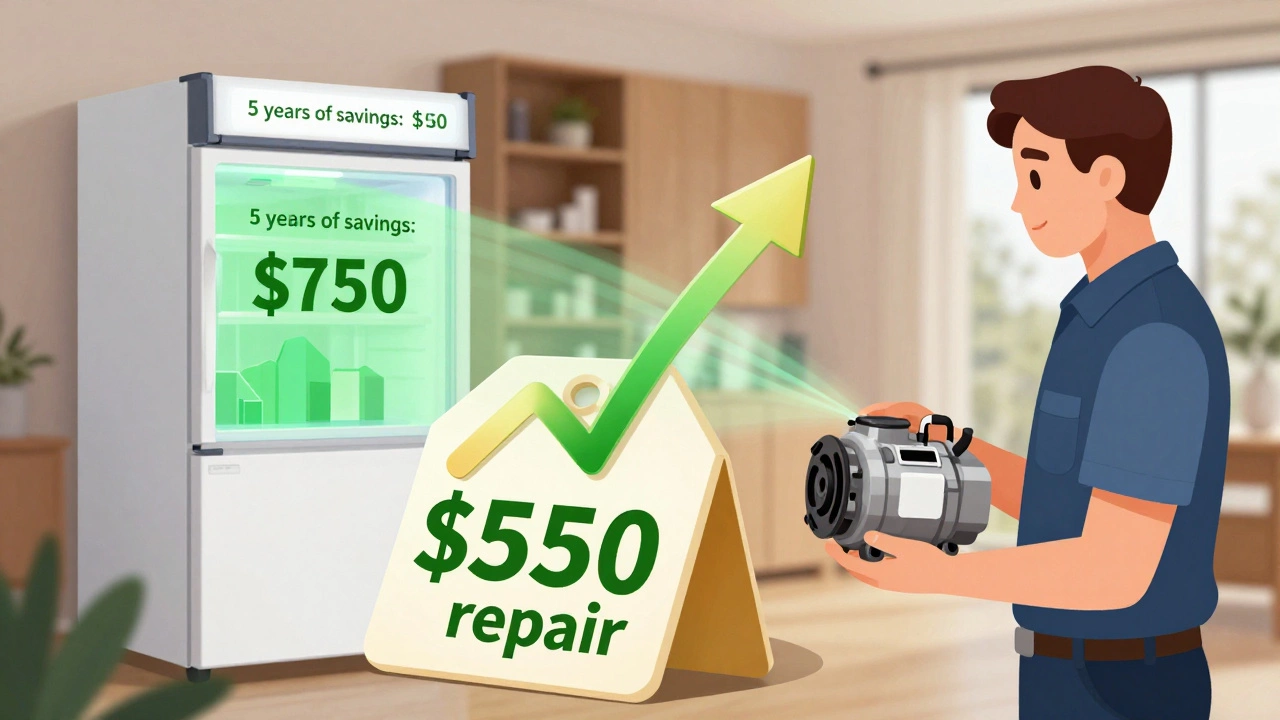
Let’s say your freezer is 10 years old and the compressor is failing. The repair quote is $550. A new 18-cubic-foot energy-efficient model? $680. At first glance, repair seems cheaper. But here’s the catch: the new freezer will use 50% less power. Over the next five years, you’ll save about $750 on electricity. Add in the peace of mind, better temperature control, and a full warranty - the new one pays for itself.
Energy efficiency matters more than you think
Freezers don’t just run when you open the door. They run 24/7. An old model might be using double or triple the electricity of a modern one. In Adelaide, where summer temperatures regularly hit 40°C, your freezer is working overtime. That’s not just bad for your wallet - it’s bad for the planet.
Look for the Energy Rating Label. The number of stars tells you everything. A 5-star freezer uses less than 350 kWh per year. A 2-star freezer from 2010? More than 800 kWh. That’s a $450 difference per year. If you’re paying $0.30 per kWh (current South Australian rates), you’re spending $1,350 extra over five years on an old freezer. That’s more than the cost of a new unit.
Warranty and reliability
New freezers come with at least a 12-month warranty. Some brands offer up to five years on the compressor. That’s protection you don’t get with a repair. A repaired freezer might work for another year - or it might die again in three months. No one can guarantee it.
Also, think about parts availability. A 2012 freezer might have a broken fan motor, but the manufacturer stopped making that part in 2020. You might need to scavenge from another unit, which means delays and a patchwork fix. A new freezer? Every part is in stock, and technicians know how to service it.
What about second-hand freezers?
Some people consider buying a used freezer from a second-hand store or online marketplace. But unless it’s under 3 years old with a clear service history, it’s a gamble. Many second-hand freezers are sold because they’re failing. And without a warranty, you’re on your own if it dies in a month.
There’s one exception: if you find a barely-used freezer from someone who upgraded and still has the original receipt and warranty, it can be a great deal. But those are rare.
When to replace - even if the repair is cheap
There are situations where you should replace even if the repair costs less than $200:
- Your freezer is over 10 years old.
- You’ve already repaired it once in the last two years.
- The freezer is noisy, frosty on the outside, or struggles to keep food frozen.
- You’re upgrading your kitchen and want a modern, space-saving model.
- You’ve noticed your power bill rising steadily over the last year.
These aren’t just signs of wear. They’re signs that your freezer is inefficient, unreliable, and costing you more than it’s worth.
What to look for in a new freezer
If you decide to replace, here’s what to check:
- Size - Match your needs. A family of four usually needs 15-20 cubic feet. A single person or couple? 8-12 cubic feet is enough.
- Energy rating - Aim for 4 stars or more. Avoid anything below 3 stars.
- Type - Upright freezers save space. Chest freezers keep food colder longer and are more efficient.
- Features - Look for fast-freeze, temperature alarms, and frost-free. Avoid manual defrost unless you’re on a tight budget.
- Brand - Brands like Haier, LG, and Samsung have strong reliability records in Australia. Avoid no-name brands on eBay or Amazon.
Final call: repair or replace?
Here’s your quick decision guide:
- Is your freezer under 5 years old? → Repair.
- Is it 5-10 years old and the repair cost is under $300? → Repair.
- Is it 10+ years old? → Replace.
- Is the repair cost over half the price of a new unit? → Replace.
- Are you spending more than $200 extra per year on electricity? → Replace.
There’s no shame in replacing a freezer. The goal isn’t to stretch out a dying appliance - it’s to save money, energy, and hassle in the long run. A new, efficient freezer pays for itself in under three years. And after that? It’s pure savings.
Is it worth repairing a 12-year-old freezer?
Generally, no. A 12-year-old freezer is near the end of its lifespan. Even if the repair is cheap, the unit is likely inefficient and could fail again soon. You’re better off replacing it with a modern, energy-efficient model that will save you money on power bills and avoid future repairs.
How much does it cost to repair a freezer compressor?
Replacing a freezer compressor typically costs between $400 and $700, including parts and labour. This is often close to or more than half the price of a new freezer. If the compressor has failed, the freezer is usually not worth repairing unless it’s a high-end model under 5 years old.
Can I save money by buying a second-hand freezer?
It’s risky. Most second-hand freezers are sold because they’re failing. Even if it looks fine, there’s no warranty, and older models use far more electricity. You might save $200 upfront, but end up paying $500+ extra in power bills over a year. Only consider it if the freezer is under 3 years old with proof of service history.
Do I need to replace my freezer if it’s still freezing food?
Not necessarily. If it’s keeping food frozen and the temperature is stable, it’s still functional. But if it’s running constantly, making loud noises, or covered in frost on the outside, it’s working too hard. That means higher electricity bills and a short remaining lifespan. Replace it before it fails completely.
What’s the average lifespan of a freezer?
Most freezers last between 10 and 15 years. Chest freezers tend to last longer than upright ones, often reaching 15-20 years with good maintenance. Regular cleaning of coils, checking door seals, and avoiding overloading can extend life by a few years.